
Social Media
OpenAI Robotics Lead Resigns Over Pentagon Deal Ethics Concerns

OpenAI Robotics Lead Resigns Over Pentagon Deal Ethics Concerns
Caitlin Kalinowski, the hardware lead within OpenAI’s robotics division, has resigned. Her departure follows the company’s controversial agreement with the U.S. Department of Defense. Kalinowski publicly criticized what she saw as a rushed process that failed to establish critical ethical boundaries.
OpenAI confirmed the resignation to Engadget. The company stated it has no plans to fill her position. This move represents significant internal dissent at a pivotal moment for AI governance.
A Public Critique of Rushed Guardrails
Kalinowski didn’t leave quietly. She took to X to voice her concerns directly. “Surveillance of Americans without judicial oversight and lethal autonomy without human authorization are lines that deserved more deliberation than they got,” she wrote.
Her criticism centered on process. Responding to another post, the former executive called the announcement “rushed without the guardrails defined.” She framed it primarily as a failure of governance. How can a company build safe AI if it doesn’t first build safe agreements?
This isn’t a minor technical disagreement. It’s a fundamental clash over the speed and safeguards of deploying powerful technology. Kalinowski, who joined OpenAI from Meta in late 2024, positioned her resignation as a matter of principle.
OpenAI’s Defense and Stated Red Lines
OpenAI responded with a statement acknowledging the strong views surrounding the issue. The company said it would continue discussions with relevant parties. More importantly, it directly addressed Kalinowski’s accusations.
“We believe our agreement with the Pentagon creates a workable path for responsible national security uses of AI while making clear our red lines,” the statement read. The company explicitly listed those boundaries: no domestic surveillance and no autonomous weapons.
The statement adds that OpenAI “doesn’t support the issues that Kalinowski brought up.” This creates a clear public rift. The company asserts its deal has safeguards; a key leader says those safeguards were an afterthought.
The Broader Context: A Industry at a Crossroads
Kalinowski’s resignation is the most prominent fallout from OpenAI’s Pentagon deal, but it’s part of a larger pattern. The decision came shortly after rival AI firm Anthropic refused a government request to lift certain guardrails. Specifically, Anthropic declined to ease restrictions around mass surveillance and fully autonomous weapons development.
Even OpenAI’s own CEO, Sam Altman, has signaled caution. He stated he would amend the Defense Department deal to explicitly prohibit spying on Americans. This suggests internal debate was ongoing even as the partnership was announced.
The incident highlights a growing tension in the AI industry. Tech companies are balancing lucrative government contracts against their publicly stated ethical principles. When national security and Silicon Valley ethics collide, someone has to draw the line. In this case, it was a robotics hardware lead on her way out the door.
For now, OpenAI moves forward without Kalinowski and without a stated replacement for her role. The company’s path with the Pentagon is set, but the questions she raised about haste and governance are likely to linger far longer.
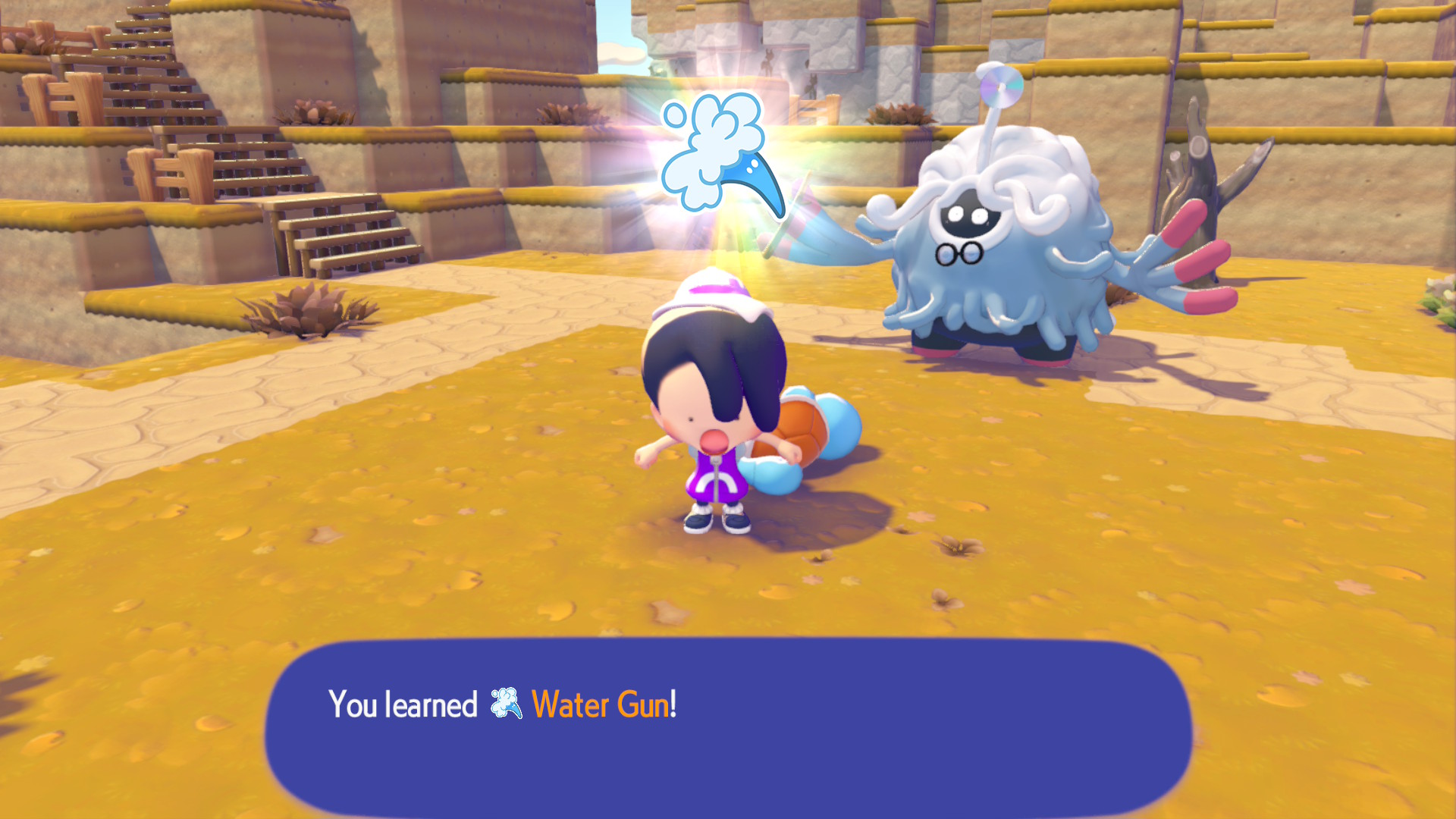
Pokémon Pokopia Review: A Charming Blend of Life Sim and Pokémon Adventure
Mainline Pokémon games often have you sprinting toward the next gym badge or legendary encounter. There’s little time to appreciate the world itself. Pokémon Pokopia flips that script entirely. Here, your success isn’t measured by battle victories, but by the community you cultivate and the town you rebuild from the ground up.
Building a Home, One Block at a Time
You begin your journey as a Ditto, waking in a world curiously absent of humans and other Pokémon. With your trainer gone, you take on a humanoid form and partner with the sole remaining resident, Professor Tangrowth. Your mission is clear: restore a desolate wasteland into a thriving Pokémon paradise.
The core gameplay loop is simple yet deeply satisfying. You scavenge materials, craft habitats from shrubs and trees, and construct homes designed to lure specific Pokémon back to the area. As your town grows, so does your toolkit. Befriended Pokémon teach you new skills and provide essential items, creating a wonderful cycle of mutual aid.
A World You Can Shape
Pokopia’s entire environment is built from destructible and placeable blocks. This mechanic goes far beyond simple decoration. Need to cross a river? Build a bridge. Spot a resource on a cliff? Carve out a staircase. The freedom to reshape the landscape to solve problems and express your creativity is a constant joy.
Compared to games like Animal Crossing, Pokopia places a heavier emphasis on active construction and exploration over pure interior decorating. You’re not just placing furniture; you’re terraforming the very earth and convincing Pokémon to call it home.
My only minor critique involves the real-time building system. While it’s charming that construction continues when you’re offline, waiting a full day for larger projects can occasionally slow your momentum. In a game already packed with over 50 hours of story content, these pauses can feel like unnecessary brakes on your creativity.
The Heart of the Game: The Pokémon Themselves
While the building framework is expertly borrowed from titles like Dragon Quest Builders, Pokopia’s soul belongs entirely to its monsters. This is where the game truly shines and separates itself from the pack.
Forget the repetitive digital cries of the main series. Here, you have actual conversations with your Pokémon neighbors. They run up to thank you for their new home, offer gifts, and share their unique personalities. It’s a small change that makes the world feel incredibly alive and connected.
The roster is surprisingly deep, featuring over 100 Pokémon from across generations. While Kanto favorites are well-represented, you’ll find plenty of creatures from later regions, including some legendary cameos. Each species has distinct habitat preferences and abilities that directly impact gameplay.
Monsters with Personalities
The attention to detail is delightful. A Water-type might request a more humid home environment. A Fighting-type could ask for exercise equipment. Need help with farming? Recruit a Grass-type. Require a forge? A Fire-type Pokémon is your best bet. This system encourages you to consider each monster’s natural traits, making every recruitment feel meaningful.
Perhaps the most heartwarming aspect is watching the Pokémon interact with each other. You’ll stumble upon scenes of two creatures chasing each other playfully, working out together, or napping in a sunny spot. The included photo mode lets you capture these spontaneous, cozy moments, creating a personal album of your town’s daily life.
Exploration Filled with Nostalgia and Secrets
Venturing beyond your town’s borders is its own reward. For veterans of the original games, the world is sprinkled with clever references to iconic Kanto locations and characters. It’s a love letter to the franchise’s history that never feels forced.
Exploration isn’t just for sightseeing. While spelunking in caves or hiking through forests, you’ll encounter wild Pokémon on their own adventures. Helping these creatures with small tasks often convinces them to join your community, turning exploration into a direct path toward town growth.
The world feels meticulously designed with secrets. While some are obvious, others are cleverly hidden. Pokopia provides just enough subtle hints to point curious players in the right direction without holding their hand, making every discovery feel earned.
A New Blueprint for Pokémon Spin-Offs
Pokopia offers an astonishing amount of content. Dedicated players could easily lose themselves in its world for months, happily building and socializing until the next mainline release. More importantly, Bandai Namco and Game Freak have achieved something special.
This isn’t a shallow life-simulator with a Pokémon skin hastily applied. It’s a robust, well-crafted game that stands firmly on its own mechanics. The addition of Pokémon doesn’t feel like a marketing gimmick; it feels essential. The monsters are the heart, the humor, and the helpers that make the entire experience work.
Pokémon Pokopia succeeds by asking a different question. Instead of “How can I become the strongest?” it asks, “What kind of world do we want to build together?” The answer it provides is one of the coziest, most genuinely charming experiences in the entire franchise.
Another Delay for ChatGPT’s Controversial Feature
ChatGPT users waiting for more permissive content settings will have to keep waiting. OpenAI has quietly pushed back the launch of its planned “adult mode” yet again. The company confirmed the delay to journalist Alex Heath, stating the feature is on hold while engineers focus on what it calls higher-priority work for a broader user base.
This isn’t the first schedule slip. The feature’s timeline has been a moving target since it was first announced, leaving its future release date completely unclear.
What OpenAI is Building Instead
So, what’s more important than letting adults access adult content? According to an OpenAI spokesperson, the team is channeling its efforts into core AI improvements. The current focus is on making ChatGPT smarter, more personable, and more tailored to individual users.
Specific goals include “gains in intelligence, personality improvements, personalization, and making the experience more proactive.” In simpler terms, OpenAI wants the bot to be more useful and engaging for everyday tasks before expanding into more niche, age-restricted territories. The company still intends to release an adult mode eventually, but admits it “would take more time.”
The Rocky Road to “Treating Adults Like Adults”
The concept of an adult mode originated from CEO Sam Altman last October. In a post on X, he outlined a principle of “treat adults like adults” and mentioned plans for more robust age-gating. A key component of this was allowing “erotica for verified adults.”
The initial promise was a December 2025 launch. That deadline came and went. Later, an OpenAI executive adjusted the timeline, pointing to the first quarter of 2026. Now, with Q1 nearly over, that window has closed without a new target. The only related rollout has been an age prediction tool, launched in January, which might eventually support the adult content system.
What This Means for Users and the AI Landscape
This repeated delay highlights the complex balancing act AI companies face. On one hand, there’s pressure to offer less restrictive platforms and cater to diverse user demands. On the other, there are immense technical, ethical, and safety hurdles in verifying age and controlling content distribution at scale.
Prioritizing core intelligence over boundary-pushing features might be a pragmatic, if disappointing, choice for OpenAI. It suggests the company believes its mainstream reputation and product reliability are paramount. For now, users curious about a more permissive ChatGPT will have to watch, wait, and see if “adult mode” ever truly grows up.
OpenAI Robotics Lead Resigns Over Pentagon Deal Ethics Concerns
Caitlin Kalinowski, the hardware lead for OpenAI’s robotics division, has stepped down. Her resignation comes with sharp criticism of the company’s decision to partner with the U.S. Department of Defense. Kalinowski argues the deal was rushed through without establishing sufficient ethical boundaries.
A Resignation Rooted in Principle
Kalinowski made her stance clear on social media. She highlighted two specific red lines she believes were crossed too hastily: surveillance of Americans without judicial oversight and the development of lethal autonomous weapons without human authorization. “These are lines that deserved more deliberation than they got,” she wrote.
For Kalinowski, this wasn’t just a policy disagreement. She framed it as a core governance failure. The announcement of the Pentagon partnership, she explained, came before the necessary guardrails were defined. This lack of process appears to have been the final straw for the executive, who joined OpenAI from Meta in late 2024.
OpenAI’s Defense and the Broader Context
OpenAI confirmed the resignation in a statement. The company acknowledged that people hold “strong views” on these issues and promised continued dialogue. More importantly, OpenAI directly addressed Kalinowski’s concerns. The company stated its agreement with the Pentagon includes clear prohibitions against domestic surveillance and autonomous weapons.
“We believe our agreement creates a workable path for responsible national security uses of AI,” the statement read, emphasizing those established red lines. OpenAI maintains it does not support the activities Kalinowski warned against.
This controversy doesn’t exist in a vacuum. OpenAI’s decision to engage with the Defense Department followed a notable refusal by rival AI firm Anthropic. Anthropic declined to lift certain guardrails related to mass surveillance and fully autonomous weapon development. Even OpenAI CEO Sam Altman has indicated he would amend the deal to explicitly ban spying on Americans.
The Fallout and What Comes Next
Kalinowski’s departure is the most prominent internal reaction to the Pentagon deal so far. It puts a human face on the ethical tensions simmering within the AI industry. As companies race to develop powerful technologies, their partnerships with military and intelligence agencies are becoming a major fault line.
OpenAI told media outlets it has no plans to replace Kalinowski. This suggests a possible restructuring or shift in focus for its robotics hardware efforts. Her exit raises questions about how other employees view the company’s direction and its commitment to its stated principles.
The debate she ignited is far from over. It touches on fundamental questions about the role of private tech companies in national security, the speed of ethical review, and who gets to draw the lines on AI’s use in life-and-death scenarios. For now, one of OpenAI’s top robotics minds has decided she can’t be part of the answer.


Pokémon Pokopia Review: A Charming Blend of Life Sim and Pokémon Adventure
ChatGPT Adult Mode Delayed Again as OpenAI Shifts Priorities
OpenAI Robotics Lead Resigns Over Pentagon Deal Ethics Concerns

10 Emerging Technologies in Information Technology You should to Know About
the meaning of ICT

What is social media
-
 IT & Security3 years ago
10 Emerging Technologies in Information Technology You should to Know About
-
Uncategorized4 years ago
the meaning of ICT
-
 Uncategorized4 years ago
What is social media
-
Uncategorized4 years ago
5 important Things That Keep a Data Center Running
-

 How to3 years ago
Who visited your Facebook profile
-

 Threats dictionary3 years ago
What is malware and how Protect Yourself from malware
-

 IT & Security3 years ago
5 Essential Tips for Improving Your IT Security
-

 Errors Fix3 years ago
Microsoft Update Error code 0x80243FFF