Connect with us

CyberSecurity

Tax Season Phishing: How Cybercriminals Are Targeting You in 2026

Published

on

Tax Season Phishing: How Cybercriminals Are Targeting You in 2026

The annual tax filing rush isn’t just stressful for taxpayers. It’s a golden opportunity for cybercriminals. Early 2026 has seen a significant surge in malicious campaigns specifically designed to exploit the anxiety and urgency of tax season.

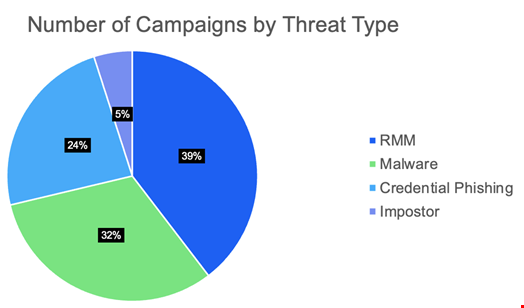
Cybersecurity firm Proofpoint has identified over a hundred distinct operations. These aren’t just simple spam emails. They’re sophisticated attacks delivering malware, deploying remote access tools, and executing complex fraud schemes aimed squarely at stealing credentials and financial data.

The New Tools in a Hacker’s Arsenal

Attackers are getting creative with their methods. A key trend identified in recent advisories is the weaponization of legitimate Remote Monitoring and Management (RMM) software. These tools, typically used by IT departments for remote support, are being co-opted by threat actors to gain persistent, undetected access to victim systems.

Once installed, this access can be used to siphon data, deploy additional payloads, or lay the groundwork for long-term espionage. It’s a dangerous shift that bypasses many traditional security measures designed to flag known malware.

Global Campaigns and Evolving Threat Actors

The threat is truly global. Researchers have tracked campaigns with distinct geographical focuses. One group, tracked as TA2730, has shown particular interest in organizations across Japan and other Asian markets.

Meanwhile, taxpayers in Canada, Australia, Singapore, and Switzerland have also been in the crosshairs of other coordinated efforts. The scale ranges from broad, opportunistic phishing blasts to highly targeted business email compromise (BEC) attacks.

How the Scams Work: From Fake Forms to Executive Impersonation

The social engineering hooks are varied but consistently effective. In one common scheme, attackers impersonate investment firms. They send emails urgently requesting updates to tax forms like the W-8BEN, directing the target to a flawless but fake login portal that harvests their credentials the moment they’re entered.

Another prevalent tactic involves BEC scams. Here, cybercriminals pose as company executives—often the CEO or CFO—and send internal requests for sensitive employee tax documents like W-2 or W-9 forms. An employee thinking they’re complying with a boss’s request can inadvertently expose a treasure trove of personal identification and financial data for the entire workforce.

Why Tax Lures Are So Dangerously Effective

What makes these scams so successful? Timing and psychology. During tax season, people expect communications about filings, penalties, missing documents, and compliance issues. An email with the subject line “ACTION REQUIRED: Correct Your Tax Filing Immediately” is designed to trigger panic and bypass rational scrutiny.

The pressure to avoid penalties or meet deadlines causes even cautious individuals to act first and verify later. Threat actors understand this annual rhythm perfectly. They know that people are using a multitude of apps and services to manage their finances, creating more potential vectors for attack.

Protecting Yourself and Your Organization

Vigilance is your first and best defense. Enterprises must prioritize user education, specifically around the techniques and timely lures that criminals abuse each tax season. Employees should be trained to scrutinize any email requesting sensitive data or tax forms, especially those conveying urgency.

Always verify the sender’s email address carefully—not just the display name. Hover over links to see the true destination URL before clicking. Never download attachments from unsolicited messages about taxes.

For businesses, implementing strict verification protocols for financial and data requests—like a mandatory secondary approval channel—can stop BEC scams in their tracks. Remember, cybercriminals don’t take a break. They simply follow the calendar, and taxes remain one of their most reliable annual themes.

CyberSecurity

European Commission Data Breach: Hackers Target Cloud Infrastructure

Published

on

European Commission Confirms Cloud Platform Breach

The European Commission has publicly confirmed a significant security incident. Hackers potentially accessed and exfiltrated data from the cloud infrastructure supporting its official Europa.eu platform.

The executive body stated it discovered the cyber-attack on March 24th. Immediate investigative and containment actions were launched. According to the Commission, its rapid response contained the incident and allowed for the implementation of risk mitigation measures. Crucially, this was done without causing downtime for the Europa websites.

“Early findings of our ongoing investigation suggest that data have been taken from those websites,” the Commission’s statement read. The body is now in the process of notifying other EU entities that may have been impacted. A full assessment of the breach’s scope is still underway.

ShinyHunters Claims Responsibility for Massive Data Theft

While the Commission’s statement was measured, claims from a notorious hacking group paint a more severe picture. The extortion group ShinyHunters posted screenshots on social media platform X, asserting responsibility for the breach.

The group claims to have compromised over 350 gigabytes of European Commission data. The alleged haul is extensive, including mail server dumps, databases, confidential documents, contracts, and other sensitive material. Separate screenshots appear to show the personally identifiable information (PII) of employees, a serious privacy violation.

Security researchers corroborate parts of this claim. Analysts at the International Cyber Digest reported that the hackers accessed emails, DKIM signing keys, internal administrative URLs, and data from platforms like NextCloud and the military financing mechanism Athena. A complete single sign-on (SSO) user directory may also have been stolen.

Understanding the Threat Actor: ShinyHunters’ Modus Operandi

Who is behind this attack? ShinyHunters is a prolific and active cybercriminal group with a roster of high-profile victims. Their recent campaigns have targeted major corporations like Google, Chanel, and Pandora, often focusing on stealing SSO credentials and Salesforce data.

The group frequently employs vishing, or voice phishing, as a primary tactic. In some operations, they impersonate corporate IT helpdesks. They call employees directly, tricking them into entering their login credentials on sophisticated phishing sites that perfectly mimic legitimate company portals. This human-centric attack method bypasses many technical security controls.

Potential Fallout and Security Implications

The exact method of intrusion into the Commission’s systems remains unclear, though unconfirmed reports point to its Amazon Web Services (AWS) infrastructure being the initial target. There is also social media chatter, yet to be verified, suggesting the EU’s cybersecurity agency, ENISA, might also be involved.

Security experts warn the repercussions could be severe. Nick Tausek, lead security automation architect at Swimlane, highlighted several risks. “This breach could open the door to identity risk, operational disruption, and secondary spear-phishing attacks,” he stated.

He also noted a concerning twist. “The attacker claiming they will not extort does not make it less serious, it just changes the playbook. A quiet leak can be just as damaging for trust, diplomacy, and ongoing investigations.” This scenario forces defenders into a complex juggling act of containment, digital forensics, and public communications, all while the full extent of the damage is still unknown.

The European Commission has assured the public that its core internal systems were not compromised. It pledged to continue monitoring, analyzing the incident, and using the findings to strengthen its cybersecurity posture. For now, the digital clean-up and investigation continue.

Continue Reading

CyberSecurity

Critical Citrix NetScaler Vulnerability CVE-2026-3055 Actively Exploited

Published

on

Active Exploitation of Critical Citrix NetScaler Flaw Confirmed

Security researchers have confirmed that a critical vulnerability in Citrix’s networking products is now being actively exploited by attackers. The flaw, tracked as CVE-2026-3055, carries a severe CVSS v4.0 score of 9.3. It affects NetScaler Application Delivery Controller (ADC) and NetScaler Gateway, formerly known as Citrix ADC and Citrix Gateway.

These enterprise-grade solutions are widely used to manage, optimize, and secure application delivery and remote access. The vulnerability stems from insufficient input validation, leading to a memory overread condition. An unauthenticated remote attacker can exploit this to leak potentially sensitive information directly from the appliance’s memory.

Which Systems Are at Risk?

Not every NetScaler deployment is vulnerable. The critical detail is that CVE-2026-3055 only impacts systems explicitly configured as a SAML Identity Provider (SAML IDP). Default or standard configurations are not affected. This significantly narrows the attack surface but leaves exposed systems in immediate danger.

The vulnerability affects specific versions of the software. If you’re running NetScaler ADC or NetScaler Gateway version 14.1 before 14.1-66.59, or version 13.1 before 13.1-62.23, you are vulnerable. The FIPS and NDcPP builds before 13.1-37.262 are also affected. Only customer-managed on-premises instances are at risk; Citrix-managed cloud instances are safe.

How can you check your configuration? Administrators need to inspect their NetScaler configuration for the string “add authentication samlIdPProfile .*.” Finding this command indicates a vulnerable SAML IDP setup.

Honeypots Capture Exploitation in Real-Time

The transition from patch release to active exploitation was alarmingly fast. Security firm watchTowr published an analysis of CVE-2026-3055 on March 28. By then, their honeypot network had already recorded exploitation attempts from known threat actor IPs starting March 27.

“This is an impressive turnaround time for a vulnerability Citrix identified internally,” the watchTowr researchers noted, highlighting the speed of modern threat actors.

In parallel, researchers at Defused observed authentication method fingerprinting activity against NetScaler systems on the same day. They confirmed this reconnaissance was “directly linked” to CVE-2026-3055. Since the flaw only impacts IDP-configured instances, this fingerprinting is likely attackers scanning for precisely those targets.

By March 29, Defused confirmed active exploitation. Attackers are sending crafted SAMLRequest payloads to the `/saml/login` endpoint, deliberately omitting the `AssertionConsumerServiceURL` field. This triggers the appliance to leak memory contents via the `NSC_TASS` cookie. Defused’s honeypot data shows exploitation using the same payload structure as the public proof-of-concept.

Urgent Patching and Mitigation Steps

The message from Citrix, security researchers, and agencies like the UK’s NCSC is unanimous: patch immediately. The updated, secure versions are NetScaler ADC and Gateway 14.1-66.59 and later, 13.1-62.23 and later for the 13.1 branch, and 13.1-FIPS/NDcPP 13.1.37.262 and later.

For organizations that cannot reboot systems immediately, Citrix offers a temporary mitigation through a feature called ‘Global Deny List,’ introduced in version 14.1.60.52. This provides an “instant-on” patch that doesn’t require a reboot. Signatures to mitigate CVE-2026-3055 are available, but only for firmware builds 14.1-60.52 and 14.1-60.57.

Citrix emphasizes that the Global Deny List is a stopgap measure. “We recommend that you adopt fully patched builds,” the company stated. “The Global Deny List feature is meant to be a method of quickly protecting your NetScaler so that upgrades can be done during a scheduled outage window.” The window for scheduled upgrades is closing fast as attackers continue to scan for and exploit this critical flaw.

Continue Reading

CyberSecurity

Hide My Email Privacy: Apple’s Feature Won’t Stop Law Enforcement

Published

on

When Anonymous Isn’t Really Anonymous

Apple markets its “Hide My Email” feature as a privacy shield for iCloud+ subscribers. It lets users generate random email addresses that forward messages to their real inbox. The company promises it doesn’t read the forwarded content.

That promise holds true—unless you’re a federal agent with a warrant. Recent court filings show Apple has handed over the real identities behind these anonymous addresses to law enforcement at least twice. The privacy feature, it turns out, has a backdoor for government investigations.

Court Documents Reveal the Reality

What happens when the FBI comes knocking? The details are in the paperwork. In one case, agents were investigating threats sent to Alexis Wilkins, the girlfriend of former FBI official Kash Patel. They traced a threatening email to a Hide My Email address.

Apple’s response was comprehensive. The company didn’t just confirm the address was anonymized. It provided the account holder’s full name, primary email, and records for 134 different anonymized addresses created through the service. The data helped secure a search warrant.

A second warrant tells a similar story. Homeland Security Investigations agents received information from Apple during an identity fraud probe. Records showed the suspect had created multiple Hide My Email addresses across several Apple accounts. The company’s cooperation was noted in the agent’s affidavit.

The Limits of Apple’s Encryption Promise

Apple often highlights end-to-end encryption for iCloud services. This means only you can access your data—not even Apple can see it. That’s true for some data types, but not all customer information falls under this protection.

What remains accessible? Basic account details like your name, physical address, and billing information. Standard email content, which is rarely encrypted, is also readable. These are the pieces law enforcement can obtain with proper legal authority.

This situation highlights a broader truth about digital privacy. Most email travels in plain text across servers worldwide. The routing information alone can reveal patterns about your communications, even if the content seems hidden.

What This Means for User Privacy

Should you stop using Hide My Email? Not necessarily. The feature still protects your real address from marketers, data brokers, and casual website tracking. It creates a useful barrier against spam and reduces your exposure in corporate data breaches.

Just understand its limitations. No privacy tool is absolute when faced with a valid search warrant. Services like Signal have gained popularity precisely because they offer true end-to-end encryption for messages, keeping even the platform itself in the dark.

The takeaway is clear. Read the fine print on any privacy feature. Companies may advertise anonymity, but legal obligations often require them to maintain a link between you and your alias. Your digital shadow is harder to erase than you might think.

Continue Reading

Trending