Connect with us

Artificial Intelligence

Academy Confirms AI Cannot Win Oscars for Acting or Writing: What It Means for Filmmakers

Published

on

Academy Confirms AI Cannot Win Oscars for Acting or Writing: What It Means for Filmmakers

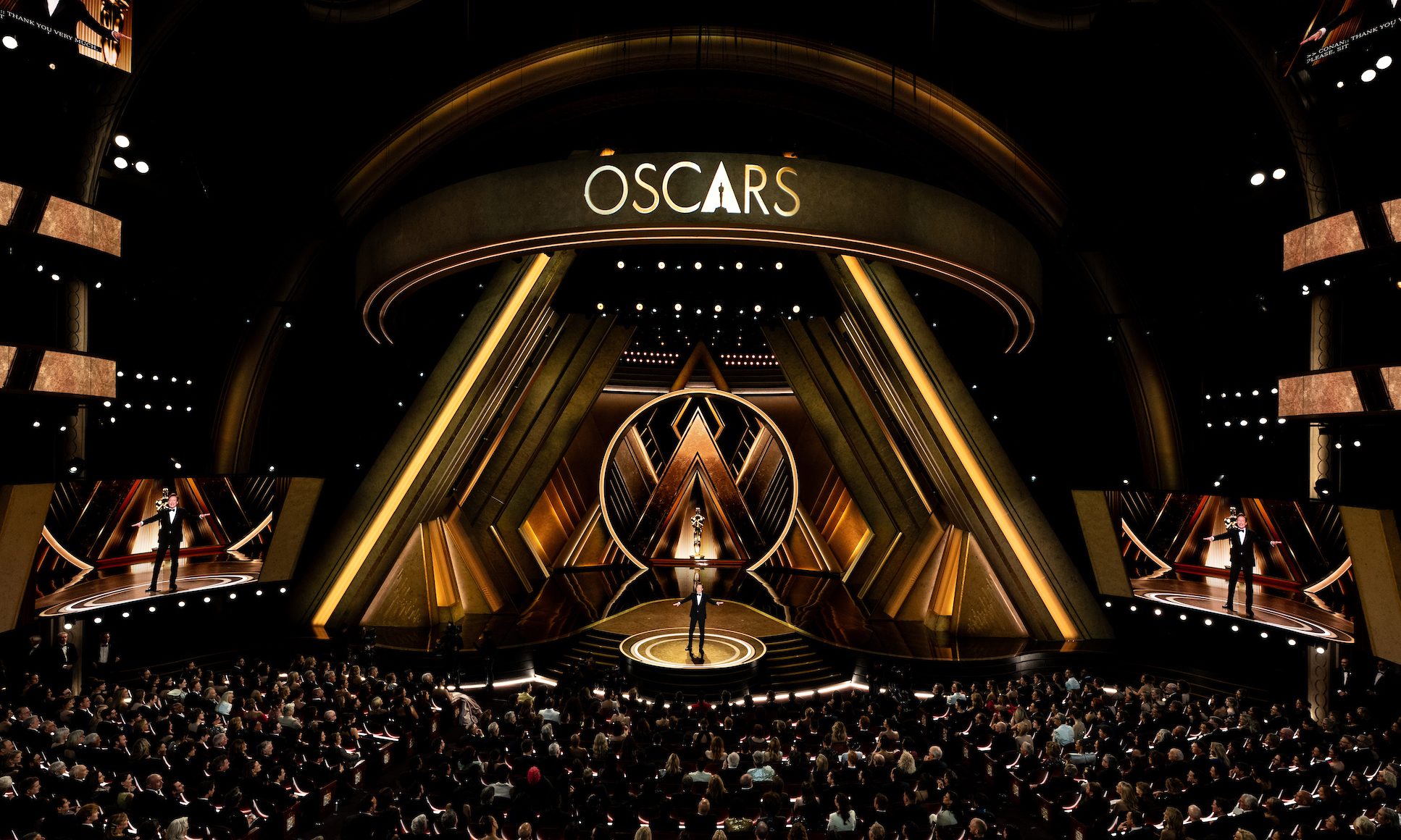
The Academy of Motion Picture Arts and Sciences has finally spoken clearly: AI cannot win Oscars for acting or writing. In its updated 99th Academy Awards rulebook, the organization explicitly states that only human contributions will be considered for the most prestigious creative categories. This decision marks a pivotal moment in the ongoing debate about artificial intelligence in Hollywood.

Human Performance Takes Center Stage

Under the new guidelines, only performances “demonstrably performed by humans with their consent” are eligible for acting awards. This means that any AI-generated or synthetic performance, no matter how realistic, cannot receive an Oscar. The rule requires that roles be credited in the film’s official billing, ensuring that the human actor behind the role is recognized.

Furthermore, the Academy has drawn a firm line in writing categories. To qualify for Best Original Screenplay or Best Adapted Screenplay, a film must have an explicitly credited human writer. The rulebook emphasizes that the screenplay must be “human-authored,” effectively shutting the door on scripts generated entirely by AI systems.

What About AI-Assisted Films?

It is important to note that the Academy has not banned the use of AI tools in filmmaking. Generative AI and other digital technologies can still be used during production, from de-aging actors to generating visual effects. However, their presence alone does not influence a film’s chances of nomination or winning.

Instead, voters will evaluate the degree of human authorship when assessing a film. If questions arise about how AI was used, the Academy reserves the right to request additional details from filmmakers. This approach balances technological innovation with the preservation of human creativity.

Why This Decision Matters for Hollywood

The clarification comes at a time when AI is becoming increasingly common in the creative industries. From script generation to performance enhancement, AI tools are reshaping how films are made. However, the Academy’s decision establishes a clear boundary: awards should celebrate human achievement, not machine output.

This move also addresses heated debates around authorship and originality. By setting these rules now, the Academy is attempting to maintain the integrity of its awards while still allowing room for innovation. As one industry insider noted, “The Oscars are about human storytelling, and that isn’t changing anytime soon.”

Impact on Filmmakers and Studios

For filmmakers, the message is straightforward: AI can be a tool, but not a credited creator. Productions that rely heavily on AI for writing or performance may face challenges in qualifying for certain categories unless human involvement remains central. This could shape how studios approach AI in future projects, encouraging a focus on human collaboration rather than automation.

Looking ahead, these rules could evolve as technology advances. The Academy may revisit its guidelines, but for now, the Oscars remain firmly focused on celebrating human creativity. Learn more about AI in film production and how it affects your next project.

What This Means for the Future of Cinema

Ultimately, the Academy’s decision reinforces a core principle: the Oscars honor human artistry. While AI can assist in filmmaking, it cannot replace the emotional depth, nuance, and originality that come from human performers and writers. This is a win for those who believe that storytelling is fundamentally a human endeavor.

As the industry adapts to new technological possibilities, the line between tool and creator will continue to blur. However, the Academy has made its position clear. For now, AI cannot win Oscars, and that is unlikely to change anytime soon. Check the latest Oscar eligibility rules for more details on qualifying your film.

In summary, the Academy’s rules send a strong signal: human creativity remains at the heart of cinema. Whether you are a filmmaker, a writer, or a fan, this decision reaffirms the value of authentic human expression in an increasingly digital world.

Continue Reading
Click to comment

Leave a Reply

Your email address will not be published. Required fields are marked *

Artificial Intelligence

Databricks wanted $1 billion. Investors offered $15 billion. Here’s what happened next.

Published

on

Databricks raises $5B

The leak that changed everything

It started with a single news article. Not a product launch, not a customer win — just a report from The Information that Databricks was raising money. That was enough to set off a chain reaction CEO Ali Ghodsi never anticipated.

“We wanted to raise $1 billion, but then The Information printed this article saying that Databricks is doing a big fundraise,” Ghodsi told TechCrunch. “We were heads down with our conference, and we were not actually at all focused on fundraising.”

The timing couldn’t have been worse. Databricks was in the middle of its annual user conference in June, and Ghodsi’s phone wouldn’t stop buzzing. “My phone blew up. It was like the worst timing for us because we were busy with our conference,” he recalled.

But here’s the thing about having too many investors pounding on your door — it’s a pretty good problem to have. What started as a modest $1 billion target quickly snowballed into something far bigger. “The interest level was just insane. Just from this select group of investors that we looked at, there was $15 billion of interest,” Ghodsi said.

From $1 billion to $5 billion: how the round grew

When you’ve got that much demand, telling longtime backers they can’t get in is a quick way to burn bridges. So Databricks made a pragmatic call: issue more stock. In July, the company announced it had closed a new round at a $188 billion valuation, though it kept the exact amount under wraps at the time.

On Thursday, the full picture emerged. Databricks raised $5 billion at a valuation that ticked up to a clean $190 billion. The round was led by Coatue, with participation from Blackstone, MGX, T. Rowe Price accounts, and newcomer Sixth Street Growth — the firm founded by former Goldman Sachs chief investment officer Alan Waxman. All told, about two dozen VCs got a piece of the deal.

Why investors were so eager

The answer is simple: Databricks looks like a sure bet. Ghodsi says the company has hit $7 billion in annualized run-rate revenue, growing at 80% and already cash-flow positive. Its core cloud data warehouse product alone generates $1.5 billion of that run-rate and is still expanding at 100% year-over-year.

Then there’s the AI angle. Lakebase, the company’s database for AI agents launched in June 2025, has already reached a $100 million revenue run-rate. And Genie, its AI chatbot for business analysis, is — in Ghodsi’s words — “insanely popular.”

Why raise more when the business is thriving?

That’s the obvious question. Databricks had already pulled in $20 billion over the past 20 months. But AI doesn’t come cheap.

“AI research is very expensive,” Ghodsi said, noting the company employs a 100-person AI research team. Databricks also has multi-billion dollar cloud commitments with all three major hyperscalers — AWS, Azure, and Google Cloud.

On top of that, Databricks is on an acquisition spree. This week it snapped up Electric, the company behind the lightweight Postgres database PGlite. In June it bought AI cybersecurity firm Panther, and in March it acquired two more startups. “We do a lot of M&A,” Ghodsi said simply.

The new math of mega-rounds

There was a time when a $1 billion raise was considered massive — a headline-grabbing feat that took months of courting investors. In today’s AI gold rush, that number barely moves the needle. Startups are walking out of the gate with billion-dollar seed rounds.

Databricks’ private fundraising has become something of a running joke in Silicon Valley. When the company announced this round last month, observers quipped online that it had raised so many times it was running out of letters of the alphabet to name the rounds.

What’s next for Databricks?

Ghodsi told CNBC he still wants to take the company public eventually. With this many investors on the cap table, all of whom will want an exit at some point, he doesn’t have much choice.

But for now, the focus is on investing in AI — and doing it out of the public eye. Given the expenses involved, staying private a while longer makes sense. And when you can command $15 billion in instant interest on your own terms, why rush?

For more on how AI companies are reshaping fundraising, check out our analysis of AI startup funding trends and the latest on Databricks competitors in the data lakehouse space.

Continue Reading

Artificial Intelligence

Anti-surveillance clothing is getting cheaper, but don’t expect an invisibility cloak

Published

on

anti-surveillance clothing

Privacy fashion moves from art school to the street

Anti-surveillance clothing is starting to look less like an art-school experiment and more like something you could actually wear outside. Shirts designed to confuse facial recognition systems now cost about as much as ordinary streetwear. But buying one won’t make you disappear.

Designers are using face-like prints, unusual cuts and infrared lights to interfere with computer vision, according to The Guardian. These techniques target specific weaknesses, so their success depends on what happens to be watching you.

How can clothing confuse a camera?

Adversarial clothing takes advantage of the shortcuts software uses to identify people and objects. Urban Privacy‘s Faception designs scatter fake faces across the fabric, giving an algorithm more visual noise to process.

Cap_able, meanwhile, uses knitted patterns created with AI. The company says versions of the YOLO object-detection system have mistaken its designs for animals or small figures instead of identifying the wearer as a person. It’s an amusing result, but fooling one model doesn’t guarantee the same trick will work elsewhere.

Infrared tricks for night vision

Urban Privacy’s experimental Urban Ghost coat tries a different approach. Infrared LEDs around its hood are intended to overwhelm compatible night-vision cameras. Regular cameras and other surveillance systems may remain completely unimpressed.

How affordable is privacy fashion?

Urban Privacy lists Faception Reloaded T-shirts from €35, sweatshirts from €59 and hoodies from €65. At those prices, anti-surveillance clothing isn’t reserved for wealthy privacy enthusiasts or gallery mannequins.

Cap_able remains considerably more expensive. Its knitted crop tops start at €560, while a hoodie costs €620. That puts the collection firmly in wearable-art territory, but the cheaper Urban Privacy garments show how quickly the idea is filtering down. You can now test an adversarial pattern without making your bank account unrecognizable too.

Why shouldn’t you trust it completely?

Controlled testing against one object-detection model can’t prove a garment will defeat facial recognition in public. Lighting and camera position can alter the result, while newer software may learn to ignore patterns that once caused trouble. Researcher Jennifer Bell also told The Guardian that these products haven’t undergone independent real-world testing.

That makes adversarial clothing more convincing as protest than protection. Wearing one makes a clear statement about surveillance and may inconvenience certain systems along the way. Just don’t treat a patterned hoodie as an anonymity switch. Until these garments face broader independent testing, assume the camera can still see you.

If you’re curious about the broader world of privacy tech, you might also want to read about how to block facial recognition on your phone or the best privacy-focused browsers for everyday use. They won’t hide your face, but they’ll give you more control over your digital footprint.

Continue Reading

Artificial Intelligence

Google’s Gemini is about to let you fine-tune its voice. Here’s what’s coming

Published

on

Gemini voice customization

Google is handing you the mixing board for Gemini’s voice

For months, Google has been quietly pushing Gemini to sound less like a robot reading a script and more like, well, a person. The next step? Letting you dial in exactly how that person talks.

Fresh code pulled from the latest Google app beta (version 17.41.12) points to a new Gemini voice customization panel. Instead of picking from a handful of preset personalities, you’d get four separate sliders: Energy, Formality, Warmth, and Speed. Each one runs from Low to High (or Slow to Fast for speed).

That’s a meaningful departure from the current setup, where your choices are essentially limited to the voices Google cooked up for you.

What the new controls actually do

The feature hasn’t been announced yet, so we’re working from what’s visible in the code. Android Authority’s APK Insights team dug into the strings and found a dedicated “Customize” section tucked inside Gemini’s voice settings.

Here’s the breakdown of what you’d be able to adjust:

  • Energy: Low, Medium, High
  • Formality: Low, Medium, High
  • Warmth: Low, Medium, High
  • Speed: Slow, Normal, Fast

These aren’t meant to replace the existing voices. Rather, they’d layer on top of them. So you could pick a voice you like and then tweak its delivery to match your mood or use case — say, a brisk, formal tone for work queries and a slower, warmer one for casual chats.

The settings are expected to carry across both Gemini Live and the standard chat interface, which means you won’t have to reconfigure things depending on where you’re talking.

Why this matters after the Google I/O refresh

This discovery lands right after Google overhauled the voice picker following I/O. The old carousel interface is gone, replaced with a cleaner list. Two new voices — Flare and Glow — joined the lineup, bumping out Nova and Lyra.

The current roster now stands at ten voices: Ursa, Vega, Pegasus, Dipper, Eclipse, Capella, Orbit, Orion, Flare, and Glow.

Interesting detail: Google also stripped away the personality labels that used to describe each voice, things like “Calm” or “Bright.” Now you’re left to judge purely by ear. That move makes more sense in hindsight — if users are about to get granular controls, the preset descriptions become less relevant.

The interface is getting a facelift too

Alongside the voice changes, the update refreshes Gemini’s icons — slimmer, more modern takes on the microphone, camera, gallery, file upload, video, screen sharing, and Gemini Live buttons. These visual tweaks are rolling out via a server-side update alongside Gemini version 1.0.913571982.

Google isn’t the only one tuning voices

This push toward personalization fits a broader trend. At Google I/O, the company said regional dialects are on the roadmap for Gemini. Voice customization slots neatly into that effort to make AI feel less generic.

Apple is heading the same direction. Apple‘s iOS 27 gives Siri AI similar controls — Pace and Expressivity — and those preferences extend across Maps and Safari.

The subtext here is clear: the AI race isn’t just about what assistants can do anymore. It’s about how they sound while doing it. Tone, warmth, and cadence are becoming competitive battlegrounds.

What to expect next

None of this is official yet. Code in a beta doesn’t guarantee a public rollout, and Google could tweak the feature before it ships. But the trajectory is obvious.

If this lands as expected, you’ll soon be able to shape Gemini’s voice to fit your ear — not the other way around. For anyone who’s ever winced at a too-chipper assistant or struggled to follow a machine-gun-fast response, that’s a genuinely useful upgrade.

Keep an eye on the Google app beta updates in the coming weeks. And if you’re curious about where Gemini Live is headed, our Gemini Live features guide covers what’s already available. For more on the broader shift, check out how Siri’s new voice controls compare.

Continue Reading

Trending