Connect with us

Artificial Intelligence

Your ChatGPT history is a personality test you didn’t know you were taking

Published

on

Your ChatGPT history is a personality test you didn’t know you were taking

Every time you ask ChatGPT to draft an email, vent about a relationship problem, or look up symptoms, you might be handing over more than just a query. Researchers at ETH Zurich have trained an AI model to predict personality traits directly from real ChatGPT conversation logs, and it was scarily good at recognizing personality traits. This breakthrough raises serious questions about privacy, data ethics, and how companies might use your digital footprint.

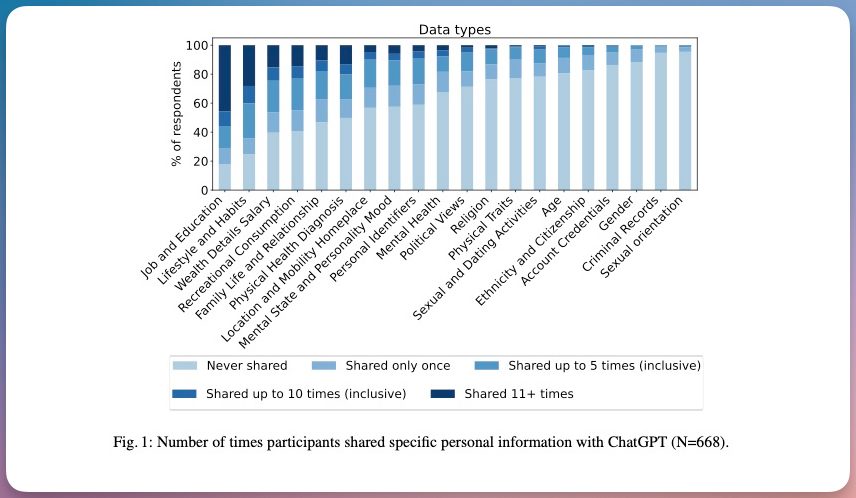
As reported by TechXplore, the study collected 62,090 real conversations from 668 ChatGPT users. Participants also completed a standard personality test, giving the researchers a baseline to measure against. The AI was then trained to classify each user as low, medium, or high across the five traits: openness, conscientiousness, extraversion, agreeableness, and neuroticism. The fine-tuned model beat random chance across all five traits, with extraversion being the easiest to predict, achieving up to 44% higher accuracy than guessing.

Does it matter what you talk about with ChatGPT?

Absolutely. The study found that chats involving mental health topics made extraversion particularly easy to infer. Discussions about religion were strongly linked to conscientiousness inference, and conversations about mental state and mood made openness more predictable. Even seemingly casual conversations contained enough signal to be useful. The researchers also found that the more you use ChatGPT, the easier you become to profile.

This means that your everyday questions—from asking for cooking recipes to complaining about work—are not as neutral as they seem. Each exchange adds a small piece to a larger puzzle that AI can assemble into a detailed personality portrait. Given how much data we share with ChatGPT, it matters a lot whether it can easily discern our personality traits.

Why does ChatGPT personality prediction matter beyond the research lab?

The researchers are clear about the implications. Service providers already have access to all of this data, and with over 800 million monthly ChatGPT users as of January 2026, the scale of potential profiling is enormous. A personality profile built from your chat history could be used for targeted advertising, personalized persuasion, or in worst-case scenarios, large-scale influence campaigns.

Recently, ChatGPT has started integrating ads. With the data it has on hands for us, think how easily it can format the ads to manipulate our thinking. For instance, if the AI knows you are high in neuroticism, it might show you ads for anxiety relief products or financial planning services that prey on your fears. Similarly, an extraverted user might see ads for social events or networking tools.

How accurate is the personality profiling?

The study’s accuracy is impressive but not flawless. Extraversion was the easiest trait to predict, achieving up to 44% higher accuracy than random guessing. However, other traits like openness and agreeableness were more challenging. Still, as AI models improve, so will their ability to read us. The researchers note that even a modest improvement in prediction accuracy can have significant real-world consequences when applied to hundreds of millions of users.

What can you do to protect your privacy?

For now, it is worth remembering that your AI chatbot is not a diary. At least not a private one. You can also take a proactive approach and delete your ChatGPT history regularly to remove your personal chats from its memory. This simple habit can significantly reduce the amount of data available for profiling.

Additionally, consider reviewing your privacy settings on all AI platforms. Many services allow you to opt out of data collection for training purposes. You might also want to avoid sharing highly sensitive personal information—like mental health struggles or financial details—in conversations with chatbots. If you need advice on such topics, consult a human professional instead.

Building on this, it’s wise to treat every chatbot interaction as potentially public. Think before you type: would you be comfortable if this conversation appeared on a billboard? If not, it’s probably best not to share it with an AI.

The bigger picture: AI and the future of targeted advertising

This research highlights a growing trend: the convergence of AI and psychology for commercial gain. Companies like Google, Meta, and OpenAI are sitting on vast troves of conversational data. With the right algorithms, they can turn that data into detailed psychological profiles for hyper-targeted advertising.

However, there are also ethical implications. If AI can predict your personality from chat logs, it could be used to manipulate your decisions—from what you buy to how you vote. Regulators are beginning to take notice, but the technology is moving faster than the law. As a result, individual vigilance is currently the best defense.

In conclusion, your ChatGPT history is more than a log of queries—it’s a window into your personality. While the technology is fascinating, it also demands caution. Stay informed, protect your data, and remember: in the digital age, your words have power beyond what you imagine.

Continue Reading
Click to comment

Leave a Reply

Your email address will not be published. Required fields are marked *

Artificial Intelligence

A Jazz Label Covered an AI-Generated Hit to Make a Point the Music Industry Has Been Avoiding

Published

on

A Jazz Label Covered an AI-Generated Hit to Make a Point the Music Industry Has Been Avoiding

In 2026, an AI music label called Enlly Blue released a track titled “Through My Soul” that amassed over 11 million YouTube views and millions of streams. The catch? There is no human behind the artist. Enlly Blue is a completely fabricated persona with six full albums, all generated by artificial intelligence. This is the unsettling reality of the modern music landscape, where algorithms now dominate the charts.

However, one composer decided to take a stand. Adrian Younge, co-founder of the Los Angeles-based Jazz Is Dead label, heard “Through My Soul” and immediately sensed something was wrong. He told Fast Company that the track felt “constructed rather than performed,” as if its influences were stitched together by a machine. Instead of ignoring it, he did something bold.

The Human Response: Recording a Live Cover

Younge recruited his Midnight Hour band and vocalist Loren Oden to record a fully human version of the AI-generated song. He instructed the musicians to play big, be bold, and breathe life into the composition. They performed it live at the Lodge Room in Los Angeles, and something clicked. As Younge explained, “A song written by a machine and performed by a machine has no soul, but with real musicians behind it, it finally meant something.” He liked the result so much that he added the cover to his touring setlist.

This move was not just a creative experiment. It became the centerpiece of a larger initiative called Played by Humans, created in collaboration with ad agency TBWAChiatDay LA. The campaign aims to give human-made music its own verified label, similar to how explicit content is flagged. Artists and labels can upload their tracks to a tool that scans for AI audio fingerprints. Tracks that pass receive a certifiable stamp for public display.

Why the Music Industry Needs an AI Music Label

The numbers behind this campaign are staggering. According to Deezer, 44% of all music uploaded to streaming platforms daily is now AI-generated. What is more alarming is that 97% of listeners cannot tell the difference between human and machine-made music. This creates a massive transparency problem for the industry.

Played by Humans has already scanned over 1.6 million tracks. The tool is not anti-AI; it simply analyzes the music itself, because the creators believe listeners deserve to know exactly what they are consuming. Meanwhile, Sony has developed technology that can identify original songs hidden inside AI-generated music, helping to sniff out plagiarism and protect human artists.

How Streaming Platforms Are Responding

The music industry’s reaction to this AI surge has been contradictory. In April, Spotify launched a “Verified by Spotify” badge to help listeners identify human artists. But just a month later, Spotify struck a deal with Universal Music Group that allows Premium subscribers to create AI-generated covers and remixes of real songs—for an extra fee. So on one hand, Spotify is trying to help you spot human music. On the other hand, it is building a paid tool to generate more AI music using human artists’ work. Spotify claims that participating artists will collect royalties on anything made from their work.

This dual approach has sparked debate. Some argue that platforms are capitalizing on the very problem they claim to solve. Others see it as a necessary evolution. But one thing is clear: the line between human and machine creativity is blurring faster than ever.

What Played by Humans Means for Artists

For independent musicians and small labels, the AI music label certification offers a way to stand out. In a sea of algorithm-generated tracks, a “Played by Humans” badge signals authenticity. It tells listeners that every note was performed by a real person, with all the imperfections and emotion that entails.

Adrian Younge’s cover of “Through My Soul” proves that human interpretation can transform machine-made material into something meaningful. The campaign is a reminder that technology should serve art, not replace it. As Younge put it, the song finally had soul when real musicians played it.

To learn more about how technology is reshaping music creation, check out our guide on AI music tools for producers. For artists looking to protect their work, explore copyright tips for AI-generated music.

The Future of Music Authenticity

As AI continues to evolve, the demand for transparency will only grow. The Played by Humans campaign is a step toward a future where listeners can make informed choices about what they hear. Whether streaming platforms will fully embrace this labeling system remains to be seen. But one thing is certain: the conversation about authenticity in music is far from over.

Continue Reading

Artificial Intelligence

WWDC 2026: iOS 27, Siri AI, and Apple Intelligence Upgrades — Everything You Need to Know

Published

on

WWDC 2026: iOS 27, Siri AI, and Apple Intelligence Upgrades — Everything You Need to Know

Apple’s Worldwide Developers Conference (WWDC) 2026 was anything but ordinary. This year, the event carried extra weight — not only because it marked Tim Cook’s final keynote as CEO, but also because Apple had a point to prove. After months of missed deadlines and mounting skepticism about its AI capabilities, the company stepped up to the stage on June 8, 2026, with a clear mission: reclaim its position in the artificial intelligence race. And by all accounts, it succeeded.

From a completely rebuilt Siri powered by Apple Foundation Models and Google Gemini to a sweeping set of Apple Intelligence upgrades, the announcements spanned six operating systems. Here’s a comprehensive breakdown of everything Apple revealed during the WWDC 2026 keynote.

iOS 27: A Snow Leopard-Style Refinement

As early rumors suggested, iOS 27 is designed as a foundational update — think Snow Leopard for the iPhone. Rather than introducing a radical visual overhaul, Apple focused on fixing the underlying machinery to deliver a smoother, faster experience.

Performance Boosts Across the Board

Users can expect up to 30% faster app launches and 70% quicker photo loading times after shooting. Perhaps the most welcome improvement is an 80% speed boost for AirDrop transfers. Even older iPhones that support iOS 27 will feel more responsive, thanks to a rebuilt CPU scheduler that optimizes performance on legacy hardware.

Liquid Glass Transparency Slider

Addressing legibility complaints about the Liquid Glass design, Apple introduced a new transparency slider. This lets users adjust the opacity from ultra-clear to fully tinted. App icons have been sharpened with additional refraction layers, and toolbars and sidebars within apps now have a cleaner, more uniform appearance.

Safari, Search, Health, and More

Safari now includes topic-based tab organization and a built-in Notify Me feature for product restocks and price drops. System-wide Search has been rebuilt from the ground up, featuring a new index that loads on update for faster, more reliable results across Mail, Photos, and other apps. Mail itself gets a ranking system that surfaces more relevant messages.

Apple Maps gains an AI-powered Flyover that displays cities in a three-dimensional birds-eye view with detailed, labeled landmarks. The Passwords app now autonomously navigates to vulnerable sites and upgrades weak passwords. The Health app adds perimenopause and menopause support for Cycle Tracking, with notifications for any deviations. Photos introduces a new slideshow maker and three AI-powered editing tools: Spatial Reframing, Extend, and an upgraded Clean Up.

One feature that might have flown under the radar is the new Shortcuts creator. Instead of learning how to build automations, you can simply describe a Shortcut in plain language, and iOS 27 will generate it for you. iCloud Shared Albums now support full-resolution sharing with Windows and Android users, while CarPlay gets video app support. A custom EQ for AirPods finally arrives, and the AirPods Pro 3 gain GymKit heart rate syncing through the iPhone.

Child safety and parental controls also received a major update, including Ask to Browse, Communication Safety enhancements, and a Declared Age Range API — all designed to protect younger users.

iOS 27 Compatibility and Release Timeline

iOS 27 doesn’t drop any older iPhones, including all models in the iPhone 11 lineup. However, Apple Intelligence still requires an iPhone 15 Pro or newer, and the most advanced on-device AI features need the A19 Pro chipset. The developer beta is live now, with a public beta arriving in July and a stable release expected in mid-September 2026.

Siri AI: A New Era for Apple’s Assistant

The old Siri was reliable for basic tasks like setting alarms or answering general knowledge questions. But as competitors like Google Gemini, ChatGPT, and Perplexity raised the bar, Siri started to feel left behind. Apple’s new Siri AI changes that completely.

Built on Apple’s Foundation Models and Google Gemini technology, the assistant now operates at the operating system level. It can access your Messages, Mail, Photos, and on-screen content in real-time without switching apps. During WWDC demos, Siri surfaced specific photos with filtered faces, built multi-stop navigation routes by identifying a beach arch from an on-screen photo, and pulled up information a contact mentioned in a week-old message.

Siri AI can also write, edit, and proofread emails, messages, or notes — similar to Writing Tools. More impressively, it can match the tone of a conversation, drafting messages to your manager differently than those to friends or family. A new dedicated Siri app stores your conversation history and syncs it across all devices.

Siri AI launches in English this fall as an opt-in beta across all operating systems except tvOS 27. It remains free with a daily usage allowance, but features relying on server processing — including image generation — will have daily limits. iCloud+ users get higher limits. Notably, Siri AI won’t be available in the EU on iOS and iPadOS, and it won’t be available in China at all.

Apple Intelligence Upgrades Beyond Siri

While Siri AI grabbed headlines, Apple Intelligence upgrades extend far beyond the assistant. Image Playground now generates photorealistic images alongside existing illustration styles and supports more aspect ratios and platforms. Genmoji has been overhauled, creating faster and more expressive emojis.

For the first time, Visual Intelligence expands beyond the iPhone. iPads get it integrated into the screenshot experience, while Macs gain a dedicated keyboard shortcut for selecting anything on the screen and sending it directly to Siri. Vision Pro users can now look at anything around them and ask Siri about it. The iPhone Camera gets a new Siri mode that lets you tap the shutter button and ask questions about what you’re looking at — Apple’s answer to Google’s Gemini Live.

Messages now offers one-tap suggestions based on conversation context, allowing tasks like creating a reminder or setting a note without leaving the thread. Call Context generates AI summaries of incoming calls before you decide to answer. Accessibility features also benefit: VoiceOver offers richer image descriptions, and Voice Control lets you describe interface elements without memorizing exact names.

iPadOS 27: Polished Productivity

iPadOS 26 made the iPad feel like a real computer, but iPadOS 27 polishes the experience. The Menu Bar can now be placed permanently on the screen, saving time when switching between apps. iPhone apps can be resized when running on iPad, closing an awkward display gap for apps without proper iPad versions. External drive performance gets a significant boost, with file browsing and transfers up to 5x faster than iPadOS 26.

Siri AI is available on compatible iPads with full capability, along with Safari’s topic-based tab organization and all the new Apple Intelligence features. However, iPadOS 27 drops support for several older models, including the first-generation 11-inch iPad Pro, third-generation 12.9-inch iPad Pro, iPad Air 3, iPad mini 5, and iPad 8. The developer beta is available now, with a public beta in July and a stable release in fall 2026.

macOS Golden Gate: The Intel Era Ends

This year’s Mac release is called macOS Golden Gate — a symbolic threshold that closes the door on Intel-based Macs for good. The design gets colored sidebar icons, edge-to-edge sidebars, and a uniform toolbar across apps, along with the Liquid Glass transparency slider.

Siri AI is integrated directly into Spotlight search, enabling rich, multi-turn conversations from anywhere on the desktop. Visual Intelligence comes to Mac for the first time, and control-clicking an image or file now surfaces Siri as a native option in the context menu. The most advanced on-device AI features require an M3 Mac or later with at least 12GB of unified memory. Intel-based Macs are not supported at all.

watchOS 27, visionOS 27, and tvOS 27

watchOS 27 makes the biggest compatibility cut in the device’s history. Series 9, Series 10, Ultra 2, and SE 3 users are in the clear, but only Series 10 or newer devices get Apple Intelligence features. Supported models get a redesigned Dynamic App Grid, a new tap gesture for the Smart Stack, and a unified Find My app. Siri AI arrives on the smartwatch with full conversational capability.

visionOS 27 introduces Siri AI as a floating 3D orb that you can place anywhere in your virtual environment. Visual Intelligence now works on physical objects in your surroundings, and panoramas can be converted into full spatial environments. Wi-Fi connections are up to 3x faster on the headset. Notably, Siri AI is available on Vision Pro in the EU.

tvOS 27 received the shortest presentation, but still includes a redesigned Podcasts app, smoother app launch animations, Hi-Res Lossless audio in Apple Music, faster AirPlay connectivity, and on-device HomeKit Secure Video processing. The update requires Apple TV 4K second generation or later, dropping the 2015 Apple TV HD and 2017 first-generation 4K model.

Tim Cook’s Farewell and Apple’s AI Redemption

WWDC 2026 was Tim Cook’s final keynote as Apple’s CEO. He will step down on August 31, 2026, after 14 years at the helm, handing the company to John Ternus on September 1. In many ways, it was a fitting farewell: Apple entered the event as a side runner in the AI race and left as a leader in on-device intelligence. For more on the future of Apple’s ecosystem, check out our complete Apple ecosystem guide and best iPhone models for 2026.

Continue Reading

Artificial Intelligence

Google’s NotebookLM Gets a Major Upgrade: Code Writing, Spreadsheet Building, and Smarter Research

Published

on

Google’s NotebookLM Gets a Major Upgrade: Code Writing, Spreadsheet Building, and Smarter Research

Google has supercharged its AI-powered notebook tool, NotebookLM, with a suite of powerful new capabilities. The most striking addition? NotebookLM now writes code and builds spreadsheets, moving far beyond simple note-taking. This update transforms the platform into a full-fledged research and productivity assistant for complex projects.

According to an official announcement from Google, the upgrade introduces a new reasoning engine, expanded file output options, and a more flexible research workflow. Users can now open a notebook with just a rough idea, and the tool will automatically find relevant sources from the web. This means less time curating materials and more time analyzing them.

NotebookLM Writes Code and Spreadsheets with Gemini 3.5

The core of this transformation is the shift to Gemini 3.5 and Google’s Antigravity coding model. This new engine brings more accurate responses and greater transparency into how the AI reaches its conclusions. Each notebook now runs on a dedicated cloud computer that can write and execute code, backed by over 100 curated software skills.

Google’s internal benchmarks show a 65%-plus win rate over the previous version across five core evaluation categories. Particularly impressive gains appear in large document analysis (69.9%) and web research (78.2%). Consequently, users can expect more reliable outputs when dealing with lengthy reports or complex online data.

Building on this, the tool can now generate a wide range of downloadable files directly from the studio panel. These include PDFs, Word documents, Excel spreadsheets, PowerPoint decks, CSVs, data visualizations, and images. Users can provide detailed formatting instructions before generation and request edits afterward. This makes it easy to turn a research notebook into a polished presentation or a data-heavy spreadsheet.

How the New Research Workflow Simplifies Projects

One of the most practical changes is the lowered barrier to entry. Previously, users needed a fully formed source library to get started. Now, you can open a notebook with a rough idea or question, and NotebookLM will use Google Search to surface relevant sources and help build out the repository.

Importantly, users retain full control over which sources are added. All sources remain clearly attributed throughout the notebook, ensuring transparency and accuracy. This feature is a boon for journalists, students, and researchers who often begin with a vague topic and need to discover credible sources quickly.

For a deeper dive into how AI tools are reshaping productivity, check out our guide on top AI productivity tools for 2026. Additionally, you might find our article on Google Workspace AI features useful for understanding the broader ecosystem.

Availability and Pricing for the NotebookLM Upgrade

The updates are live now for Google AI Ultra subscribers and Workspace business customers on AI Ultra Access and AI Expanded Access plans. Broader availability is planned for later this year. If you’re a power user of Google’s ecosystem, this upgrade is immediately accessible.

However, casual users will need to wait for the public rollout. Google hasn’t specified a date, but the company’s track record suggests a gradual expansion over the coming months. In the meantime, existing NotebookLM features remain available for all users.

To maximize your use of the new features, start by experimenting with the code-writing capability. Ask NotebookLM to generate a Python script for data analysis or an Excel formula for a complex calculation. You can also test the source-finding feature by entering a broad research question and letting the tool build your library.

As AI assistants become more integrated into daily workflows, tools like NotebookLM are setting a new standard. The ability to write code, build spreadsheets, and find sources automatically—all within one notebook—represents a significant leap forward. This is not just an incremental update; it’s a redefinition of what an AI notebook can do.

Continue Reading

Trending