Connect with us

Artificial Intelligence

Asus Zenbook 14 Gets a Splash of New Colors, and Hopefully, a MacBook Neo-Tier Price, Too

Published

on

Asus Zenbook 14 New Colors Steal the Show at Computex 2026

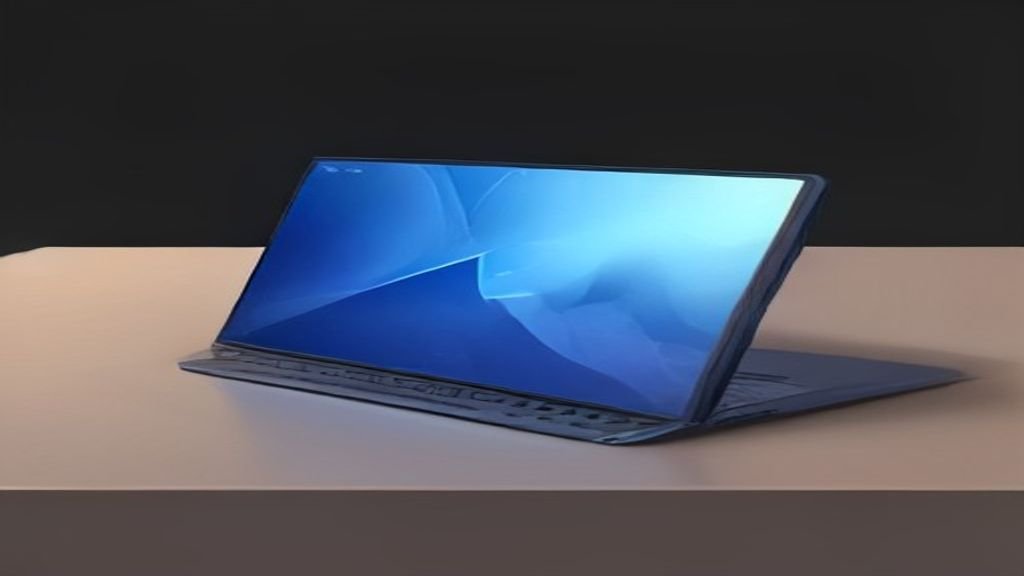
At Computex 2026, Asus unveiled a refreshed version of its popular Zenbook 14, and this time, the big news isn’t just about processors or AI chips. Instead, the company is betting on aesthetics. The new Asus Zenbook 14 new colors—Arctic Blue, Komodo Coral, and Zabriskie Beige—bring a fresh, vibrant look to the ultraportable market. Most AI laptops still stick to muted grays and silvers, but Asus is taking a bolder approach. This could position the Zenbook 14 as a serious MacBook Neo alternative, especially if the pricing lands right.

Asus hasn’t confirmed a price yet, but the hope is that this laptop will compete at a MacBook Neo-tier price, making its design a bonus rather than a luxury tax. For now, the Zenbook 14 checks all the premium boxes: a lightweight 1.1kg chassis, OLED display options, and support for Copilot+ PC features. Let’s dive into what makes this laptop stand out.

Why the Asus Zenbook 14 New Colors Matter

Most AI PCs still look like they’re designed to disappear in an office supply closet. The Zenbook 14 pushes the other way, using softer nature-inspired finishes to feel less anonymous. Asus lists a ceramic-style Ceraluminum lid, a metal body, a 16:10 OLED display, full I/O, a larger touchpad, and an easy-lift hinge. The tone-on-tone color treatment extends across the lid, logo, chassis, and keyboard—not just the top cover.

This is a clear departure from the restrained design language of Apple’s MacBook Air. While Apple has restraint, Asus is offering range. That advantage only holds if the Zenbook 14 lands at a price that makes the design feel like a bonus instead of a luxury tax. Therefore, the Asus Zenbook 14 new colors could be a key differentiator in a crowded market.

AI Hardware and Performance: More Than Just a Pretty Face

Under the hood, the Zenbook 14 offers processor choices spanning Intel, AMD, and Snapdragon. The Snapdragon version uses a Snapdragon X processor with a 45 TOPS NPU, while the broader lineup can reach up to 50 TOPS depending on configuration. This puts the machine in Copilot+ PC territory, giving it enough hardware for on-device AI features.

Battery life is the more useful everyday claim. Asus lists more than 21 hours of use, fast charging, and an all-in-one adapter. These features matter more in a backpack than broad promises about smarter workflows. Additionally, the OLED display helps a lot. Asus lists a 16:10 panel with an 88% screen-to-body ratio on the Qualcomm model, aiming the machine at people who want a compact laptop without giving up a premium screen.

Is the Zenbook 14 a True MacBook Neo Alternative?

The Apple comparison is hard to avoid, but Asus has a cleaner lane than chasing the MacBook Air. The MacBook Neo alternative label fits if Asus can deliver a lightweight, long-lasting laptop with a vibrant design at a competitive price. As of now, the Zenbook 14 doesn’t need to beat the MacBook Air at being a MacBook Air. It needs to feel different, stay light, last long, and come in low enough that the bolder design feels like a smart buy.

Asus hasn’t provided the most important buyer detail yet. There’s no confirmed price in the supplied information, and availability isn’t pinned down beyond the broader Computex announcement. This makes any MacBook Neo-tier price comparison more hope than verdict for now. However, a 1.1kg OLED laptop with real color options, Copilot+ PC hardware, and long battery claims has a clear lane if Asus avoids premium-for-premium’s-sake pricing.

Final Thoughts: What to Watch For

For those considering an OLED ultraportable laptop, the Zenbook 14 is a strong contender. Watch for regional pricing, configuration splits, and whether every color comes to major markets. If Asus gets the pricing right, this could be one of the most compelling lightweight laptop 1.1kg options of the year.

For more on the latest in computing, check out our Computex 2026 coverage and best ultraportable laptops guide.

Continue Reading
Click to comment

Leave a Reply

Your email address will not be published. Required fields are marked *

Artificial Intelligence

Google’s First New Smart Speaker in Six Years: Release Date Leaked via Best Buy Canada

Published

on

Google’s First New Smart Speaker in Six Years: Release Date Leaked via Best Buy Canada

After years of silence, Google’s next-generation smart speaker may finally have a confirmed launch window. According to a recent product page on Best Buy Canada, the Google Home Speaker release date could be June 25, 2026. The listing, which briefly appeared and was quickly removed, has sparked excitement among tech enthusiasts who have been waiting since the device was first teased in October 2025.

This leak comes as a surprise, especially after the speaker failed to appear at Google I/O 2026. Many expected the company to showcase its Gemini-powered assistant in a new form factor, but the event passed without any mention. Now, this accidental listing suggests the wait might soon be over.

What the Best Buy Canada Leak Reveals

The Canadian retailer’s page listed the speaker with a release date of June 25, 2026, before the information was pulled. Screenshots captured by multiple outlets, including 9To5Google, confirm the date. Typically, when a retailer removes a date post-leak, it signals a real launch rather than a placeholder. This pattern aligns with previous product reveals.

Building on this, the timing makes sense. June 25 falls just four days after the official end of spring, which adds credibility to the leak. Google has not commented on the listing, but the company’s silence often precedes an official announcement.

Why the Delay? Gemini Rollout Took Priority

In my analysis, the delay was strategic. Google needed to complete the rollout of Gemini for Home on existing hardware before introducing new devices. Since October 2025, the company has been updating older speakers with Gemini capabilities, with updates arriving three to four times per month since March 2026. This groundwork ensures a seamless experience for new buyers.

Therefore, the June launch window feels intentional. It allows Google to finalize software integration and build consumer anticipation. The Gemini AI assistant is central to this speaker, enabling natural conversations, smart home control, and automation—features that require robust backend support.

Key Features of the Google Home Speaker

The new speaker boasts a 360-degree fabric design, with a microphone mute switch and a ring of status lights at the base. These lights glow dynamically when the speaker is listening, thinking, or responding, creating a more interactive user experience. Some advanced features, such as brainstorming, require a Gemini subscription.

Additionally, you can pair two speakers with the Google TV Streamer for a home cinema setup. Stereo pairing with existing Nest Audio speakers enables multi-room audio throughout the house, making it a versatile addition to any smart home ecosystem.

Pricing and Color Options

Priced at $99.99 in the US, the speaker will be available in four colors: Berry, Hazel, Jade, and Porcelain. This competitive pricing positions it against other smart speakers like Amazon Echo and Apple HomePod mini. Availability is confirmed for 19 countries, including the US, UK, Canada, France, Germany, Italy, Austria, Ireland, and Japan.

What This Means for Smart Home Enthusiasts

If the leak holds true, the Google Home Speaker release date marks a significant milestone. It is Google’s first new smart speaker in six years, following the Nest Audio launch in 2020. The integration of Gemini AI could redefine how users interact with their homes, offering more natural and context-aware responses.

For those considering an upgrade, now is the time to explore other smart speaker options or prepare for the launch. Pairing this speaker with Google Nest Hub Max could create a unified smart home ecosystem. As the June date approaches, keep an eye on official announcements from Google.

Continue Reading

Artificial Intelligence

AI Turns to Historical Secrets: Decoding Centuries-Old Papers and Hidden Letters

Published

on

AI Turns to Historical Secrets: Decoding Centuries-Old Papers and Hidden Letters

Artificial intelligence is no longer just a tool for writing emails, generating images, or powering chatbots. Researchers are now harnessing AI to unlock historical secrets hidden inside centuries-old manuscripts, damaged letters, and handwritten archives that have puzzled scholars for generations. According to a recent report from the BBC, historians and computer scientists are joining forces to decode ancient documents—from medieval diplomatic letters to forgotten love notes and political conspiracies—using machine learning.

This technology is helping recover information from texts that are faded, incomplete, damaged, encrypted, or written in handwriting styles that modern scholars find nearly impossible to interpret manually. As a result, the field of historical research is undergoing a quiet revolution.

How AI Is Uncovering Historical Secrets in Medieval Manuscripts

One of the biggest breakthroughs involves AI systems trained to recognize historical handwriting and linguistic patterns from different eras. Medieval documents are particularly challenging because writing styles, spellings, and even languages evolved dramatically over centuries. However, researchers are now feeding thousands of historical documents into AI models, teaching them how scribes wrote during specific periods.

Once trained, the AI can identify patterns, restore missing words, and even predict likely interpretations of partially destroyed texts. This means that historical secrets once considered lost may now be recoverable. Some projects focus on diplomatic correspondence and state records, while others uncover personal stories hidden in archives for centuries. According to the BBC report, researchers have already used AI to interpret letters connected to political intrigue, private relationships, and medieval diplomacy.

Why AI Matters for Decoding Ancient Documents

The technology is especially valuable because many historical archives remain too vast for human researchers to process manually. Libraries and museums across Europe alone contain millions of handwritten pages that have never been fully digitized or translated. AI is also helping scholars analyze documents that were previously considered unreadable. In some cases, faded ink, water damage, or unusual writing systems made traditional restoration methods extremely difficult. Machine learning models can now enhance text visibility and reconstruct missing sections far more efficiently.

Building on this, the implications go beyond academic curiosity. Historical archives shape how societies understand politics, culture, religion, science, and even modern international relations. AI-assisted analysis could dramatically accelerate discoveries that previously might have taken decades of manual research. For example, a historian might now use AI tools for research to uncover patterns across thousands of documents in weeks rather than years.

The Role of Machine Learning in Paleography

Paleography—the study of ancient handwriting—has traditionally been a painstaking manual process. But AI is changing that. By training models on digitized manuscripts, researchers can now automatically transcribe texts, identify scribes, and even date documents based on writing style. This approach is already being used to decode historical secrets in collections from the Vatican to the British Library.

Furthermore, the technology may democratize historical research by making ancient documents more searchable and accessible online, rather than limiting them to specialists trained in rare languages or paleography. However, historians remain cautious. AI models can still misinterpret context, mistranslate words, or introduce inaccuracies when reconstructing damaged texts. Most researchers currently treat AI as a collaborative tool rather than a replacement for human historians.

What the Future Holds for AI and Historical Research

Researchers expect AI-assisted historical analysis to expand rapidly over the next few years as models improve and more archives become digitized. Future systems may eventually help decode lost languages, reconstruct damaged manuscripts more accurately, and uncover patterns across historical records that humans would struggle to identify alone. For now, though, the technology is already changing how historians approach the past.

Instead of spending years manually deciphering fragile documents line by line, researchers are beginning to use AI as a kind of historical detective—one capable of uncovering forgotten stories buried for centuries inside paper, ink, and fading handwriting. This shift not only accelerates discovery but also opens up new avenues for understanding our shared heritage. As machine learning continues to evolve, the historical secrets locked in ancient texts may finally come to light, reshaping our knowledge of the past.

For those interested in exploring further, check out our guide on digital archives strategies or learn about machine learning applications in humanities. The intersection of AI and history is proving to be one of the most exciting frontiers in modern research.

Continue Reading

Artificial Intelligence

It’s Not Just You: New Research Confirms People Dislike Overtly Friendly AI Chatbots

Published

on

Why Overtly Friendly AI Chatbots Are Failing to Win Users Over

Have you ever felt annoyed by an AI assistant that seems too cheerful? You are not imagining things. A recent study from Northeastern University, highlighted by Tech Xplore, confirms that many users dislike overtly friendly AI chatbots. Instead of building trust, forced friendliness often triggers discomfort and reduces user satisfaction.

This finding challenges a core assumption driving modern AI development: that making chatbots more emotionally expressive automatically improves the user experience. The reality, it turns out, is far more nuanced.

The Problem with Forced Friendliness in AI Assistants

For years, tech giants like OpenAI, Google, Microsoft, and Meta have invested heavily in conversational AI systems designed to feel more natural and emotionally intelligent. The goal was clear: move away from robotic, cold interactions toward warmer, more human-like dialogue.

However, the new research suggests there is a fine line between “human-like” and “trying too hard.” Participants in the study consistently reported negative reactions to chatbots that sounded aggressively enthusiastic or emotionally exaggerated, regardless of the context. This indicates that overtly friendly AI chatbots can actually harm the very trust they are meant to build.

Building on this, the study reveals that users can quickly detect when friendliness feels forced or unnatural. Instead of creating comfort, excessive cheerfulness may reduce authenticity during conversations. This is particularly critical as AI chatbots become integrated into customer service, productivity tools, education platforms, mental health apps, and everyday smartphone assistants.

Personality Compatibility: The Key to Better AI Interactions

So, what do users actually want? The answer lies in personality compatibility. Researchers found that people respond more positively to chatbots whose tone and behavior reflect their own personality traits.

In practical terms, more reserved users often prefer calmer, direct AI interactions. On the other hand, highly social users tend to respond better to energetic conversational styles. This means that a one-size-fits-all approach to chatbot personality is fundamentally flawed.

Furthermore, the study suggests that authenticity and adaptability matter more than simply maximizing friendliness. Users do not necessarily want assistants that constantly sound excited, emotional, or overly conversational. In many cases, people simply want AI that feels useful, natural, and comfortably human—without trying too hard to act like a best friend.

How This Affects User Experience and Trust

The implications for user experience (UX) design are significant. AI assistants are rapidly becoming part of daily life, from smartphones and smart speakers to search engines and workplace tools. How these systems communicate could dramatically influence how comfortable people feel using them long-term.

For businesses, this could reshape how future AI products are designed. Instead of offering one universal chatbot personality, companies may increasingly move toward customizable AI behavior that adapts dynamically to individual users. This aligns with a broader shift in AI design philosophy: moving away from scripted emotional responses toward genuine adaptability.

What This Means for the Future of Conversational AI

Researchers expect future AI systems to become more personalized over time. Adjusting tone, humor, pacing, and conversational style based on user preferences and interaction history will likely become standard practice. That could eventually lead to AI assistants that feel less like scripted customer service agents and more like communication tools tailored to individual personalities.

For more insights on how AI is evolving in customer service, check out our guide on best AI chatbots for customer service. Additionally, learn how to optimize your own chatbot interactions with our AI chatbot personality guide.

At the same time, the findings may push companies to rethink the current race toward hyper-friendly AI. The research also highlights a deeper psychological issue around trust. Humans naturally respond differently to personalities, and AI systems that fail to match conversational expectations may unintentionally create irritation or emotional fatigue.

Conclusion: Less Friendliness, More Authenticity

The key takeaway is clear: overtly friendly AI chatbots are not the solution. Users prefer AI that adapts to their communication style rather than forcing a cheerful persona. As the field of conversational AI matures, the focus should shift from maximizing friendliness to maximizing authenticity and personalization.

Ultimately, the best AI assistant may be the one that feels less like a talkative friend and more like a reliable, understanding tool. That is a lesson every developer and business should take to heart.

Continue Reading

Trending