Connect with us

Artificial Intelligence

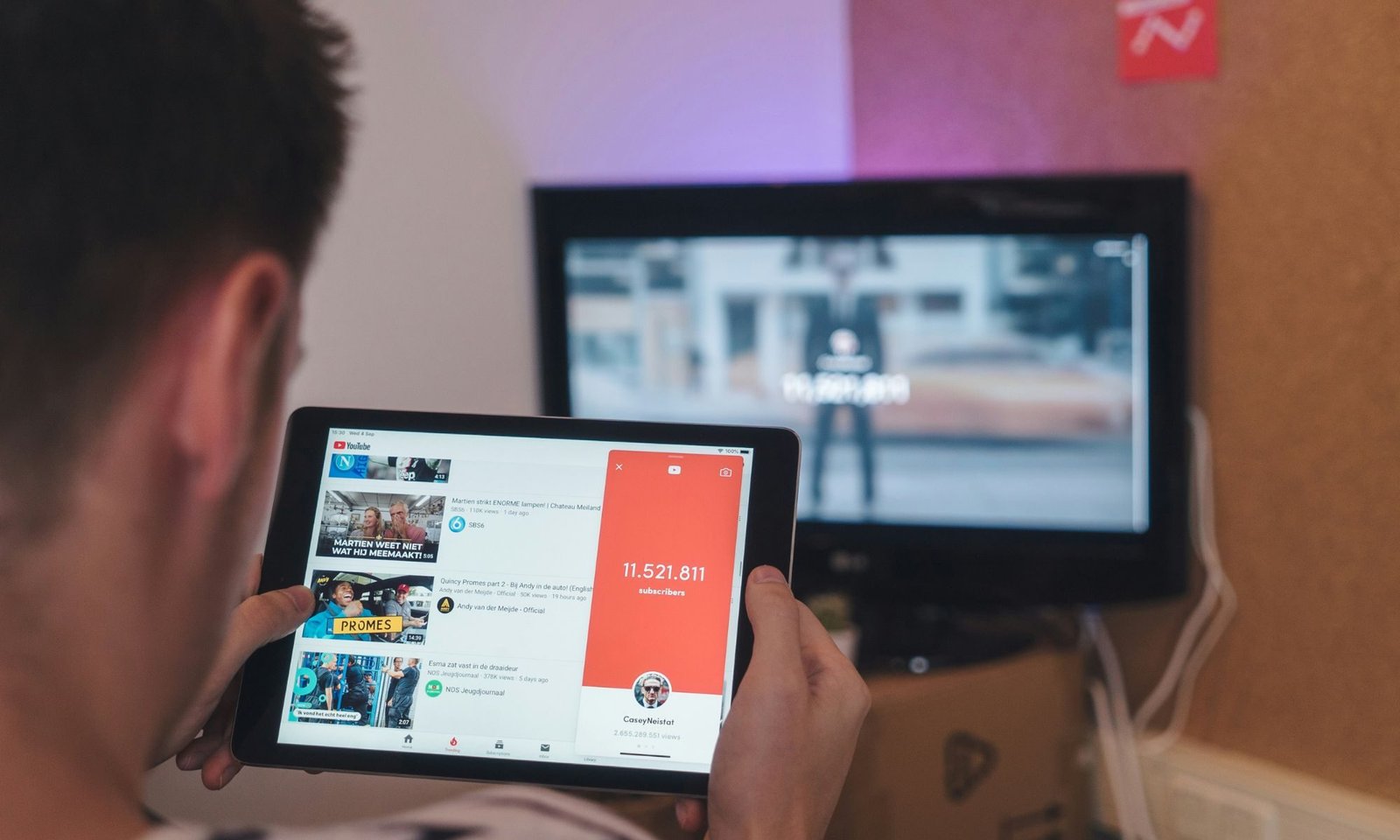
YouTube’s New Monetization Rules Take Aim at AI Slop and Clickbait Traps

Published

on

AI slop

YouTube’s New Monetization Rules: The End of AI Slop?

YouTube just drew a line in the sand. On July 16, the platform’s updated monetization guidelines take effect, and they’re squarely aimed at the flood of low-quality, AI-generated content that’s been clogging feeds. This isn’t a ban on artificial intelligence — it’s a targeted strike against what the platform calls “inauthentic content” that exists purely to farm views and ad revenue.

For creators who’ve built channels on genuine effort, this is good news. For those churning out cookie-cutter videos with minimal human input, the party might be over.

What Exactly Changes for Creators?

YouTube’s revised policy under the YouTube Partner Program (YPP) identifies three specific categories of content that will no longer qualify for ad revenue. Let’s break them down:

  • Generic and repetitive material: Videos created quickly using AI, CGI, or templates with little variation between uploads. Think unoriginal tutorial rehashes that add nothing new to the conversation.
  • Emotionally manipulative or “off-putting” content: This includes staged animal rescue videos designed to pull at heartstrings — regardless of whether AI was involved. If it’s chasing clicks through manipulation, it’s out.
  • AI-generated personas: Synthetic representations of real people giving advice on high-stakes topics like finance, healthcare, or legal matters. These are now demonetized entirely.

The third point is significant. AI avatars dispensing financial or medical advice have become increasingly common, and YouTube is clearly worried about the potential harm. It’s a bold move that prioritizes viewer safety over ad dollars.

Why YouTube Is Cleaning House

This isn’t just about user experience — it’s about money. YouTube is locked in a fierce battle with traditional TV networks and rival streaming platforms for premium advertising budgets. The platform recently surpassed Netflix in global average daily views, a staggering milestone. But with that scale comes responsibility.

If feeds fill up with what many call “AI slop,” advertisers get spooked. Premium brands don’t want their products appearing next to low-effort, automated garbage. YouTube’s Chief of Trust and Safety, Matt Halprin, told Creator Insider that while AI tools can empower genuine creators, the platform draws a strict line against automated channels producing videos that lack narrative arc and human creativity.

It’s a balancing act. YouTube wants to embrace AI innovation without letting the platform devolve into a wasteland of spam.

What This Means for Everyday Viewers

For the average user, the changes should be noticeable almost immediately. Fewer emotionally manipulative clickbait traps. A drop in generic spam. And, crucially, greater protection against untrustworthy, AI-generated medical or financial advice presented by synthetic avatars.

That last part matters more than most people realize. We’ve all seen those videos with a lifeless digital face explaining cryptocurrency or miracle cures. They’re designed to look authoritative while being completely hollow. YouTube’s new rules effectively pull the financial rug out from under them.

How Creators Should Adapt

If you’re a creator who relies heavily on AI tools, this doesn’t mean you need to abandon them entirely. The key is to use AI as a supplement, not a replacement, for genuine creativity. Here are a few practical steps:

  • Add real human insight: Inject your own perspective, experiences, and personality into every video.
  • Vary your content: Avoid the template trap. Each video should feel distinct, not like a carbon copy of the last.
  • Be transparent: If you use AI tools, disclose it. Audiences appreciate honesty, and it builds trust.
  • Focus on quality over quantity: One well-crafted video beats ten rushed, automated ones every time.

The creators who thrive post-July 16 will be those who treat AI as a collaborator, not a crutch. The ones who don’t adapt risk losing monetization entirely.

This policy shift also ties into broader conversations about AI content detection and the role of synthetic media across the web. YouTube’s enforcement will serve as a major test case for how modern platforms balance technological innovation against digital spam.

At the end of the day, this is a clear signal: YouTube wants human creativity at the forefront. AI can help, but it can’t replace the narrative arc, the emotional resonance, or the originality that makes content worth watching. For viewers tired of scrolling past endless AI slop, that’s a win.

For creators, the message is simple — adapt or get left behind. The era of low-effort, automated content farming on YouTube is officially coming to an end.

Continue Reading
Click to comment

Leave a Reply

Your email address will not be published. Required fields are marked *

Artificial Intelligence

“LOL, I found out I can access the [network storage]”: The wildest claims in Apple’s lawsuit against OpenAI

Published

on

Apple OpenAI lawsuit

Apple’s trade secrets lawsuit against OpenAI reads less like a legal filing and more like a spy thriller script. The 41-page complaint, filed Friday, doesn’t just accuse OpenAI of poaching talent. It paints a picture of a coordinated operation to siphon confidential Apple information — complete with smug text messages, stolen hardware parts, and an internal cheat sheet for dodging security.

Some of the allegations are so brazen they almost sound made up. One message allegedly sent by a former Apple engineer to a colleague still inside the company reads: “LOL, I found out I can access the [network storage], so funny.” The reply? “I’m ready.”

Here are the most striking claims in the Apple OpenAI lawsuit.

“Rotten to the core”: Apple takes a swipe at OpenAI’s hardware ambitions

Apple doesn’t mince words when describing the foundation of OpenAI’s rumored hardware business. You know, the one that might eventually challenge the iPhone.

“OpenAI’s nascent hardware business now rests on the shakiest of foundations, rotten to its core by its illegal reliance on misappropriated trade secrets,” the complaint states.

Leave it to Apple to work a rotting fruit metaphor into a legal document. The message is clear: whatever OpenAI is building, Apple claims it was built on stolen blueprints.

“This is the tip of the iceberg”

Apple isn’t just documenting what it knows. It’s signaling that this is only the beginning. The company argues that once the discovery process gets rolling — when emails, texts, and internal documents are handed over — the real scale of the alleged misconduct will come into focus.

“Discovery will expose that the misappropriation has been occurring on a scale many times greater than the several instances described below,” the complaint reads.

Translation: Apple thinks it’s caught a few fish, but it believes there’s a whole school down there.

The “LOL” message that started it all

One of the most damning pieces of evidence involves Chang Liu, a former senior systems electrical engineer at Apple who later joined OpenAI. According to the complaint, Liu exploited an authentication bug to access Apple’s systems — from the Apple-issued work computer of Yu-Ting “Alyssa” Peng, a colleague who allegedly acted as a conduit between the two companies.

Liu’s message to Peng — “LOL, I found out I can access the [network storage], so funny” — is included in the filing almost verbatim. Peng allegedly replied, “I’m ready.” She later left to join OpenAI herself but isn’t named as a defendant.

Then there’s the follow-up. Within hours of leaving Apple, Liu allegedly texted: “I still have another computer.” That message was discovered on Peng’s work laptop. Apple claims Liu planned to use that second machine to keep accessing confidential data after his departure.

“Didn’t even know we could take those from the office”

Some of the wildest allegations involve OpenAI’s hiring practices. Apple claims that OpenAI chief hardware officer Tang Yew Tan — who spent 24 years at Apple, most recently as VP of product design for iPhone and Apple Watch — directed job candidates still working at Apple to bring “actual parts” from Apple to their interviews.

The purpose? “Show and tell sessions.”

One candidate was reportedly surprised by the request, saying he didn’t even realize Apple parts could be taken out of the office. Apple also alleges candidates were told to bring “CAD/design artifacts” and “prototypes” to interviews.

That’s not a job interview. That’s a shopping list.

Avoiding the “dreaded walkout”

Apple’s complaint claims OpenAI went as far as coaching departing employees on how to evade Apple’s security procedures. The alleged method? An internal Apple document bearing a “Need to know” designation was circulated to new hires.

The document reportedly contained details on how to avoid the “dreaded walkout” — Apple’s practice of immediately removing employees from the premises when they give notice. By dodging that, employees could stay for the typical two-week notice period, giving them more time to access confidential information.

And if Apple asked departing employees to sign anything at their exit interview? OpenAI allegedly advised them not to sign — and to “let OpenAI know ‘asap.’”

Over 400 former Apple employees now work at OpenAI

The complaint also reveals a striking number: more than 400 former Apple employees now work at OpenAI. Apple uses that figure to underscore the scale of the problem.

“It is not surprising that certain OpenAI personnel have knowledge of Apple’s confidential and proprietary information, which they are obligated to keep confidential. But OpenAI has resorted to exploiting this confidential information,” the complaint states.

That’s a lot of people with a lot of institutional knowledge walking out the door.

The io connection: metal-finishing secrets and a $6.5 billion deal

Then there’s io, the hardware firm founded by former Apple employees — including Jony Ive — that OpenAI acquired last year in a deal valued at $6.5 billion. io is now a defendant in the lawsuit.

Apple alleges io used its proprietary industrial design techniques by misleading an Apple partner into believing it had permission to carry out a “confidential metal-finishing technique.” The complaint also claims OpenAI approached a supplier using confidential information about power and battery components — even using “internal terminology” to ask questions that “only Apple-insiders would know to ask.”

If you’re wondering whether this kind of behavior is normalized at OpenAI, Apple has an answer for that too. The company describes the alleged misconduct as “normalized and exemplified by leadership.”

“Apple is left with no choice”

Apple says it tried to resolve this quietly. The company claims it reached out to OpenAI back in February to raise concerns. OpenAI never responded.

So here we are.

OpenAI’s only public response so far came via a statement on X on Friday: “We have no interest in other companies’ trade secrets. We remain focused on building innovative technology that empowers people everywhere.”

Whether that holds up in court remains to be seen. But if even half of these allegations are proven, the Apple OpenAI lawsuit could become one of the most consequential trade secrets cases in tech history. For more on how companies protect their intellectual property, check out our breakdown of trade secret litigation trends and the growing tension between Big Tech hiring practices and non-compete agreements.

Continue Reading

Artificial Intelligence

This New AI Model Wants Self-Driving Cars to Think Before They Swerve

Published

on

self-driving cars

Why Self-Driving Cars Still Panic in Emergencies

Autonomous vehicles have mastered the mundane. Merging lanes, obeying lights, keeping a steady gap on the highway — all handled. But throw a ladder in the middle of the road, a pedestrian darting from between parked vans, or a first responder waving you down, and things get messy fast.

We’ve all seen the viral clips: a robotaxi freezing at a police scene, or swerving erratically when a tire blows. These systems were trained to mimic human driving, not to reason through chaos. That’s the gap a team at Seoul National University is trying to close with a new AI model called SafeDrive.

Their work just earned a spotlight as a highlight paper at CVPR 2026 — an honor given to only about 3% of submissions. For context, that’s the conference where the world’s top computer vision labs show off. Korea has never had an end-to-end autonomous driving paper land there before.

The Problem With “Mimic the Human” AI

Most end-to-end autonomous driving models work the same way: feed them thousands of hours of real driving footage, and they learn to imitate what a human would do. It’s effective in normal conditions. But when something unexpected happens, these systems often can’t explain why they chose a certain action.

That’s a nightmare for safety engineers. If a car swerves left and causes a crash, you need to know whether it was a sensor glitch, a misjudgment, or a flaw in the training data. With a black-box model, you’re guessing.

Professor Jun Won Choi, who leads the team at SNU’s Department of Electrical and Computer Engineering, wanted to change that. His team built something called Fine-grained Safety Reasoning.

Instead of picking a single path and committing, SafeDrive generates several possible trajectories. It then combines those options with what the car’s sensors are seeing — lidar, cameras, radar — and scores each one for safety. The car picks the highest-scoring path. Simple in theory, but it directly attacks the two biggest failures of current systems: safety and explainability.

Why SafeDrive Is a Big Deal for Korea

This isn’t just a technical win. It’s a geopolitical one.

The US and China have dominated the self-driving narrative — Waymo, Tesla, Baidu, and a dozen startups have soaked up the headlines. Korea, for all its strength in semiconductors and display tech, has been a quiet observer. This CVPR highlight changes that narrative.

It signals that Korean research isn’t just catching up; it’s producing ideas that the rest of the world wants to read about. And the government is paying attention.

From Lab to Real Roads

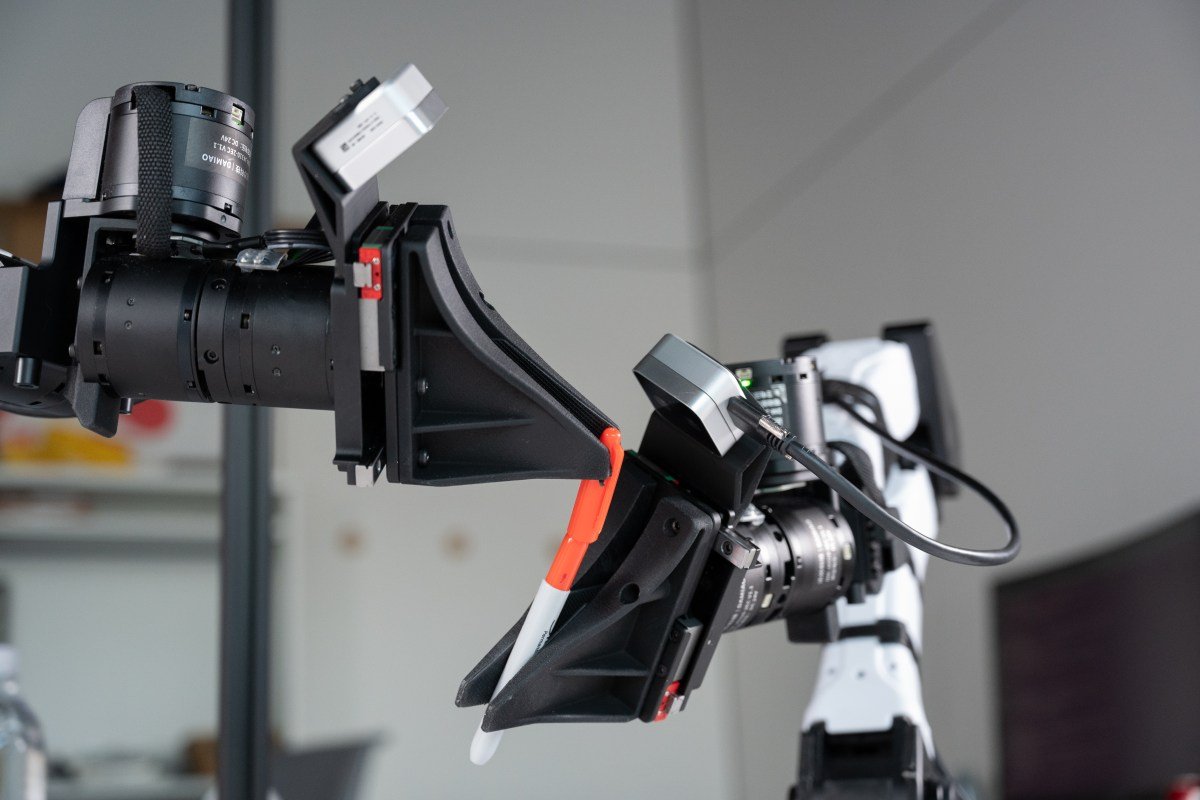
SafeDrive isn’t stuck in a research paper. It’s already been integrated into EAD, a reference model backed by Korea’s Ministry of Trade, Industry and Energy. Choi’s team is now working with domestic autonomous driving companies to test the model in actual vehicles.

The next steps are bigger datasets and more testing. Eventually, the team wants to push SafeDrive toward full commercialization, using data they collect themselves. That’s a long road — but for the first time, Korea has a serious player in the game.

What This Means for the Future of Autonomous Driving Safety

Let’s be clear: SafeDrive isn’t the final answer. No single model will make self-driving cars perfect. But the shift toward safety reasoning — where the car explicitly evaluates multiple options and can justify its choice — is a meaningful step.

Think about it this way: a human driver doesn’t just react. They anticipate, weigh options, and make judgment calls. If we want self-driving cars to handle the messy, unpredictable world, they need to do the same. SafeDrive is one of the first models to try this at scale.

For anyone following autonomous driving technology, this is a development worth watching. And for Korea, it’s proof that they’re no longer just building the chips — they’re building the brains.

Continue Reading

Artificial Intelligence

Satya Nadella just told companies using AI something they won’t like

Published

on

companies using AI

The warning no one expected from Microsoft’s CEO

Satya Nadella has never been one for dramatic pronouncements. The Microsoft CEO is known for his calm, almost clinical demeanor. So when he published a blog post on Sunday that reads like a warning shot at the very industry he’s helped build, people noticed.

His message to companies using AI is blunt: you’re paying twice. Once with money for tokens. And again with something far more precious—your proprietary knowledge.

“You essentially pay for intelligence twice, once with money, and again with something even more valuable: the proprietary knowledge you must reveal to make that intelligence useful,” Nadella writes. “The better you want the model to perform, the more of that knowledge you have to feed it!”

This isn’t a fringe concern. Venture capitalists like Jason Calacanis and Palantir CEO Alex Karp have been sounding similar alarms for months. But when the CEO of a company that has poured billions into OpenAI and Anthropic says it, the conversation shifts.

What Nadella means by “paying twice”

Here’s the core of his argument. When your company uses a proprietary AI model, you’re not just renting intelligence. You’re training it.

Every prompt your employees write. Every correction they make when the model gets something wrong. Every tool the agent touches. Nadella calls this “exhaust,” and he says it gets distilled into institutional know-how.

“Every correction is distilled into institutional know-how,” he writes. “This is the kind of knowledge a competitor could never buy.”

Think about that for a second. You’re teaching a model the nuances of your business—your pricing strategies, your customer pain points, your internal workflows. And the model maker gets to keep all of it. The concern is that labs like OpenAI and Anthropic could one day use that knowledge to compete against their own customers.

The distillation double standard

Nadella’s solution is as elegant as it is pointed. He argues that if AI companies get to scrape the entire internet to train their models, then enterprises should have the right to study those models in return.

“Distillation” is the practice of using a model’s outputs to train a cheaper, more efficient model. In February, Anthropic accused Chinese open source models of sending millions of prompts to Claude to improve their own systems. The company urged the U.S. government to crack down on export controls.

Nadella sees hypocrisy here. “While the great innovation that comes from model providers having fair use rights to train models on public data is needed, I find it ironic that the status quo is to then turn around and impose restrictive terms on distillation,” he writes.

You can’t have it both ways, in other words. If the world’s data is fair game for training, your model’s outputs should be fair game for learning.

What Nadella wants companies to do

His advice is exactly what you’d expect from the CEO of a giant cloud provider. He wants companies to:

  • Retain ownership of all data—prompts, feedback, everything
  • Build proprietary learning environments on the cloud (where your data likely already lives)
  • Create “orchestration layers” that let you switch between AI models easily

That last point is key. Instead of being locked into one provider, companies should be able to route requests across multiple models. Tools called AI “gateways” are already doing exactly this, and they’re growing fast.

Nadella never says the words “open source” in his post. But the subtext is unmistakable.

The on-prem shift is already happening

Here’s the thing: enterprises aren’t waiting for permission. Many of them are already moving to open source models installed on their own servers.

Idit Levine, CEO of Solo.io, which makes networking and security software for enterprise AI systems, says she’s seeing this shift play out in real time. Her customers start with proprietary models, then start asking questions.

“Can I take an open source model and run it on-prem? It will do almost 90% of what the big one’s doing. It will cost way less,” Levine told TechCrunch. “They understand that, and they can control it.”

Solo.io’s technology powers the Linux Foundation’s Agentgateway project. Its customers include T-Mobile, ADP, and SAP. Levine sees on-prem open source models as the next big wave in enterprise AI.

She’s not alone. Vercel, the web hosting platform that recently added AI model-switching tools, and OpenRouter, which helps developers route requests across AI models, are both seeing surges in traffic to open models. Last month, open models accounted for 29% of all traffic routed through Vercel’s gateway.

What this means for the future of enterprise AI

When the CEO of Microsoft—a company with deep financial ties to both OpenAI and Anthropic—openly urges companies using AI to be wary of proprietary models, something has shifted.

The economics are compelling. Open models are getting close to proprietary performance at a fraction of the cost. And the data ownership argument is getting harder to ignore. Why would you hand your competitive advantage to a model maker when you could keep it in-house?

Nadella’s closing line sums it up: “In consuming intelligence, you are creating intelligence. And what you create should belong to you.”

Whether you agree with him or not, the trend is clear. Companies are waking up to the hidden cost of proprietary AI. And they’re starting to look for alternatives.

For more on how to protect your data when working with AI, check out our guide on AI data ownership best practices. And if you’re evaluating model options, our breakdown of open source vs proprietary AI models can help you decide.

Continue Reading

Trending