Connect with us

Infosecurity

EU sues four member states over NIS2 cybersecurity law delays

Published

on

NIS2 cybersecurity law

Brussels turns up the heat on laggards

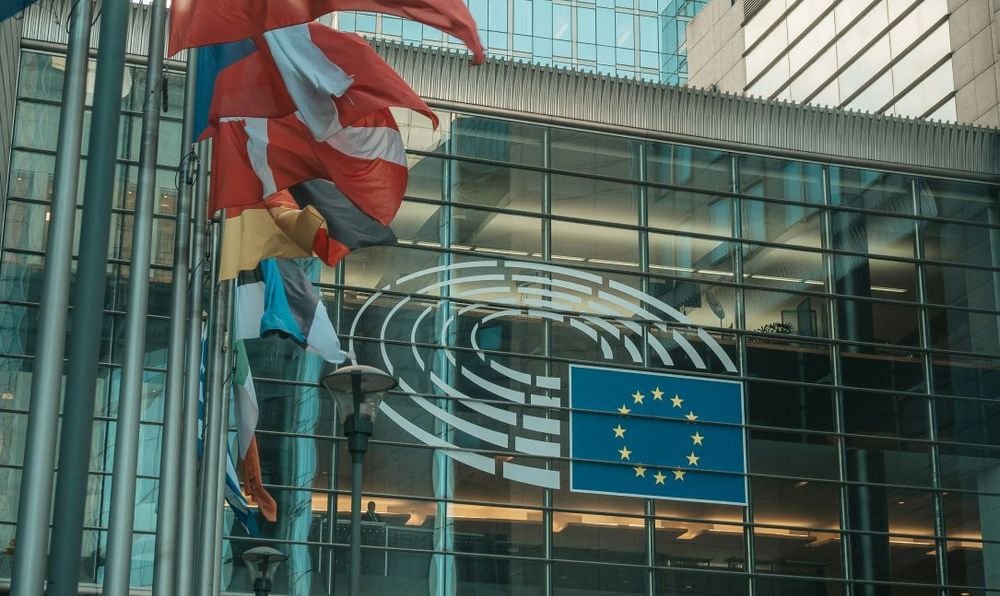
The European Commission has filed legal referrals at the EU’s top court against four member states for failing to implement the bloc’s flagship cybersecurity law covering critical infrastructure. Ireland, Spain, France and the Netherlands are more than 20 months late in transposing the NIS2 cybersecurity law, which sets minimum security standards for hospitals, energy networks, transport operators and public administrations.

The Commission has asked the Court of Justice of the European Union to impose a lump sum and ongoing daily financial penalties on all four countries until each formally notifies full transposition. The move, announced Wednesday, marks a rare escalation in the EU’s enforcement of digital rules.

Why NIS2 matters now

NIS2 is an update of the original Network and Information Security Directive of 2016, a law that covered fewer sectors and was applied unevenly across the bloc. The newer directive widened its scope to 18 critical sectors and added risk management and incident reporting requirements that were not included in the original directive.

Few member states met the original October 2024 deadline for transposing NIS2 into domestic legislation. As of January 2025, only six of the EU’s 27 member states had transposed the directive. The delays have left glaring gaps in the bloc’s cyber defenses.

European officials have cast the risk in increasingly stark terms. Speaking in Munich in February, the Commission’s technology lead, Henna Virkkunen, warned the European Union could no longer afford to be “naive” about adversaries’ ability to switch off critical infrastructure, saying that power grids, hospitals and financial systems were all increasingly exposed.

Fines: real teeth or paper tiger?

In practice, the fines being sought by the Commission are rarely paid. Member states in previous cases have generally adopted the required legislation while proceedings are under way, prompting the Commission to withdraw before the court makes a ruling.

That pattern could repeat here. Ireland said its National Cyber Security Bill, which will transpose NIS2 and place the country’s National Cyber Security Centre on a statutory footing, is close to finalization, with the minister responsible expecting to notify transposition by end of 2026. Spain, France and the Netherlands had not published comparable statements at the time of writing.

The threat landscape: incidents are climbing

The filing comes as ENISA, the EU’s cybersecurity agency, has warned of thousands of cybersecurity incidents affecting the bloc in the year ending June 2025. ENISA identified public administration as the most-targeted critical sector at 38% of incidents, followed by transport at 7.5%.

Those numbers explain the urgency. A single breach in a hospital network can disrupt patient care; a compromised energy grid can shut down entire regions. The NIS2 rules are designed to force member states to take basic precautions seriously.

What NIS2 actually requires

  • Risk management measures across 18 critical sectors
  • Mandatory incident reporting to national authorities
  • Supply chain security for ICT products and services
  • Board-level accountability for cyber risks

NIS2 also underpins a broader legislative program on cybersecurity. The EU’s Cyber Resilience Act, which imposes security requirements on connected products and whose vulnerability-reporting obligations begin to apply in 2027, relies on the national response-team network that NIS2 establishes.

What’s next for the directive

In January, the Commission proposed revising the EU’s Cybersecurity Act to strengthen ENISA and reduce risks in critical technology supply chains, including a provision that would see member states phase out designated high-risk suppliers such as Huawei and ZTE from critical infrastructure.

Separately, the Commission proposed targeted amendments to NIS2 to provide greater legal clarity and ease compliance for companies — issues which officials have said contributed to delays in transposing the updated directive. Those amendments could soften some of the more burdensome requirements, but they don’t change the core obligations.

For businesses operating across the EU, the message is clear: NIS2 isn’t going away. Even if the court cases drag on, the directive’s requirements will eventually apply everywhere. Companies that haven’t started mapping their compliance obligations should treat this as a wake-up call.

The Commission’s legal action is a signal that Brussels is losing patience. Whether the fines ever get paid is almost beside the point. The real pressure is political and reputational — and for the four countries named, the clock is ticking.

Continue Reading
Click to comment

Leave a Reply

Your email address will not be published. Required fields are marked *

Infosecurity

VMware vCenter Vulnerability Exploited Just Five Days After Patch Release

Published

on

vCenter flaw exploited

Critical vCenter Flaw Exploited Within Days of Disclosure

Attackers wasted no time. A critical VMware vCenter vulnerability was exploited just five days after Broadcom published its advisory. The campaign used an open-source reverse shell to keep access to compromised systems.

German digital forensics firm Quirso uncovered the activity during an incident response engagement. Its findings, released on August 10, point to a suspected advanced persistent threat (APT) actor. Quirso counted 361 victim IP addresses across 47 countries, though it cautioned that an IP address doesn’t always equal a single organization.

The vulnerability, tracked as CVE-2026-59310, is a critical directory traversal flaw in the vCenter Syslog server. It carries a CVSS score of 9.8. Broadcom said an unauthenticated attacker with network access to vCenter can exploit it to execute arbitrary code. That turns a service built to collect logs into a direct route into the operating system.

For more on VMware-related threats, see Play Ransomware Expands to Target VMware ESXi Environments.

Five Days From Advisory to Compromise

Broadcom released its advisory on July 29. At that point, it said it had not observed any exploitation. The advisory was revised on August 3 to include 8.0 U2f express patches.

Quirso’s team first noticed compromised systems contacting attacker infrastructure on August 3. The next day brought 151 more victim IPs. By August 5, roughly 95% of the total 361 had appeared. Germany, the United States, Turkey, Iran, and France accounted for 185 of them.

The correlation between disclosure and exploitation is striking. While the attacker may have had prior knowledge of the flaw, Quirso believes the advisory likely served as the campaign’s starting point.

Two Clocks to Manage

For persistence, the attackers deployed reverse_ssh, an open-source SSH-based reverse shell framework built for penetration testing. Because it dials outward rather than accepting inbound connections, it can bypass controls designed to block unsolicited inbound access. Quirso stressed that its presence alone does not prove compromise.

Jason Soroko, senior fellow at certificate lifecycle management provider Sectigo, said patching alone won’t resolve the incident. “There are therefore two clocks to manage,” he said. One for closing the vulnerability, and another for evicting anyone who entered before the patch was applied.

What to Check Right Now

  • Look for outbound SSH connections from vCenter servers to unknown IPs.
  • Review logs for unusual activity around August 3–5, 2026.
  • Check for the presence of reverse_ssh binaries or related processes.
  • Assume compromise if any indicators are found, and initiate incident response immediately.

Patch Availability and Workarounds

Broadcom has not published a workaround. Fixed vCenter releases are 9.1.0.0300, 9.0.2.0100, and 8.0 U3k or 8.0 U2f depending on the deployed branch. These address both critical flaws in the advisory: the exploited directory traversal and an authentication bypass in VMware Directory Service.

If you haven’t patched yet, do it now. The window between disclosure and exploitation is shrinking, and this campaign shows how quickly attackers move.

For more on securing your infrastructure, read about VMware vCenter vulnerability remediation steps and how to detect reverse shells in your environment.

Continue Reading

Infosecurity

Google Cloud Sets 2027 Deadline for First Post-Quantum Security Milestone

Published

on

post-quantum security roadmap

Google Cloud’s Three-Stage Quantum Migration Plan

Google Cloud has broken its post-quantum security roadmap into three distinct risk domains, each with its own deadline. The first major milestone—mitigating store-now-decrypt-later (SNDL) risk—is set for the end of 2027.

The roadmap, published on August 12, draws directly from Google’s internal quantum threat model. It’s a pragmatic approach that acknowledges the uneven pace of quantum readiness across different parts of the cloud stack.

What’s Already Shipped

Some pieces are already live. Google Cloud API endpoints, including google.com and *.googleapis.com, now support quantum-safe key exchange using the NIST-standardized ML-KEM in hybrid mode.

Application and proxy load balancers offer hybrid key exchange for TLS 1.3, initially opt-in so customers can validate the change without breaking existing applications. Cloud KMS has reached general availability for ML-KEM, ML-DSA, and SLH-DSA, and quantum-confidential ALTS—Google’s internal traffic protocol—completed in 2025.

Still on the horizon: Cloud VPN and Interconnect in 2026 and 2027, Private CA in 2027, and quantum-safe Cloud IAM and Cloud HSM in 2028.

The Certificate Problem

Certificates present a unique constraint. Post-quantum signatures are large enough to slow down certificate chain validation. Google’s answer is Merkle Tree Certificates.

Jason Soroko, senior fellow at certificate lifecycle management provider Sectigo, explains the approach replaces multiple large signatures with one compact inclusion proof, keeping overhead near current levels.

It also folds transparency logging into issuance itself. As Soroko puts it: “If a certificate is not in the tree, it simply does not exist.”

Customers Carry Part of the Load

Google is explicit that this isn’t a purely server-side fix. Customers must update client-side software to negotiate post-quantum handshakes and manage their own asymmetric key lifecycles.

Hardware is another variable. The company says some physical components may not be fully transitioned until after 2029, since the shift depends partly on natural equipment replacement cycles.

That timeline matters. In March, Google warned that a cryptographically relevant quantum computer could arrive as early as 2029.

What This Means for Your Organization

If you’re running workloads on Google Cloud, the practical takeaway is to start inventorying your cryptographic assets now. The SNDL risk is the most urgent—data encrypted today could be decrypted by a future quantum machine.

For a deeper look at how the broader industry is preparing, check out our analysis of how cybersecurity vendors are preparing for the post-quantum era. You might also want to review lessons from Singapore’s quantum future planning for a government perspective.

The key question isn’t whether quantum computers will arrive. It’s whether your data will still be safe when they do. Google’s roadmap gives you a clear window to act—2027 for SNDL, 2028 for signatures and key management.

Use that time wisely. The clock is already ticking.

Continue Reading

Infosecurity

One Exposed AWS Key. 1,500 UK Charities. A Breach That Shouldn’t Have Happened.

Published

on

AWS access key

The Breach That Started With a Build Artifact

It started with a single mistake buried in JavaScript. A valid AWS access key was left exposed in public build artifacts — and that was all an attacker needed to walk straight into the CRM systems of roughly 1,500 UK charities.

Beacon, the software provider behind the platform, confirmed the finding in an incident update on August 12. The company admitted the key was likely exposed during routine software development. In other words, this wasn’t a sophisticated nation-state operation. It was a preventable slip-up with outsized consequences.

Once the attacker had the credentials, they didn’t need to break through layers of defense. They simply logged in and downloaded everything: the entire CRM database, including attachment files. Beacon’s assessment is blunt — the full customer base of charitable organizations was impacted.

What Kind of Data Was Taken?

The affected charities operate in some of the most sensitive corners of the sector. Healthcare. Victim support. Rape and sexual abuse services. The data held by these groups isn’t just names and emails — it’s the lifeblood of trust between a charity and its supporters.

Specifically, the breach exposed supporters’ names, email addresses, telephone numbers, and donation records. That combination is a gift for social engineering attacks. Armed with donation history, a scammer can craft a convincing phishing email referencing a past gift. It’s chillingly easy.

There’s some relief, though. Beacon says the CRM system did not hold sensitive patient information, payment card details, or bank account numbers. That limits the damage — but it doesn’t erase it.

Encryption Didn’t Save the Day

Here’s the uncomfortable part: the data was encrypted at rest in AWS. It should have been safe. But because the attacker used valid credentials, AWS decrypted the data on download. So the encryption was effectively a non-factor.

This is a critical lesson for any organization storing data in the cloud. Encryption at rest is a baseline, not a silver bullet. If an attacker has legitimate keys, they get the data in readable form. No exceptions.

Beacon’s own analysis of AWS Cost & Usage reports shows the malicious activity began on July 27 at 01:20:16 UTC and lasted about one hour and 27 minutes. That timing aligns with a sharp spike in data downloads on July 27–28. The attack was quick, targeted, and over before most people even noticed.

Charities Cleared, But Scams Loom

Beacon’s charity customers have all been advised to report the breach to the UK’s Information Commissioner’s Office (ICO). One of the confirmed victims, The Survivor’s Trust, already has. In a statement on August 13, the charity said the ICO reviewed its case and concluded the charity holds no responsibility for the breach.

That’s a small comfort. The charity, which provides specialist rape and sexual abuse support services, has urged supporters to stay alert to potential scams in the coming weeks. Expect phishing emails referencing your donations, your support, your history with the cause. That’s the playbook.

Other charities have gone public with their own disclosures: Shrewsbury and Telford Hospital Charity, the British Deaf Association, and Yorkshire’s Brain Tumour Charity. They join Sheffield Hospital Charity, Priscilla Bacon Hospice Charity, the Clock Tower Sanctuary, and Victim Support in admitting supporter data was compromised.

What Beacon Did Next

Beacon says it has not detected any attempts by the attacker to maintain persistence in its environment. That’s the one piece of good news. The attacker took the data and left — no backdoors, no lingering access.

The company has reset all credentials for services and accounts integrated with AWS to prevent repeat unauthorized access. It’s also monitoring for any signs the stolen data has been published or misused. So far, nothing has surfaced.

But the damage is done. For 1,500 charities, the trust equation has shifted. Supporters who gave their personal details now have to wonder: who’s got my information, and what will they do with it?

The Cloud Security Lesson No One Wants to Learn

This incident is a textbook example of a cloud misconfiguration leading to a data breach in the charity sector. It’s not about sophisticated malware or zero-day exploits. It’s about a developer accidentally leaving a key in a public file.

If you’re responsible for AWS security best practices, take note: credential scanning should be part of your CI/CD pipeline. Secrets should never live in build artifacts. And access keys should be rotated regularly, with least-privilege policies enforced.

Beacon’s customers are now left to deal with the aftermath — notifying supporters, managing reputational fallout, and hoping the ICO doesn’t come knocking with fines. The charities themselves were cleared of responsibility, but that doesn’t help the person whose donation history is now in the hands of a stranger.

One exposed key. 1,500 organizations. Countless individuals. That’s the cost of a single oversight.

Continue Reading

Trending