Connect with us

Artificial Intelligence

iOS 27 just added a way to restore missing iPhone shortcuts — here’s how it works

Published

on

missing iPhone shortcuts

A quiet bug that’s been stealing your automations

If you’ve ever built a morning routine with Apple’s Shortcuts app, you know the sinking feeling when a custom workflow just… isn’t there. No warning. No error message. It’s gone.

For years, that’s been the reality for a subset of iPhone users. Automations vanish from the library but remain alive somewhere in iCloud — invisible, unreachable, and effectively lost unless you rebuild them from scratch. Apple never acknowledged the bug publicly. There was no fix. Until now.

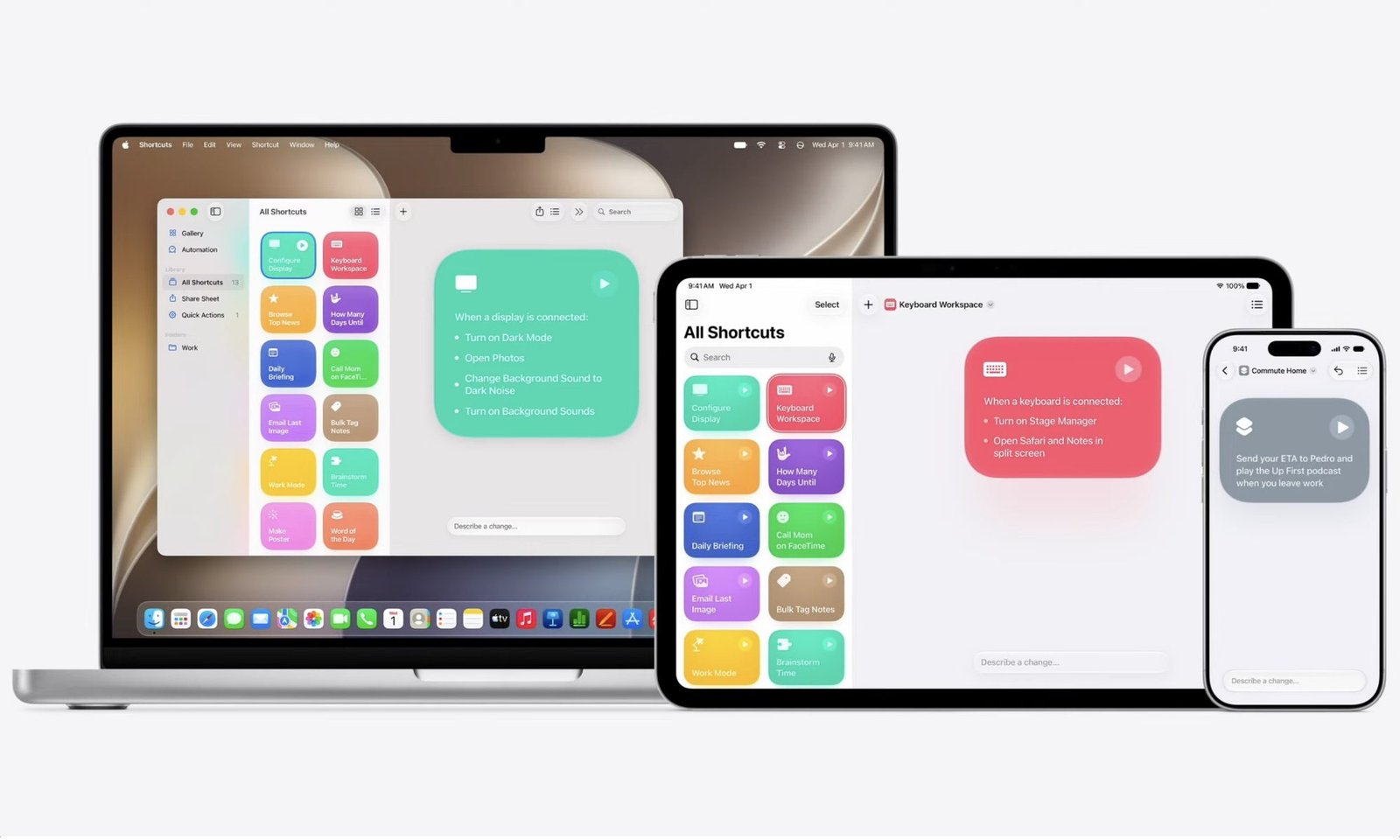
iOS 27 Beta 3 introduces a small but critical change: a Restore button buried in Settings > Apps > Shortcuts. When the system detects shortcuts stored locally but missing from your library, it shows a counter: “X shortcuts on this device aren’t currently in your library.” Tap Restore, and they flood back into your “All Shortcuts” view — unsorted, but present.

How the restore feature actually works

The new button doesn’t require digging through iCloud menus, manually reimporting files, or restoring from a backup. It’s a one-tap operation. Matthew Cassinelli, a well-known Shortcuts power user, tested it on his own device and found over 200 automations waiting to be restored. He had no idea when or how they’d disappeared.

Some of those restored shortcuts appeared with a “1” appended to their names — a classic sign of iCloud sync conflicts. Cassinelli admits his situation is extreme: he’s been adding, deleting, and re-adding what he estimates as “up to 4,000 shortcuts.” But the fact that even he couldn’t tell something was missing speaks volumes about how silently this bug operates.

Why this matters beyond power users

Casual Shortcuts users — people who run a single “Good Morning” automation or a quick text-to-spreadsheet workflow — probably won’t ever hit this issue. But anyone who has built a meaningful library over time has been flying without a safety net.

Think about the automations that quietly run in the background: home automation triggers that turn off lights, Focus Mode configurations that silence work apps, or routines that log health data. When one of those disappears, you might not notice until, say, your morning alarm fails to trigger your coffee maker. By then, the shortcut is gone and there’s no official way to recover it — until now.

What caused the vanishing shortcuts bug?

Apple has never published a root cause analysis. But the symptoms point to an iCloud sync issue. Shortcuts sync across devices via iCloud, and when conflicts arise — two devices editing the same automation, a network interruption mid-sync, or a corrupted metadata file — the local copy can simply stop appearing in the library while the underlying data stays on the device.

That’s why the new restore button works: it scans local storage for orphaned shortcut data and re-registers it with the Shortcuts database. It doesn’t fix the underlying sync architecture, but it gives users a way out without rebuilding everything.

How to check if you have missing shortcuts

If you’re running iOS 27 Beta 3 or later, here’s how to find out:

  • Open Settings.
  • Go to Apps, then Shortcuts.
  • Look for a line that says “X shortcuts on this device aren’t currently in your library.”
  • If you see it, tap Restore.

No counter? No problem — it means your library is in sync. But if you’ve ever wondered why a favorite automation stopped working, it’s worth checking. The counter might be waiting.

A fix that should have come years ago

Shortcuts is one of the most powerful tools Apple ships with iOS. It’s also one of the most opaque when something goes wrong. There’s no error log, no sync status indicator, no way to know if your automations are intact. The restore button doesn’t solve every problem — duplicates can still appear, and the “1” suffix is messy — but it’s a meaningful step.

For anyone who relies on iPhone shortcuts for daily productivity, this is the kind of fix that restores trust. You no longer have to hope your automations survive a sync hiccup. You can just hit a button and bring them back.

Continue Reading
Click to comment

Leave a Reply

Your email address will not be published. Required fields are marked *

Artificial Intelligence

Bunkerhill Health lands $55M to push agentic AI from lab to live hospital floors

Published

on

agentic AI health systems

Bunkerhill’s $55M bet: making AI work inside real hospitals

Bunkerhill Health has closed a $55 million Series B round to push its agentic AI platform, Carebricks, deeper into the messy reality of working hospitals. The round includes continued backing from Sequoia Capital, Felicis, Optum Ventures, and Y Combinator, with Khosla Ventures joining as a new investor.

That last name matters. Vinod Khosla has watched plenty of healthcare AI projects die in pilot purgatory — models that dazzled in research papers but never touched a patient chart. His firm’s participation signals something: Bunkerhill claims to have cracked the hardest part of healthcare AI, which is getting a health system to actually run the software in production.

The problem Carebricks tries to solve

US healthcare spending hit $5.3 trillion in 2024, according to the Centers for Medicare & Medicaid Services. Meanwhile, labor shortages keep squeezing providers. Hospitals have poured money into documentation systems meant to lighten the load on clinicians. Bunkerhill’s argument is that the next wave of technology spending shouldn’t just record what doctors think — it should act on those ideas.

“Medicine has advanced faster than our healthcare system’s ability to operationalise it,” said Nishith Khandwala, co-founder and CEO of Bunkerhill Health. “Every leading health system has more opportunities to improve patient outcomes than its workforce has capacity to address. We believe AI agents can help them turn more of those ideas into reality.”

What Carebricks actually does

Carebricks isn’t a fixed product. It’s a platform that lets hospitals build their own AI agents. Some agents scan cardiology imaging for early signs of heart disease and flag patients needing follow-up. Others handle prior authorizations or keep registry data current. The range extends into administrative work — the kind that rarely makes AI pitches but eats staff hours every week.

Cleveland Clinic, the University of Texas Medical Branch (UTMB), and Intermountain Health all run Carebricks today.

20 AI agents live inside one health system

UTMB offers the clearest picture of what “running it” looks like once the pilot label comes off. The system now has more than 20 agents live on Carebricks, spanning clinical care, operations, and administration, according to Dr. Peter McCaffrey, UTMB’s chief AI officer.

A coronary calcium agent that caught a heart attack before it happened

In its first month running at UTMB, a coronary calcium detection agent built on an FDA-cleared algorithm flagged a patient as being at imminent risk of a heart attack. Cardiology confirmed the risk and performed a triple bypass. UTMB’s care team credits the early detection with saving the patient’s life.

It’s a single case, not a controlled trial. Bunkerhill has published no data on false-positive rates or performance across a broader patient population over time.

Nephrology triage cuts wait times in half

A nephrology triage agent now prioritizes patients by severity, escalating urgent cases and routing others to telemedicine. UTMB reports this has cut average specialist wait times by more than 50 percent.

Lung nodule tracking improves follow-up speed

A lung nodule agent tracks incidental findings on CT scans through to the correct follow-up. UTMB cites an 80 percent faster response on urgent cases, a doubling of guideline-concordant follow-up, and a drop in manual coordinator work.

These are health system-reported operational results from live production use — not synthetic benchmark scores. That matters. It also means the numbers reflect one institution’s data conditions and staffing setup, not a guarantee that another hospital will see the same curve.

“We’ve already seen tremendous impact on patient care, and we’re only at the beginning of what becomes possible when a health system can operate with agentic AI at this scale,” McCaffrey said.

The governance question Bunkerhill can’t dodge

None of this removes the work health systems still have to do themselves. Bunkerhill says it will use the new funding to expand Carebricks into a wider range of clinical and operational use cases while building out governance, monitoring, and safeguards.

A platform that lets a nephrology department build its own triage agent also means that department owns the consequences of how that agent is tuned. Health system boards weighing a Carebricks-style deployment need answers on liability assignment, monitoring cadence, and what happens when an agent’s judgment and a clinician’s judgment disagree — before signing off on scale.

UTMB’s 20-agent footprint gives Bunkerhill a reference case few competitors can currently match. Whether that number holds up as a signal for the rest of the industry depends on how UTMB, and the other systems now running Carebricks, handle the governance side as the agent count climbs.

What the $55M buys

Bunkerhill plans to use the new capital to expand Carebricks into a wider range of clinical and operational use cases. The company also intends to build out governance, monitoring, and safeguards — the infrastructure that makes it safe for hospitals to scale agent count without running into chaos.

Vinod Khosla put it bluntly: “The bottleneck in healthcare AI was never the technology, it was getting a health system to actually run it. Bunkerhill closed that gap. They made it much, much easier to adopt AI and already have traction inside critical health systems that would take most companies years to earn.”

The question now is whether that traction scales beyond UTMB — and whether the governance framework keeps pace with the agent count.

Continue Reading

Artificial Intelligence

Why AMI Labs’ Alexandre LeBrun refuses to call his AI ‘AGI’ or ‘superintelligence’

Published

on

AMI Labs AGI superintelligence

The label game is a trap

While much of the AI industry scrambles to brand its latest breakthroughs as “AGI” or “superintelligence,” Alexandre LeBrun, CEO of Yann LeCun’s world model startup AMI Labs, is deliberately sitting that race out. In an interview with TechCrunch, LeBrun made it clear: his company doesn’t use either term. Not now. Not ever.

“We never used the word AGI. And I just noticed that nobody is using it anymore; they switched to superintelligence,” he said. “Next time we’ll switch to something else.” He isn’t impressed by the new buzzword either. “There’s no good definition. What is superintelligence? I don’t know. It’s not a very useful word.”

That’s a pointed stance from a founder whose startup just raised over a billion dollars. But LeBrun isn’t chasing hype. He’s chasing something harder to define: a machine that actually understands the physical world.

World models vs. LLMs: a different kind of intelligence

LeBrun spoke with TechCrunch last week in Seoul, where he was attending the International Conference on Machine Learning. His mission there wasn’t just academic. He was scouting industrial partners — robotics firms, manufacturers, electronics companies — for AMI Labs, which is still pre-product. The startup is building what’s called a world model: an AI system that incorporates physics to predict and interact with the real world, rather than just generating text or images.

“An LLM predicts the next word or text,” LeBrun explained. “A world model predicts the next state.” Nudge a glass off the table, and you already know it will tip and spill. That intuitive understanding of cause and effect is what a world model is meant to capture.

He isn’t claiming world models are superior to LLMs. They’re “complementary, not replaceable,” he said. Drawing a parallel to how the human brain separates language and reasoning, he argued that LLMs will remain the most efficient tools for processing language, while world models will provide the context and real-world understanding that LLMs lack.

Robots are still dumb — and dangerous

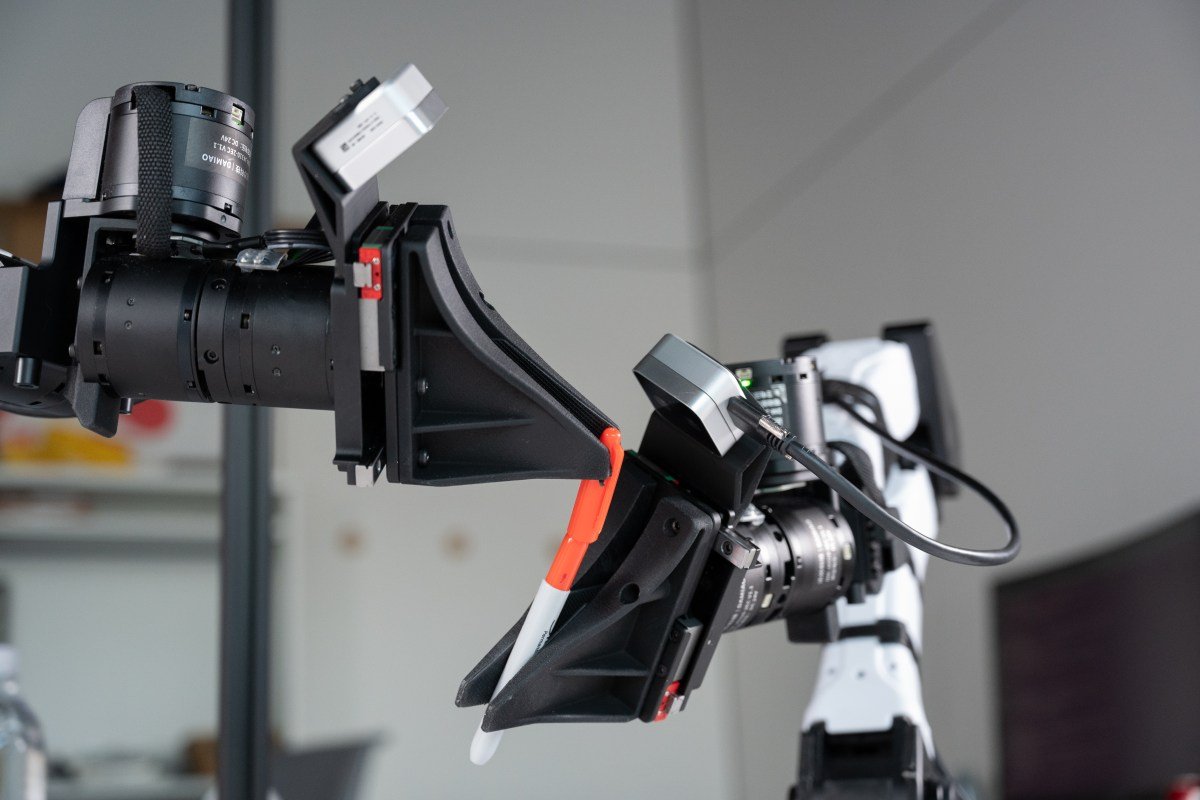
One area where world models could make a real difference is robotics. Right now, LeBrun says, robots are “completely static,” running fixed routines with no awareness of their surroundings. “AI remains really dumb in the physical world,” he told TechCrunch.

Even basic context-awareness would be a leap forward. LeBrun pointed to a widely shared incident where a dancing robot at a public event approached and kicked a child. “The hardware is very advanced; progress in hardware in the last few months is incredible, but there’s no brain,” he said. A world model could have helped that robot understand it was about to harm someone and stop.

“Robots are not safe right now,” LeBrun added bluntly. “There’s no solution for that today.”

Why Korea? Hardware, speed, and a billion-dollar bet

LeBrun’s interest in Asia isn’t accidental. A world model, he argues, can’t be built inside a lab. “We need access to the real world,” he said, and that means partnering with companies that actually build things. South Korea has advanced robotics, semiconductor, and manufacturing industries — exactly the sectors where physical AI could have the biggest impact.

But the second reason is speed. “Korea was the fastest adopter of the internet 25 years ago,” LeBrun noted. He sees the same pattern now with AI. The government has thrown significant money behind the technology, including a June plan to mobilize roughly $880 billion for chips, AI data centers, and physical AI. “They should coexist,” said JP Lee, CEO of SBVA and one of AMI’s Asian backers, referring to the need to fund both LLMs and physical AI.

Lee has been pushing AMI to establish a presence in Korea from the start. “I’ve been telling Alex and the team to come to Korea,” he told TechCrunch. Local developers, he argued, are quick to adopt and adapt new tools — a pattern that has already produced homegrown internet players like Naver and Kakao.

Healthcare, factories, and the 1% problem

LeBrun’s previous company was Nabla, an AI health startup. That background colors his view of where LLMs fall short. He likens today’s AI systems to a doctor trained only on textbooks, with no residency or real-world experience. “LLMs cover only 1% of healthcare,” he said. The rest depends on hands-on practice and physical intuition — exactly what a world model aims to provide.

For now, AMI Labs has nothing to sell. The startup, co-founded by Turing Award winner Yann LeCun after he left Meta, raised $1.03 billion in March at a $3.5 billion pre-money valuation. There’s no product yet, and LeBrun won’t commit to a timeline. “We’ll make a surprise when we’re ready,” he said.

That might sound evasive. But for a CEO who refuses to play the naming game, it’s consistent. He’s not selling a label. He’s selling something that doesn’t exist yet — and he’d rather get it right than call it superintelligence.

Continue Reading

Artificial Intelligence

Apple’s new Home AI features come with a hidden price tag — and it stings

Published

on

Apple Home AI features

Apple’s new Home AI features are here — but only if you’re willing to pay

At WWDC 2026, Apple unveiled a suite of new AI-powered features for its Apple Home app. Auto-updating notifications. Smarter camera search. Automatic tracking and stitching of multiple video feeds for a single event. Higher-resolution recordings. They sounded like genuine quality-of-life upgrades.

But there was a catch. Apple didn’t say which iCloud+ plans would get access. Now, buried in the release notes of macOS Golden Gate beta 3, we have the answer. And it’s not good news for anyone on a budget.

The hidden cost of Home AI features

Apple’s iCloud+ pricing tiers range from cheap to steep:

  • 50GB: $0.99/month
  • 200GB: $2.99/month
  • 2TB: $9.99/month
  • 6TB: $29.99/month
  • 12TB: $59.99/month

I wasn’t expecting the 50GB plan to get the new AI features. That plan only supports one camera via HomeKit Secure Video. But the 200GB tier felt like a safe bet. It supports up to five cameras — exactly the kind of multi-camera setup that benefits most from AI summaries and cross-camera search.

Wrong. Apple has locked the Apple Home AI features behind the 2TB iCloud+ plan and above. That means you have to pay at least $9.99/month to use them. No exceptions.

Why does 2TB feel like the wrong cutoff?

Let’s look at how HomeKit Secure Video works today. The 50GB plan gets you one camera. The 200GB plan supports up to five. The 2TB plan removes the camera limit entirely.

So here’s the logic gap: a user with a 200GB plan and five cameras already has the hardware setup that would benefit most from AI features. They have multiple angles, multiple events to track, and a real need for smart summaries. Yet Apple is telling them to pay triple — jumping from $2.99 to $9.99 — just to unlock software that their existing setup is perfectly suited for.

A cash grab or a cost shift?

This feels like a deliberate push. Apple’s AI infrastructure is expensive to run. Processing video on-device is one thing, but cloud-based AI features — especially those that stitch multiple feeds and generate summaries — require serious server power. By restricting these features to the 2TB tier, Apple is effectively asking users to subsidize its rising AI costs.

Is that unfair? A little. HomeKit Secure Video already requires a paid plan. Adding AI on top of that and demanding a higher tier feels like double-dipping. Especially when the 200GB plan already supports multi-camera setups that would benefit most.

What you actually get with the Home AI features

For those willing to pay, here’s what the new features include:

  • Auto-updating notifications: Alerts that evolve as events unfold, instead of static pings.
  • Smarter camera search: Search by object, person, or activity across all your cameras.
  • Automatic video stitching: Multiple camera feeds for a single event are merged into one timeline.
  • Higher-resolution recordings: Better clarity for playback and analysis.

These are genuinely useful — especially for people with multiple cameras covering a large property. But the price of admission is steep.

Bottom line: The 200GB tier deserved better

Apple could have made the Apple Home AI features available starting at the 200GB tier. That would have aligned with the existing camera limits and given users a clear upgrade path. Instead, they’ve forced a jump from $2.99 to $9.99 — a 234% increase — for features that many 200GB users would actually use.

It’s a smart business move for Apple, no doubt. But for users, it feels like a cash grab. If you’re running a five-camera HomeKit setup on a 200GB plan, you now have a tough choice: pay more or go without.

Continue Reading

Trending