A landmark ruling with a long shadow
The Supreme Court’s decision last month in Chatrie v. United States — the first major Fourth Amendment case to reach the high court in eight years — may have been about cell phone location data. But its ripple effects could reach far beyond Google’s servers.
Legal scholars and privacy advocates are now asking a pointed question: if police need a warrant to see where your phone was, why shouldn’t they need one to see where your car was?
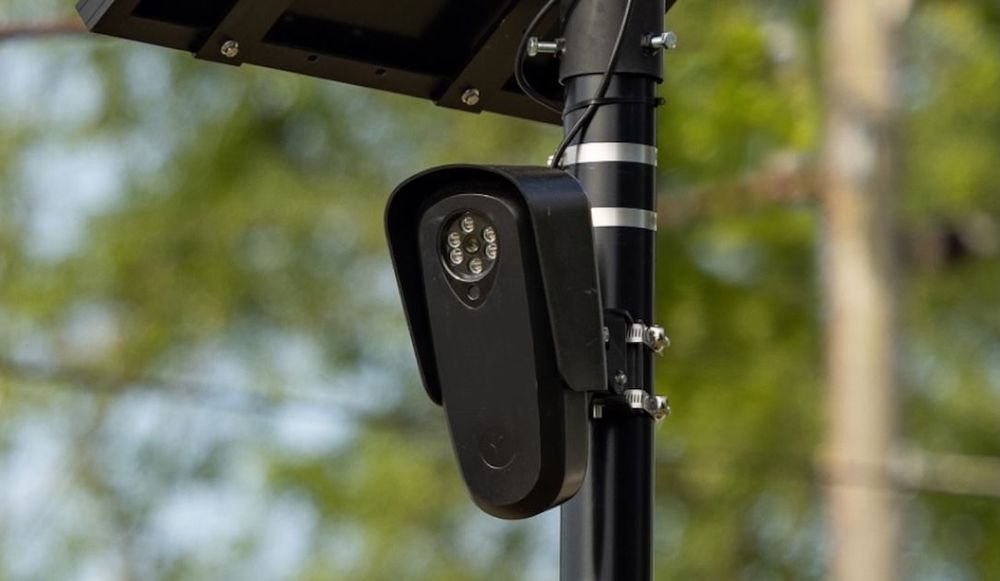
The ruling, which found that so-called geofence searches of location history require a warrant, has thrown a spotlight on license plate cameras — the networks of automated license plate readers (ALPRs) that have quietly become a cornerstone of modern policing.
What Chatrie actually changed
For years, police have leaned on tech companies to hand over location data, letting them pinpoint which phones were near a crime scene at a specific time. The government argued these geofence searches were too brief to trigger Fourth Amendment protections.
The justices disagreed. Even a few hours of location history, they wrote, can reveal whether someone visited an “indisputably private” place — a psychiatrist’s office, an abortion clinic, an AIDS treatment center, a strip club, or a by-the-hour motel.
“Location History enables police officers to focus on precisely those sites — to see, in a given time block, who shows up,” the opinion read.
That language matters, says Michael Soyfer, an attorney at the Institute for Justice. The court zeroed in on the “retrospective and indiscriminate” nature of the surveillance — adjectives that fit ALPR data just as well.
“The justices drilled down on what was in the database and not just what police happened to access at a point in time,” Soyfer said at a recent briefing. “The court’s really emphasizing that it’s looking at the capabilities of the technology overall rather than just what police did with it.”
The Flock Safety factor
Here’s where the rubber meets the road. Flock Safety, the country’s dominant ALPR vendor, says it has between 90,000 and 100,000 cameras on public roadways. It collects data on roughly 20 billion license plates every month.
That’s not a typo. Twenty billion.
Police increasingly use this data to identify suspects — running plates through databases that can reveal where someone lives, works, and drives on a regular basis. The question is whether that kind of sweeping surveillance should require judicial oversight.
Flock Safety insists the Chatrie decision doesn’t apply to its technology. In a statement, a company spokesperson argued that the ruling addresses “geofence warrants for Google location history, which is categorically different from license plate recognition technology.”
“Google location history involves data from a person’s own mobile device and reveals continuous movements across both public and private places,” the statement said. “Flock’s ALPR technology, by contrast, captures point-in-time images of vehicles in public view.”
The company also pointed to a side note in the Supreme Court opinion that appears to differentiate the standard for what counts as a Fourth Amendment search based on whether the tracking occurs on “public roads.” Courts have “repeatedly and uniformly” treated ALPRs differently from cell-site location data, the spokesperson added.
Why ALPRs aren’t just about plates
Andrew Guthrie Ferguson, a law professor at George Washington University and author of Your Data Will Be Used Against You, isn’t convinced. He argues that modern ALPRs are just the tip of a much larger iceberg.
“Modern ALPRs are just the connecting point to a much larger system of personally revealing information stored in police and connected public databases,” Ferguson said in an interview.
Those databases often hold far more than plate reads. Ferguson points to social media activity, surveillance video from thousands of public and private cameras, body camera footage, drone video, gunshot detection sensor data, and police dashboard cameras — all linked together in ways that let officers build extraordinarily detailed dossiers on individuals.
“There are some differences with the nature of license plates that are after all designed for identification, but I think it is a mistake to think about ALPRs standing alone,” he said. “Chatrie certainly strengthens the Fourth Amendment case against the warrantless collection of ALPR data.”
What a warrant requirement would mean
If courts ultimately decide that ALPR searches require a warrant, the impact on policing would be hard to overstate. Here’s what could change:
- Police would need to show probable cause before searching historical plate data — a significant hurdle for investigations that currently rely on quick database queries.
- Retrospective searches — going back days or weeks to see which cars were at a scene — would likely face the toughest scrutiny.
- Real-time alerts, like Flock’s ability to flag a stolen car the moment it passes a camera, might survive, since those are more like traditional surveillance.
- Data retention policies would probably shrink. Why keep 30 days of data if you can’t search it without a warrant?
The Chatrie decision could also have implications beyond ALPRs. Soyfer notes it may affect reverse keyword searches, cell tower dumps, and law enforcement’s purchase of commercial location data from brokers — all practices that have grown rapidly in recent years.
A debate that’s just beginning
Flock Safety may be right that the Supreme Court didn’t have license plates in mind when it wrote the Chatrie opinion. But the logic of the ruling — that the government can’t build a massive, searchable database of where people have been without judicial oversight — is hard to square with the company’s business model.
The court’s emphasis on the capabilities of technology, rather than how police happened to use it in a particular case, is a direct challenge to the way ALPR networks operate. They collect everything, store everything, and search everything.
For now, the legal landscape remains unsettled. But one thing is clear: the debate over license plate cameras and the Fourth Amendment is only getting started. And after Chatrie, the burden of proof may be shifting.








 CyberSecurity7 months ago
 How To6 months ago
 How To6 months ago
 How To4 months ago

 How To5 months ago
 How To6 months ago
 Social Media7 months ago