Connect with us

Video

9 Boring Online Jobs Quietly Paying People Six Figures: The Surprising Path to High Income

Published

on

Most people dream of landing a flashy tech job or becoming a social media influencer. But while everyone chases the spotlight, a quiet revolution is taking place in the world of remote work. There are actually dozens of roles that most job seekers ignore—roles that are considered boring, unglamorous, or even morbid—yet they quietly pay six figures. In a revealing new video, career expert Shane Hummus breaks down nine such positions, showing how the most overlooked paths can lead to serious financial rewards.

Why Boring Online Jobs Are a Goldmine

The term “boring” might sound unappealing, but in the job market, boring often means stable, high-demand, and low-competition. Building on this idea, Hummus explains that many of these roles are hidden in plain sight. They don’t require a flashy portfolio or a massive social media following. Instead, they rely on specialized knowledge, attention to detail, and a willingness to work in areas that others avoid. As a result, the supply of qualified candidates is low, driving up salaries for those who step in.

The Most Overlooked Path: Funeral Planning and End-of-Life Services

One of the most surprising entries on the list is funeral planning. It may sound grim, but the industry is quietly booming. With an aging population and a growing preference for personalized memorials, funeral directors and end-of-life planners can earn well over $100,000 per year. Hummus notes that this role barely gets talked about, yet it offers a stable income and deep personal satisfaction. In addition, many of these jobs can be done remotely, handling logistics, paperwork, and client consultations from home.

The Hidden Gatekeeper: Title Insurance and Real Estate Clerks

Another boring online job that pays six figures is title insurance. Every time a home is sold, a title company ensures the property has no legal claims against it. This role requires meticulous research and an eye for detail, but it rarely makes headlines. However, with the real estate market constantly moving, title examiners and insurance agents are in steady demand. According to Hummus, this is the hidden gatekeeper behind every home sale, and experienced professionals can earn between $80,000 and $120,000 annually.

The AI Paperwork Role: Training Data Annotators

As artificial intelligence advances, a new category of boring online jobs has emerged: data annotation. These are the people who label images, transcribe audio, and review AI outputs to make machines smarter. It’s repetitive work, but it’s also essential. Hummus points out that every AI breakthrough creates a wave of paperwork and data labeling tasks. Because the work is tedious, few people stick with it, but those who do can earn six figures as team leads or quality assurance specialists. This is one of the lowest-barrier ways to enter the AI industry—you can start tonight with just a computer and an internet connection.

The Introvert’s Dream: Medical Coding and Billing

For those who prefer to avoid constant meetings and social interaction, medical coding is a dream role. It involves translating patient records into standardized codes for insurance billing. It’s detail-oriented, solitary, and highly paid. Medical coders with certifications can earn $70,000 to $100,000, and experienced coders often exceed that. Hummus emphasizes that this role exists in every healthcare system, making it recession-resistant and consistently in demand.

The Role Between Humans and AI: Prompt Engineering

A relatively new position that didn’t exist two years ago is prompt engineering. These specialists craft the inputs that guide AI models to produce desired outputs. It’s a mix of linguistics, logic, and creativity—and it pays exceptionally well. Because the field is so new, almost no one qualifies yet, which means early adopters can command salaries upwards of $150,000. Hummus calls it the role between humans and AI, and it’s one of the most exciting boring jobs on the list.

How to Get Started in These Quiet High-Income Careers

If you’re intrigued by the idea of a boring online job that pays six figures, the first step is to pick one that aligns with your skills and interests. Many of these roles require certifications or specific training, but they are often affordable and can be completed online. Hummus recommends starting with data annotation or medical coding because they have the lowest barriers to entry. From there, you can specialize and move up the pay scale.

Closing Thoughts

The next time you scroll through job listings, don’t overlook the roles that seem dull or unglamorous. Behind the scenes, these boring online jobs are quietly building wealth for thousands of professionals. Whether it’s funeral planning, title insurance, or AI training, the opportunity is real and the income is substantial. Watch Shane Hummus’s full video to get the complete breakdown and discover which path might be your ticket to a six-figure remote career.

Continue Reading
Click to comment

Leave a Reply

Your email address will not be published. Required fields are marked *

Video

How He Built a $214/Day Personal Brand with Claude in Under 30 Days

Published

on

personal brand with Claude

Building a personal brand from scratch can feel like an uphill battle, especially when you’re trying to juggle content creation, audience growth, and monetization. But what if you could generate $214 per day in just 30 days, using AI tools like Claude to accelerate the process? That’s exactly what Shane Hummus breaks down in his latest video, offering a no-nonsense blueprint for anyone ready to launch a profitable personal brand quickly.

The Conversation That Changed Everything

Shane opens with a pivotal conversation that reshaped his approach to personal branding. Instead of chasing vanity metrics like follower counts, he realized the real value lies in creating content that resonates deeply with a specific audience. This shift in mindset is the foundation of his strategy—one that leverages Claude to streamline research, scripting, and idea generation. By using AI to handle the heavy lifting, you can focus on delivering value and building trust, which are the true drivers of income.

The Silent Killer: Why Most Personal Brands Fail

One of the most eye-opening sections of the video is Shane’s breakdown of why 90% of videos fail. He identifies a “silent killer” that most creators overlook: mismatch between content and audience expectations. When your thumbnail promises one thing but your video delivers another, viewers bounce instantly. This is where Claude can help you maintain consistency. By using AI to analyze top-performing content in your niche, you can ensure every piece of content aligns with what your audience actually wants. Shane emphasizes that being “congruent but average” is far better than being “perfect but mismatched.”

The 21-Day Milestone and the 4-Move Framework

Building a personal brand with Claude isn’t about overnight success; it’s about hitting key milestones. Shane reveals that most people never make it past day 21, which is the point where the initial excitement wears off and real work begins. To help viewers push through, he introduces a four-move framework: niche down, create a content bank, optimize for platforms, and monetize early. Each step is designed to be executed with Claude’s assistance, from generating content ideas to drafting scripts that convert. The framework is simple but powerful, and it’s the backbone of his $214/day strategy.

Why a Big Following Doesn’t Guarantee Income

Perhaps the most liberating insight from the video is that you don’t need a massive audience to make money. Shane points out that many creators with millions of followers struggle to monetize, while others with just a few thousand loyal fans earn a full-time income. The key is building a personal brand with Claude that prioritizes engagement over reach. By using AI to craft personalized responses, create interactive content, and analyze audience feedback, you can foster a community that’s willing to pay for your expertise.

Overcoming the Camera Objection and Leveraging Flaws

A common barrier to starting a personal brand is the fear of being on camera. Shane addresses this head-on, explaining that your perceived flaws—whether it’s your accent, appearance, or speaking style—can actually be your biggest advantage. Authenticity resonates more than polish, and Claude can help you script and rehearse so you sound natural and confident. The goal isn’t to be perfect; it’s to be relatable. As Shane puts it, “Congruent but average beats perfect but mismatched every time.”

Ready to Start Your Personal Brand with Claude?

Shane’s video is a must-watch for anyone who wants to build a personal brand with Claude and start generating income within 30 days. He provides actionable steps, real-world examples, and a clear roadmap that eliminates guesswork. Whether you’re a complete beginner or a seasoned creator looking to pivot, this framework will save you months of trial and error. Watch the full video above to learn the exact strategy that can turn your personal brand into a $214/day machine.

Continue Reading

Video

FIFA Let Him Into Their Network: Inside the World Cup’s Massive Broadcast Infrastructure

Published

on

FIFA World Cup network

When the world tunes in to watch the FIFA World Cup, few stop to think about the invisible digital backbone that makes every goal, every replay, and every camera angle possible. Behind the scenes, a sprawling temporary network—the International Broadcast Center (IBC)—connects 16 stadiums across the United States and Canada to billions of screens worldwide. NetworkChuck, the popular tech educator, was granted unprecedented access to this hidden infrastructure, and the result is a fascinating deep dive into one of the most complex broadcast networks ever assembled.

The Scale of the FIFA World Cup Network

Building on his reputation for demystifying complex networking topics, NetworkChuck spent two days inside the IBC in Dallas, Texas. What he found was staggering: a network carrying uncompressed ST 2110 video, supporting 150,000 multicast flows, and engineered with redundancy that would make any enterprise architect jealous. The video captures not just the technical specs but the human stories behind the infrastructure—engineers who have dedicated their careers to ensuring that a match in Boston can be flawlessly transmitted to viewers in Tokyo within milliseconds.

As the FIFA World Cup network operates at the intersection of sports and technology, its design prioritizes both performance and resilience. The IBC isn’t a permanent facility; it’s a temporary marvel built from scratch for each tournament, then dismantled after the final whistle. This ephemeral nature adds another layer of challenge, as the team must assemble, test, and operate a world-class network under extreme time pressure.

How the Broadcast Infrastructure Works

The core of the FIFA World Cup network relies on uncompressed ST 2110 video, a standard that separates video, audio, and metadata into discrete streams. This approach allows for incredible flexibility—each camera feed can be routed independently, mixed, and distributed without the latency introduced by compression. The video demonstrates how engineers use Wireshark to decode actual match packets, revealing the precise timing and sequencing that ensure seamless playback.

In addition, the network employs a clever failover trick that NetworkChuck highlights: a red/blue fiber system that provides instant redundancy. If the primary path fails, traffic switches to the backup within milliseconds, with no perceptible interruption to the broadcast. This level of engineering is critical when millions of viewers are watching live, and any glitch could become a global headline.

The Human Element: The People Behind the Packets

Beyond the technical wizardry, the video shines a light on the dedicated professionals who make the FIFA World Cup network hum. From “Multicast Martin,” the SDN specialist who manages the multicast flows, to the audio listeners who ensure every kick of the ball sounds authentic, the IBC is staffed by experts who combine deep technical knowledge with a passion for the beautiful game. NetworkChuck interviews key figures like Christoph Barbet, Head of Broadcast Infrastructure at HBS, who explains the philosophy of building a network that “just works” under immense pressure.

Therefore, the video serves as a tribute to these unsung heroes. It humanizes the technology, reminding viewers that behind every packet is a person who spent years mastering their craft. The closing moments, which include a lighthearted prayer for the stressed engineers, underscore the emotional stakes involved in delivering the world’s most-watched sporting event.

What Viewers Can Learn from This Deep Dive

For network engineers and tech enthusiasts, the FIFA World Cup network offers a masterclass in high-performance networking. The video covers multicast routing, ST 2110 standards, and real-world packet analysis in a way that is both educational and entertaining. NetworkChuck even built a small simulation game on a Hostinger VPS to demonstrate the concepts, making the content accessible even to those new to networking.

As a result, viewers walk away with a deeper appreciation for the invisible infrastructure that powers live sports. The video is not just a tour; it’s an invitation to explore the intersection of technology and human ingenuity. Whether you’re a seasoned engineer or a curious fan, this inside look at the FIFA World Cup network is a must-watch.

Watch the Full Video

If you’re ready to dive into the packets and see how the World Cup really comes to life on your screen, watch the full video above. NetworkChuck’s engaging storytelling and rare access make this one of the most compelling tech documentaries of the year.

Continue Reading

Video

How to Fix Outlook Data File Change and Incoming Email Going to Wrong Inbox

Published

on

Outlook data file change

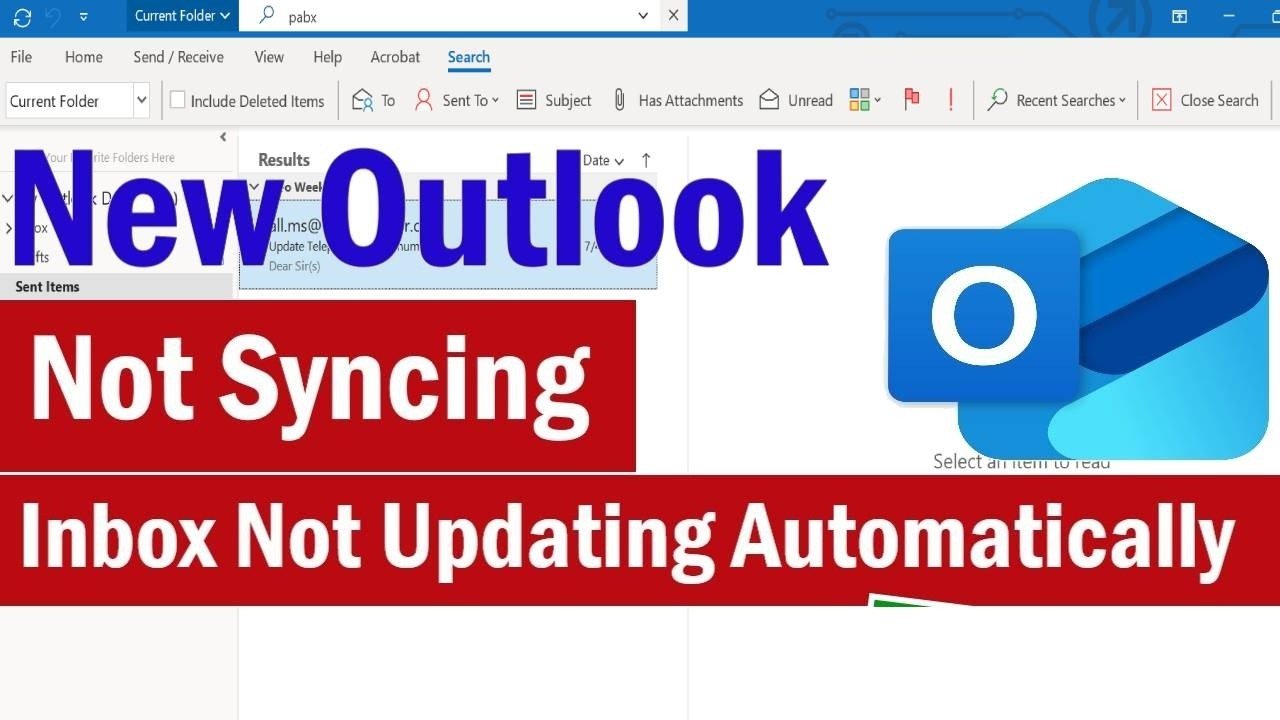
If you’ve ever opened Microsoft Outlook only to find that your incoming emails are mysteriously landing in the wrong inbox—or not appearing at all—you’re not alone. This frustrating glitch often stems from a seemingly innocuous change to your Outlook data file. Fortunately, the fix is simpler than you might think. In a detailed walkthrough, one experienced technician demonstrates exactly how to resolve this issue and restore order to your email workflow.

Understanding the Outlook Data File Change Problem

When you change the default Outlook data file (the .pst or .ost file that stores your emails, contacts, and calendar), Outlook can get confused about where new messages should go. As a result, incoming emails might end up in a secondary inbox, a different folder, or even vanish from view. This is especially common after switching accounts, upgrading Outlook, or migrating to a new computer. The root cause is often a mismatch between the default data file setting and the actual delivery location.

Step-by-Step Fix for Outlook Data File Change

Step 1: Identify the Current Default Data File

Open Outlook and navigate to **File > Account Settings > Account Settings**. On the **Data Files** tab, you’ll see a list of all your Outlook data files. The one marked “Default” is where Outlook currently delivers new emails. If this isn’t the correct file for your primary email account, you’ll need to change it.

Step 2: Set the Correct Data File as Default

Select the data file that corresponds to your primary email account—this is usually the one named after your email address. Click **Set as Default** and confirm the change. Outlook will now route all new incoming emails to this data file.

Step 3: Restart Outlook and Verify

Close and reopen Outlook. Check your inbox to confirm that new emails are appearing in the correct location. If the problem persists, proceed to the next step.

Step 4: Repair the Outlook Data File (If Needed)

Sometimes the data file itself becomes corrupted. Use the built-in **Inbox Repair Tool (scanpst.exe)** to scan and fix the file. Locate the tool in your Office installation folder (e.g., `C:Program FilesMicrosoft OfficerootOffice16`), run it, and point it to your .pst or .ost file. Let it complete the repair process.

Why This Fix Works and When to Use It

This solution is particularly effective for users who have recently changed their Outlook data file manually or through an automatic update. It ensures that the email delivery path matches the default data file setting, eliminating confusion. The method works across Outlook 2016, 2019, and Office 365, making it a universal fix for one of the most common email configuration errors.

Preventing Future Outlook Data File Issues

To avoid this problem in the future, always verify your default data file after any major Outlook update or account change. Additionally, regularly back up your .pst or .ost files to prevent data loss. If you manage multiple email accounts, keep each account’s data file clearly labeled and set the primary one as default.

Final Thoughts

Dealing with an Outlook data file change that misdirects incoming emails can be a headache, but the fix is straightforward. By following the steps outlined above—checking your default data file, setting the correct one, and repairing if necessary—you can quickly get your inbox back to normal. Watch the full tutorial for a visual guide to each step, and don’t forget to like and subscribe for more troubleshooting tips.

Continue Reading

Trending