Connect with us

Artificial Intelligence

Perplexity’s Personal Computer Can Work Autonomously on Your Mac, and It’s Now Available to All

Published

on

Perplexity Personal Computer Mac App Goes Wide: Meet the Autonomous AI Agent for Your Desktop

Perplexity has officially launched its Personal Computer Mac app for all users, and this release marks a significant step forward in how artificial intelligence can interact with your local machine. Instead of just answering questions in a chat window, this AI agent works directly on your Mac — searching files, operating inside native apps, browsing the web, and connecting to over 400 tools — all without constant human supervision.

You give it a task, and it gets to work. You only step in when it needs your approval. It’s similar in spirit to Claude Cowork, but Perplexity’s approach is purpose-built for deep integration with macOS.

What Can Perplexity Personal Computer Do for You?

If you have ever lost an hour jumping between apps, hunting for a file, or manually pulling information from different sources, this tool is built for exactly that frustration. It can work across your local files, native Mac apps, connected tools, and the web — all in one go.

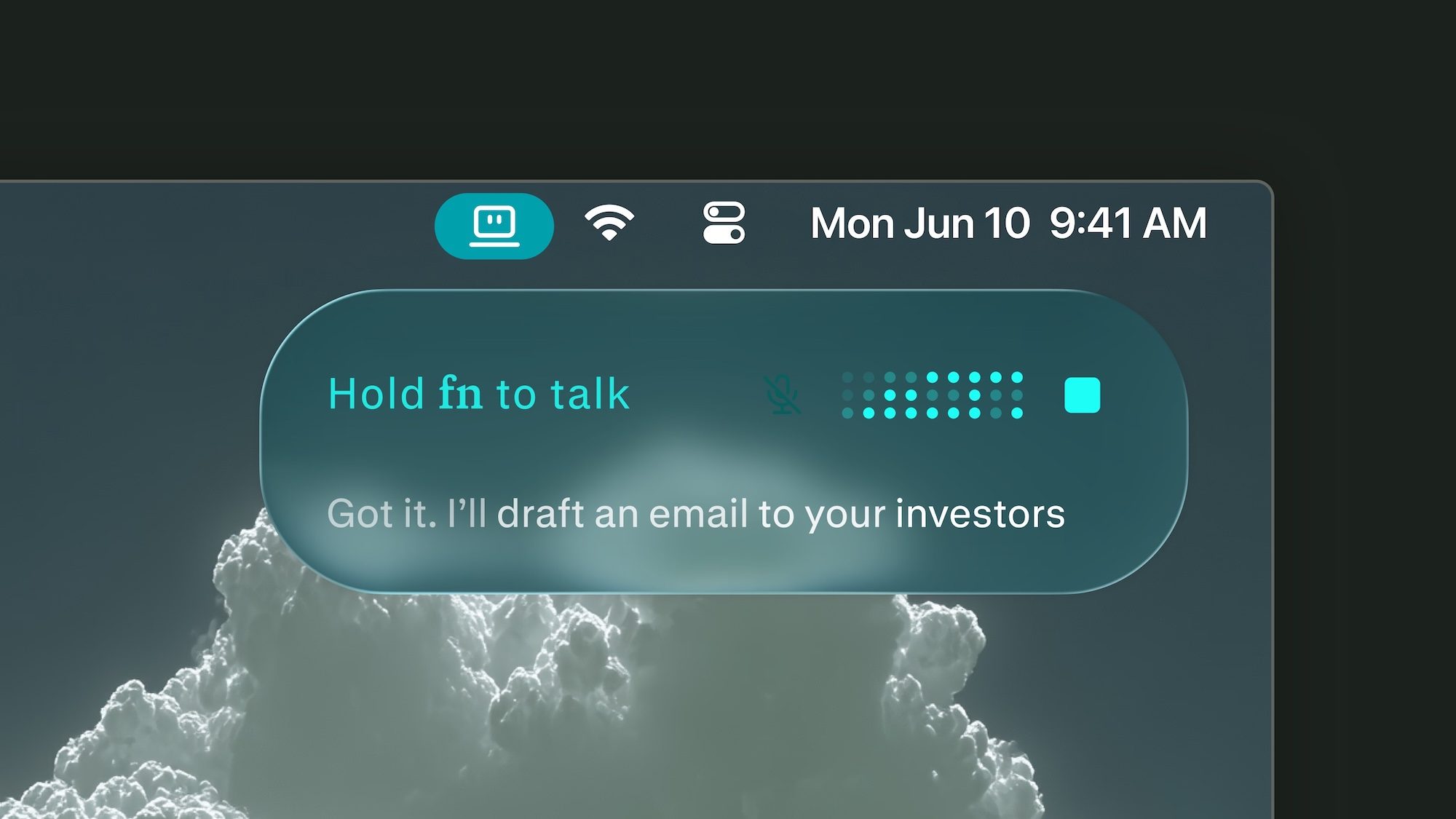
Here is a fun example Perplexity showcased: open Notes, press both CMD keys, and ask it to handle your to-do list. It figures out each task and gets them done. You can also ask it to clean up a messy folder and sort everything into properly named project folders.

Building on this, the best part is that you stay in control. It checks in when a decision matters, and every action it takes is reversible. Think of it as a capable assistant — not an unsupervised one.

What’s the Best Way to Run Perplexity Personal Computer?

According to Perplexity, a desktop Mac is the ideal environment. Since the entry cost of a Mac mini is relatively low, it’s the recommended option. Running the AI agent on a Mac mini allows it to operate continuously, even when you are away from your desk.

You can kick off a task from your iPhone, and the agents keep working on your Mac back home. You can also approve requests from any device and let it run overnight for complex projects.

However, the Mac mini is currently in short supply, so you might have to wait or grab any available model. The new Perplexity Personal Computer Mac app is available today for all users. Everyone gets everyday features like search, attachments, and dictation.

It is not yet on the App Store, so you will need to download it directly from Perplexity’s website. Learn more tips for using Perplexity AI effectively to get the most out of this tool.

How Autonomous AI Agents Are Changing Productivity

This launch reflects a broader shift in the AI landscape. Instead of passive chatbots, we now have autonomous AI agents that can act on your behalf. Perplexity’s approach is particularly notable because it works locally on your Mac, meaning your data stays on your device rather than being processed entirely in the cloud.

For power users, this opens up possibilities like automated research, file organization, and cross-app workflows that previously required complex scripting or third-party automation tools.

Practical Use Cases for Perplexity Personal Computer

  • Research and summarization: Ask it to gather information from multiple sources and compile a report.
  • File management: Request a cleanup of your Downloads folder into organized project directories.
  • Cross-app workflows: Have it pull data from a spreadsheet, create a chart in Keynote, and email the result.

Getting Started with Perplexity Personal Computer

To begin, head to Perplexity’s website and download the Mac app. Once installed, you can start giving it tasks immediately. The interface is straightforward: type or speak your request, and the agent takes over.

Remember that you can approve or reject actions at any time. This safety mechanism ensures you remain the decision-maker for critical operations. Explore other Mac productivity apps that complement this tool.

Final Thoughts on Perplexity Personal Computer

Perplexity has delivered a genuinely useful AI agent that feels like a natural extension of your Mac. It is not a gimmick — it solves real problems around multitasking and information management. As the technology matures, we can expect even deeper integration with macOS and third-party services.

Download it today and see how much time you can save by letting an AI agent handle the busywork.

Continue Reading

Artificial Intelligence

Google’s Gemini 3.5 Transcribe Turns Your Rambling Into Polished Prose

Published

on

Gemini 3.5 Transcribe

Nobody sounds like a news anchor

We all stumble, backtrack, and throw in a dozen “ums” when we talk. Google’s new Gemini 3.5 Transcribe is built for exactly that reality. Announced as the company’s most precise speech-to-text model yet, it takes your messy, unpolished speech and turns it into clean, formatted text — without demanding you sound like a broadcast professional first.

The model arrives alongside two companions, Gemini 3.5 Live and Gemini 3.5 Live Experimental. Together, the trio forms what Google brands as “Gemini Audio.”

Here’s the kicker: it’s already in production, not sitting in some research lab.

How Gemini 3.5 Transcribe cleans up your speech

The model automatically strips out filler words like “um” and “ah,” so your transcribed text doesn’t carry every verbal hiccup. More impressively, it catches self-corrections in real time. Say “let’s meet Tuesday, no wait, Wednesday,” and it understands you meant Wednesday — and adjusts accordingly.

You can also edit your text using nothing but your voice. No typing, no tapping. Just speak the correction.

The model can even delegate tasks like image generation or file analysis to other Gemini models through function calling. That capability is currently live in the Gemini app on macOS.

Accuracy numbers that back it up

Google reports a word error rate of just 4% for real-time streaming and 2.6% for pre-recorded audio. That’s strong for conversational speech, especially when you factor in the messy reality of how people actually talk.

Support spans more than 85 languages, regional accents, and specialized jargon. It can also attribute speech to up to three different speakers in a recording, complete with timestamps. That’s a serious upgrade for journalists, researchers, and anyone who transcribes meetings.

Where it’s already live

This isn’t a future feature. Gemini 3.5 Transcribe already powers Rambler, the dictation feature on Android’s Gboard, and the Gemini app on macOS. Chrome support is coming soon, which will let you dictate directly into any web field.

Developers can access it now in Google AI Studio and Antigravity, Google’s agentic coding platform. Enterprise users get it through the Gemini Enterprise Agent Platform.

Expanding across Google’s ecosystem

The rollout doesn’t stop there. Google is expanding the model into Search Live, Gemini Live, Docs, Keep, and Gmail. The next time you’re rambling into your phone, Gemini might just understand you better than you understand yourself.

For anyone who’s ever dictated a text and gotten gibberish back, this feels like a genuine step forward. The question isn’t whether AI can transcribe — it’s whether it can handle the way we actually speak. Google’s betting the answer is yes.

Continue Reading

Artificial Intelligence

Apple TV and HomePod May Finally Get Apple Intelligence — Here’s the Evidence

Published

on

Apple Intelligence Apple TV

The Quiet Corner of Apple’s AI Push

Apple’s big AI moment has finally arrived — on the iPhone, iPad, and Mac. But walk into your living room, and the story changes. The Apple TV and HomePod have been sitting this one out, watching from the sidelines. That’s odd, especially since Siri is the main way you talk to both devices.

That could be about to shift. A fresh clue buried in the latest iOS 27 beta suggests Apple is prepping its home devices for a slice of the Apple Intelligence action.

What the iOS 27 Beta Reveals

As spotted by Apple Home Authority, the Home app now includes a new menu labeled “Apple Intelligence Report.” It appears for compatible Apple TV and HomePod units running beta software. A single menu buried in a beta might normally be easy to shrug off. But here’s the thing: neither device currently supports Apple Intelligence at all. So why build a menu for something that doesn’t work yet?

The timing matters too. This isn’t just an iPhone feature accidentally referencing other gadgets. For the menu to show up, your Apple TV or HomePod also has to be running the tvOS 27 or HomePod 27 beta. That’s a deliberate link — software on one device talking to software on another. It points to something real in the works.

Siri Could Finally Catch Up in Your Living Room

The most likely payoff is a smarter Siri. Right now, the experience is uneven. You can ask your iPhone a complex question and get a rich, context-aware answer. Ask the HomePod sitting three feet away the same thing, and you’ll likely get a shrug. That gap has felt awkward for a while, and Apple seems to know it.

Bringing the newer Siri to the HomePod would make voice requests genuinely useful again — especially when your phone isn’t in hand. Imagine asking for a recipe, a weather update, or a reminder without pulling out your device. The Apple TV could benefit just as much. A smarter assistant could help you find something to watch, answer questions about a show, or navigate menus without phrasing every command like a robot command.

There’s a catch, though. None of this is confirmed. Apple hasn’t officially announced Apple Intelligence support for either product. The menu’s existence hints at intent, but it doesn’t tell us which models will actually get the features.

New Hardware Might Be the Missing Piece

Here’s the bigger question: will current Apple TV and HomePod models handle it? Apple Intelligence has steep hardware requirements elsewhere in Apple’s lineup. The iPhone, iPad, and Mac all need relatively recent chips to run it. It wouldn’t be a shock if Apple’s home devices need new silicon too before they can join the AI party.

Rumors have already pointed toward refreshed Apple TV 4K and HomePod models. If new hardware is coming, this beta discovery fits neatly into that timeline. A new chip inside a new HomePod, paired with a smarter Siri, would give the smart speaker a reason to exist beyond just playing music and setting timers.

What About Existing Devices?

Some current models may still get partial support. The menu’s appearance doesn’t reveal which devices are compatible. Apple could limit full Apple Intelligence to new hardware while offering a lighter version to older ones. Or it could leave older devices out entirely, which would frustrate plenty of owners.

We won’t have to guess for long. Apple is expected to hold its next major event on September 9. That’s the natural stage for announcing new Apple TV and HomePod hardware — and for finally explaining why those devices were so quiet during the earlier software reveals.

What This Means for Your Smart Home

If Apple follows through, the living room becomes a much more capable place for AI. A smarter HomePod could handle multi-step requests, understand context better, and respond faster. An Apple TV with Apple Intelligence could turn your TV into a conversational hub — ask it to pull up a movie by mood, genre, or even a vague description like “that one with the guy from The Office.”

That kind of experience is already possible on phones. Extending it to the home is a logical next step. It also makes Apple’s ecosystem story stronger: one Siri, everywhere you are.

For now, it’s still speculation. But the beta evidence is hard to ignore. Apple is clearly testing the waters for Apple Intelligence on home devices. Whether it arrives this fall or later, the days of a dumb speaker in the corner may finally be numbered.

Continue Reading

Artificial Intelligence

A 23-year-old’s AI assistant just raised $350 million. Here’s why investors are betting big

Published

on

AI startup Instinct

The fastest unicorn you’ve never heard of

Here’s a number that should make you sit up: AI startup Instinct just closed a $250 million Series B, pushing its valuation to a staggering $2.5 billion. The company didn’t exist 18 months ago. Its founder is 23.

That’s not a typo. Noah Shinn, who launched Instinct last year, has watched his company balloon from a side project to one of the most valuable AI startups in the world — all before most people have even tried the product.

The round was co-led by Index Ventures and Benchmark, two of Silicon Valley’s most storied venture firms. Total funding now stands at $350 million.

What exactly does Instinct do?

Instinct is what the company calls a “life organizer.” It’s an AI agent that connects to your apps and devices, then lets you talk to it via text or phone calls. Think of it as a personal assistant that actually follows through.

Want groceries delivered? Concert tickets bought? Subscriptions cancelled? Instinct handles it. The company says users have already planned cross-country road trips, scheduled weddings, and saved hundreds of dollars by cutting unused services.

Shinn’s own tweet announcing the raise was characteristically understated: “I’m thrilled with everything our early users are doing with Instinct. They’ve told us they’ve planned cross-country road trips, bought weekly groceries and concert tickets, and cancelled hundreds of dollars of subscriptions. Someone’s even planning their wedding with Instinct.”

Privacy concerns are already bubbling up

Not everyone is celebrating. The app is currently in private beta, but early testers have raised red flags about its permissions and terms of service.

Some users on social media have pointed out that Instinct asks for unusually broad access to connected accounts. The terms of use, they argue, contain clauses that could allow the company to use personal data in ways that feel invasive.

Shinn hasn’t directly addressed these criticisms. For now, the company seems focused on scaling — and on getting the product out of beta.

Why investors are throwing money at it

Here’s the thing about the current AI funding climate: investors are desperate for products that go beyond chatbots. Everyone can build a chatbot. Few can build something that actually does things.

Instinct’s pitch — an agent that takes action, not just answers questions — is exactly what venture capitalists have been hunting for. The fact that it’s early, buggy, and controversial hasn’t slowed the momentum.

Compare that to other AI assistants on the market. Most require you to switch apps or learn new workflows. Instinct slides into your existing life, using the tools you already have.

The lo-fi website hiding a high-tech product

Visit Instinct’s website and you might be confused. It’s deliberately bare-bones — almost retro. No flashy animations, no AI-generated hero images. Just a simple page and a waitlist.

That minimalist approach is a deliberate contrast to the polish of competitors. It signals: we’re builders, not marketers. Whether that’s strategic or just a reflection of a tiny team remains to be seen.

What’s clear is that the strategy is working. A valuation of $2.5 billion for a company with no public revenue and a limited beta is a statement of intent. Investors aren’t betting on what Instinct is today. They’re betting on what it could become.

What’s next for Instinct

The company hasn’t announced a public launch date. The waitlist is still open, and the team is reportedly focused on improving the agent’s reliability and addressing early feedback.

If you’re curious about how AI agents are changing everyday tasks, Instinct is worth watching. So is the broader trend of AI startups raising massive rounds before public release.

One thing’s for sure: the summer of AI hype isn’t over. It just got a new poster child.

For more on the latest funding news, check out our coverage of recent AI startup funding rounds.

Continue Reading

Trending