Connect with us

How To

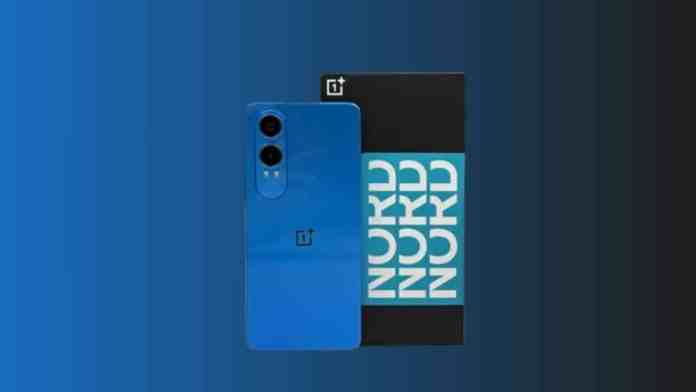
OnePlus Nord CE 4 Review: Best Futuristic Phone Under ₹25,000 in India

Published

on

OnePlus Nord CE 4: Best Futuristic Phone Under ₹25,000 in India

Are you hunting for a budget-friendly smartphone that doesn’t compromise on performance? The OnePlus Nord CE 4 under ₹25,000 is turning heads with its futuristic design and robust features. Available now on Amazon with deep discounts, this device offers an impressive blend of style, speed, and battery life. Let’s explore why this phone is a top contender in its price bracket.

OnePlus Nord CE 4 Price and Discounts

The OnePlus Nord CE 4, equipped with 8GB RAM and 128GB storage, is originally priced at ₹26,999. However, Amazon is currently offering a flat 7% discount, bringing the price down to just ₹24,999. That’s already a steal for a phone with this hardware.

But the savings don’t stop there. Cardholders of HDFC Bank, ICICI Bank, and Kotak Mahindra Bank can claim an additional instant discount of ₹1,000, pushing the effective price to ₹22,050. Plus, you can opt for EMI plans starting at a mere ₹1,212 per month. For those with an old handset, Amazon’s exchange offer can further reduce the cost. This makes the OnePlus Nord CE 4 price incredibly competitive for a phone loaded with premium specs.

Display and Design: A Visual Treat

The OnePlus Nord CE 4 sports a 6.7-inch FHD+ Super AMOLED display with a crisp resolution of 2412 x 1080 pixels. The 120Hz refresh rate ensures buttery-smooth scrolling, whether you’re browsing social media or playing fast-paced games. The screen also supports HDR10+ for vibrant colours and deep blacks, making it ideal for streaming movies on Netflix or YouTube.

Design-wise, the phone features a sleek, modern aesthetic with a glass back and a punch-hole camera. It feels premium in hand, and the slim bezels maximise the viewing area. If you’re looking for a best phone under 25000 that looks and feels expensive, this is it.

Performance: Snapdragon 7 Gen 3 Power

Under the hood, the OnePlus Nord CE 4 is powered by the Qualcomm Snapdragon 7 Gen 3 chipset. Built on a 4nm process, this processor delivers flagship-level efficiency and speed. Whether you’re multitasking between apps, editing photos, or playing graphics-heavy games like BGMI and Call of Duty Mobile, the phone handles everything with ease.

It runs on Android 14 out of the box with OxygenOS 14, offering a clean, bloatware-free experience. The 8GB of LPDDR5 RAM ensures smooth app switching, while the 128GB UFS 3.1 storage provides fast read/write speeds. For power users, there’s also a virtual RAM expansion feature. In short, the Snapdragon 7 Gen 3 phone offers performance that rivals many higher-priced devices.

Gaming and Multitasking

Gamers will appreciate the Adreno 720 GPU, which handles high frame rates without stuttering. The phone also includes a dedicated gaming mode that optimises CPU and GPU resources. Combined with the 120Hz display, the gaming experience is immersive and responsive. This makes the OnePlus Nord CE 4 a strong candidate for the best phone under 25000 for mobile gaming enthusiasts.

Camera System: Capture Every Moment

Photography enthusiasts will find plenty to like here. The dual rear camera setup includes a 50MP primary sensor with an f/1.8 aperture and OIS (Optical Image Stabilisation), plus an 8MP ultra-wide lens. Daytime shots are sharp, with accurate colours and good dynamic range. The OIS helps reduce blur in low-light conditions, producing clearer night shots than many competitors.

For selfies, the 16MP front-facing camera is housed in a punch-hole cutout. It supports AI beautification and portrait mode, ensuring your selfies look polished. Video calling is also clear, thanks to the camera’s noise reduction algorithms. Whether you’re a vlogger or a casual snapper, the camera system on this OnePlus Nord CE 4 delivers consistent results.

Battery Life and Charging

Battery anxiety is a thing of the past with the OnePlus Nord CE 4. It packs a massive 5,500mAh battery, which easily lasts a full day of heavy use—and often stretches into the second day for moderate users. Whether you’re streaming, gaming, or browsing, the battery holds up admirably.

When it’s time to recharge, the 67W SuperVOOC fast charging comes to the rescue. According to OnePlus, the charger can take the battery from 0 to 100% in about 45 minutes. This means a quick 15-minute top-up can give you hours of usage. The combination of a large battery and fast charging makes this phone perfect for busy professionals and students alike.

As a result, the OnePlus Nord CE 4 under ₹25,000 stands out as a futuristic, all-rounder smartphone. Its powerful processor, stunning display, versatile cameras, and long-lasting battery make it a compelling choice in the mid-range segment. If you’re in the market for a new phone, this deal on Amazon is hard to ignore.

Continue Reading
Click to comment

Leave a Reply

Your email address will not be published. Required fields are marked *

Social Media

Stop the Scroll Without AI: A Human Writer’s Blueprint for LinkedIn Content That Actually Gets Shared

Published

on

LinkedIn content without AI

The Real Problem With LinkedIn Posts (It’s Not You)

You’ve been posting consistently on LinkedIn for weeks. Maybe months. The likes trickle in. A comment here, a reaction there. But the kind of traction that actually builds a professional following? It’s not happening.

Here’s the hard truth: the platform is flooded with AI-generated sludge. Generic advice, recycled quotes, and bland observations that all sound like they came from the same bot. Readers can smell it. They scroll past it.

That’s your opening. The gap between what most people post and what actually earns attention is widening. And you don’t need a single AI tool to exploit it.

Why Human-Written LinkedIn Content Wins Right Now

LinkedIn’s algorithm has always favored posts that keep people on the platform. But in 2025, the bar is higher. Users are tired of perfectly polished, soulless content. They want voice. They want a point of view. They want to feel like a real person is on the other side of the screen.

This is where writing LinkedIn content without AI becomes your unfair advantage. A human-written post carries micro-signals that machines can’t fake: a slightly awkward but honest sentence, a surprising personal anecdote, a moment of genuine vulnerability. Those signals stop the scroll.

Let’s break down a three-part framework that works. No templates. No prompts. Just a way to think about your next post.

Part 1: The Hook That Earns the First Glance

Your opening line has one job: make someone stop. Not like. Not comment. Just pause their thumb for one extra second.

Most people start with a question or a stat. Those can work, but they’re overused. A stronger tactic is a specific, concrete observation that challenges a common belief. For example:

  • Instead of: “Struggling to get leads on LinkedIn?”
  • Try: “I sent 50 cold DMs last week. Exactly 3 people replied. Here’s what I learned.”

The second version works because it’s personal, numerical, and promises a lesson. It also signals that the post was written by someone who actually did something, not a bot generating fluff.

What to Avoid in Your Hook

Don’t open with a generic truth like “In today’s fast-paced business world.” That’s a dead giveaway. Also avoid questions that your reader has heard a hundred times before. If your hook could be swapped into any other post on LinkedIn, rewrite it.

Part 2: The Middle That Holds Attention

You’ve got the click. Now you need to keep them reading. This is where most LinkedIn content falls apart. The middle becomes a list of bullet points or a generic lesson that feels like it was copied from a blog post.

Instead, tell a mini-story. It doesn’t have to be dramatic. A short narrative about a specific client conversation, a mistake you made, or an unexpected result from a small experiment works beautifully. Keep it tight. Three to five sentences max for the story.

Then, extract the lesson. This is the part of your LinkedIn content strategy where you deliver value. Show what you learned and how it applies to the reader’s situation. Be specific. If you can include a number or a timeframe, do it.

For example: “After that call, I changed one thing in my proposal template. My close rate went from 20% to 35% in two months.” That’s concrete. That’s believable. That’s human.

Short Paragraphs Are Your Friend

On LinkedIn, no one reads long blocks of text. Keep paragraphs to two or three sentences max. Use line breaks generously. Make the post scannable. The eye needs rest points, and white space is a cheap way to provide them.

Part 3: The Close That Drives Shares

Shares are the holy grail of LinkedIn engagement. A share puts your post in front of a new audience, often with the sharer’s endorsement attached. To earn that, your ending needs to do one thing: invite the reader to add their own experience.

The best way to do this is a call for participation that feels genuine. Instead of “What do you think?” (which everyone writes), try something like: “If you’ve tried a similar approach and it backfired, I’d genuinely love to hear what happened.” Or: “What’s one piece of advice you’d give to someone just starting out? Drop it in the comments.”

The key is specificity. A vague ask gets vague responses. A focused ask invites people who actually have something to say. And those engaged commenters are the ones most likely to share your post with their network.

Practical Tips for Writing LinkedIn Content Without AI

You don’t need to be a professional writer to make this work. You just need to be willing to sound like yourself. Here are a few ground rules I use:

  • Write like you talk. Read your post out loud. If it sounds stiff, rewrite it. Your natural speaking voice is your best asset.
  • Use contractions. “It’s” not “it is.” “Don’t” not “do not.” This alone makes your writing feel warmer.
  • Cut every word that doesn’t add value. If a sentence still makes sense without a word, delete it. Short is strong.
  • Post at a consistent time. Experiment with morning and lunch slots. Track which times get the most views for your specific audience.

One more thing: don’t worry about going viral. Viral is a lottery. Consistency and genuine connection are a strategy. Write one solid post per week for three months, and you’ll build a following that actually trusts you.

Why This Approach Beats AI-Generated Content

AI tools are useful for many things. Brainstorming ideas. Summarizing long documents. Drafting email templates. But for LinkedIn content that builds relationships? They fall short.

LinkedIn is a professional network, but it’s still a human network. People connect with people, not with output. A post written from personal experience, with a specific voice and a clear point of view, will always outperform generic AI-generated content in the long run.

The algorithm may reward frequency, but it rewards authenticity more. And authenticity is something no machine can replicate.

So next time you sit down to write a human-written LinkedIn post, skip the AI tools. Open a blank document. Think about one thing that happened this week that taught you something. Write it in your own voice. Use the three-part framework. And hit publish.

You might be surprised how far being human can take you.

Continue Reading

How To

Why I ditched Windows copy for large files — and the tool I trust now

Published

on

Windows file copy

The moment I stopped trusting Windows file copy

It started with a 12 GB video project. I dragged it from one internal SSD to another — a simple operation, right? Windows popped up its usual blue progress bar, estimated “about 3 minutes,” then stalled at 87% for nearly twenty. The estimate jumped to 40 minutes. Then it froze entirely. I had to kill Explorer and start over. That was the last straw.

For small stuff — a few screenshots, a Word doc — Windows copy is fine. It works. You don’t think about it. But the moment you push it past a couple of gigabytes, the cracks show. The progress bar lies. The speed tanks. And sometimes, the whole operation silently fails, leaving you with a half-copied file and no error message.

I’m not alone. Ask any video editor, developer, or data hoarder: Windows file copy for large transfers is a gamble you don’t want to take.

What actually goes wrong under the hood

Windows uses a single-threaded, buffered I/O model for standard copy operations. That sounds technical, but the practical result is simple: it doesn’t handle big, sustained reads and writes well. The system tries to cache everything in RAM, which works fine for small files. For a 50 GB archive, though, the cache fills up, the disk thrashes, and the UI becomes unresponsive.

There’s also the checksum problem. Windows doesn’t verify data integrity during a copy. A single bit flip from a slightly flaky SATA cable? You’ll never know — until the file won’t open on the destination drive. Microsoft has improved things with Robocopy in PowerShell, but the default drag-and-drop experience hasn’t changed in a decade.

What I switched to — and why it’s night and day

After that frozen 12 GB transfer, I started testing alternatives. I needed something that could handle multi-gigabyte files, resume after an interruption, and actually show me honest progress. After trying a handful of tools, I settled on one: TeraCopy.

TeraCopy is not new — it’s been around for years. But it solves the core problem. It uses its own buffering, separate from Windows, and it processes files in a way that doesn’t lock up the Explorer interface. You can keep working while it runs. More importantly, it verifies checksums after every copy. If a byte got mangled, you’ll know immediately.

Real-world speed difference

I tested it with a 25 GB folder of mixed media files — video, audio, raw photos. Windows copy averaged around 110 MB/s, with frequent dips to 30 MB/s. The whole thing took about 4 minutes and 20 seconds. Same files, same drives, using TeraCopy: steady 180 MB/s, completed in 2 minutes 35 seconds. That’s nearly 40% faster, with no stuttering.

And when I unplugged the USB drive mid-transfer (accidentally, I swear), Windows threw a generic error and I had to start over. TeraCopy paused, I reconnected, and it resumed from where it left off. That alone saves hours over a year.

Other tools worth considering

TeraCopy isn’t the only option. If you prefer open-source software, FastCopy (for Windows) is a solid choice. It’s less polished but equally reliable. It gives you fine-grained control over buffer size and read/write priorities. For Mac or Linux users, rsync is the gold standard — it’s command-line only, but it handles huge transfers, incremental backups, and integrity checks better than anything else.

There’s also Robocopy, which ships with Windows. It’s powerful, but it’s a command-line tool with a steep learning curve. Most people won’t want to memorize flags like /R:3 /W:10 just to copy a folder. TeraCopy gives you that same reliability in a simple window with a progress bar you can actually trust.

When Windows copy is still fine

Let’s be fair. If you’re moving a few hundred megabytes of documents or images, Windows copy works. The overhead of a third-party tool isn’t worth it. But the moment you’re dealing with files over 2–3 GB, or batches of files totaling more than 10 GB, the risk of a stalled or corrupted transfer goes up fast.

I still use Windows copy for quick, small jobs. But for anything substantial — a game install, a video project, a backup archive — I open TeraCopy first. It’s a small habit that’s saved me hours of frustration and at least one corrupted project file.

If you’ve ever watched that blue progress bar freeze at 99% and wondered if your data is safe, you already know: the default tool isn’t good enough. There are better options. Pick one.

Continue Reading

Social Media

TV Time is shutting down. Its original founder is building Bingers, a new home for TV fans

Published

on

Bingers app

TV Time is going dark. A familiar face is stepping up.

More than 25,000 people have signed a petition begging TV Time to stay alive. But the popular TV and movie tracking app is still shutting down. Its parent company, Whip Media, is pivoting to AI. So TV Time’s community of 26.4 million lifetime installs is about to lose its digital clubhouse.

Enter Antonio Pinto. He’s the French entrepreneur who originally built the app — back when it was called TVShow Time — and sold it to Whipclip in 2016. Now he’s building a new app called Bingers. Think of it as a spiritual successor. A second chance.

“I decided to build the new home where the TV Time community could go,” Pinto wrote on the Bingers website. “I wanted to rebuild all TV Time’s great features, but also fix everything that always bothered me.”

That’s a lot of baggage to carry. But Pinto seems ready.

What Bingers will do differently

TV Time had a serious performance problem. The app loaded slowly. It was expensive to run. Pinto says the premium subscription covered only about 10% of the server costs. That’s a brutal ratio. It’s also a big reason the app is dying.

Bingers is built differently. Pinto claims the architecture keeps server costs low, making the whole thing more sustainable. Users should get faster responses when they mark an episode as watched — even when millions of people hit that button at the same time.

That’s the kind of technical fix that doesn’t make headlines but keeps users sane. Anyone who’s waited five seconds for a checkmark to appear knows the pain.

Import your TV Time data now

Here’s the good news: you don’t have to start from scratch. TV Time users can export their entire viewing history using the app’s GDPR-compliant export tool. That tool will disappear once the app is removed from the App Store and Google Play on July 15.

Bingers already has an archive import tool live on its website. Upload your data now, and your history will be waiting when the app launches. That includes community comments from TV Time — the episode-by-episode chatter that made the app feel like a live watch party.

Pinto says the import will “recreate TV Time’s community comments.” That’s a big deal. Many tracking apps let you log what you watched. Very few let you argue about the finale with strangers.

When can you get Bingers?

The app won’t arrive overnight. Pinto tells TechCrunch that Bingers will hit the App Store and Google Play by the end of July 2026. That’s a long wait. But the waitlist is open now on the Bingers website. Sign up, and you’ll get a notification when it’s ready.

In the meantime, the archive import is already functional. So you can lock in your data and forget about it. When the app finally drops, your history will be there.

Why this matters for TV fans

TV Time wasn’t just a tracker. It was a social network for people who watch too much television. That combination is rare. Most tracking apps are solo experiences. You log your shows, get some stats, move on. TV Time had threads, reactions, inside jokes. It had a culture.

When Pinto heard the app was being wound down, he said he felt sad. “Sad because TV Time was part of my life for so many years. And sad because this community was like my other family. Reading the community reactions after each episode became a ritual for me, and for many others.”

That kind of attachment is hard to replicate. But if anyone can do it, it’s the person who built the original. Bingers might not save every feature. It might not bring back every user. But it gives the community a place to land — and that’s more than most dying apps offer.

If you’re a TV Time user, export your data before July 15. Then join the waitlist. Your viewing history deserves a second act.

Continue Reading

Trending