Connect with us

Artificial Intelligence

ChatGPT Models Explained: How to Pick the Best One for Your Needs

Published

on

ChatGPT Models Explained: How to Pick the Best One for Your Needs

Artificial intelligence is advancing at an incredible pace. Every week seems to bring a new AI tool or feature, and ChatGPT models explained is a topic many users are eager to understand. OpenAI’s chatbot has become a daily assistant for millions, but selecting the right model now requires a bit of know-how. Instead of one option, you can choose from several models tailored to different tasks—writing, coding, research, or complex problem-solving.

But here’s the catch: the differences aren’t always obvious. Some models prioritize speed, others focus on deep reasoning, and a few strike a balance. Choosing the wrong one won’t ruin your results, but it might mean slower responses or less detailed answers. This guide breaks down the current lineup, explains each model’s strengths, and helps you decide which one fits your workflow.

Understanding the ChatGPT Model Lineup

Before diving in, it’s helpful to know what’s available. OpenAI has simplified its naming over the past year, replacing older versions with a focused collection of models. For most users, GPT-5 is the default—and it’s the one OpenAI recommends for everyday tasks. Alongside it, you’ll find specialized options for reasoning, speed, or specific workflows. The models you can access also depend on your subscription: Free, Go, Plus, or Pro.

Here’s a quick overview of the current models and what they do best.

Model Best For Should You Use It?
GPT-5 Everyday conversations, writing, research, productivity, image generation Yes. This is the default and best for most users.
GPT-5 Thinking Complex reasoning, coding, analysis, multi-step problems Use when you need deeper reasoning and detailed answers.
GPT-5 Thinking Pro Advanced research and expert-level problem solving Best for professionals and power users.
GPT-5 Instant Quick answers and everyday tasks where speed matters Use when you want the fastest response possible.
o3 Complex reasoning, coding, mathematics, science Still powerful, but GPT-5 Thinking may be a better choice now.
o4-mini Fast reasoning with lower resource needs Good for everyday reasoning tasks when speed is key.
o4-mini-high Stronger reasoning than o4-mini Useful for better reasoning without moving to larger models.
GPT-4.1 Coding and instruction-following tasks Particularly useful for developers.
GPT-4.1 mini Lightweight version for simple tasks Best for quick interactions.

For most people, the decision comes down to GPT-5, GPT-5 Thinking, or GPT-5 Instant. The rest are for specialized needs.

GPT-5: The All-Purpose Workhorse

GPT-5 is OpenAI’s flagship model and the default option. If you’re unsure, start here. It’s designed as an all-purpose assistant, balancing speed, intelligence, and versatility. It handles writing emails, summarizing documents, brainstorming ideas, generating images, conducting research, and coding projects. For most everyday tasks, GPT-5 delivers the best mix of performance and convenience.

When to Use GPT-5

Choose GPT-5 for reliable performance across a wide range of tasks. It’s ideal for writing, content creation, productivity, learning, and general problem-solving. You won’t need to overthink model selection.

When to Switch to Another Model

If you’re tackling a complex coding challenge or an advanced research project, GPT-5 Thinking may provide more detailed responses. For quick answers, GPT-5 Instant is faster.

GPT-5 Thinking: For Deeper Reasoning

While GPT-5 handles a bit of everything, GPT-5 Thinking is built for tasks that require deeper reasoning. It takes more time to work through complex prompts, evaluate approaches, and deliver detailed answers. This makes it excellent for advanced coding, research-heavy tasks, data analysis, mathematics, and multi-step problems where accuracy matters more than speed.

As a result, you’ll get more thorough explanations and stronger problem-solving capabilities, even if responses take longer.

When to Use GPT-5 Thinking

Use GPT-5 Thinking when tackling challenging problems, conducting in-depth research, or working on tasks that benefit from step-by-step reasoning. It’s especially useful for developers, students, researchers, and professionals with complex workflows.

When to Stick with GPT-5

For everyday conversations, writing, brainstorming, and general productivity, GPT-5 is often better—it provides excellent results more quickly.

GPT-5 Thinking Pro: Expert-Level Analysis

GPT-5 Thinking Pro takes reasoning a step further. It’s designed for situations where you need the highest analytical depth and are willing to trade speed for comprehensive answers. It excels at expert-level problem solving, advanced research, and complex coding challenges that require evaluating large amounts of information.

For most everyday tasks, the difference may not be obvious, but for highly technical or specialized work, the extra reasoning can be valuable.

When to Use GPT-5 Thinking Pro

Choose this model for complex professional projects, detailed research, or difficult technical problems where the most thorough analysis is critical.

When to Skip It

Most users will be better served by GPT-5 or GPT-5 Thinking. Unless your work genuinely benefits from deeper reasoning, the additional processing time may not be worth it.

GPT-5 Instant: Speed First

GPT-5 Instant prioritizes speed. Instead of spending extra time reasoning, it delivers answers as quickly as possible while maintaining core capabilities. It’s well suited for everyday questions, quick research, brainstorming, summarizing information, and routine productivity tasks where fast responses matter more than exhaustive analysis.

For rapid back-and-forth conversations, GPT-5 Instant feels more responsive.

When to Use GPT-5 Instant

Choose GPT-5 Instant when you need answers quickly, are working through many prompts, or want a faster ChatGPT experience for everyday tasks.

When to Use Another Model

If your prompt requires detailed reasoning, advanced coding, or complex analysis, GPT-5 or GPT-5 Thinking will produce stronger results, even if they take longer.

What Happened to Older Models Like GPT-4.1 and o3?

If you’ve been using ChatGPT for a while, you might notice that some models are no longer in the picker. OpenAI regularly retires older versions as newer ones arrive. GPT-4.5, GPT-4.1, GPT-4.1 mini, and o4-mini have been phased out of the standard experience. Access to models like o3 now depends on your subscription tier.

In most cases, OpenAI has replaced these with newer GPT-5 variants that offer stronger reasoning and better performance. That doesn’t mean the old models were bad—many had loyal followings for coding or conversational style. But for today’s users, the GPT-5 family is where development is focused.

For example, o3 was excellent for complex, multi-step tasks like strategic planning, detailed analyses, and extensive coding. OpenAI suggests using it for risk analysis or data-driven business strategies. o4-mini, a smaller model, is quick and cheap but has less world knowledge—best for fast technical tasks like extracting data from a CSV or generating quick summaries. o4-mini-high is a step up, thinking longer for higher accuracy in coding and math.

Which Models Are Available on Free, Go, Plus, and Pro?

The models you can use depend on your subscription. OpenAI has simplified the picker, but paid users get more advanced reasoning models and higher limits.

  • Free: GPT-5 (default) with limited reasoning features and lower usage limits.
  • Go ($8/month): GPT-5 with higher limits than Free, plus access to Thinking mode (lower limits than Plus).
  • Plus ($20/month): GPT-5, GPT-5 Instant, and GPT-5 Thinking with significantly higher limits.
  • Pro ($100/month): Same core models as Plus, plus GPT-5 Thinking Pro with substantially higher limits.
  • Pro ($200/month): Everything in Plus, plus GPT-5 Thinking Pro, the most capable reasoning model, with the highest limits.

OpenAI has also simplified the interface: most users now see options like Instant, Thinking, and Pro, with ChatGPT handling model selection behind the scenes. Keep in mind that model availability changes frequently.

Beyond consumer plans, OpenAI offers subscriptions for students, educators, businesses, and enterprise customers with higher limits and additional controls.

Why So Many Models?

Large language models are unpredictable—users never know exactly what responses they’ll get, and developers don’t either. It might be more convenient to have all capabilities in one model, but that’s not easy. As OpenAI tweaks models, some things improve while others get worse, and unexpected side effects occur. Releasing new versions focused on specific areas makes more sense than trying to balance everything perfectly.

Frequently Asked Questions

Which ChatGPT model should most people use?

For most users, GPT-5 is the easiest recommendation. It handles everyday tasks like web searches, writing assistance, brainstorming, and summarizing documents without much thought. Unless you’re working on advanced coding or research, GPT-5 is likely all you need.

What’s the difference between GPT-5 and GPT-5 Thinking?

GPT-5 balances speed and capability, while GPT-5 Thinking spends more time reasoning. GPT-5 Thinking is better for complex coding, research, and multi-step problems, while GPT-5 is ideal for everyday tasks where speed and versatility matter.

Is GPT-5 Instant less accurate than GPT-5?

Not necessarily. GPT-5 Instant prioritizes speed, making it great for quick questions. For many tasks, the output quality difference is minimal. However, GPT-5 generally delivers more detailed responses and stronger reasoning for complex prompts.

Do free ChatGPT users get access to GPT-5?

Yes. GPT-5 is available to free users, though usage limits and access to advanced reasoning features differ from paid plans. Go, Plus, and Pro subscribers get higher limits and additional model options.

For more tips, check out our guide on how to use ChatGPT effectively or explore best AI writing tools for comparison. Also, see our ChatGPT vs. Bard comparison for alternative options.

Continue Reading
Click to comment

Leave a Reply

Your email address will not be published. Required fields are marked *

Artificial Intelligence

Sam Altman’s space data center trash talk echoes what experts have been saying for years

Published

on

space data centers

The weekend spat that put a spotlight on orbital compute

Sam Altman and Elon Musk traded insults on social media over the weekend, and buried under the name-calling was a real disagreement about the future of computing in orbit.

Musk accused Altman of being a scammer. Altman fired back: “homeboy you’re the one sellling [sic] public market investors on short-term space datacenters.”

Set aside the schoolyard tone, and Altman’s jab lands close to what many industry insiders have concluded but public market investors seem to be ignoring: space data centers are not going to be a meaningful business anytime soon.

Why SpaceX’s orbital data center pitch is so seductive

SpaceX’s plan to launch a fleet of orbital data centers for AI inference work is a big reason the company is valued at $2 trillion. Bullish analysts see the potential for that processing power to fuel SpaceXAI’s models or serve as an orbital neocloud — something unprecedented in the AI boom.

The vision is compelling: put high-powered computing above the atmosphere, beam results down to Earth, and sidestep the terrestrial constraints of power and land. But experts who have actually studied the problem tell a different story.

What the experts say (when investors aren’t listening)

Talk to the entrepreneurs behind other space data center startups. Talk to the team at Google working on orbital compute. Talk to engineers who’ve run the numbers for fun. You get the same answer: this won’t make a big dent until we have much cheaper rockets and the ability to mass-produce high-powered satellites at low cost.

The economics simply don’t work yet. Launching a single satellite with meaningful compute power is expensive. Launching hundreds, or thousands, is currently inconceivable.

The Starship wildcard — and why it’s not enough

Musk’s answer to the skeptics is predictable: SpaceX‘s Starship, the massive new rocket, is expected to make its 13th test flight as soon as July 16. If Starship can fly again and again, the business case for space data centers could close.

But even a successful recovery of both stages on that test flight doesn’t mean operational reusable flight is right around the corner. It’s likely still years away. And even when Starship is flying regularly, space data center launches will take a back seat to SpaceX’s commitments to NASA and to building out its own Starlink network.

There’s another wrinkle. During its IPO road show, SpaceX conceded that Starship may not be fully reusable in the near term. Each launch might have to throw away its second stage. That would put a serious damper on the economics of orbital compute.

Musk’s “next year” promise falls flat

That’s why Musk’s rejoinder — “We start flying them next year” — doesn’t convince many people. Sure, SpaceX could launch a satellite equipped for high-speed data processing next year. That’s not the question.

The real question is when SpaceX can launch and manufacture these satellites at scale. And that’s likely a question for the 2030s.

For now, the gap between vision and reality in the space-compute business remains wide. Investors betting on near-term orbital data centers might be wise to listen to the engineers — and to Altman’s trash talk.

Continue Reading

Artificial Intelligence

China’s AI talent shortage is so bad that tech giants are recruiting teenagers

Published

on

AI talent shortage

The 13-year-old who’s already ahead of the curve

In Hangzhou, a 13-year-old boy has won national AI competitions and built an online following of more than 136,000 people. His dad, meanwhile, is trying to figure out how to guide a kid through a field that barely existed when he was growing up. That family’s story, first reported by Rest of World, captures where China’s tech industry is heading.

Companies used to wait for graduates to walk through the door. Now they’re reaching further back — first to undergrads, and increasingly to teenagers. The goal? Spot rare talent before anyone else gets to them.

Why the sudden rush to recruit teens?

The short answer is a serious talent gap. McKinsey estimates China could be short by 5 million AI workers by 2030. Right now, there are more open AI jobs than qualified people to fill them. That math has pushed companies to rethink who they even consider.

Tencent recently launched camps for students aged 13 to 18, covering everything from AI product management to quantum computing. ByteDance founder Zhang Yiming went even further, co-founding a research program that hand-picks just 30 students a year as full-time trainees.

Geely flips the hiring order entirely

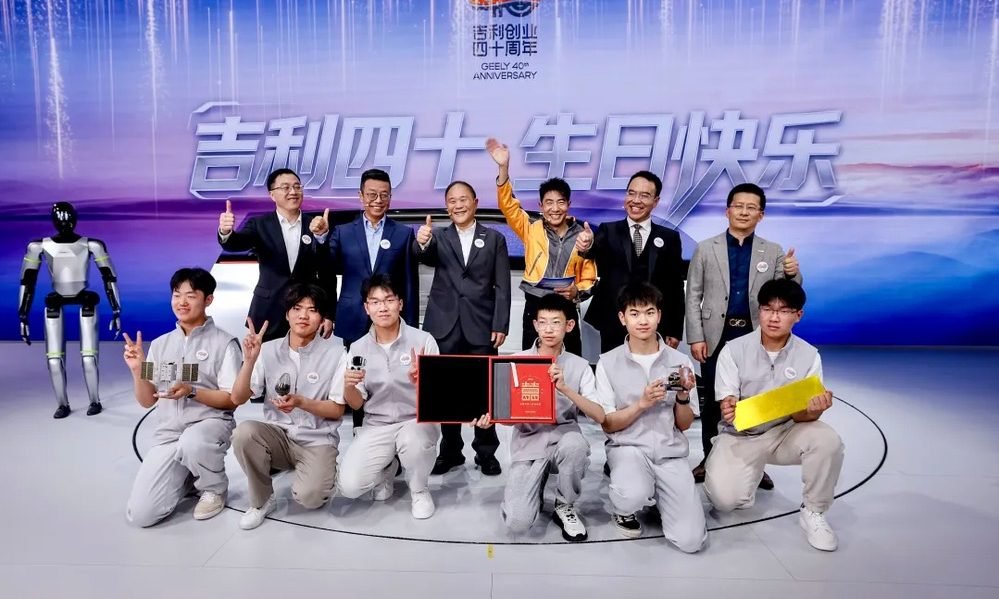
Then there’s Geely, which turned the usual hiring pipeline upside down. The automaker now recruits students straight out of high school, trains them in AI and EV tech alongside their studies, and guarantees them a job that pays the same as a fresh graduate once they’re done. No degree required. No waiting four years.

It’s a bold bet. But Geely isn’t alone in questioning the old rules.

Does a degree matter less now?

MiniMax, one of China’s leading AI startups, says it still isn’t hiring high schoolers — but it has stopped treating a degree as a hard requirement. The company cares more about curiosity and raw ability than a diploma. That shift isn’t unique to China either.

Google co-founder Sergey Brin has said the company is increasingly open to hiring people without a bachelor’s degree. At the end of the day, AI isn’t just changing what jobs look like. It’s rewriting who even gets considered for them.

What this means for the future of hiring

Degrees, age, and traditional resumes are all starting to matter a little less than raw skill and curiosity. That’s a big deal for young people who might have been overlooked before. It’s also a warning for anyone who assumed a diploma was a lifetime ticket.

For parents like that Hangzhou dad, the new landscape raises a tricky question: how do you raise a kid for a career that didn’t exist a decade ago? There’s no playbook. But if China’s tech giants are any indication, the answer might be to start earlier — and think less about credentials, more about capability.

If you’re curious about how AI is reshaping other parts of life, check out AI job market trends or how to build an AI career without a degree.

Continue Reading

Artificial Intelligence

VentureBeat taps Rob Strechay as its first Lead Analyst, doubling down on enterprise AI research

Published

on

Rob Strechay Lead Analyst

VentureBeat’s new research push has a name

Rob Strechay, formerly managing director and principal analyst at theCUBE Research, is now VentureBeat’s first Lead Analyst. He’s also a founding analyst of the company’s new research arm, VentureBeat Research.

The move signals something bigger than a single hire. VentureBeat is deliberately shifting toward specialization — analysis built for technical decision-makers like directors, VPs, CIOs, and CTOs who are actively evaluating, buying, and deploying enterprise AI.

“The enterprise AI stack is being rewritten in real time,” said VentureBeat’s leadership in announcing the appointment. “The decision-makers I talk with are starved for objective, defendable data.”

Why this hire matters now

The questions enterprise technology leaders are asking have changed. Organizations are moving past generative AI experimentation and into production deployment. They want to know how to orchestrate multi-vendor environments, where the security gaps in their agentic pipelines sit, and how to fix the utilization problems draining their infrastructure budgets.

News coverage alone can’t answer those questions. That’s the gap VentureBeat Research is built to fill.

An analyst who has sat on every side of the table

Strechay brings nearly three decades of experience as a practitioner, product executive, and industry analyst. Before becoming an analyst, he was an executive at startups including Zerto. He joined Amazon Web Services to help build a new analytics service. He later served as a senior analyst at Enterprise Strategy Group and, most recently, as managing director and principal analyst at theCUBE Research and SiliconANGLE.

His initial focus areas at VentureBeat: cloud infrastructure, advanced data infrastructure, platform engineering, DevOps orchestration and observability, and the intersection points where AI and enterprise security collide.

Already at work: GPU utilization and the VB Pulse surveys

Strechay hasn’t waited for an official start date. In May he published an analysis of enterprise GPU utilization, examining the compute waste sitting inside enterprise AI infrastructure. He also provided a substantive review of VentureBeat’s AI Infrastructure & Compute survey before it went into the field.

His infrastructure-level focus complements the research engine VentureBeat has built around its monthly VB Pulse surveys. These track five areas of enterprise AI adoption:

  • Agentic orchestration
  • Agent reliability and evals
  • Agentic security and identity
  • AI infrastructure and compute
  • Context layers, including retrieval-augmented generation (RAG)

The June report on agentic orchestration, drawn from a survey of 145 enterprises, found that two-thirds had hedged their AI model strategy rather than committing to a single provider. The June outage of Anthropic’s Claude models made that posture’s value painfully clear.

VB In Conversation: The first vehicle

A core vehicle for this expanded research footprint will be a deepening of VentureBeat’s existing VB In Conversation video interview series, which Strechay will host. The series will bring architectural blueprints, actual deployment barriers, and back-end infrastructure realities to light through in-depth technical interviews with the architects and product leaders behind leading enterprise AI systems.

“VentureBeat has built an audience of enterprise builders and technology buyers that any analyst would want to serve,” Strechay said. “My goal is to use deep empirical metrics and VentureBeat’s proprietary tracking data to help enterprise buyers and the people building for them make sound platform and infrastructure decisions during the most disruptive transition enterprise technology has seen.”

What to expect next

The expanded VB In Conversation series will appear on VentureBeat and on VentureBeat’s YouTube channel, alongside Strechay’s written analysis on the site. Enterprise practitioners who want to take part in the monthly VB Pulse surveys, or arrange an analyst briefing with Strechay, can reach the research team directly.

For those tracking enterprise AI adoption trends, this hire is a signal. VentureBeat is betting that technical depth — not just news — is what enterprise buyers need most right now.

Continue Reading

Trending