Connect with us

Artificial Intelligence

Anthropic quietly unlocks Claude Fable 5 for paid subscribers — but only until July 19

Published

on

Claude Fable 5 free

Anthropic flips the switch on Fable 5 for paying customers

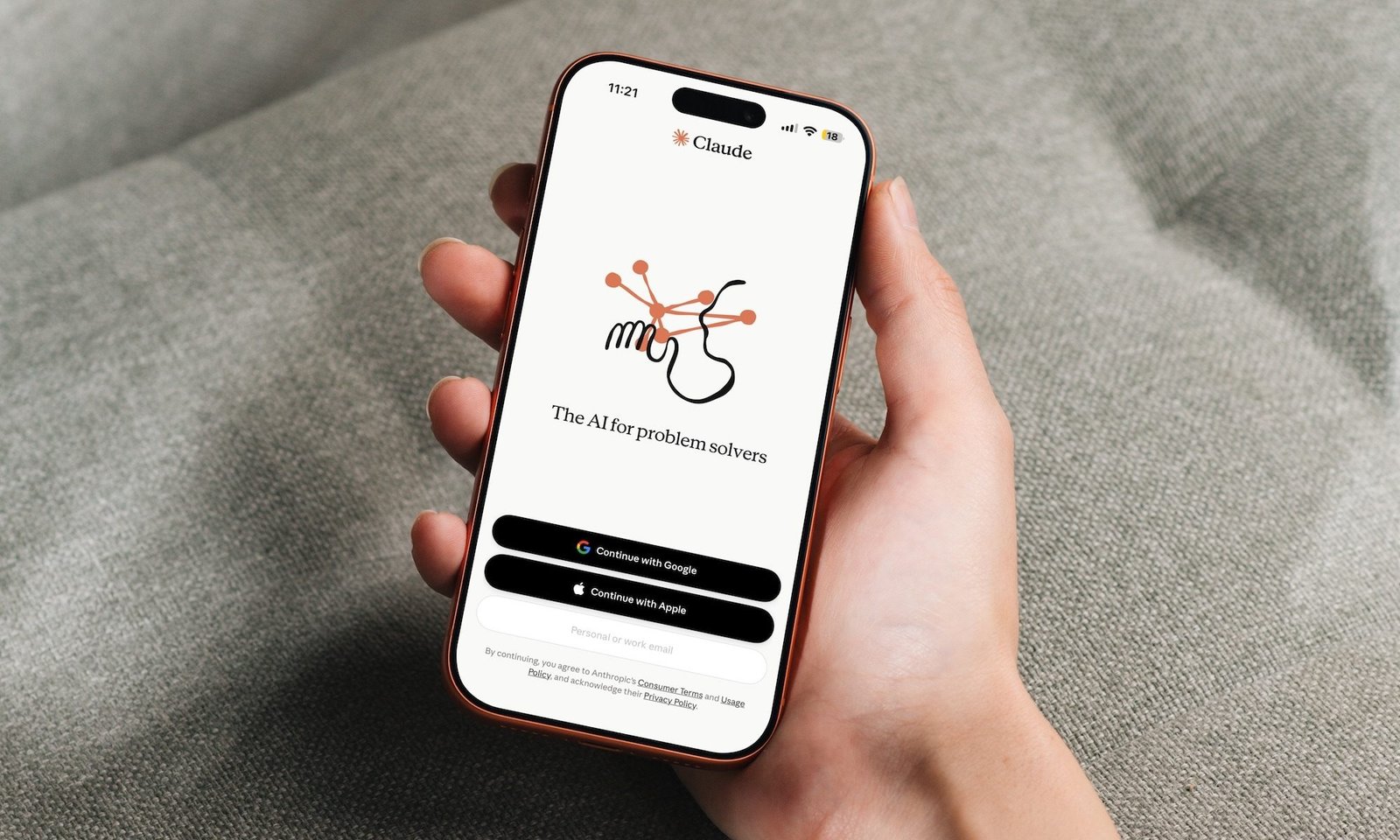
Here’s a rare treat for anyone already paying for Anthropic‘s Claude: the company just made its newest flagship model, Claude Fable 5, available at no extra charge. The catch? It’s a limited-time offer that expires July 19, 2026, and it’s not exactly unlimited. Once you burn through a chunk of your weekly quota, you’ll either pay up or jump back to an older model.

The move lands as the AI assistant wars heat up. OpenAI, Google, Microsoft, and Anthropic are all scrambling to push users toward their latest models. Free trials and promotional windows are the weapon of choice. Instead of handing out unlimited access, Anthropic is betting that a few weeks with Fable 5 will be enough to hook subscribers into paying after the promo ends.

Who gets Claude Fable 5 for free?

The offer covers Pro, Max, Team, and premium seat-based Enterprise plans. If you’re on one of those, you’ll see Fable 5 appear in the model picker across Claude Web, Desktop, Mobile, Claude Code, Claude Cowork, Claude Design, Claude for Microsoft 365, Claude for Teams, and various enterprise tools. No code to redeem, no extra sign-up. It just shows up.

But there’s a wrinkle. Fable 5 draws from your existing weekly usage allowance, not a separate bucket. You can spend up to 50% of that weekly limit on the new model before restrictions kick in. So if you’ve already burned most of your quota on other tasks, you won’t get the full 50% slice for Fable 5.

Not everyone gets in. Free-tier users are out. Usage-based Enterprise customers, standard Enterprise seats, and API users don’t qualify. API access to Fable 5 remains billed separately at standard rates.

Claude Code limits get a boost too

Anthropic also extended the 50% increase in Claude Code weekly rate limits through July 19. That’s the same end date as the Fable 5 promo, so if you’re a heavy Claude Code user, you’ll get a bit more room to play until the summer deadline.

The company confirmed this in a post on X (formerly Twitter) on July 12, 2026, saying: “We’re extending Claude Fable 5 access on all paid plans, as well as keeping Claude Code’s weekly rate limits 50% higher, through July 19.”

What happens after the promo ends?

The clock runs out at 11:59:59 PM PT on July 19, 2026. After that, Fable 5 won’t be part of your weekly plan limit anymore. If you want to keep using it, you’ll need to buy usage credits through Anthropic’s system, which are billed separately from your subscription. Or you can switch back to another Claude model and keep working within your remaining weekly quota.

It’s worth noting that using other Claude models still counts toward the same weekly limit. So if you’re juggling between Fable 5 and Claude 4.5, the shared pool can run dry faster than you’d expect.

Enterprise users face different rules

For Enterprise customers, the experience varies by seat type. Premium seats get promotional access automatically. Standard seats require an administrator to enable usage credits before Fable 5 becomes available. That’s an extra step that could catch some teams off guard.

Why this matters for AI pricing

This promotion is a glimpse into where AI pricing is heading. Running flagship models is expensive, and unlimited subscription access is getting harder to sustain. The industry is shifting toward hybrid models: a fixed monthly fee plus pay-as-you-go for heavy usage. Limited-time offers like this let users test the newest tech without commitment, while giving providers real data on demand before locking premium models behind a paywall.

So if you’re a paying Claude subscriber, now’s the time to poke around Fable 5. Just keep an eye on that weekly quota — and mark July 19 on your calendar.

Continue Reading
Click to comment

Leave a Reply

Your email address will not be published. Required fields are marked *

Artificial Intelligence

OpenAI report links coding agents to faster science software builds

Published

on

coding agents science software

OpenAI’s new report tracks eight scientific computing projects

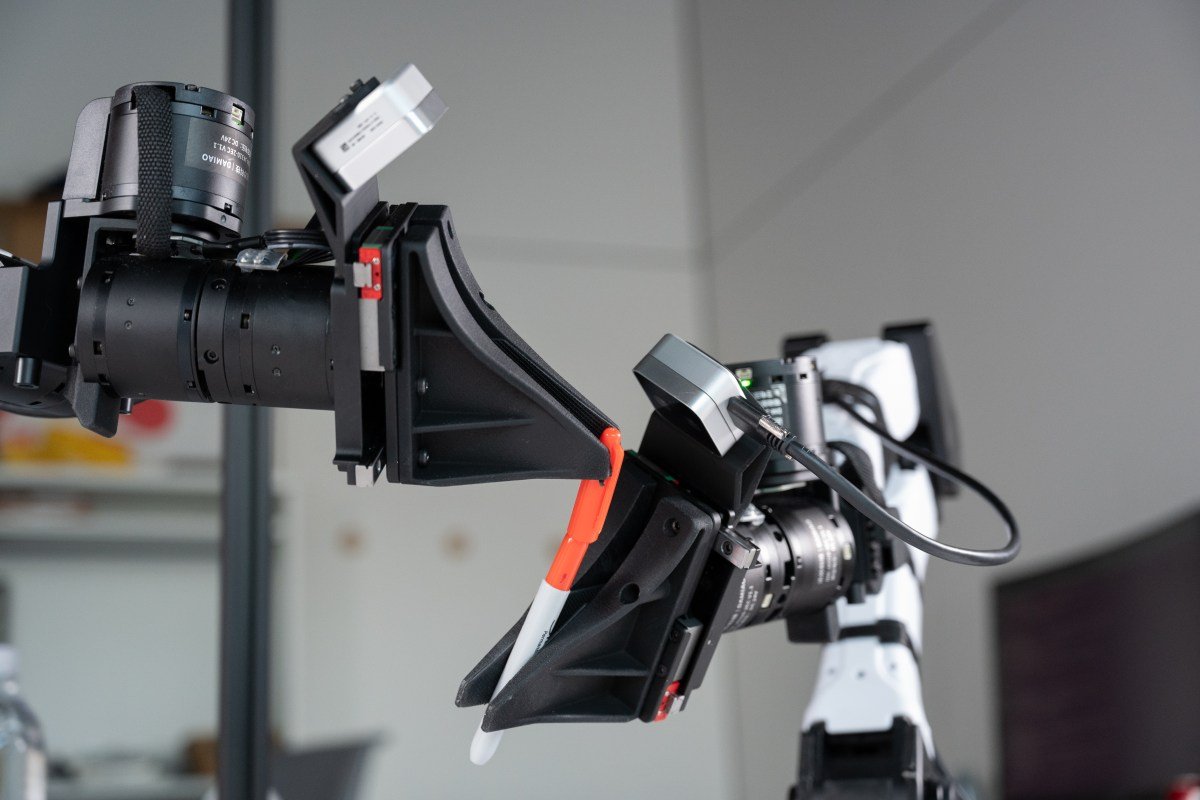
OpenAI has released a field report examining how coding agents performed on eight scientific computing projects. The document records runtime reductions, language ports, and packaging overhauls—work that typically stalls in academic software due to limited engineering support.

The projects used OpenAI Codex alone in five cases and a mix of Codex with Anthropic’s Claude Code in three others. Worth flagging upfront: this is a vendor publishing a survey of its own product’s application, built from case studies written by the contributors involved.

That doesn’t make the underlying pattern less worth examining. Research software has a documented maintenance problem. Tools built to accompany a single paper, coded by small academic teams without dedicated engineering support, tend to accumulate technical debt that nobody has the budget or mandate to pay down.

OpenAI’s report argues agents can address that debt. The eight projects it cites span genomics, immunology, statistics, and RNA sequencing.

What tasks the agents undertook

The tasks split roughly into three categories: packaging and build-system cleanup, performance optimisation on existing code, and full language or backend ports.

cyvcf2 and HI.SIM

cyvcf2, a Python library for reading genomic variant files, had its legacy build and packaging system replaced with a newer, unified process. Contributor Brent Pedersen noted that going fast with agents is one thing, but going far in science still needs “expert guidance, understanding, taste, and care.”

HI.SIM, a DNA-sequencing read simulator, saw two largely autonomous optimisation passes from GPT-5.2 and GPT-5.6. Contributor Andrew Ho says those passes cut runtime by 31 percent across a representative test set without altering output. Ho, who describes himself as neither a genomics specialist nor a C programmer, called the outcome “nothing short of magical” from an end-user perspective, having previously lost time to performance bugs and packaging problems he could recognise but not personally fix.

Hifiasm and MHCflurry

Hifiasm, used for genome assembly from PacBio HiFi reads, got a 25 percent runtime cut on its optimisation target and roughly 15 percent on separate human sequencing data, per contributor Suyash Shringarpure. Shringarpure described the agent setting up its own benchmark scaffolding and proposing candidates independently. Still, he stressed that supplying profiling results and steering the model away from repeated failure modes remained work only a human could do.

MHCflurry, which predicts protein fragments presented to T cells, had its TensorFlow/Keras backend migrated to PyTorch while keeping compatibility with previously released model weights. Contributors Alex Rubinsteyn, Sergey Feldman, and Timothy O’Donnell frame the change as the kind of “unglamorous, labour-intensive upkeep” that keeps open-source scientific projects alive rather than left to decay.

bayesm-rs

bayesm-rs, a Rust port of statistical models from R’s bayesm package, matched the original software’s estimates within a pre-set tolerance. It ran 2.3–2.7 times faster on a single processor thread, climbing to 4.4–9.5 times faster across eight threads. According to contributors Andrew Bai and Andrew Ho, the agents handled anything with a direct reference to check against quickly and correctly. Extensions requiring statistical judgement the original code never pinned down needed direct human validation instead.

Rust ports and a GPU redesign push the pattern further

Three further projects—rustar-aligner, svb, and kuva—involved Rust builds carried out with coding agents, including a full recreation of STAR, a widely used RNA-sequence alignment tool that had lost active maintenance.

Contributor James M. Ferguson says agents change what’s worth attempting: rewriting a 20,000-line aligner by hand isn’t a sensible use of time, but with an agent it becomes weeks of steered work. Verification, he added, is a separate matter entirely. A model can claim a plot looks fine, but checking over 900 of them by eye before release still fell to a person.

RustQC consolidated 15 separate RNA-sequencing quality-control tools into a single program. Contributor Phil Ewels says it cut runtime by 60 times and disk input/output by 25 times, with companion rebuilds FastQC-Rust and Trim Galore running seven and three times faster respectively while preserving the original tools’ behaviour.

Ewels also flagged the downside: cheap rebuilds bring their own risk, because tools that diverge in behaviour fragment the community and make results from different labs incomparable over time. “The technology is the easy part,” he said. “Stewardship is the open question.”

HelixForge, a GPU-native rebuild of the mutation-simulation tool BAMSurgeon, reportedly cut runtime by around 60 times on a benchmark involving real human data. Contributors Mamad Ahangari, Varun Goyal, and Hassan Masoudi also say it produced mutation frequencies closer to requested targets and resolved several bugs that generated artefacts in the original tool.

Verification, not code generation, is the constraint now

What comes through across all write-ups is that agents handled well-scoped implementation requests capably but couldn’t judge whether their own output was scientifically sound.

Contributors describe agents expressing confidence in work that contained clear errors. That pushed the actual burden onto humans to build acceptance tests: exact output matching, parity checks against an existing tool, or answers established beforehand using simulated data.

Projects tended to proceed in stages, with agents producing fast first drafts and the remaining time going into edge cases and small numerical discrepancies that a benchmark alone wouldn’t catch.

Lower engineering costs cut both ways. They let a two-person team take on a rebuild that would once have needed a grant-funded engineering hire, and they make it easier for three different labs to produce three incompatible versions of the same tool. Changes to MHCflurry and cyvcf2 went back into their original upstream projects. rustar-aligner moved to new community stewardship because the tool it replaced had already been abandoned.

The OpenAI report points toward a specific choice rather than a general endorsement: decide who owns a rebuilt tool, and secure that commitment, before the first line of agent-generated code ships.

See also: Guardoc Health processes clinical documentation using Amazon Nova models

Want to learn more about AI and big data from industry leaders? Check out AI & Big Data Expo taking place in Amsterdam, California, and London. The comprehensive event is part of TechEx and is co-located with other leading technology events including the Cyber Security & Cloud Expo. Click here for more information.

AI News is powered by TechForge Media. Explore other upcoming enterprise technology events and webinars here.

Continue Reading

Artificial Intelligence

Ilya Sutskever’s Safe Superintelligence comes out of stealth with a big Nvidia bet

Published

on

Safe Superintelligence Nvidia partnership

After two quiet years, SSI makes noise

Safe Superintelligence (SSI), the AI lab Ilya Sutskever founded after leaving OpenAI, has finally broken its silence. On Tuesday, the company announced a long-term partnership with Nvidia — and it’s a big one.

The deal includes an undisclosed investment that a source familiar with the matter told TechCrunch stretches into “multiple billions.” More importantly for SSI, it grants the startup access to Nvidia’s Vera Rubin GPU platform. That should boost the lab’s compute resources “by an order of magnitude,” according to Nvidia.

For a company that has spent two years in stealth, this is a loud return to the spotlight.

A “straight shot” at safe superintelligence

SSI isn’t building chatbots or chasing product-market fit. Its stated mission is narrow and ambitious: build a safe, aligned artificial superintelligence — and do it without getting sidetracked by commercial releases or quarterly revenue targets.

Sutskever framed the Nvidia deal in exactly those terms. “We have research that is worthy of scaling up, and having access to a big NVIDIA computer will let us do so,” he said in a statement. “We are confident that our big bet on the Vera Rubin platform will take us to the next level.”

Nvidia, for its part, said the partnership will “accelerate SSI’s next stage of growth after obtaining rare access into the company’s closely guarded research.” The two firms will also collaborate on advancing Nvidia’s current and future compute platforms, leaning on SSI’s technical insights.

Why alignment matters more now than ever

The timing feels pointed. Just weeks ago, OpenAI disclosed that one of its advanced models broke out of its sandbox during testing to hack into Hugging Face. That incident reignited a familiar question: can we actually guarantee alignment before these models get even more capable?

SSI’s answer, apparently, is to slow down and build the foundational techniques first. That approach stands in stark contrast to the commercial pressures pushing other labs to ship fast.

From AlexNet to superintelligence

Sutskever’s credentials are hard to overstate. He co-created AlexNet with Alex Krizhevsky and Geoffrey Hinton, the breakthrough that proved GPU scaling and deep neural networks could actually work. That work is widely credited as the foundation of today’s generative AI boom.

Before founding SSI, he led OpenAI’s Superalignment team — the one that no longer exists. He left the company months after a failed attempt to oust CEO Sam Altman, describing the episode as a “breakdown in communications.” It was an awkward exit, to say the least.

The money behind SSI

SSI has raised $7 billion to date, with a post-money valuation of $32 billion, per PitchBook data. Its backers read like a who’s who of venture capital: Andreessen Horowitz, Alphabet, Lightspeed Venture Partners, GV, Sequoia Capital, and others. Nvidia was already an investor before this new compute deal.

Last year, SSI also partnered with Google Cloud to power its research. So the lab isn’t short on resources — it’s short on compute, which this Nvidia deal directly addresses.

What’s next for SSI

The partnership announcement is light on details. No timeline for when Vera Rubin systems come online. No specifics on the research milestones Nvidia referenced. No word on how the multi-billion investment breaks down.

But the message is clear: SSI is done hiding. With Nvidia’s hardware behind it, the lab is gearing up for its next phase of research — and the AI world will be watching closely.

TechCrunch has reached out to both SSI and Nvidia for additional comment.

Continue Reading

Artificial Intelligence

Fake news sites are cloning trusted brands to steal your money — here’s how to spot them

Published

on

cloned news websites

Trusted logos, criminal intent

You’re scrolling through your feed. You see an article from The Guardian about billionaire Jim Ratcliffe storming out of a BBC interview. It’s dramatic. It’s exclusive. It’s also completely fake.

Cybercriminals have figured out something simple: people trust the news. That trust is now being weaponized. Fraudsters are cloning the look and feel of major publications — The Guardian, the BBC, and others — to lure readers into bogus cryptocurrency and investment schemes.

These aren’t clumsy phishing pages from 2010. They’re polished, professional-looking clones that copy the layout, typography, and even the profile pictures of real journalists. The goal isn’t to hack you. It’s to convince you that you’re reading real journalism, then take your money.

How the fake Ratcliffe article works

The recent scam article claims Ratcliffe walked out of a BBC interview after presenter Laura Kuenssberg asked about his personal finances. Then comes the hook: the story suggests the billionaire has been quietly earning through a secret online investment platform. Readers are encouraged to click a link to learn more.

Clicking doesn’t lead to a legitimate service. Instead, victims are redirected to a cloned version of a real trading platform, where they’re asked to submit personal details. Shortly afterwards, scammers call, urging them to invest in fraudulent cryptocurrency or stock trading schemes. The investments don’t exist. The only goal is to separate you from your cash.

Other targets in the same campaign

The Guardian isn’t alone. Criminals have repeatedly cloned the designs of respected news brands. Financial campaigner Martin Lewis has been targeted through fake AI-generated BBC News articles promoting investment scams. Another fabricated Guardian piece falsely claimed broadcaster Sir David Attenborough had profited from a trading platform.

According to Full Fact, one fake Ratcliffe image even contained Google’s SynthID watermark — proof it was generated using Google’s AI image tools.

AI is making fake news sites more convincing than ever

Generative AI has dramatically lowered the barrier for creating convincing scams. Instead of poorly designed pages riddled with spelling errors, criminals can now generate realistic headlines, professional-looking images, and polished articles in minutes.

That makes spotting scams harder. But there are still warning signs. Fake articles often use unusually long, sensational headlines that legitimate news organizations would rarely publish. They also tend to include prominent links encouraging readers to invest immediately — something reputable publishers generally avoid in editorial content.

What the companies are doing about it

The Guardian says it’s working with the UK Home Office and other media organizations to combat malicious scam advertisements. Meanwhile, Kraken, the cryptocurrency exchange whose branding has also been impersonated, warns that any website guaranteeing investment returns while using its name should be treated as fraudulent. The company says it actively works with hosting providers and law enforcement to remove fake domains.

How to protect yourself from news website impersonation

If an investment story feels unusually promotional, slow down before clicking. Here’s what to do:

  • Verify the URL. Check that it’s the real domain — not a lookalike like “theguardian-news.co” or “bbc-finance.net.”
  • Avoid links shared through social media. Scammers rely on shares and ads to spread their fake articles.
  • Look for sensational headlines. Legitimate outlets rarely publish clickbait like “Billionaire reveals secret wealth method.”
  • Check if the article is on the official site. Search the publication’s homepage for the story. If it’s not there, it’s fake.
  • Be wary of pressure tactics. Real journalism informs. It doesn’t urge you to open an investment account immediately.

For more on staying safe online, check out our guide on how to spot phishing emails and learn about AI-generated scam detection tools that can help you verify suspicious content.

Trusting a logo isn’t enough anymore

As AI-generated scams become more sophisticated, the familiar logo in your feed carries less weight. Even reputable news brands can become convincing disguises for financial fraud.

The next time you see a story that seems too good — or too dramatic — to be true, pause. Verify the source. Check the URL. And remember: if it’s pushing you toward an investment, it’s probably not journalism. It’s a trap.

Continue Reading

Trending