Connect with us

Artificial Intelligence

Copilot’s next trick: diagnosing your PC’s problems — but there’s a catch

Published

on

Copilot PC Insights

Copilot is learning to check your PC’s pulse

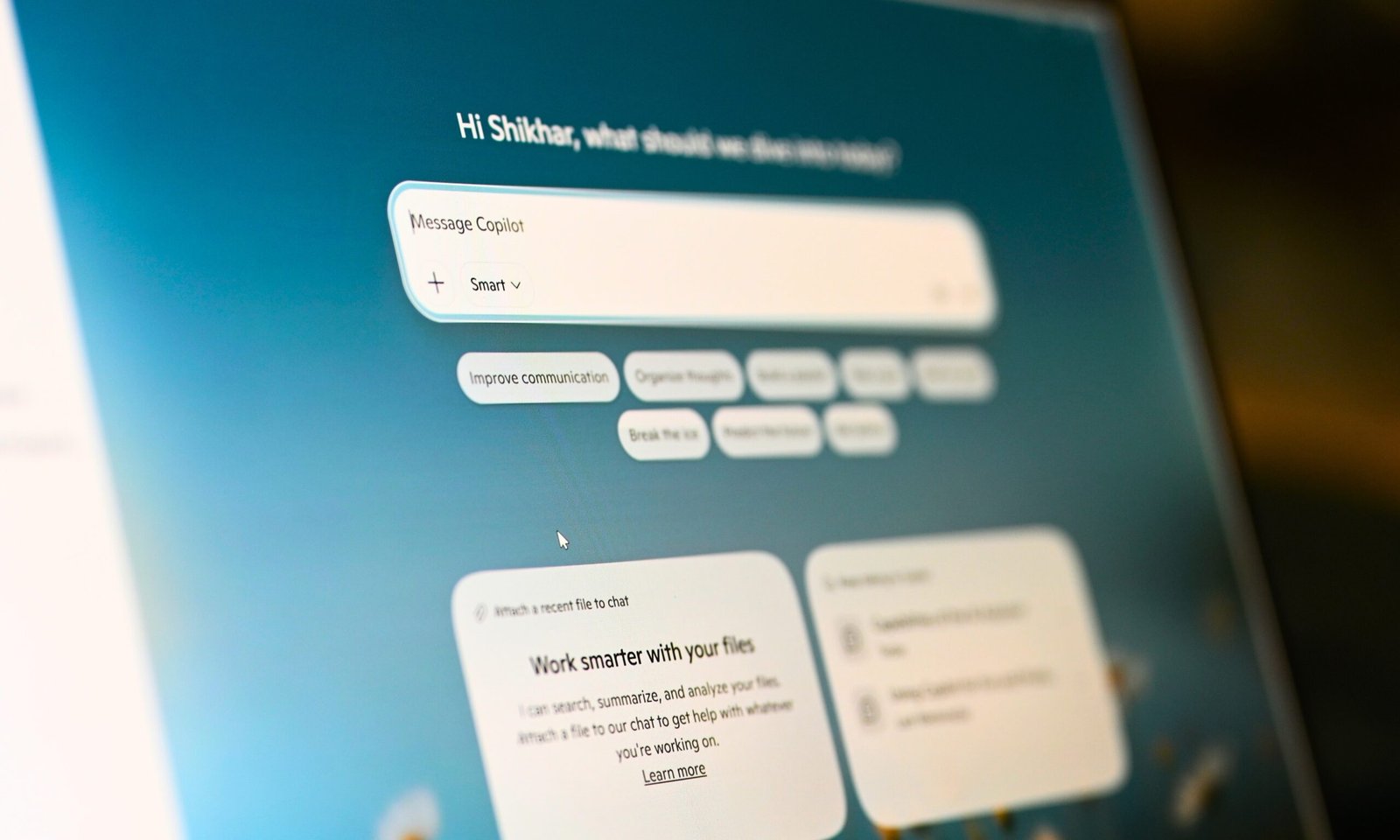
Microsoft is quietly testing a new Copilot feature called PC Insights, and it could change how you troubleshoot your computer. Instead of digging through Task Manager or Settings, you’d simply ask the AI assistant a natural language question about your hardware or storage. That’s the pitch, anyway.

According to a Microsoft support document spotted by Windows Latest, the feature will let you ask things like, “Do I have enough space for a 100GB game?” Copilot would then check your available storage and give you a straight answer. You could also inquire about CPU usage, battery health, and other diagnostics to pinpoint what’s slowing things down.

What Copilot can actually see

PC Insights is expected to read CPU, RAM, and GPU usage, calculate free storage space, and even check folder sizes for things like your Downloads or Documents folders. That’s a lot of visibility. It will also be able to see connected USB devices, external drives, printers, webcams, and the status of your Bluetooth and Wi-Fi connections.

Here’s the kicker: the feature is reportedly opt-in. Microsoft says Copilot will ask for your permission each time you ask a hardware-related question, unless you switch it to “Always allow.” That’s a smart privacy move, especially given how much system data the assistant would be able to access.

What Copilot won’t do

There are limits, though. Copilot won’t be able to open individual files. And for now, it appears limited to flagging problems rather than actually fixing them. So it’s more of a diagnostic tool than a repair tech. You’ll still need to roll up your sleeves for the actual fixes.

There’s a big catch: Copilot is a resource hog

Here’s where the irony kicks in. The app promising to flag what’s slowing down your PC has been found to be a resource hog itself. In its testing, Windows Latest found that the current Copilot app uses up to 1GB of RAM at idle. That’s not nothing. It also takes up a fair chunk of storage because it ships with its own private copy of Microsoft Edge.

So while PC Insights could be genuinely useful for less tech-savvy folks, it’s hard to fully trust a tool for spotting resource problems when it’s contributing to them itself. It’s like asking a mechanic with a broken arm to fix your car — good intentions, but maybe not the best candidate.

What this means for everyday users

For the average person, PC Insights could be a real time-saver. Instead of opening Task Manager and trying to decode which process is eating your RAM, you’d just ask Copilot. That’s a much lower barrier to entry. And for people who don’t know their way around system settings, it could make troubleshooting feel less intimidating.

But there’s a bigger question here: should you trust an AI that’s part of the problem? If Copilot is using 1GB of RAM at idle, that’s a significant chunk of your system’s resources. On a machine with 8GB of RAM, that’s over 12% of your memory gone before you even start asking questions.

The bottom line on Copilot PC Insights

PC Insights is still in testing, so we don’t know exactly when it’ll roll out to the public. But the direction is clear: Microsoft wants Copilot to be your go-to for everything, including system diagnostics. That could be great for accessibility, but it also raises a few eyebrows.

If you’re curious about how to get the most out of your PC, you might also want to check out our guide on how to check RAM usage on Windows or our tips on freeing up disk space in Windows. And if you’re worried about Copilot’s resource usage, you can always disable Copilot on Windows 11 until Microsoft sorts out the performance issues.

For now, PC Insights feels like a promising feature with a nagging caveat. It’s a bit like having a personal tech support agent — one that occasionally eats your lunch. We’ll be watching to see if Microsoft tightens up Copilot’s own resource usage before this goes live. Otherwise, the tool meant to diagnose your PC’s problems might just be the newest one.

Continue Reading
Click to comment

Leave a Reply

Your email address will not be published. Required fields are marked *

Artificial Intelligence

Cursor launches India-first ₹649 plan as SpaceX acquisition looms

Published

on

Cursor India launch

Cursor goes local in India with a ₹649 monthly plan

Just weeks before its acquisition by SpaceX is expected to close, Cursor is making its boldest move yet in India. On Monday, the AI coding startup launched Cursor Start — a ₹649-a-month (about $7) subscription built specifically for the Indian market, priced far below its standard $20-per-month Pro tier.

It’s the first time Cursor has localized pricing for a single country. And it’s a clear signal of where the company sees its next wave of growth.

Why India? The numbers tell the story

India is already Cursor’s third-largest market globally, and it holds the highest concentration of power users anywhere in the world. The user base there has more than tripled over the past year, according to the startup.

That growth, combined with India’s massive engineering talent pool, made it the natural first test case for localized pricing, says Simon Green, Cursor’s head of Asia-Pacific and Japan.

“We felt that we had an opportunity there to right-size the commercial model and drive scale,” Green told TechCrunch. “The technical competency of the country and the engineering talent that already exists make it a very natural fit.”

India’s developer ecosystem is staggering in size. GitHub reported earlier this year that the country hosts more than 27 million developers on its platform — second only to the U.S. — with over two million joining in 2026 alone.

What you get with Cursor Start

Cursor Start isn’t a stripped-down teaser. It includes access to Cursor’s Composer 2.5 model and Grok 4.5, with higher usage limits than the free tier. Subscribers also get cloud agents, the iOS app, plugins, Model Context Protocol support, hooks, and skills.

The plan is designed for developers who hit the ceiling of the free tier but don’t need the full Pro experience. It’s billed in Indian rupees and supports payments via credit cards, debit cards, and India’s Unified Payments Interface (UPI).

What’s missing compared to Pro

The trade-offs are clear. Unlike the $20 Pro plan, Start doesn’t include access to frontier AI models from providers like OpenAI and Anthropic. Advanced features like Bugbot, Auto Mode, Automations, and the Cursor SDK are also off the table.

Green says the lower-priced plan is meant to broaden access, not cannibalize the flagship offering.

Keeping the plan India-only

Cursor is taking steps to ensure the India-specific pricing doesn’t leak beyond its borders. Green said the company will use multiple checks to verify that subscribers are individual users in India, including measures designed to deter access through virtual private networks (VPNs).

This isn’t a novel strategy. OpenAI launched its sub-$5 ChatGPT Go in India first, then expanded it to other markets. Anthropic has also rolled out India-specific plans over the past year as global AI companies fight for users in one of the fastest-growing AI markets on the planet.

If Cursor Start proves successful, Green says the model could travel. “We will continue to do everything we can to fuel the demand and serve those clients that are using us,” he said. “Now, if this model proves that we could take it to other markets, perhaps we will. But I think it’d be crazy to say we would never do it elsewhere.”

Beyond pricing: Cursor’s deeper India bet

The localized subscription is just one piece of a broader expansion. Cursor recently hired its first salesperson in India, with another leader expected to join in Delhi. The company is also building out a government affairs office and has brought on three technical customer support hires, expanding its footprint across Bengaluru, Chennai, Hyderabad, and Mumbai.

Enterprise adoption is still early, Green said. So far, growth in India has been driven largely by individual developers, startups, and universities. But he sees significant potential in banking and large enterprises as the local sales team scales up.

The pricing model wasn’t designed as a loss leader. Green said Cursor Start is commercially sustainable because it’s built around Cursor’s own AI models, which carry lower operating costs than relying primarily on third-party frontier models.

The SpaceX factor

This India push comes a little over a month after Elon Musk’s SpaceX agreed to acquire Cursor in a $60 billion all-stock deal, following SpaceX’s blockbuster initial public offering. The acquisition is expected to close in Q3.

SpaceX has been partnered with Cursor since April to develop a next-generation “coding and knowledge work AI.” Green said Cursor will operate independently until the deal closes, and that the India expansion plans were already in motion before the acquisition was announced.

Once the deal closes, though, SpaceX’s existing presence in India through Starlink could help Cursor scale faster by lowering commercial and operational barriers.

The timing is telling. Cursor is laying groundwork in India now, positioning itself to hit the ground running the moment the SpaceX deal finalizes. For Indian developers, the immediate takeaway is simpler: a $7 monthly plan that packs serious AI-assisted coding power. That’s a price point that could reshape how India’s 27 million developers work.

Continue Reading

Artificial Intelligence

This Floating AI Robot Looks Like It Drifted Out of a Studio Ghibli Film

Published

on

floating AI robot

A Robot That Doesn’t Look Like a Robot

Most home robots share a boring, boxy DNA. They roll, they bump, they beep. Vacuums thud into chair legs. Drones whine overhead like angry bees. Function first, comfort never.

Researchers in Japan think that’s backwards. Their new prototype doesn’t roll or whine. It floats. Silently. And it looks like something that escaped a Studio Ghibli movie.

This is the floating AI robot from Keio University, led by researcher Mingyang Xu in collaboration with the MIT Media Lab. It’s a lighter-than-air creature that drifts through rooms with tiny fins instead of spinning propellers. Think Tinker Bell crossed with Pokémon’s Mew and a Soot Sprite.

Soft Body, Silent Flight

Traditional drones are loud because they rely on fast-spinning rotors. This robot skips that entirely. Its soft, buoyant body moves with gentle fin strokes, gliding like a small white whale navigating your living room.

That softness isn’t just for looks. There are no exposed blades, no pinch points, no hard edges. It can float right up to a person without triggering the usual fear response. That’s a big deal for home robotics, where safety barriers usually keep machines at arm’s length.

What It Actually Does

The demo video shows it doing surprisingly mundane tasks. It wakes you up like an alarm clock. It reminds you about appointments. It hovers nearby while you study. It even dances with its owner.

It’s not trying to replace your smartphone or smart speaker. It’s more like a friendly presence that happens to share your space. A companion, not a tool.

Escaping the Uncanny Valley

Robotics has a long, awkward history with human-like faces. The uncanny valley is real: the closer a robot gets to looking human, the more unsettling it becomes. Synthetic smiles and blinking digital eyes often make things worse.

This team took a different route. No face at all. Emotion comes through movement. A gentle drift here, a playful bob there. The robot’s body language does the talking, and that might be more effective than any LED smile.

It’s a clever workaround. Instead of trying to imitate humans, it borrows from animated creatures we already love. We’re wired to find those shapes endearing.

Why This Matters for AI Companions

The timing isn’t accidental. OpenAI, Meta, and Apple are all pouring money into AI assistants that will eventually live in dedicated hardware. Robotics companies are racing to build companions people actually want at home.

But hardware is only half the battle. If people don’t feel comfortable around a machine, they won’t keep it around. The uncanny valley isn’t just a design problem, it’s a market problem.

The Future Might Just Float

This prototype won’t hit stores anytime soon. It’s a research concept, a glimpse of what could be. But it raises an interesting question: what if the most successful home robot of the next decade doesn’t look like a humanoid at all?

What if it just drifts quietly into the room, like a character from an animated fantasy? That’s the bet these researchers are making.

For now, it’s a charming experiment. But it could reshape how we think about robots living alongside humans. The floating AI robot might be the first step toward machines that feel less like appliances and more like companions.

Continue Reading

Artificial Intelligence

OpenAI report links coding agents to faster science software builds

Published

on

coding agents science software

OpenAI’s new report tracks eight scientific computing projects

OpenAI has released a field report examining how coding agents performed on eight scientific computing projects. The document records runtime reductions, language ports, and packaging overhauls—work that typically stalls in academic software due to limited engineering support.

The projects used OpenAI Codex alone in five cases and a mix of Codex with Anthropic’s Claude Code in three others. Worth flagging upfront: this is a vendor publishing a survey of its own product’s application, built from case studies written by the contributors involved.

That doesn’t make the underlying pattern less worth examining. Research software has a documented maintenance problem. Tools built to accompany a single paper, coded by small academic teams without dedicated engineering support, tend to accumulate technical debt that nobody has the budget or mandate to pay down.

OpenAI’s report argues agents can address that debt. The eight projects it cites span genomics, immunology, statistics, and RNA sequencing.

What tasks the agents undertook

The tasks split roughly into three categories: packaging and build-system cleanup, performance optimisation on existing code, and full language or backend ports.

cyvcf2 and HI.SIM

cyvcf2, a Python library for reading genomic variant files, had its legacy build and packaging system replaced with a newer, unified process. Contributor Brent Pedersen noted that going fast with agents is one thing, but going far in science still needs “expert guidance, understanding, taste, and care.”

HI.SIM, a DNA-sequencing read simulator, saw two largely autonomous optimisation passes from GPT-5.2 and GPT-5.6. Contributor Andrew Ho says those passes cut runtime by 31 percent across a representative test set without altering output. Ho, who describes himself as neither a genomics specialist nor a C programmer, called the outcome “nothing short of magical” from an end-user perspective, having previously lost time to performance bugs and packaging problems he could recognise but not personally fix.

Hifiasm and MHCflurry

Hifiasm, used for genome assembly from PacBio HiFi reads, got a 25 percent runtime cut on its optimisation target and roughly 15 percent on separate human sequencing data, per contributor Suyash Shringarpure. Shringarpure described the agent setting up its own benchmark scaffolding and proposing candidates independently. Still, he stressed that supplying profiling results and steering the model away from repeated failure modes remained work only a human could do.

MHCflurry, which predicts protein fragments presented to T cells, had its TensorFlow/Keras backend migrated to PyTorch while keeping compatibility with previously released model weights. Contributors Alex Rubinsteyn, Sergey Feldman, and Timothy O’Donnell frame the change as the kind of “unglamorous, labour-intensive upkeep” that keeps open-source scientific projects alive rather than left to decay.

bayesm-rs

bayesm-rs, a Rust port of statistical models from R’s bayesm package, matched the original software’s estimates within a pre-set tolerance. It ran 2.3–2.7 times faster on a single processor thread, climbing to 4.4–9.5 times faster across eight threads. According to contributors Andrew Bai and Andrew Ho, the agents handled anything with a direct reference to check against quickly and correctly. Extensions requiring statistical judgement the original code never pinned down needed direct human validation instead.

Rust ports and a GPU redesign push the pattern further

Three further projects—rustar-aligner, svb, and kuva—involved Rust builds carried out with coding agents, including a full recreation of STAR, a widely used RNA-sequence alignment tool that had lost active maintenance.

Contributor James M. Ferguson says agents change what’s worth attempting: rewriting a 20,000-line aligner by hand isn’t a sensible use of time, but with an agent it becomes weeks of steered work. Verification, he added, is a separate matter entirely. A model can claim a plot looks fine, but checking over 900 of them by eye before release still fell to a person.

RustQC consolidated 15 separate RNA-sequencing quality-control tools into a single program. Contributor Phil Ewels says it cut runtime by 60 times and disk input/output by 25 times, with companion rebuilds FastQC-Rust and Trim Galore running seven and three times faster respectively while preserving the original tools’ behaviour.

Ewels also flagged the downside: cheap rebuilds bring their own risk, because tools that diverge in behaviour fragment the community and make results from different labs incomparable over time. “The technology is the easy part,” he said. “Stewardship is the open question.”

HelixForge, a GPU-native rebuild of the mutation-simulation tool BAMSurgeon, reportedly cut runtime by around 60 times on a benchmark involving real human data. Contributors Mamad Ahangari, Varun Goyal, and Hassan Masoudi also say it produced mutation frequencies closer to requested targets and resolved several bugs that generated artefacts in the original tool.

Verification, not code generation, is the constraint now

What comes through across all write-ups is that agents handled well-scoped implementation requests capably but couldn’t judge whether their own output was scientifically sound.

Contributors describe agents expressing confidence in work that contained clear errors. That pushed the actual burden onto humans to build acceptance tests: exact output matching, parity checks against an existing tool, or answers established beforehand using simulated data.

Projects tended to proceed in stages, with agents producing fast first drafts and the remaining time going into edge cases and small numerical discrepancies that a benchmark alone wouldn’t catch.

Lower engineering costs cut both ways. They let a two-person team take on a rebuild that would once have needed a grant-funded engineering hire, and they make it easier for three different labs to produce three incompatible versions of the same tool. Changes to MHCflurry and cyvcf2 went back into their original upstream projects. rustar-aligner moved to new community stewardship because the tool it replaced had already been abandoned.

The OpenAI report points toward a specific choice rather than a general endorsement: decide who owns a rebuilt tool, and secure that commitment, before the first line of agent-generated code ships.

See also: Guardoc Health processes clinical documentation using Amazon Nova models

Want to learn more about AI and big data from industry leaders? Check out AI & Big Data Expo taking place in Amsterdam, California, and London. The comprehensive event is part of TechEx and is co-located with other leading technology events including the Cyber Security & Cloud Expo. Click here for more information.

AI News is powered by TechForge Media. Explore other upcoming enterprise technology events and webinars here.

Continue Reading

Trending