Connect with us

How To

This Open-Source App Brings Interactive File Previews to Your Terminal—and It’s Great

Published

on

interactive file previews

Why Your Terminal Needs Interactive File Previews

You know that moment when you’re deep in a terminal session, and you just need a quick look at a file? Not a full edit, not a grep search—just a peek. Usually, you’d open it in a pager or an editor, which pulls you out of your flow. This open-source app changes that.

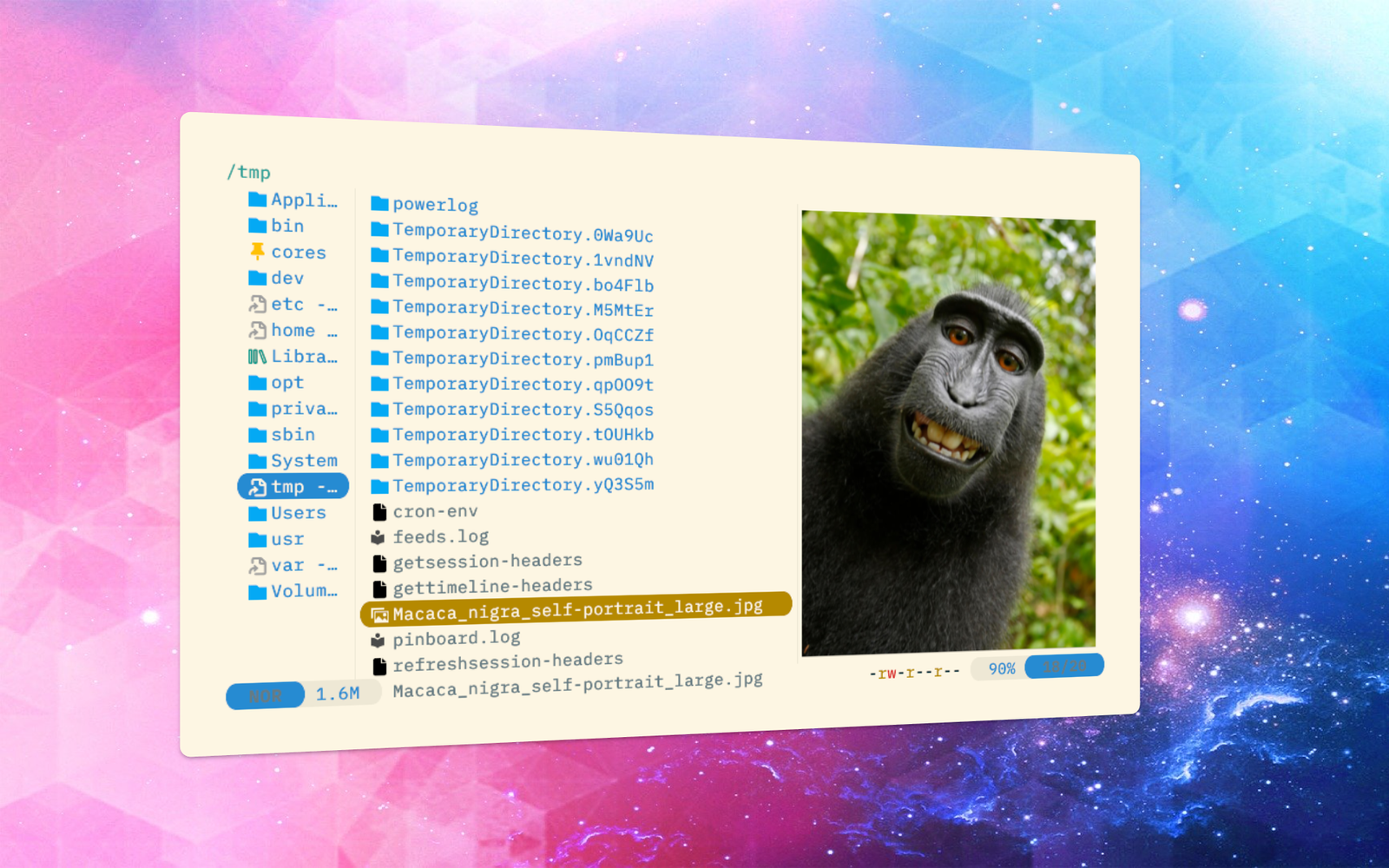
It brings interactive file previews directly into your terminal. You can scroll through files, see images, and even get syntax-highlighted code—all without leaving your command line. It’s the kind of tool that makes you wonder how you managed without it.

What Makes This App Stand Out

There are plenty of terminal utilities out there, but this one feels different. It’s not just a static previewer; it’s interactive. You can navigate through directories, preview files in place, and even handle multiple file types without breaking a sweat.

Key Features at a Glance

  • Instant previews: Click on a file and see its contents immediately.
  • Syntax highlighting: Code files are displayed with proper color coding, making them easier to read.
  • Image support: Preview images directly in the terminal, which is a rarity.
  • Lightweight: It’s a single binary with no heavy dependencies.
  • Open source: Fully open-source, so you can customize it to your heart’s content.

These features combine to make terminal file previews feel natural and fluid. You’re not fighting the tool; you’re working with it.

How to Get Started

Getting started is straightforward. You can download the latest release from the project’s GitHub page, or if you’re on a Mac, you can install it via Homebrew. The installation is a single command, and you’re ready to go.

Once installed, you can invoke it from any directory. The interface is intuitive—navigate with your arrow keys, press Enter to preview a file, and press Q to quit. It’s that simple.

Who Is This For?

If you’re a developer, a system administrator, or anyone who spends a lot of time in the terminal, this tool is a godsend. It’s especially useful for quickly checking configuration files, logs, or source code without launching a full editor.

Even if you’re a casual terminal user, you’ll find it handy. It’s one of those terminal productivity tools that you didn’t know you needed until you tried it.

Is It Worth the Hype?

Short answer: yes. The app is stable, fast, and does exactly what it promises. It’s not flashy, but it doesn’t need to be. It’s a practical tool that solves a real problem, and it does so elegantly.

If you’re looking to enhance your terminal workflow, this is a solid addition. And because it’s open source, you can trust that it’s built with transparency and community input.

So, give it a try. You might find that interactive file previews become your new favorite way to browse files. For more on optimizing your command-line experience, check out our best terminal apps roundup.

Continue Reading
Click to comment

Leave a Reply

Your email address will not be published. Required fields are marked *

Social Media

How to Build AI Automations With Claude Cowork: A Practical Guide

Published

on

AI automations Claude Cowork

Why Claude Cowork Is Different From Chatbots

Most people still think of AI as a chat window. You type, it answers. But that’s not where the real value lives anymore. Anthropic‘s Claude Cowork flips that model. It’s an agentic platform designed to handle multi-step tasks across your entire tech stack. Not just conversation. Execution.

Think of it this way: a chatbot suggests what you could do. Claude Cowork actually does it. It can pull data from your CRM, draft a response, update a spreadsheet, and send an email—all in one session. That’s the difference between a tool and a teammate.

Step 1: Map Out the Workflow Before You Touch Code

Here’s the mistake most people make. They open Claude Cowork and start typing commands. That’s like building a house without blueprints. You’ll end up with something that stands, but it won’t be what you wanted.

Start by writing down the process you want to automate. Break it into steps. What triggers the workflow? What data does it need? What’s the final output?

  • Trigger: A new lead enters your CRM.
  • Data: Lead details, company info, past interactions.
  • Action: Send a personalized welcome email, schedule a follow-up task.
  • Output: Confirmation in your dashboard.

Once you have that map, Claude Cowork can follow it. Without it, you’re just guessing.

Step 2: Connect Your Tools and Set Permissions

Claude Cowork doesn’t work in a vacuum. It needs access to your apps. That means connecting your CRM, your email, your project management tool, maybe your database.

The platform supports a range of integrations. You’ll want to check which ones are available in your plan. Some are native. Others might require API keys or middleware.

A word of caution: permissions matter. Give Claude Cowork the least access it needs to do the job. If it only needs read access to your calendar, don’t grant write access. You can always expand later.

Step 3: Build the Automation in Plain Language

Here’s where Claude Cowork shines. You don’t need to write Python or JavaScript. You describe the workflow in plain English, and it translates that into actions.

For example, you might say: “When a new row appears in this Google Sheet, check if the email column is filled. If yes, send a Slack notification to the sales channel.” Claude Cowork handles the rest.

Start small. Automate one task. Test it. Then expand. Trying to build a massive workflow on day one is a recipe for frustration.

Testing Your Automation

Before you let it run wild, test with dummy data. Run the workflow manually. Watch where it breaks. Adjust the instructions. Repeat.

This iterative loop is normal. Even experienced developers don’t ship perfect automations on the first try.

Step 4: Deploy and Monitor Performance

Once your automation works in a test environment, it’s time to deploy. But deployment isn’t the finish line. It’s the starting line.

Monitor how the automation performs. Are there errors? Is it slower than expected? Are the outputs accurate? Claude Cowork provides logs and analytics. Use them.

Set up alerts for failures. If an automation silently breaks, you might not notice until it’s too late. A daily summary of what the agent did can save you a lot of headaches.

Step 5: Iterate Based on Real-World Feedback

Automations are never perfect out of the gate. Real-world data is messier than your test data. Customers have odd names. Emails bounce. APIs change.

Treat your automation like a living thing. Review its output weekly. Ask yourself: is it still saving time? Is it still accurate? If not, tweak the instructions.

This is where the human-friendly design of Claude Cowork pays off. You can adjust the workflow without rewriting code. Just edit the description and let the agent adapt.

Common Pitfalls to Avoid

Even with the best planning, things go wrong. Here’s what to watch out for:

  • Over-automating too fast. You’ll lose track of what’s happening.
  • Ignoring error logs. They’re there for a reason.
  • Skipping permission reviews. Security isn’t a one-time thing.
  • Not documenting your workflows. You’ll forget what you built in a month.

Keep a simple document that lists each automation, what it does, and when you last checked it. Future you will be grateful.

Is Claude Cowork Right for Your Business?

Not every business needs agentic AI. If you have five employees and a simple sales process, a basic CRM might be enough. But if you’re drowning in repetitive tasks—data entry, follow-ups, reporting—Claude Cowork can genuinely free up hours.

The key is to start with one high-value workflow. Pick something that’s painful and frequent. Automate that first. Then expand.

For more on how AI is reshaping social media and business workflows, check out our guide on AI social media automation. You might also want to read about choosing the right AI assistant for your team.

Claude Cowork isn’t magic. It’s a tool. But with the right approach, it can feel pretty close.

Continue Reading

Social Media

Musk’s X and the World Federation of Advertisers call a truce — after a very public war

Published

on

X settles lawsuit

The fight is over — officially

Elon Musk’s X has settled its multiyear legal battle with the World Federation of Advertisers (WFA), the two organizations announced Wednesday. The deal puts an end to a bruising dispute that began when X accused the trade group of orchestrating an illegal ad boycott.

The settlement is a quiet end to a very loud fight. It closes the book on X’s aggressive legal campaign to hold advertisers accountable for pulling their spending over brand safety worries.

For Musk, it’s a retreat. For the WFA, it’s a relief. For the advertising industry, it’s a signal that the era of open warfare with the platform might finally be cooling down.

How we got here: a $44 billion takeover and a mass exodus

The roots of this conflict trace back to 2022. Musk bought X (then Twitter) for $44 billion and immediately overhauled the platform’s content moderation policies. Advertisers got nervous. They worried their brands would appear next to harmful content — hate speech, misinformation, the kind of stuff that keeps brand safety teams up at night.

So they paused spending. Lots of them. Mars, CVS Health, Shell, Lego — X named them all in its lawsuit, accusing them of participating in what it called a “systematic illegal boycott.”

The advertisers pushed back hard. Their argument was simple: brands get to decide where their money goes. No court should force them to fund a platform they don’t trust.

The GARM factor — and why it mattered

At the center of the dispute was the Global Alliance for Responsible Media (GARM), a WFA-backed coalition of brands and agencies. GARM was set up to develop standards that would keep ads away from harmful online content. Sounds reasonable, right? X didn’t see it that way.

X alleged that GARM’s guidelines were effectively a coordinated weapon — a way for advertisers to starve the platform of revenue without individually violating competition laws. The WFA always rejected that framing, insisting GARM was just a standards body, not a cartel.

Here’s the thing: the legal record didn’t go X’s way. In March, a federal court dismissed the lawsuit. The judge said X failed to demonstrate it had suffered harm under federal competition laws. X appealed in April. Wednesday’s settlement makes that appeal moot.

What the settlement actually says

The joint statement is careful, diplomatic, almost conciliatory. Here’s the key language:

“Today the World Federation of Advertisers (WFA) and X Corp. are putting the litigation involving the Global Alliance for Responsible Media (GARM) behind them. This resets the relationship between the two organizations.”

Notably, the WFA reiterates its commitment to freedom of speech — a principle it says dates back to its founding constitution in 1953, and one it shares with X. The statement also confirms that GARM, which was discontinued on August 9, 2024, will not be revived. No restart. No similar initiative. Done.

Both sides say they’re aligned on one point: brands, platforms, and consumers all benefit from brand-safety innovation. Whether that’s genuine harmony or just a face-saving exit remains to be seen.

Musk’s rocky history with advertisers

This lawsuit wasn’t the only chapter in Musk’s feud with the ad industry. After taking over X, he made headlines with a famously crude remark, telling advertisers who paused spending to “go f*** yourself.” It was a moment that crystallized his combative approach — and probably didn’t help win back skeptical marketers.

The stakes here were always bigger than one lawsuit. X’s advertising revenue took a serious hit after the takeover, and the platform has been trying to rebuild trust with brands ever since. Settling this case removes a major legal cloud, but it doesn’t automatically restore advertiser confidence.

What this means going forward

For X, the settlement clears the decks. No more litigation over GARM, no more appeals, no more fighting the WFA in court. The platform can now focus on rebuilding its ad business — though that’s a tall order in a market where brand safety remains a top concern.

For the WFA, it’s a vindication of sorts. The organization never conceded wrongdoing, and the settlement doesn’t require it to. GARM is gone, but the WFA’s core mission — helping brands advertise responsibly — continues.

The bigger question is whether this truce holds. Musk has a history of picking fights and then moving on. Advertisers have long memories. The settlement resets the relationship, but trust is rebuilt in actions, not press releases.

One thing’s certain: the next chapter in Musk’s relationship with the ad industry will be written in how X handles content moderation, not in court filings.

Continue Reading

How To

I Finally Ran the Calibration on My KRK Rokit 5s — Here’s Why You Should Too

Published

on

KRK Rokit 5 calibration

The Setup: Good Speakers, Ignored Features

When I unboxed my KRK Rokit 5 monitors last year, I was genuinely impressed. Flat, detailed, with just enough low-end punch for a small room — they sounded like a proper upgrade from my old computer speakers. So I did what most people do: placed them on my desk, plugged them in, and forgot they had any settings beyond the volume knob.

That was a mistake. These speakers ship with a DSP that includes 25 visual EQ presets and a companion app for room tuning. I knew about it. I just never bothered.

Why I Finally Ran the Calibration

Months passed. I mixed a few podcast episodes, watched movies, and listened to music. Everything sounded fine. But then I moved my desk to a different wall, and suddenly the low end got boomy. Kick drums sounded like they were coming from a cardboard box. I couldn’t fix it with the tone controls on the back — the bass knob just made it worse.

So I downloaded the KRK app, connected the speakers via Bluetooth, and ran the built-in calibration. It took about ten minutes. The difference was night and day — and not in a subtle “oh, that’s slightly clearer” way. It was like someone lifted a blanket off the speakers.

What the Calibration Actually Does

The Rokit 5’s calibration isn’t magic. It’s a simple but effective room-correction routine. You place the included microphone at your listening position, and the app plays a series of test tones. The DSP then analyzes how your room reflects those frequencies and applies corrective EQ curves.

Here’s what surprised me: the app didn’t just cut the problem frequencies. It also revealed how much my desk placement was smearing the midrange. After calibration, vocals sat forward, cymbals had a crisp attack, and the bass tightened up dramatically. The 25 visual EQ settings are still there if you want to tweak further, but the auto-calibration got me 90% of the way there.

What the App Shows You

  • A real-time frequency response graph before and after correction
  • Per-speaker EQ adjustments (left and right independently)
  • Preset slots so you can switch between music, mixing, and movie modes
  • Bluetooth control from your phone — no need to reach behind the speakers

Should You Calibrate Your Own Speakers?

If you own any monitor with room correction — whether it’s a KRK, a pair of studio monitors, or even a high-end soundbar — the answer is a qualified yes. But there’s a catch: calibration only helps if your listening position is fixed. If you move around a lot or sit at different spots, the correction might not be worth it.

Also, don’t expect it to fix a bad room. If your speakers are crammed into a corner or buried behind a monitor stand, no EQ will save you. Get the placement right first, then calibrate.

My Final Take: Do It, But Don’t Overthink It

Running the calibration on my Rokit 5s took less time than brewing a pot of coffee, and the result was a more honest, more enjoyable sound. I wish I’d done it the day I unboxed them. If you’ve been ignoring that feature on your own speakers, give it a shot. Worst case, you’ll learn something about your room. Best case, your music will sound better than it has in months.

And if you’re shopping for new monitors, make sure room correction is on your checklist. It’s not a gimmick — it’s a tool that actually works.

Continue Reading

Trending