Connect with us

CyberSecurity

Ransomware Attacks in France Decline in 2025, ANSSI Report Reveals

Published

on

A Measured Victory in France’s Cyber War

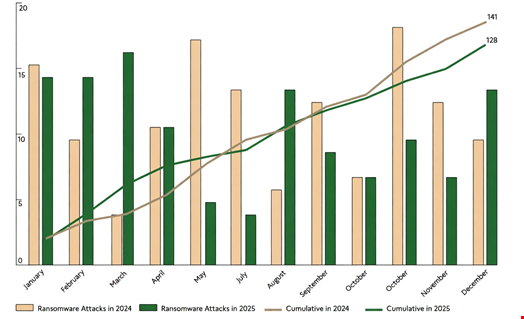
The numbers tell a story of cautious optimism. According to the French National Cybersecurity Agency (ANSSI), 2025 saw 128 reported ransomware attacks on French organizations. That’s a noticeable dip from the 141 incidents recorded the previous year.

This decline isn’t accidental. Vincent Strubel, ANSSI’s director general, and his team point directly to the impact of coordinated law enforcement actions and more effective defensive measures. It’s a sign that sustained pressure on cybercriminal networks can yield tangible results.

Who Was Hit and What Was Used?

While the overall trend is positive, the threat landscape remains complex and dangerous. Small and medium-sized businesses (SMBs) continued to bear the brunt of these attacks, representing the most frequent targets. However, the most significant year-over-year increases in targeting were seen in the healthcare and education sectors.

This shift suggests attackers are adapting their focus to where they perceive maximum pressure can be applied or where data is most sensitive. The tools of the trade also evolved. The Qilin ransomware strain was the most observed in 2025, accounting for 21% of incidents, followed by Akira (9%) and LockBit 3.0 (5%).

ANSSI also noted the emergence of over a dozen new strains, including Nova, Warlock, and Sinobi, appearing in at least one incident each. The criminal toolkit is never static.

The Impact of Global Law Enforcement

Why the drop? ANSSI’s analysis credits successful preventive work by cyber defenders and, crucially, large-scale international police operations. One operation stands out: Operation Endgame.

This coordinated action, involving multiple countries, is cited as having disrupted a significant portion of the ransomware infrastructure. More than just taking down servers, such operations sow distrust within the criminal ecosystem itself. When criminals can’t rely on their tools or their partners, their operations become riskier and less efficient.

A Broader Look at the Cyber Threat Landscape

Ransomware is just one piece of the puzzle. ANSSI’s annual report provides a wider lens on the cyber threats facing France. In 2025, the agency handled 3,586 cyber alerts requiring its support—an 18% decrease from 2024.

It’s important to contextualize that drop. 2024 was the year of the Paris Olympic and Paralympic Games, a period that naturally saw a heightened state of alert and a spike in reported signals. Of those thousands of alerts, ANSSI confirmed 1,366 as genuine cyber incidents involving a malicious actor, a number virtually identical to the 1,361 confirmed in 2024.

Two other trends stood out. The agency reported a significant increase in incidents related to data exfiltration claims. Yet they offer a critical warning: treat such claims with skepticism. Out of 460 events flagged as potential data leaks in 2025, only 42% were linked to actual, new compromises. The rest were false claims or the ‘recycling’ of old stolen data—a common intimidation tactic.

On a brighter note, ANSSI observed a substantial decrease in distributed denial-of-service (DDoS) attacks targeting French entities in 2025.

The Blurring Lines of Cyber Conflict

Perhaps the most concerning long-term trend identified in the report is the growing ‘fog’ of cyber operations. The lines between nation-state actors and cybercriminals are becoming deliberately blurred.

Groups from both spheres are increasingly sharing capabilities, tools, and techniques. They adopt each other’s practices, creating a murky environment where attribution—figuring out exactly who is behind an attack—becomes immensely difficult. This ‘division of labor’ among specialized actors makes attacks more sophisticated and resilient.

Strubel pointed to the series of cyber-attacks against Polish electrical infrastructure at the end of 2025 as a stark warning. It “raises the specter of the feared scenario for which France is preparing,” he stated. The scenario? By 2030, France could face a massive increase in hybrid attacks where cyber operations have concrete, potentially destructive effects on critical national infrastructure.

His final message, however, was one of resolve. “Yes, France has the means to counter, deter, or at least significantly complicate the work of attackers.” The 2025 ransomware dip is a battle won, but the cyber war is a long-term campaign.

CyberSecurity

STX RAT: New Remote Access Trojan Strikes Finance Sector With Advanced Stealth

Published

on

STX RAT: A New Remote Access Trojan Targets Finance Sector With Advanced Stealth Tactics

In late February 2026, a previously undocumented remote access trojan—dubbed STX RAT—was uncovered during an attempted attack on a financial services firm. This sophisticated malware, identified by eSentire’s Threat Response Unit, employs advanced stealth tactics and encrypted communications to evade detection and steal sensitive data. Its emergence signals a growing threat to the finance sector, where attackers are increasingly leveraging complex delivery chains and in-memory execution.

How STX RAT Delivers Its Payload

The STX RAT delivery chain is notably intricate, relying on multi-stage scripts to gain initial access. Attackers use opportunistic methods, such as browser-downloaded scripts and trojanized installers, to infiltrate systems. In one observed case, a VBScript file launched a JScript component, which then retrieved a compressed archive containing the main payload and a PowerShell loader.

This approach avoids traditional file-based detection by executing payloads directly in memory. The malware uses XXTEA encryption and Zlib compression for multi-stage unpacking, making analysis more difficult for security tools. Additionally, it employs reflective loading techniques via PowerShell to maintain persistence through registry-based autorun and COM hijacking.

Advanced Stealth and Evasion Tactics

A defining feature of STX RAT is its encrypted communication protocol, which secures data exchanges between infected systems and attacker infrastructure. This modern cryptographic method complicates interception and analysis. Moreover, the malware delays its credential-stealing functions until it receives explicit commands from its command server, reducing detectable behavior during automated analysis.

Defensive evasion is extensive. The trojan scans for virtual environments, terminates execution if analysis is suspected, and obscures internal strings using layered encryption. These advanced stealth tactics make it challenging for standard endpoint protections to detect the threat in real time.

Broad Surveillance and Control Capabilities

Once active, STX RAT enables attackers to remotely control infected machines through a hidden virtual desktop, allowing actions without user awareness. Its capabilities extend to harvesting sensitive information from browsers, FTP clients, and cryptocurrency wallets. The malware can also execute additional payloads, create network tunnels, and simulate user input.

The command structure supports a wide range of post-exploitation actions, from credential extraction to full system interaction. eSentire noted that its design suggests ongoing development, with some features not yet fully operational. This indicates the threat may evolve further, targeting additional sectors.

Protecting Against STX RAT and Similar Threats

To defend against STX RAT and similar remote access trojans, organizations must strengthen endpoint protections and limit exposure to script-based attacks. Building on this, eSentire urges firms to implement robust email filtering, restrict PowerShell execution, and monitor for unusual network traffic. Endpoint security best practices can help mitigate these risks.

Furthermore, regular security awareness training is critical. Employees should be cautious of suspicious downloads and links, as initial access often relies on social engineering. Cyber threat intelligence tips can provide additional guidance on staying ahead of emerging malware.

As the finance sector remains a prime target, proactive defense measures are essential. Ransomware prevention strategies also apply to trojans like STX RAT, emphasizing the need for layered security.

Continue Reading

CyberSecurity

FBI Takes Down Global Phishing Ring W3LL: What You Need to Know

Published

on

FBI Takes Down Global Phishing Ring W3LL: What You Need to Know

In a significant blow to cybercrime, the FBI announced on Monday that it has dismantled a global phishing operation known as W3LL. This sophisticated scheme allegedly targeted more than 17,000 victims across the world, causing millions in potential fraud. The bureau collaborated with Indonesian police to execute the takedown, which included the arrest of the suspected developer and the seizure of critical domains.

How the W3LL Phishing Operation Worked

The W3LL operation was built around a phishing kit sold for $500 on underground forums. Cybercriminals used this kit to create fake login pages that mimicked legitimate services, such as email providers and financial platforms. These pages were designed to steal passwords and multi-factor authentication codes from unsuspecting users.

According to the FBI, the kit enabled criminals to attempt over $20 million in fraud. The operation also featured an online marketplace where stolen credentials and access to hacked systems were bought and sold. This marketplace facilitated the sale of more than 25,000 compromised accounts, making it a lucrative hub for cybercriminals.

International Collaboration Led to the Takedown

The FBI worked closely with Indonesia’s national police to bring down the W3LL infrastructure. The alleged developer, identified only as G.L., was detained as part of the operation. The bureau also seized key domains, effectively crippling the phishing network. This joint effort highlights the importance of cross-border cooperation in combating cybercrime.

Building on this success, the FBI has not yet released additional details about the investigation. However, the takedown sends a clear message to cybercriminals: law enforcement is increasingly capable of dismantling even sophisticated operations.

Impact on Victims and Cybersecurity

The W3LL phishing operation targeted a wide range of individuals and organizations. Victims likely included employees at companies, small business owners, and everyday internet users. The stolen credentials could have been used for identity theft, financial fraud, or further cyberattacks.

As a result, this case underscores the ongoing threat of phishing attacks. Cybercriminals are constantly refining their tactics, making it essential for users to remain vigilant. For example, always verify website URLs before entering login credentials, and enable multi-factor authentication where possible. Additionally, consider using a password manager to generate and store complex passwords.

Lessons for Businesses and Individuals

For businesses, this takedown serves as a reminder to invest in employee training and advanced security tools. Regular phishing simulations can help staff identify suspicious emails. Meanwhile, individuals should avoid clicking on links in unsolicited messages and report any suspected phishing attempts to authorities.

Furthermore, law enforcement agencies are urging victims of the W3LL operation to come forward. If you believe your credentials were compromised, change your passwords immediately and monitor your accounts for unusual activity. You can also file a complaint with the Internet Crime Complaint Center (IC3).

What This Means for the Future of Cybercrime

The dismantling of W3LL is a major victory for cybersecurity, but it is not the end of the story. Phishing remains one of the most common and dangerous cyber threats. In fact, similar operations are likely already being developed by other criminal groups.

However, the FBI’s success demonstrates that international law enforcement can adapt to these challenges. By targeting the infrastructure behind phishing kits and marketplaces, authorities can disrupt the cybercriminal ecosystem. This approach may deter some attackers and make it harder for others to operate.

Ultimately, the W3LL takedown is a reminder that cybersecurity is a shared responsibility. Governments, businesses, and individuals must work together to stay ahead of evolving threats. For more insights, check out our guide on how to prevent phishing attacks and cybersecurity best practices.

Continue Reading

CyberSecurity

Iran-Backed Hackers Strike US Critical Infrastructure Through Internet-Connected OT Devices

Published

on

Iran-Backed Hackers Strike US Critical Infrastructure Through Internet-Connected OT Devices

Iranian-affiliated hackers have launched a series of attacks on US critical national infrastructure (CNI) providers, causing operational disruptions and significant financial losses, according to a recent advisory from the Cybersecurity and Infrastructure Security Agency (CISA). The campaign, which began last month, specifically targets internet-facing operational technology (OT) assets, including programmable logic controllers (PLCs) from Rockwell Automation and Allen-Bradley.

This coordinated effort by an advanced persistent threat (APT) group has already affected government services, local municipalities, water and wastewater systems (WWS), and the energy sector. The attackers are manipulating project files and tampering with data displayed on human-machine interfaces (HMI) and supervisory control and data acquisition (SCADA) displays, as reported by CISA. These PLCs are critical for managing a wide range of industrial processes, making them prime targets for disruption.

How Iran Hackers Target US CNI via Internet-Facing OT Systems

The threat actors are exploiting internet-connected OT devices, bypassing traditional security perimeters. They use configuration software like Rockwell Automation’s Studio 5000 Logix Designer to establish ‘accepted connections’ to targeted PLCs. These connections often originate from overseas IP addresses and third-party hosted infrastructure, making detection challenging.

Inbound malicious traffic typically appears on ports such as 44818, 2222, 102, 22, and 502. Particularly concerning are attacks on port 22, where the hackers deploy Dropbear Secure Shell (SSH) software on victim endpoints to maintain remote access. This method allows them to persist within networks and continue their malicious activities undetected.

As a result, CISA has urged all US CNI providers to urgently review their systems for indicators of compromise (IOCs) and apply the recommended mitigations. The advisory emphasizes that the widespread use of these PLCs across critical infrastructure increases the risk of further targeting of other OT devices.

Immediate Actions for Critical Infrastructure Firms

In response to this escalating threat, CISA has outlined several critical steps for CNI operators. First, organizations should use secure gateways and firewalls to protect PLCs from direct internet exposure. This is a fundamental measure to reduce the attack surface for threat actors.

Additionally, firms must query available logs for the IOCs provided in the advisory and check for suspicious traffic on the associated ports, especially if it originates from overseas. For Rockwell Automation devices, placing the physical mode switch on the controller into the ‘run’ position can help prevent unauthorized modifications. If an organization has already been targeted, it should immediately contact the FBI, CISA, NSA, or other authoring agencies for guidance.

This campaign follows a similar attack in March, when the Handala group targeted US medtech firm Stryker, wiping tens of thousands of devices. It also echoes a 2023 operation by Iran’s Islamic Revolutionary Guard Corps (IRGC) that struck US water plants running PLCs from Israeli manufacturer Unitronics. These patterns highlight a persistent and evolving threat to critical infrastructure.

Expert Insights on the Attack Campaign

Security experts warn that this campaign did not emerge in a vacuum. Ross Filipek, CISO at Corsica Technologies, points out that years of high-profile infrastructure incidents have revealed two critical truths. First, many OT environments still have internet-reachable interfaces and remote access paths that were never intended to be permanent. Second, even limited disruptions can create outsized chaos, from emergency response strain to financial loss and reputational damage.

Filipek adds, ‘Each successful or even partially successful campaign lowers the barrier for the next one, and emboldens actors to move from nuisance-level defacement into real operational interference.’ This sentiment underscores the urgency of proactive security measures.

Steve Povolny, VP of AI strategy and security research at Exabeam, emphasizes that CNI firms operating OT should assume increased reconnaissance, credential harvesting, and opportunistic attempts to exploit systems during the US campaign in Iran. He notes, ‘Visibility gaps between IT and OT telemetry remain one of the most persistent weaknesses I see across critical infrastructure operators.’

Povolny recommends prioritizing passive network monitoring for control protocols, enforcing strict segmentation between enterprise and control zones, validating remote access pathways, and ensuring that engineering workstations and vendor maintenance channels are tightly controlled and logged. He stresses that incident response plans must explicitly account for loss of control system integrity, not just loss of data confidentiality. However, he fears it may be too late for much of this to have short-term impact.

For more on protecting critical infrastructure, see our guide on OT security best practices and learn about building an industrial cybersecurity framework.

Strengthening Defenses Against Future Attacks

To mitigate the risk of similar attacks, CNI providers must adopt a multi-layered security approach. This includes implementing robust network segmentation, deploying intrusion detection systems, and conducting regular security audits. Employee training on phishing and social engineering is also crucial, as these attacks often serve as entry points for deeper intrusions.

Furthermore, organizations should collaborate with government agencies like CISA and the FBI to stay informed about emerging threats. Sharing threat intelligence within the industry can help build a collective defense against state-sponsored actors.

Ultimately, the recent campaign by Iran-backed threat actors serves as a stark reminder that internet-facing OT systems are vulnerable to exploitation. By taking immediate action and adopting long-term security strategies, US CNI providers can better protect their critical assets from future attacks.

Continue Reading

Trending