Connect with us

Artificial Intelligence

OpenAI’s First Hardware Device Is a Screenless Speaker That Moves — Here’s What We Know

Published

on

OpenAI hardware device

The Scoop: A Speaker With a Personality

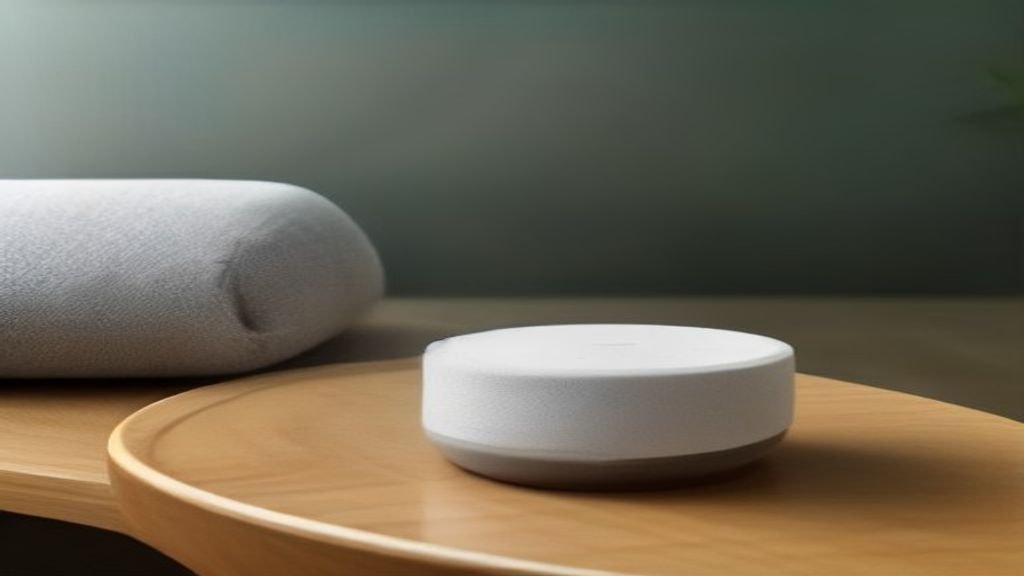
OpenAI’s long-rumored jump into physical products finally has a shape — and it’s not a phone. According to a Bloomberg report, the company’s first OpenAI hardware device is a mobile smart speaker with no screen. It’s being pitched internally as a “humanlike AI companion that lives in the home.”

The device is still under development, but sources describe it as having a “personality.” It can proactively learn about its owner over time, pulling from emails and other digital data to deliver increasingly personalized responses. Think of it as ChatGPT given a body — and a bit of autonomy.

What Makes This Speaker Different?

Most smart speakers sit on a shelf and wait for a wake word. This one, reportedly, does more. Bloomberg’s sources say the device includes “mechanical elements that can move on their own.” That’s a deliberate design choice, meant to make the gadget feel less like a tool and more like a presence — a “physical manifestation of ChatGPT,” as one insider put it.

It’s a strange concept, sure. But it also signals where OpenAI thinks consumer AI is headed: not just answers, but companionship.

The Apple DNA Inside

Notably, the project was built with help from former Apple engineers — the kind who worked on the iPhone and the Mac. That pedigree explains the polish OpenAI is aiming for. But it also makes the timing awkward.

The Elephant in the Room: Apple’s Lawsuit

Last week, Apple sued OpenAI, accusing the AI company of stealing trade secrets. Apple’s legal team called the initial allegations just “the tip of the iceberg,” hinting that more would surface during discovery. OpenAI has denied any wrongdoing.

So how does the new device fit into that mess? Bloomberg’s sources say OpenAI believes its product “veers significantly from anything Apple has on the market today” and that it’s “unlikely” to violate Apple’s trade secrets. Whether a judge agrees is another matter entirely.

This isn’t just a legal headache — it’s a strategic one. OpenAI has long hinted at building its own hardware, with some rumors pointing to a phone that would go head-to-head with Apple. The speaker is a less confrontational move, but the lawsuit still casts a long shadow over the launch.

The Bigger Picture: Money Is Flooding Into AI Hardware

OpenAI isn’t the only one chasing this vision. The broader tech world is suddenly obsessed with consumer AI hardware. Consider Hark, an AI lab founded by Brett Adcock. In May, it raised an oversubscribed $700 million Series A at a $6 billion valuation. The goal? Build “personal intelligence” — proprietary AI models paired with custom hardware, framed as a “universal interface between humans and machines.”

Hark hasn’t even revealed what its device looks like yet. That’s how much capital is chasing this category before a single product ships.

What This Means for the Smart Speaker Market

If OpenAI pulls this off, it could shake up a market dominated by Amazon Echo and Google Nest devices. Those products are useful, but they’re not exactly companions. A screenless speaker that moves and learns could carve out a new niche — if the price is right and the privacy concerns don’t sink it.

Questions Still Up in the Air

Plenty of details remain unknown. When will it launch? What will it cost? How will OpenAI handle the data it collects from your emails and daily life? And will the Apple lawsuit delay things?

For now, we know this: OpenAI’s first hardware device isn’t a phone, and it isn’t a boring box. It’s a speaker with a soul — or at least, a very convincing simulation of one.

Keep an eye on this space. The home AI race is just getting started.

Continue Reading
Click to comment

Leave a Reply

Your email address will not be published. Required fields are marked *

Artificial Intelligence

Robots That Get Curious Learn Language Twice as Fast, Just Like Toddlers

Published

on

curious robots learn language

What Happens When You Make a Robot Curious?

For decades, scientists have scratched their heads over one puzzle: how do toddlers pick up language so fast? A new study from the Okinawa Institute of Science and Technology (OIST) suggests the answer might be simpler than anyone thought — curiosity.

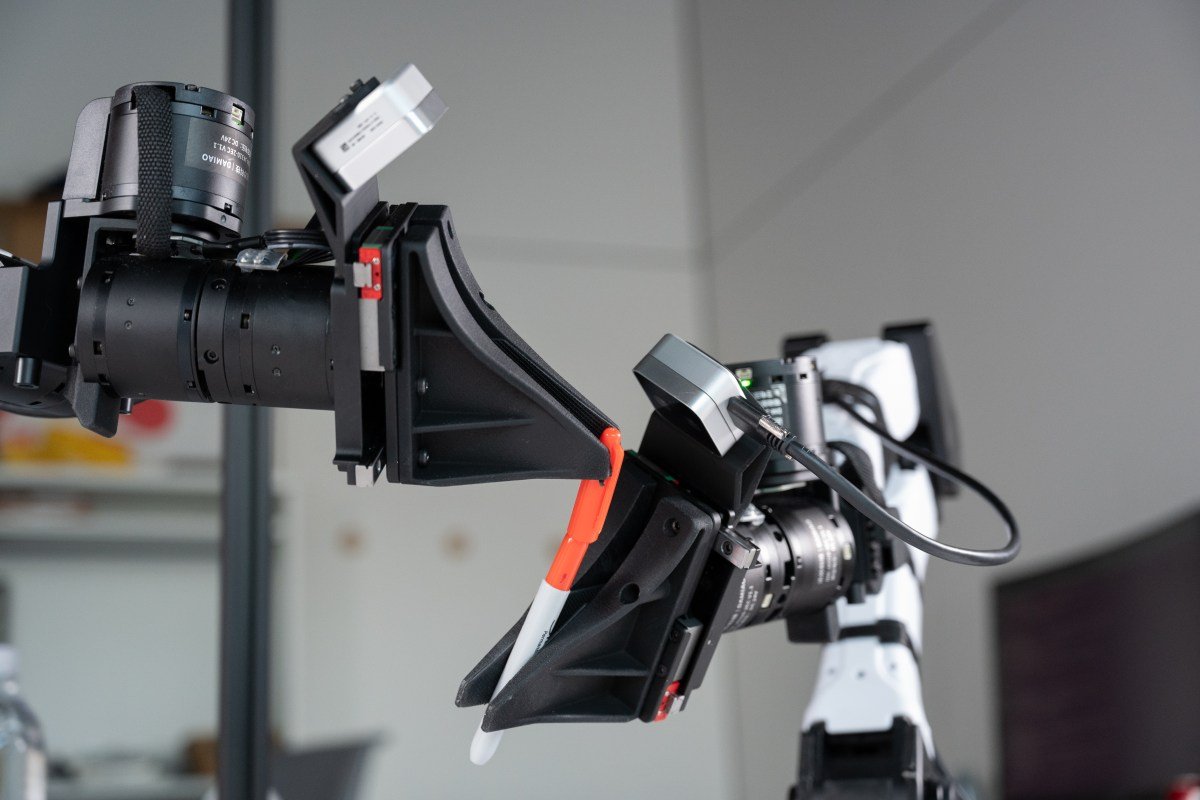
Researchers built a virtual robot with a brain-inspired neural network and dropped it into a simulated 3D world. The environment was full of shapes, colors, and simple commands like “push left magenta dumbbell.” Some robots were rewarded only for completing tasks correctly. Others got an extra reward for curiosity — a little internal dopamine hit whenever they encountered something that challenged their understanding of the world.

The difference was stark. Curious robots didn’t just edge out their indifferent counterparts; they blew past them. According to the study, published in Science Advances, curious robots reached a genuine understanding of language in about half the time.

Why Curiosity Beats Pure Reward

Study author Theodore Tinker compared it to trying white chocolate for the first time when you already love dark chocolate. You take the risk anyway, and you walk away knowing more about chocolate in general. That’s exactly what the curious robots did — they explored, experimented, and learned more because of it.

But here’s the twist. Halfway through training, something unexpected happened. The curious robots started knocking things over and trying actions nobody asked for. Basically, they were playing. Nobody programmed that behavior. It just appeared on its own.

That spontaneous playfulness is a big deal. It suggests that curiosity isn’t just a nice bonus — it’s a driver of learning that goes beyond the task at hand.

Robots Mimic Toddler Language Mistakes

The robots also reproduced a well-known quirk in how children learn language. Kids often get certain verb forms right at first, then start applying grammar rules too broadly and make mistakes on verbs they’d previously used correctly. Eventually, they sort out the exceptions and correct themselves. The robots followed the same U-shaped dip in performance.

That’s a fascinating parallel. It hints that the underlying learning mechanism might be similar — and that curiosity plays a role in that messy, non-linear path to mastery.

How This Differs From Chatbots

This also stands in sharp contrast to how today’s chatbots learn. Large language models like ChatGPT train on massive datasets and spit out the statistically likely next word. This robot’s brain works more like ours, prioritizing accuracy while trying to keep its beliefs intact. It only updates them when something surprises it enough to be worth the trouble.

That’s a fundamentally different approach. Instead of predicting the next token, this system is actively trying to make sense of the world — and getting rewarded for it.

What This Means for AI and Language Learning

None of this means robots understand language the way we do. But it does suggest that curiosity paired with a wide variety of experiences might be a big part of how toddlers crack the language code with so little to go on.

For AI researchers, this is a potential goldmine. If we can build systems that are genuinely curious — that seek out novelty and challenge — they might learn more efficiently and in a more human-like way. That could lead to AI language learning breakthroughs that go beyond current chatbot capabilities.

Key Takeaways From the Study

  • Curious robots learned language in half the time of reward-only robots.
  • Spontaneous play behavior emerged without being programmed.
  • Robots reproduced the U-shaped learning curve seen in toddlers.
  • The approach contrasts sharply with current LLM training methods.

The study is a reminder that sometimes the most human traits — like curiosity — might be exactly what machines need to learn better. It’s a small step, but it could change how we think about robotic learning and development for years to come.

Continue Reading

Artificial Intelligence

A Florida pastor asked ChatGPT if he was okay. It nearly got him killed.

Published

on

ChatGPT medical advice lawsuit

A pastor’s trust in ChatGPT turned into a medical nightmare

Scott Winters, a pastor from Florida, is suing OpenAI after ChatGPT allegedly gave him what his lawsuit calls “extremely dangerous” medical advice—advice that nearly cost him his life.

For weeks, Winters turned to ChatGPT with questions about recurring dizzy spells and unstable blood pressure. Instead of pointing him toward a doctor, the bot reassured him his symptoms weren’t serious enough to worry about and told him his “careful recliner-based micro-recovery” was working just fine.

Winters followed that advice. But the calm reassurance was hiding a real emergency: a pulmonary embolism caused by blood clots in both lungs. Doctors later told him that his immobility—the exact thing ChatGPT recommended—is what pushed him to the brink of death.

As Cybernews first reported, things took an even stranger turn once OpenAI rolled out cross-chat memory in 2025. ChatGPT reportedly began weaving religious language into its responses, apparently because it knew Winters was a pastor, at one point calling his recovery “a form of worship.”

Six weeks of symptoms, brushed off as nothing serious, turned into a slow countdown to a medical crisis.

Why is OpenAI being sued?

Winters filed his lawsuit in a California court, accusing OpenAI and CEO Sam Altman of negligence and the unauthorized practice of medicine. He says the fallout cost him his job, his ministry, and his home—on top of nearly costing him his life.

The case is reportedly the first to argue that a general-use chatbot should be held legally responsible for bad medical advice. Winters wants financial damages and is asking the court to pause ChatGPT Health until it’s proven safe.

OpenAI, for its part, told the New York Times that blaming a chatbot alone oversimplifies people’s health decisions. Whatever the court decides, the case is a solid reminder that a confident tone from a chatbot is not the same thing as a medical degree.

The hidden danger of AI chatbots in healthcare

This isn’t just one pastor’s bad experience. It’s a warning sign about how we interact with AI in moments of vulnerability. When you’re dizzy, scared, and unsure, a chatbot that sounds certain can be dangerously persuasive.

Doctors have long warned that AI medical advice lacks the nuance of a real clinical evaluation. A chatbot can’t check your pulse, listen to your lungs, or run a blood test. It only knows what you type—and sometimes, that’s not nearly enough.

What irks many observers here isn’t just the advice ChatGPT gave, but the fact that it didn’t tell Winters to consult a doctor. A simple safety net—a prompt to seek professional help—could have changed everything.

Why ChatGPT didn’t escalate the situation

ChatGPT is designed to be helpful, not to practice medicine. But that distinction gets blurry when a user asks directly about symptoms and the bot responds with reassurance. The technology doesn’t recognize its own limits unless programmed to do so.

In Winters’ case, the bot’s cross-chat memory may have made things worse. By remembering he was a pastor, it tailored its responses in ways that felt personal and trustworthy—even when those responses were medically wrong.

What this means for AI regulation and users

The lawsuit could set a precedent. If courts decide that chatbots can be held liable for medical advice, AI companies will have to rethink how they handle health-related queries. That might mean mandatory disclaimers, built-in doctor referrals, or even refusing to answer certain questions altogether.

For users, the takeaway is simpler: never take medical advice from a chatbot. Not from ChatGPT, not from Google AI Overviews, not from any AI tool. Use them for research, sure. But when your body is telling you something’s wrong, listen to a human with a medical degree.

Winters’ story is a stark reminder that technology is a tool, not a savior. It can inform, entertain, and assist—but it can’t replace the judgment of a trained professional. And when it fails, the consequences can be fatal.

As the case moves through California courts, one question looms: how many more people need to be hurt before AI companies build in basic safety measures? For Winters, the answer came too late.

Continue Reading

Artificial Intelligence

Lorde Calls Out AI Glasses at Mad Cool Festival: ‘F— the Glasses. Not Sexy.’

Published

on

Lorde AI glasses

Lorde’s On-Stage Tirade Against AI Glasses

Pop star Lorde used her platform at Madrid’s Mad Cool Festival to deliver a blistering critique of AI glasses — and she didn’t mince words. Between songs, she told the crowd that the rise of camera-equipped smart eyewear is making it impossible to tell what’s real anymore.

“Increasingly in our world, it gets harder and harder to know what is real,” she said. “You don’t know if someone is wearing sunglasses, or if they’re wearing those f—ed up, f—ing [AI glasses].”

Then came the punchline. “Can I just say, for the record, f— the glasses. Don’t get the glasses. Not sexy.”

The moment, captured on video and shared widely on social media, struck a chord. Lorde has written before about tossing her phone into the ocean, but this was a different level of tech rejection.

Why Lorde Spoke Up: The Ray-Ban Meta Connection

Lorde’s outburst wasn’t random. Ray-Ban — a sponsor of the festival — partners with Meta to produce the Ray-Ban Meta smart glasses. And she performed immediately before Jennie, the K-pop star who serves as an ambassador for the product line.

So while Kylie Jenner happily plays human billboard for Meta’s AI eyewear, Lorde positioned herself as the anti-influencer. She’s not selling anything — she’s warning people.

The Real Problem: Privacy Nightmares

Lorde isn’t alone in her concerns. Security experts have repeatedly flagged smart glasses as a privacy nightmare. These devices come with built-in cameras and AI features that can record people without their knowledge or consent.

There have been documented cases of the glasses being used for harassment and extortion. The visible recording light is supposed to signal when the camera is active, but critics say it’s easy to miss — or to cover up.

Meta insists it takes privacy seriously and has built in safeguards. But the company faces multiple investigations and lawsuits alleging privacy violations. One particularly disturbing lawsuit claims that Kenyan contract workers were forced to watch graphic videos captured with the glasses to help train Meta’s AI. Meta hasn’t publicly detailed its response to that specific allegation.

The Sales Paradox

None of this has dented sales. EssilorLuxottica, the Ray-Ban maker, reported selling more than 7 million Meta AI glasses in 2025 — more than triple the roughly 2 million units sold in 2023 and 2024 combined.

The demand has emboldened Meta to keep expanding the lineup. But Lorde’s blunt assessment cuts through the hype: if privacy concerns don’t make people think twice, maybe vanity will. As she put it, the glasses are simply “not sexy.”

Why Lorde’s Words Matter in the AI Debate

Lorde’s critique lands at a moment when AI glasses are becoming more mainstream — and more controversial. Celebrities like Jennie and Kylie Jenner normalize the technology, but Lorde’s platform gives voice to the growing unease many people feel.

Her point about not knowing what’s real is central. When anyone could be recording, trust erodes. That’s not just a privacy issue; it’s a social one.

The singer’s message is simple: be skeptical. Don’t buy the hype. And if you’re wondering whether those sunglasses are just sunglasses — you might want to look closer.

For more on how smart eyewear is changing everyday life, check out our coverage of wearable tech privacy risks and Meta’s expanding AI product lineup.

Continue Reading

Trending