CyberSecurity
TerminalFix: Fake Cloudflare CAPTCHAs Now Deliver Reverse-Tunnel Backdoors
Published
50 minutes agoon

How TerminalFix Works
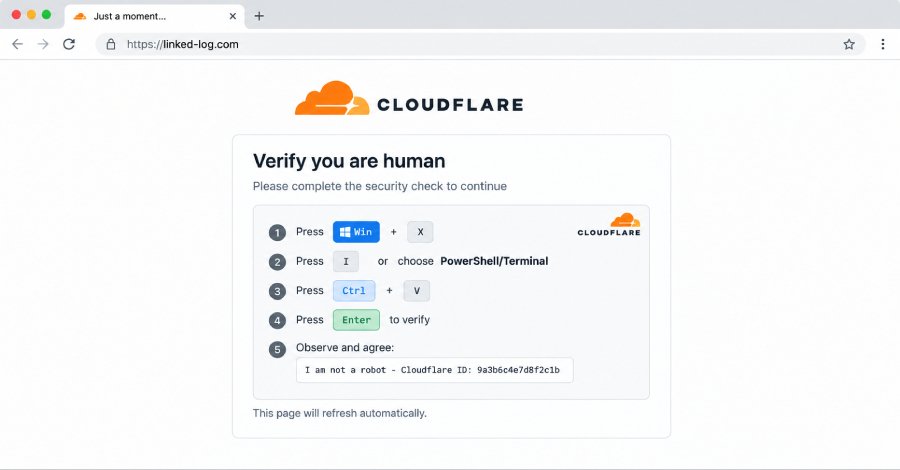
Microsoft has sounded the alarm on a new ClickFix variant, dubbed TerminalFix, that swaps the familiar Run dialog trick for something far more dangerous: a fake Cloudflare CAPTCHA that pushes victims into Windows Terminal or PowerShell.
Traditional ClickFix campaigns typically direct users to the Windows Run dialog (Win+R) and ask them to paste a command. TerminalFix takes a different route. It steers victims toward Windows Terminal or PowerShell instead, making it easier to slip in complex, multi-stage commands that would look suspicious in the old dialog box.
The result? A reverse-tunnel backdoor that gives attackers remote access to the compromised machine.
The Fake CAPTCHA Lure
Here’s how the attack unfolds. A user lands on a compromised or malicious website, often through a phishing email or a poisoned search result. A pop-up appears, mimicking a Cloudflare CAPTCHA challenge. The message asks the visitor to verify they’re human by running a command.
In reality, the “verification” is a malicious script. The command, when executed in PowerShell or Windows Terminal, downloads and runs a payload that establishes a reverse tunnel. That tunnel lets the attacker connect back to the system, bypassing firewalls and network restrictions.
The choice of Cloudflare branding is deliberate. CAPTCHAs are so routine that most users don’t think twice. They just want the page to load.
Why Windows Terminal Makes It Worse
ClickFix isn’t new — researchers have documented it for months. But the shift to Windows Terminal is a notable evolution. The Run dialog is a single line, easy to scan. Windows Terminal and PowerShell accept multi-line scripts, encoded payloads, and even obfuscated commands that are far harder to parse at a glance.
That complexity is exactly what attackers count on. A long, tangled string in PowerShell doesn’t raise red flags the way the same text might in the Run box. Users are more likely to paste and hit Enter, assuming it’s part of the CAPTCHA flow.
Microsoft’s threat intelligence team notes that TerminalFix increases the likelihood of success precisely because it exploits this gap in user awareness.
How to Protect Yourself
This attack relies on social engineering, not software vulnerabilities. That means the defense is mostly behavioral. Here’s what you should do:
- Never paste commands from a webpage into a terminal. Legitimate CAPTCHAs never ask you to run code. If a site does, close it immediately.
- Verify the URL. Fake CAPTCHA pages often appear on lookalike domains. Check the address bar before interacting with any pop-up.
- Use a reputable ad blocker. Many of these attacks are delivered through malvertising and rogue ads. Blocking them reduces exposure.
- Keep your system updated. Microsoft Defender and other security tools receive regular updates to detect new payloads like the ones used in TerminalFix.
- Enable Attack Surface Reduction rules. If you’re an enterprise admin, configure ASR rules to block suspicious child processes from Office apps and browsers.
What to Do If You’re Already Compromised
If you suspect you’ve run one of these commands, act fast. Disconnect the machine from the network to cut off the reverse tunnel. Then run a full antivirus scan and look for unusual outbound connections.
For IT teams, Microsoft recommends reviewing Windows event logs for PowerShell execution and checking for newly created scheduled tasks or services. The reverse tunnel often uses tools like ngrok or similar services, so network logs may show connections to known tunneling domains.
Finally, change any credentials that might have been exposed. A backdoor of this kind can give attackers access to more than just the one machine — it can be a foothold into a broader network.
Bottom Line
TerminalFix is another reminder that the weakest link in security is often the person at the keyboard. The fake Cloudflare CAPTCHA is a clever disguise, but the underlying principle is old: trick someone into running something they shouldn’t.
Stay skeptical. If a website asks you to open a terminal to verify you’re human, it’s almost certainly a trap. And if you’re managing a fleet of Windows machines, make sure your users know the difference between a real CAPTCHA and a social engineering attempt.
For more on how to spot and block similar threats, check out our guide on phishing attack prevention and the latest on Windows security best practices.
You may like
CyberSecurity
Android 17 Adds OS-Wide ECH to Hide Website Visits From Network Providers
Published
5 minutes agoon
August 31, 2026
Android 17 Brings ECH to the OS Level
Google has quietly rolled out a significant privacy upgrade in Android 17. The new version introduces support for Encrypted Client Hello (ECH), a standard that stops network providers from seeing which websites you visit. This isn’t just a browser tweak — it’s baked into the operating system itself.
For years, your internet service provider (ISP) could see the domain names of every site you accessed, even if the content was encrypted. ECH changes that by encrypting the part of the TLS handshake that reveals the server name. Now, with Android 17, that protection applies across the entire OS, not just in Chrome or Firefox.
The announcement came on Thursday, with Google positioning ECH as a cornerstone of its broader network security push. The company also highlighted efforts to shore up cellular vulnerabilities and protect home network privacy.
How ECH Works: The Technical Side
When you connect to a website, your device sends a TLS handshake that includes the domain name in plaintext. That’s how network providers know you’re visiting example.com even if the page itself is encrypted. ECH encrypts this handshake, so the server name is hidden from anyone sniffing the connection.
This is a big deal. DNS over HTTPS (DoH) and DNS over TLS (DoT) already hid your DNS queries, but the TLS handshake itself remained a leak. ECH closes that gap.
Android 17 implements ECH at the OS level, which means every app that uses the system’s network stack benefits automatically. You don’t need to configure anything or install a special browser. It just works.
What This Means for Your Privacy
For the average user, the practical effect is simple: your network provider can no longer build a profile of your browsing habits based on domain names. That’s a major win for privacy, especially on public Wi-Fi networks where snooping is easier.
It also matters for people in countries with strict internet censorship. ECH makes it harder for authorities to block access to specific sites, though it’s not a silver bullet — they can still block by IP address or use other techniques.
Beyond ECH: Other Security Upgrades in Android 17
ECH isn’t the only security feature in Android 17. Google also addressed cellular vulnerabilities that could expose your location or allow attackers to intercept calls. These fixes target the baseband processor, which handles radio communication and has historically been a weak point.
Home network privacy also got a boost. Android 17 now handles certain network configurations more securely, reducing the risk of man-in-the-middle attacks on your local network.
Here’s a quick rundown of what’s new:
- OS-wide ECH support for encrypted TLS handshakes
- Patches for cellular baseband vulnerabilities
- Improved home network privacy protections
- Seamless integration with existing apps — no developer action required
Why This Matters for Your Network Provider
Network providers have long relied on seeing domain names to throttle traffic, target ads, or comply with government requests. ECH undermines that visibility. Providers can still see your IP address and the amount of data you transfer, but they lose the ability to know exactly which sites you’re visiting.
That’s a significant shift. It’s also a reason why some ISPs have pushed back against ECH in the past, arguing it complicates network management and parental controls. Google’s decision to bake it into Android 17 suggests the company is prioritizing user privacy over carrier convenience.
If you’re concerned about your own setup, you might also want to explore how to change your DNS settings on Android for an extra layer of privacy, or check out the best VPN apps for Android to complement ECH.
How to Get Android 17 and ECH
Android 17 is rolling out now, but availability depends on your device. Pixel phones get it first, followed by other manufacturers. If you’re not sure whether your device has received the update, go to Settings > System > System update and check.
Once you’re on Android 17, ECH is enabled by default. There’s no toggle to flip or setting to hunt down. That’s the beauty of OS-level integration — it’s just there, protecting you without any effort.
For developers, the good news is you don’t need to change your apps. The system handles ECH transparently. If you’re building a network-heavy app, though, it’s worth testing to ensure everything still works as expected.
The Bottom Line
Android 17’s ECH support is a quiet but meaningful step forward for online privacy. It closes a long-standing gap in encrypted communications and does so in a way that requires zero user action. That’s rare in the security world, where the best protections often demand the most setup.
It’s not perfect — IP address leaks and other metadata remain — but it’s a solid improvement. If you value your privacy, updating to Android 17 is a no-brainer.
CyberSecurity
ATF Confirms Cyber Incident After Qilin Ransomware Group Claims Attack
Published
5 hours agoon
August 31, 2026
ATF Confirms Cyber Incident After Ransomware Group Claims Attack
The Bureau of Alcohol, Tobacco, Firearms and Explosives has confirmed it suffered a cybersecurity incident, responding to claims made by the Qilin ransomware group. The agency labeled the event a “major incident” and is investigating alongside the Department of Justice.
In a statement posted on its website, the ATF said the intrusion affected a standalone system, which was disconnected from the network once the breach was discovered. The agency was quick to clarify the scope: “The impacted system operates separately from the ATF enterprise network, and there is no indication that the incident has affected the ATF enterprise network, the ATF eForms system, or any other ATF system.”
Officials added that the incident has not hindered the agency’s ability to carry out its missions.
Qilin Ransomware Group Claims ATF Attack
The Qilin ransomware group added the ATF to its leak website on August 26. So far, the hackers have not made specific claims about what data, if any, was stolen. Typically, these groups post screenshots to prove they have exfiltrated certain types of documents, but that has not happened in this case.
Qilin’s post also lacks a countdown timer, which the group sometimes uses to indicate when stolen files will be published. The absence of both proof and a deadline leaves the true impact of the breach unclear.
Who Is the Qilin Ransomware Group?
Active since at least 2022, Qilin originally operated under the name Agenda. The group uses a double-extortion model: it encrypts files on victims’ systems and simultaneously exfiltrates sensitive information, threatening to leak the data if the ransom is not paid.
Qilin recently made headlines for exploiting a Check Point VPN zero-day vulnerability in its attacks. The group has listed more than 2,000 victims on its leak website to date, though the real number is likely far higher since many victims quietly pay the ransom and are never named.
Federal Response and Investigation
Senior Department officials have designated the event a “major incident” under applicable federal guidelines, and required notifications have been completed. The investigation is being conducted in coordination with the Justice Department.
This designation underscores the seriousness with which federal agencies treat ransomware attacks, especially those targeting law enforcement bodies. The ATF’s quick response—isolating the affected system—likely prevented broader damage.
What This Means for Federal Cybersecurity
The attack on the ATF is a reminder that no agency is immune to ransomware threats. Federal systems are high-value targets, and the Qilin group’s claim adds to a growing list of incidents involving government entities.
Related: Cl0p ransomware group names over 40 victims of PTC Windchill campaign
Related: Sensitive information exposed in Nutex Health data breach
Related: ReliaQuest confirms ShinyHunters hack, but says impact was limited
Timeline of Events
- August 26: Qilin adds ATF to its leak website, claiming an attack.
- August 28: ATF confirms the cyber incident, calls it a “major incident,” and announces a DOJ-coordinated investigation.
- Ongoing: The agency says the impacted system was disconnected and that no other systems were affected.
As the investigation unfolds, the cybersecurity community will be watching for any further claims from Qilin. For now, the ATF maintains that its operations are unaffected, but the full scope of the breach remains under review.
CyberSecurity
Attackers Chain Two PaperCut Flaws to Execute Code Without Authentication
Published
8 hours agoon
August 31, 2026
PaperCut Under Fire: Another Emergency Patch Lands
Malicious actors are actively exploiting a freshly patched security flaw in PaperCut NG and MF to execute arbitrary code on vulnerable instances. The company rolled out a new emergency fix with extra hardening on [date].
This isn’t a drill. The vulnerability gives an unauthenticated attacker remote control over PaperCut’s trusted configuration, which could be used to execute arbitrary Java code inside the application’s context. In plain terms: no login required, full system compromise possible.
Security researchers have observed attackers chaining two distinct flaws to bypass authentication entirely. The first is an authentication bypass in the external user lookup feature. The second is a path traversal that allows file uploads to unintended locations. Together, they form a lethal combination.
How the Exploit Chain Works
The attack sequence is deceptively simple. First, the attacker exploits the authentication bypass to gain access to the PaperCut admin interface without credentials. Then, they leverage the path traversal to upload a malicious JSP file to the web root.
Once the file is in place, the attacker triggers it remotely, executing arbitrary Java code. The result? Complete takeover of the print server, including access to sensitive print jobs and network credentials.
Here’s a breakdown of the two flaws:
- Authentication bypass (CVE-2023-27350): This flaw allows unauthenticated attackers to bypass the login screen and access admin functions.
- Path traversal (CVE-2023-27351): This enables attackers to upload files to arbitrary directories, including the web root.
Who’s Affected and What to Do
PaperCut NG and MF versions before 20.1.7, 21.2.11, and 22.0.9 are vulnerable. If you’re running any of these, you need to act now.
The company has released patches for all affected versions. The emergency fix also includes additional hardening measures to prevent similar attacks in the future. But patching is only half the battle.
Admins should also review their PaperCut logs for any suspicious activity, particularly around external user lookups and file uploads. If you see anything unusual, assume compromise and conduct a thorough investigation.
Immediate Steps to Take
- Apply the latest PaperCut patch immediately.
- Check for unauthorized admin accounts.
- Review server logs for unusual file uploads.
- Reset all admin passwords and service account credentials.
- Consider restricting network access to the PaperCut server.
Don’t wait for a scheduled maintenance window. This exploit is already in the wild, and the window for safe patching is closing fast.
Why This Matters for Your Organization
Print servers are often overlooked in security assessments. They sit quietly on the network, but they hold a treasure trove of data. Print jobs can contain confidential documents, and the server itself often has access to domain credentials.
This attack chain is particularly dangerous because it requires no authentication. That means any attacker who can reach the PaperCut web interface can compromise the server. It’s not a matter of if, but when.
If you’re using PaperCut, treat this as a critical incident. The fix is available, but the clock is ticking.
Broader Implications for Print Server Security
This isn’t the first time PaperCut has been in the spotlight. Earlier this year, a separate vulnerability was exploited by ransomware groups. The pattern is clear: print servers are a prime target.
Why? Because they’re often neglected. They run on outdated software, with default credentials, and no monitoring. Attackers know this, and they’re exploiting it.
The takeaway for IT teams: treat print infrastructure with the same rigor as your servers and endpoints. Patch promptly, monitor logs, and segment the network to limit blast radius.
For more on securing your infrastructure, check out our guide on print server security best practices. And if you’re dealing with a suspected breach, our incident response checklist can help.
Stay vigilant. The attackers aren’t slowing down, and neither should you.

Android 17 Adds OS-Wide ECH to Hide Website Visits From Network Providers

TerminalFix: Fake Cloudflare CAPTCHAs Now Deliver Reverse-Tunnel Backdoors

Hold Up, There’s a New Twitter in Town — And It’s Called Twitter.now
Trending
CyberSecurity6 months agoLeakBase Data Breach Forum Seized in Major Europol Operation
How To5 months agoThe Truth About Fast Charging Apps for Android: Can They Speed Up Your Battery?
CyberSecurity6 months agoZero-Day Attacks Hit Record High as Enterprise Software Becomes Prime Target
CyberSecurity6 months agoRussian Hackers Target WhatsApp and Signal in Global Espionage Campaign
Social Media6 months agoYouTube Live Streaming API: A Developer’s Guide to Managing Live Broadcasts
Video4 months agoSamsung One UI 8.5 Official Update Is Here: Release Timeline, Eligible Devices & Key Features
Infosecurity6 months agoCybersecurity Communication: Why Fear-Based Messaging Fails and What Works
CyberSecurity6 months agoContextCrush Vulnerability: How a Trusted AI Tool Became an Attack Vector