Connect with us

Artificial Intelligence

Anthropic’s Claude Design: A New AI Tool That Transforms Visual Creation Through Conversation

Published

on

Anthropic’s Claude Design: A New AI Tool That Transforms Visual Creation Through Conversation

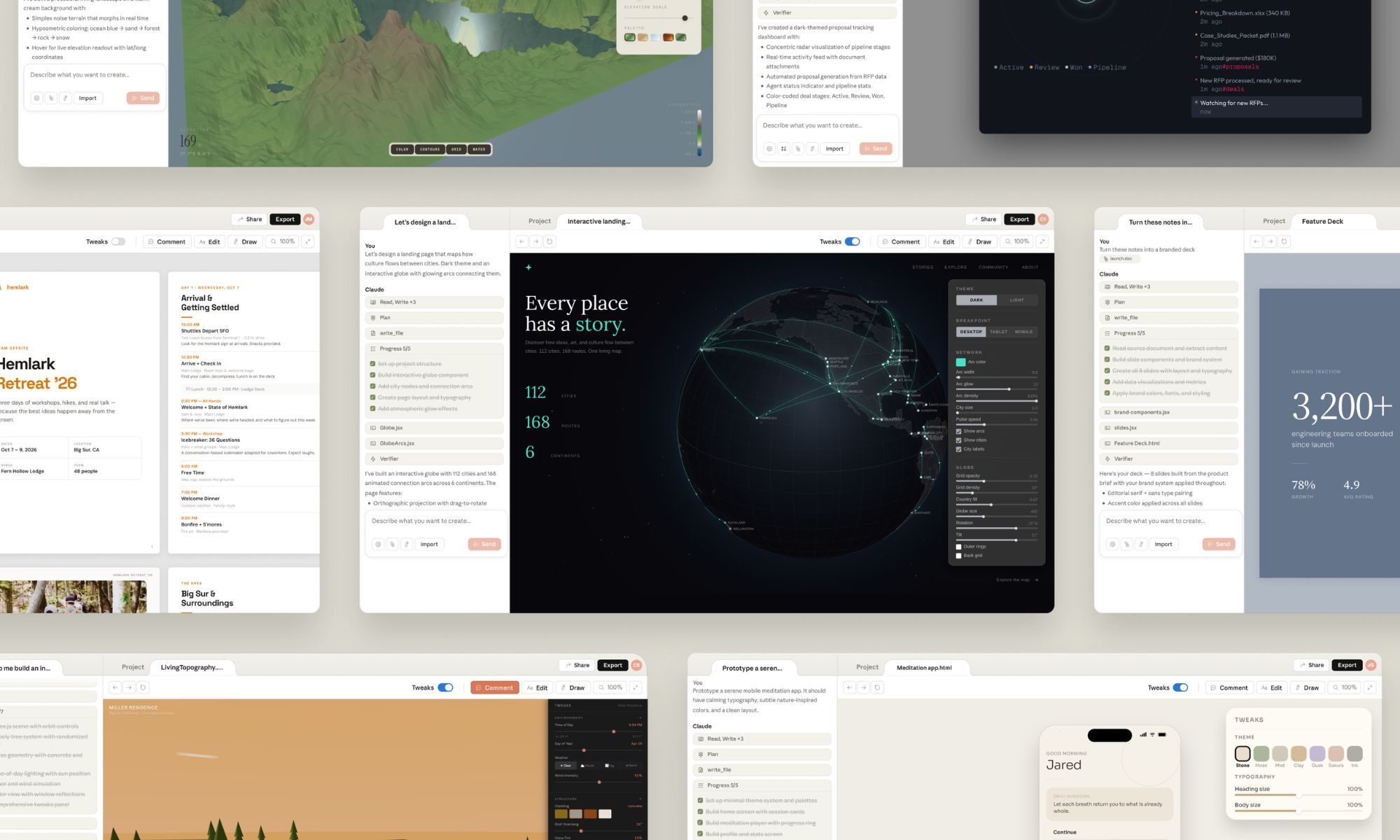
In a significant move for the creative technology sector, Anthropic has unveiled Claude Design, a novel artificial intelligence platform designed to democratize visual content creation. This tool, currently available in a research preview for paying Claude subscribers, represents a fundamental shift in how individuals and teams approach design tasks. Instead of wrestling with complex software interfaces, users can now simply describe their vision and watch as the AI brings it to life.

This means that creating professional prototypes, compelling presentations, or polished marketing materials no longer requires extensive technical training. The barrier to entry for high-quality visual design has been dramatically lowered. Consequently, the creative process becomes more accessible, fluid, and collaborative from the very first idea.

How Claude Design AI Reimagines the Creative Workflow

At its core, Claude Design is built to eliminate the friction traditionally associated with design software. The platform is powered by Anthropic’s advanced vision model, Claude Opus 4.7, which acts as the intelligent engine behind the scenes. Therefore, the workflow is refreshingly straightforward: a user provides a conversational prompt, and the AI generates an initial visual draft.

Building on this, the refinement process is equally intuitive. Users can provide feedback through inline comments, make direct edits, or use adjustable controls—all while continuing a natural dialogue with the AI. This conversational interface is the tool’s greatest strength, allowing for rapid iteration and exploration of multiple design directions that would be time-prohibitive to produce manually.

Key Applications and Use Cases

The potential applications for this technology are vast. Teams can leverage Claude Design to quickly build interactive product wireframes, assemble investor pitch decks, or generate a suite of cohesive marketing assets. For instance, a startup could conceptualize a user interface, visualize a sales presentation, and create social media graphics in a single, streamlined session.

On the other hand, this isn’t just about speed. It’s also about empowering non-designers within an organization to contribute visually without bottlenecking the creative department. Marketing managers, product owners, and executives can now directly articulate and visualize their ideas, leading to clearer communication and faster project alignment.

Intelligent Design Systems and Seamless Collaboration

One of the most sophisticated features of the Claude Design AI is its ability to understand and replicate an organization’s unique brand identity. During the onboarding process, the tool can analyze existing design files, websites, or code repositories. From this analysis, it automatically builds a living design system, capturing essential brand elements like color palettes, typography, and UI components.

As a result, every piece of content generated maintains brand consistency automatically. Designers are freed from the tedious task of manually enforcing style guides, allowing them to focus on higher-level creative strategy. Teams can even manage and refine multiple design systems within the platform, ensuring different projects or sub-brands stay on-point.

A Platform Built for Teamwork

Collaboration is baked directly into the fabric of Claude Design. Users can easily share projects with colleagues, grant specific editing permissions, and work together in real-time. This transforms design from a siloed activity into a truly collaborative effort. Furthermore, the platform supports exporting finished work in practical formats like PDF, PPTX, and HTML, or can integrate with popular tools like Canva for final touches.

The Broader Impact on Creators and Businesses

What does the arrival of a tool like Claude Design signify for the creative industry? Primarily, it signals a move towards abstraction. Complex technical skills are being abstracted away by intelligent interfaces, putting powerful capabilities into the hands of a much broader audience. For seasoned designers, this is not a replacement but a powerful augmentation. It handles the repetitive, time-consuming groundwork, allowing human creativity to focus on nuance, emotion, and strategic innovation.

Early feedback cited by Anthropic suggests a dramatic reduction in project turnaround times, with teams progressing from a rough concept to a functional prototype in a single working session. This efficiency gain is a compelling value proposition for any business where speed-to-market is critical. For more insights on how AI is shaping creative tools, explore our analysis on the future of AI in content creation.

In addition, the tool’s ability to generate interactive prototypes without writing a single line of code opens up new possibilities for product managers, entrepreneurs, and educators who need to test and communicate ideas quickly.

Looking Ahead: The Future of AI-Powered Design

Anthropic has announced that Claude Design is just the beginning. The coming weeks and months will see the introduction of additional features and deeper integrations with other software in the standard creative and productivity stack. This evolution will make the AI an even more seamless part of existing organizational workflows.

This development is part of a larger, undeniable trend where conversational AI is simplifying tasks that were once considered complex and specialized. While still in its preview phase, Claude Design offers a clear preview of a near future where the gap between an idea and its visual execution is virtually nonexistent. To understand how this fits into the wider ecosystem, read about comparing leading AI design assistants.

Ultimately, tools like this redefine who gets to be a “creator.” By lowering technical barriers, they foster a more inclusive and iterative creative process, promising to unlock a wave of innovation across countless fields and disciplines.

Continue Reading
Click to comment

Leave a Reply

Your email address will not be published. Required fields are marked *

Artificial Intelligence

Next-Gen Siri Will Sync Your AI Chats and Spread Them Across Apple’s Walled Garden

Published

on

Next-Gen Siri Will Sync Your AI Chats and Spread Them Across Apple’s Walled Garden

Apple is finally ready to give Siri a serious shot in the arm. According to a new report from Bloomberg’s Mark Gurman, the company is working on a next-gen Siri that will synchronize AI conversations across all your devices using iCloud. This move signals Apple’s intent to turn its voice assistant into a persistent, connected AI system—one that lives deep inside the company’s tightly controlled ecosystem.

Instead of a simple voice tool, Siri is expected to evolve into a conversational AI assistant capable of maintaining synced chat histories across iPhones, iPads, Macs, and other Apple hardware. This puts it in direct competition with products like ChatGPT and Google Gemini.

What the Next-Gen Siri Upgrade Entails

Gurman reports that Apple is internally testing a completely redesigned Siri interface that looks and feels like a modern AI chatbot app. The new experience includes a dedicated chat-style interface, persistent conversation history, and cloud synchronization powered through iCloud.

This means you could start an AI conversation on your iPhone and pick it up right where you left off on your Mac or iPad. Apple is positioning this seamlessness as a key differentiator, leveraging its ecosystem advantage rather than competing purely on raw AI model performance.

A Deeper Integration Across Apple’s Platforms

The report also suggests Apple is integrating Siri more deeply across its software platforms as part of future versions of iOS, iPadOS, and macOS. Internally, Apple is already preparing features for iOS 28 while work continues on iOS 27.

However, the AI-focused Siri upgrade has faced multiple delays over the past two years. Apple has struggled to modernize Siri’s underlying architecture quickly enough. Gurman notes that several Apple AI projects, including AI-powered AirPods and smart home products, were also slowed by delays tied to Siri’s redevelopment.

How Apple’s AI Strategy Differs from Competitors

Apple has been noticeably slower than rivals like Microsoft and OpenAI in rolling out consumer-facing AI products. While competitors aggressively integrated generative AI into search, productivity apps, and smartphones, Siri has increasingly felt outdated.

But Apple’s strategy appears different. Instead of creating a standalone chatbot platform, the company seems focused on embedding AI deeply into its hardware ecosystem and user workflows. This could make Siri more useful for existing Apple users, especially if conversation syncing works smoothly across devices.

On the other hand, this approach further strengthens Apple’s famously closed ecosystem. The best experiences will likely remain limited to users who are fully invested in Apple hardware.

Apple’s Hardware Push: Smart Glasses and More

At the same time, Apple is preparing for a broader hardware push built around AI experiences. Bloomberg reports the company is developing smart glasses aimed at competing with Meta’s Ray-Ban smart glasses. Siri is expected to play a major role in those products as well.

Additionally, Apple is reportedly working on updated HomePods and refreshed Apple TV products that could rely heavily on the new Siri platform.

When Will the Next-Gen Siri Arrive?

Apple is expected to reveal more about its AI plans during upcoming WWDC announcements. However, Bloomberg suggests the most ambitious Siri upgrades may not fully arrive until iOS 28. For now, Apple’s challenge is clear: it no longer just needs to improve Siri. It needs to convince users that its version of AI is worth waiting for after years of falling behind competitors already moving at full speed.

Building on this, users who want to explore similar AI capabilities today might consider alternative AI chatbot apps or optimizing their current Siri experience.

Continue Reading

Artificial Intelligence

Photoshop Is Being Eaten by the Prompt Box: The New Face of AI Image Editing

Published

on

Photoshop Is Being Eaten by the Prompt Box: The New Face of AI Image Editing

After a recent trip, I faced a familiar pile of photos needing cleanup. A stray object here, an awkward background detail there. My first instinct was Photoshop, but the full subscription feels steep for someone who isn’t a pro. Mobile apps? My thumbs are too clumsy for precision taps.

So I turned to the obvious alternative: AI image editing. Every tech company seems convinced the prompt box is the future. Why not describe the edit and let the machine handle it? Sometimes it worked beautifully. Other times, it felt like a polite argument with software that kept misunderstanding simple requests. This experience revealed that AI image editing is evolving fast—but not necessarily getting simpler.

Why Every Editor Wants to Become a Chat Box

The appeal is clear. Most people never wanted to become Photoshop monks, memorizing layers, masks, and blend modes. They just wanted to erase a person, fix a crooked shot, or generate a decent graphic without a tutorial. The prompt box skips the ceremony. It doesn’t ask if you know what a layer mask is. It asks for a result.

Companies like Adobe are embedding Firefly deeper into Photoshop, while Canva offers a buffet of “Magic” buttons. Google‘s Gemini, ChatGPT image generation, Midjourney, Ideogram, and Runway all circle the same idea: editing should feel like asking for help, not operating complex software. This shift makes conversational photo editing a growing trend.

For casual users, this is liberation. A 20-second prompt can achieve what once required patience or a friend who owed you a favor. The old barrier was technical; the new one is fuzzier: knowing what looks right, what looks fake, and where the machine decided to improvise.

When Editing Becomes Negotiation

However, asking for help isn’t the same as getting help. Anyone who has used AI photo tools for more than five minutes knows the dip when a result is almost right—but somehow more annoying. The person is removed, but the background looks like melted wallpaper. The lighting improves, but the photo now resembles a luxury dentist ad. The object moves, but the AI adds a mysterious extra finger.

This is where editing becomes negotiation. You’re not just editing the image; you’re editing the request. “Make it warmer, but don’t make it fake. Remove that object, but keep the background natural.” Old tools were annoying because they made you learn rules. Prompt-based editing is annoying because it pretends language is enough—which is generous nonsense. Language is mushy, visual judgment is slippery, and AI models can be confidently wrong.

The Reality of Iterative Edits

The first result is often the best sales pitch. It looks shockingly good at a glance. Then you ask for corrections: fix the lighting, restore detail, reduce waxy skin. After a few rounds, the image drifts. Details soften, faces turn into blobs, and the clean edit becomes less impressive the harder you try to fix it.

For professionals, this can be useful but not relaxing. Boring work gets faster, but supervision gets heavier. Someone must catch flattened images, broken compositions, or softened details before anyone else sees them. The job shifts from doing to directing—which sounds clean until the AI gives everyone porcelain skin.

The Future of Image Editing

For casual users, the interface gets friendlier and power gets closer. But the frustration gets harder to name. When a traditional editor annoyed you, at least the villain had buttons. When an AI editor misinterprets a reasonable request, it feels like a conversation going badly.

Photoshop will survive. Powerful tools usually do. But its old logic is being absorbed into a simpler, stranger interface. The future of editing may not be learning where the tools are—it may be learning how to talk to a machine that keeps pretending it understood you.

Building on this, the key is to embrace AI image editing while staying critical. Use prompts as a starting point, not a final answer. Always check for AI hallucinations like extra fingers or weird textures. For more insights, check our guide on comparing top AI photo tools and prompt engineering tips.

Ultimately, the prompt box is eating Photoshop’s lunch—but the meal isn’t fully cooked yet. Editors who adapt will thrive, but they’ll need to sharpen both their visual eye and their conversational skills.

Continue Reading

Artificial Intelligence

NBA Turns to AI to Fix Bad Referee Calls and Calm Fan Fury

Published

on

NBA Turns to AI to Fix Bad Referee Calls and Calm Fan Fury

The NBA has long struggled with controversial referee calls that spark outrage among players, coaches, and fans alike. Now, the league is betting on NBA AI officiating to reduce errors and restore trust in the game. Commissioner Adam Silver recently confirmed that the organization is actively exploring how artificial intelligence can improve officiating, replay analysis, and real-time decision-making during matches.

This shift comes at a critical time. Social media amplifies every missed whistle, and slow-motion replays make inconsistencies painfully visible to millions. Add the rise of sports betting, and each controversial call now carries financial stakes alongside competitive ones. The pressure on referees has never been higher.

How AI Could Assist Referees Without Replacing Them

Silver emphasized that the goal is not to eliminate human officials but to empower them. NBA AI officiating would act as an intelligent support system, analyzing movement patterns, contact, positioning, and foul situations in real time. This could help referees make more consistent decisions under extreme pressure.

The league already uses technology extensively through replay centers and player tracking systems. However, AI integration would take this further by processing vast amounts of visual data instantly. For example, an AI system could flag potential fouls or incorrect calls within seconds, allowing officials to review and correct mistakes before the next play.

But Silver acknowledged that officiating remains one of the toughest jobs in sports. Referees must track ten players moving at breakneck speed while making split-second judgments. AI can process far more information simultaneously, acting as an extra layer of accuracy.

Addressing Fan Frustration and Betting Scrutiny

Fan anger over referee decisions has reached a boiling point. Many supporters accuse officials of inconsistency, bias, or simply missing obvious calls during crucial moments. The rise of legal sports betting has only intensified this scrutiny, since controversial calls directly affect wagers.

By integrating artificial intelligence basketball technology, the NBA hopes to reduce these controversies. Fewer missed calls could mean fewer games overshadowed by officiating debates. However, the idea is not without critics. Some fans worry that AI might slow down the game or remove the human element that makes sports unpredictable.

The Broader Trend: AI in Professional Sports

The NBA’s move is part of a wider trend across professional athletics. Tennis already uses automated line-calling systems. Football leagues heavily rely on VAR (Video Assistant Referee). Baseball continues to test automated strike zones. Basketball may now be entering its own AI-assisted officiating era.

For context, see how AI is transforming football officiating and how tennis adopted automated line calling. These examples show that technology can improve fairness, but it also raises questions about implementation and acceptance.

Challenges Ahead: Speed, Trust, and Human Element

One major concern is that replay reviews already slow down games. Introducing AI could exacerbate delays if not implemented carefully. The league must balance accuracy with pace of play.

Another challenge is maintaining trust. Fans and players need to believe that AI decisions are impartial and correct. If the technology makes errors or seems opaque, it could backfire and increase frustration rather than reduce it.

Silver acknowledged these concerns, noting that the NBA is still in early exploration stages. There is no timeline for full implementation. However, the direction is clear: the league wants to use technology more aggressively to protect officiating credibility.

What This Means for the Future of Basketball

If successful, NBA AI officiating could set a new standard for fairness in professional basketball. It might reduce the number of games decided by controversial calls and give fans more confidence in the outcome.

But whether AI can truly solve the referee problem remains uncertain. Even partial improvements—like reducing obvious misses or speeding up reviews—could justify the experiment. For a league constantly battling viral outrage over bad calls, any progress is welcome.

As AI tools improve, expect the NBA to push forward. The league’s willingness to embrace technology signals a future where human referees and artificial intelligence work side by side, each covering the other’s weaknesses.

Continue Reading

Trending