Connect with us

Artificial Intelligence

Apple Intelligence finally gets China’s green light — with Alibaba and Baidu in tow

Published

on

Apple Intelligence China approval

The two-year wait is over — almost

Apple Intelligence has finally cleared China’s regulatory hurdle. The country’s Cyberspace Administration has registered the AI suite for use on iPhones, ending a nearly two-year standoff that kept the feature out of the world’s largest smartphone market.

The approval doesn’t mean you can flip the switch today. Apple and regulators still need to set a launch date. But the main obstacle is gone, and that’s a big deal for Apple’s fortunes in China.

It’s been a long road. Apple introduced Apple Intelligence in June 2024, and mainland China users have been watching from the sidelines ever since.

Alibaba and Baidu step up as AI partners

Apple isn’t going it alone. Two of China’s biggest AI players are now officially on board.

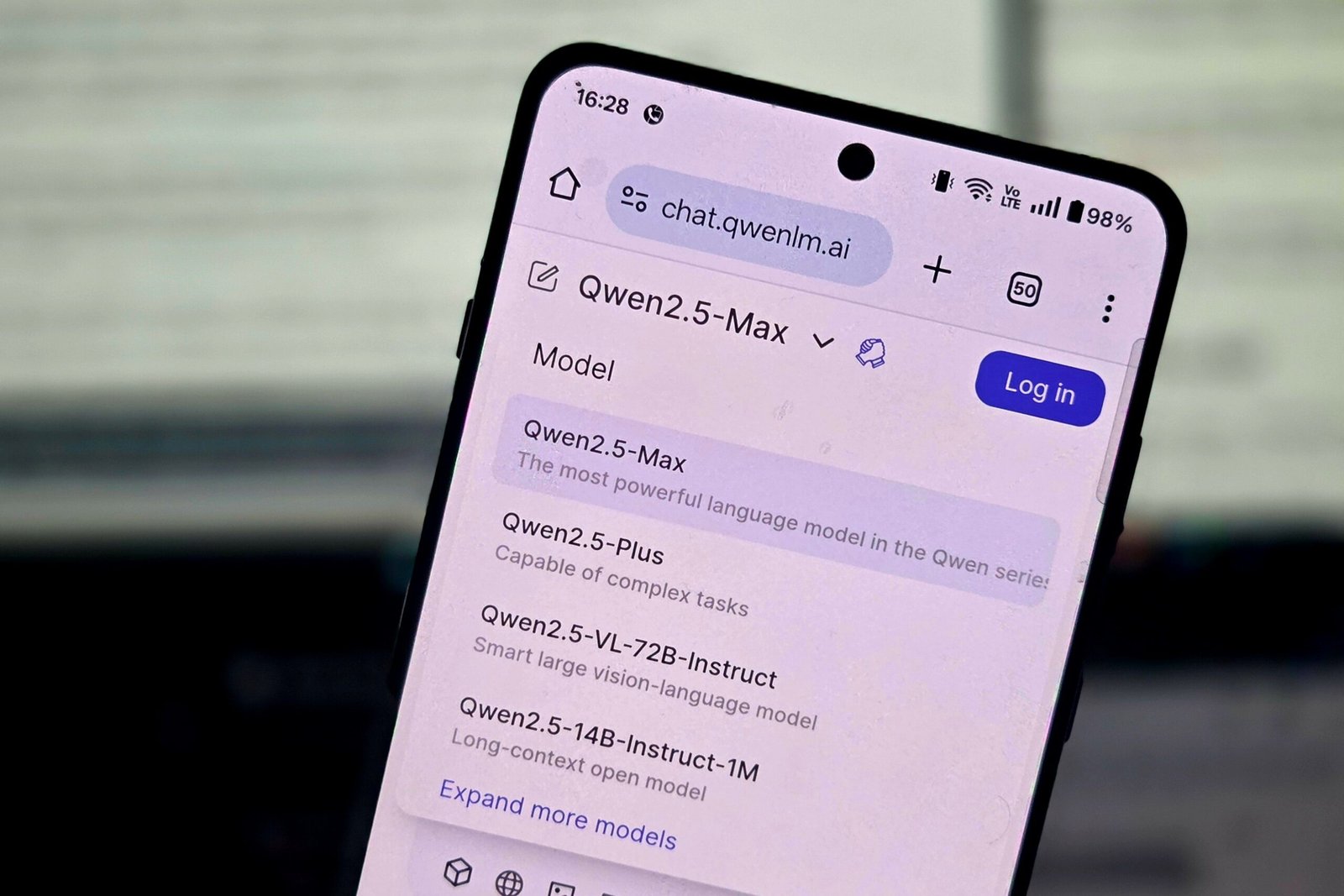
Alibaba confirmed that its Qwen model will power Apple Intelligence experiences across iOS, iPadOS, macOS, and visionOS for users in China. Qwen handles text understanding, image recognition, and content generation directly inside Apple’s operating systems.

Baidu also confirmed it’s working with Apple on features for Chinese iPhone users. What’s less clear is how the workload splits between the two companies. Each model’s exact role remains undefined.

There’s another wrinkle. The approval only covers iPhones. Chinese iPads, Macs, and Vision Pro headsets are still waiting — the two-year AI drought is only partially over.

Why two partners instead of one?

Apple rarely relies on a single vendor for critical technology, and China’s regulatory environment makes diversification smart. Alibaba brings strong consumer AI chops with Qwen, while Baidu has deep experience in search and language models.

Having two partners also hedges against any single point of failure — a practical concern given the geopolitical sensitivity around AI in China.

What this means for Chinese iPhone users

Apple’s support documentation says compatible devices already sold in China should activate the service once it officially launches. That’s good news for anyone who bought an iPhone in the last couple of years expecting AI features that never arrived.

The prolonged absence put Apple at a real disadvantage. Huawei, Xiaomi, and other domestic manufacturers have been shipping generative AI on their phones for a while now. Apple was losing ground on a feature that’s become table stakes in the premium segment.

Apple and Alibaba actually submitted features for review back in early 2025. The process stalled — a casualty of the broader geopolitical tensions between China and the United States. Now that the logjam has broken, expect a rapid rollout.

The bigger picture for Apple in China

China remains a critical market for Apple, but it’s been a rough stretch. Local competitors are aggressive, and the government has shown it can hold up foreign tech when it wants to.

This approval signals a thaw — at least when it comes to AI. Apple’s partnership with Alibaba and Baidu also keeps it aligned with Beijing’s preferences: working with domestic firms rather than imposing US-centric AI models.

For iPhone owners in China, the wait is nearly over. For Apple, it’s a chance to reclaim momentum in a market where it can’t afford to fall further behind.

Want to catch up on how Apple Intelligence works elsewhere? Check out our guide on Apple Intelligence features explained and the latest on iPhone AI rollout news.

Continue Reading
Click to comment

Leave a Reply

Your email address will not be published. Required fields are marked *

Artificial Intelligence

OpenAI Presence: The Enterprise AI Agent Product That Comes With Engineers Attached

Published

on

OpenAI Presence enterprise AI agents

OpenAI’s New Enterprise AI Agent Play: A Managed Service, Not a Self-Serve Product

On July 22, OpenAI announced Presence, a managed enterprise AI agent offering that breaks from the company’s usual playbook. You can’t just sign up online and start using it. Presence is delivered through a limited general availability programme, with deployments led by OpenAI’s own Forward Deployed Engineers and a handful of selected global systems integrators.

This is a notable shift for a company that’s built its business on API keys and seat licences. Presence is sold as a project, not a product. Each engagement starts with a single, focused job — resolving a billing dispute, handling an insurance claim, or clearing an employee IT service request.

The agent gets only the knowledge and system access that specific job requires. The customer writes the rules: what the agent can do, when it needs sign-off, and when a human takes over. After launch, Codex reads production sessions and escalations, then proposes changes that the customer’s team tests and approves before rollout.

The Labour Behind the AI Agent

OpenAI’s documentation is refreshingly candid about the work involved. Its help centre lays out a six-stage process: scoping business outcomes, security and privacy review, legal review, simulation and acceptance testing, staged rollout, and post-launch iteration. A Presence agent, it says, does not become production-ready simply by ingesting documents.

That honesty matters. Gartner has warned that more than 40% of agentic AI projects will be cancelled by the end of 2027. The failures, Gartner says, stem from governance, undefined business value, and weak operational discipline — not from model capability.

Almost everything Presence bundles is aimed squarely at that diagnosis. Simulations and graders test whether an agent reached the right outcome, followed policy, used its tools correctly, and escalated when it should — before anyone outside the company speaks to it. Guardrails intervene when an interaction moves past defined boundaries. Session records and action histories give reviewers something to audit. Escalation paths hand a person structured context rather than a cold transcript. New versions go out through controlled rollout with rollback.

Enterprises have spent two years learning that the hard part of a production agent sits in integration, permissions, and change management. A vendor that sends engineers to do that work is responding to what buyers have actually been failing at, rather than shipping another dashboard and calling the gap a customer problem.

Where the Constraint Sits: Forward Deployed Engineers

The trade-off shows up in the eligibility criteria. Access, OpenAI says, depends on workflow fit, implementation readiness, and available delivery capacity.

Delivery capacity is a consulting constraint. Software scales; engineers cleared into a bank’s core systems do not. The title Forward Deployed Engineer is borrowed from Palantir, where it describes staff embedded in customer operations for months at a time. The economics attached to it look nothing like the economics of metered inference.

By putting its own FDEs and named partners at the front of every deployment, OpenAI has stepped into the layer of the market occupied by the integrators it will also rely on to scale. That’s a workable arrangement while volumes are small — and a more complicated one later.

It also raises a question for anyone scoping a contract. When the model vendor is also the implementation partner, the lines of accountability for a policy misapplied in production need to be written down rather than assumed.

The Enterprise AI Agents on Display Are Still Early

OpenAI describes Presence as battle-tested. Its case for that language: the product was assembled from years of deploying agents with enterprise customers before it was packaged and named. The claim is about accumulated practice rather than time in market, and it’s a reasonable one to make.

The strongest single proof point is OpenAI’s own English-language phone support line, 1-888-GPT-0090. The company says the agent met or exceeded internal benchmarks for frontline human support within weeks, now resolves 75% of inbound issues without human assistance, and cut human handoffs by 15 percentage points in ten days through the Codex improvement loop.

Those are OpenAI’s figures, measured against OpenAI’s own grading criteria, on OpenAI’s own channel. The transparency is welcome, but the numbers are not independently verified.

The three named customers sit earlier in the cycle than the launch framing implies. BBVA is exploring voice support for everyday banking in Mexico. SoftBank is testing Japanese-language conversations. IAG is exploring support during high-demand events such as severe weather. Daniel Ordaz, head of AI transformation at BBVA Mexico, describes the bank as a design partner helping shape and refine voice experiences for financial customer service. Design partners are normal and useful at limited GA. None of the three, though, is presented as running Presence at scale — worth holding alongside the word proven.

What OpenAI Hasn’t Disclosed About Presence

Pricing is not published. Implementation scope and cost are set per customer and per deployment. That’s ordinary for enterprise services, but it leaves buyers without a public reference point for cost per resolved contact against an incumbent contact-centre vendor.

The model is not named. Presence uses OpenAI models, the documentation says, with configuration selected for the workflow and subject to change as that workflow evolves. That flexibility is defensible engineering — pinning a production agent to a frozen model version ages badly. Teams that have spent the past year building evaluation suites against specific versions will nonetheless want the contract to say what they’re being held to when the configuration moves.

Channel support during limited GA covers voice or chat, with contact-centre integration, routing, authentication, and handoff design confirmed deployment by deployment. Data handling follows the same pattern, with the signed architecture and contract treated as the governing record rather than any published policy.

Presence sits apart from ChatGPT Workspace Agents, which remain the self-serve path for teams building inside ChatGPT and Slack. Voice customers keep API access to OpenAI’s frontier models. The company now offers broadly the same capability three ways, separated less by what the technology can do than by who does the work.

That leaves buyers choosing on delivery capacity as much as on model capability. And on OpenAI’s own account, delivery capacity is the part being rationed.

For a deeper look at how companies are putting agentic AI to work, see our coverage of HP accelerating enterprise workflows with OpenAI Frontier and the broader enterprise AI agent landscape.

Continue Reading

Artificial Intelligence

Nvidia’s Open Secure AI Alliance is already moving fast — and that’s a good sign

Published

on

Open Secure AI Alliance

A week in, and it’s already doing something

Nvidia doesn’t do things halfway. Just one week after the Open Secure AI Alliance (OSAA) launched, the group has already formed a working group with a name that’s hard to forget: the Shared AI Findings Exchange, or SAFE. It’s already publishing proposals for public comment, with the Linux Foundation — itself a member — managing the process.

The group put this together while its members were gathered at Black Hat, the massive cybersecurity conference happening this week in Las Vegas. That timing wasn’t accidental. The people who care about AI security were already in one room, so why not get to work?

What the proposals actually cover

Let’s be honest: the initial proposals aren’t going to blow your mind. They’re practical, not flashy. The focus is on three things:

  • How to confidentially report AI cybersecurity incidents
  • How to alert the people who might be affected
  • How to do blame-free analysis so everyone can learn from what happened

That last one matters more than it sounds. In cybersecurity, the instinct is often to point fingers. A blame-free approach means companies actually share what went wrong, instead of hiding it. That’s how the whole industry gets smarter.

More than just talk: actual tech contributions

The OSAA isn’t just writing documents. Members are also contributing open source tools that could eventually become a real, usable stack for securing AI agents — or defending against rogue AI attackers.

Consider what’s already on the table. Nvidia has a family of open models and an open source LLM vulnerability scanner called Garak. Okta is working on agent identity tech. Red Hat is focused on agent governance. Amazon brought both an open agent-building tool, Strands Agents, and an authorization language called Cedar. And that’s just the start.

This is the kind of concrete, technical work that makes an industry group worth paying attention to. Anyone can sign a letter. Actually contributing code is another thing entirely.

Who’s in, and who’s conspicuously absent

The membership list is impressive: Adobe, BlackRock, Cisco, Intel, Microsoft, and Visa are all in. That’s over 120 companies total.

But look closer and you’ll notice some big names missing. Anthropic, OpenAI, and Google are not members. That’s notable, because both OpenAI and Google signed the original open letter that led to this group’s creation. The letter, published last week, urged the White House to support open source AI rather than suppress it. Nvidia championed it, and over 200 tech companies signed on.

Anthropic’s absence isn’t surprising — they’ve been skeptical of open source AI for a while. But Google? They’re generally seen as a big open source supporter, and they’ve released open weight models of their own. So why aren’t they in?

It’s possible they’re waiting to see how the group evolves. It’s also possible they’re just slow to commit. Either way, it’s worth watching whether they join as the Open Secure AI Alliance builds momentum.

Moving at AI speed

The speed here is remarkable. It’s only been a couple of weeks since reports surfaced that the Trump administration might ban Chinese open weight models. That caused real consternation in the industry, which led to the open letter. And now, a week after the OSAA formed, it’s already publishing proposals.

That’s not normal for industry groups. Most take months just to agree on a mission statement. This one is already doing work.

What this means for open AI in the US

Whether or not Chinese models get banned, the fast action from this heavyweight group looks like a good thing for the U.S. open AI ecosystem. Some in the ecosystem, like the co-founder and CTO of U.S. open weight AI lab Arcee, argue that openness is the best way to counter any threat — real or imagined — from Chinese AI labs.

“Openness may be one of the most important paths to AI safety and security,” the group wrote in their letter. That’s a strong statement. The good news is they’re backing it up with action, not just words.

For anyone tracking AI security trends or open source AI developments, this is a group worth keeping an eye on. It’s young, it’s fast, and it has the backing of some of the biggest names in tech. What it does next will tell us a lot about where open AI is headed.

Continue Reading

Artificial Intelligence

South Korea wants to give every citizen free, unlimited access to its own AI chatbot

Published

on

free AI chatbot

Seoul’s grand AI experiment

South Korea is about to do something no other major economy has tried. The government wants to hand every citizen a free AI chatbot with zero usage caps. No tiers. No premium plans. No “ask your IT department.” Just a national assistant that works like a public utility.

The Ministry of Science and ICT announced the AI for Everyone project on July 13. Private companies will build the platform around locally developed models, while a separate AI agent will help people navigate government services. It’s a more practical job than generating emails or settling arguments nobody wanted to research themselves.

What will the free chatbot offer?

The plan covers two distinct services. First, a general-purpose chatbot that anyone in South Korea can use without paying. Second, a public-service agent that identifies relevant government programs and helps users complete applications. Think of it as a digital civil servant that never sleeps.

Two or three private operators will be selected to develop these services. A beta is expected by the end of September, with an official launch planned before the end of 2026. The government will supply up to 512 Nvidia B200 GPUs, although the chosen companies must also invest their own capital.

Why must the AI stay local?

Here’s the catch: at least half of each service must run on South Korean foundation models that meet the ministry’s standards. Developers using their own models must source more than 30% of the system from other domestic AI companies. Foreign alternatives can fill limited gaps, but the government won’t subsidize them.

The rules keep more public funding inside South Korea’s technology industry while reducing its reliance on overseas platforms. A national service isn’t especially dependable if a foreign provider can suddenly tighten its limits or cut off access. That’s a lesson many governments are learning the hard way.

What about the tech giants?

This isn’t just about sovereignty. It’s about competition. South Korea is home to Samsung, LG, and a vibrant startup scene, yet its citizens largely rely on American chatbots. The government wants to change that by funding a domestic alternative that’s good enough to pull people away from established commercial platforms.

Can free AI remain free?

Government support is scheduled to continue through the end of 2030. Its scale from 2027 onward will depend on annual evaluations and budget discussions, so the longer-term definition of “free” isn’t entirely settled. Applicants have until August 11 to submit proposals.

The economics are tricky. Running a large language model for an entire population costs real money — in electricity, in GPUs, in cooling. The B200 GPUs are powerful, but they’re not infinite. If usage surges beyond projections, the government might need to rethink the model or set fair-use policies.

What this means for the rest of the world

South Korea is moving beyond research grants and limited trials by funding AI access for an entire population. That’s a bold statement about how a society should treat artificial intelligence — as infrastructure, not as a luxury subscription.

The harder question is whether its domestic models will be good enough to compete with the likes of OpenAI‘s ChatGPT or Google‘s Gemini. Local models have improved dramatically, but they still lag in some benchmarks. The September beta should give everyone the first useful answer.

If it works, expect other countries to follow. If it fails, expect the opposite — a cautionary tale about the limits of state-funded AI. Either way, South Korea is forcing the conversation.

For now, the clock is ticking. Proposals are due in August, the beta lands in September, and the world will be watching. Will free AI become a citizen’s right? South Korea is betting it can.

Continue Reading

Trending