Connect with us

Artificial Intelligence

Apple’s rumored camera AirPods Pro may have hit a major roadblock

Published

on

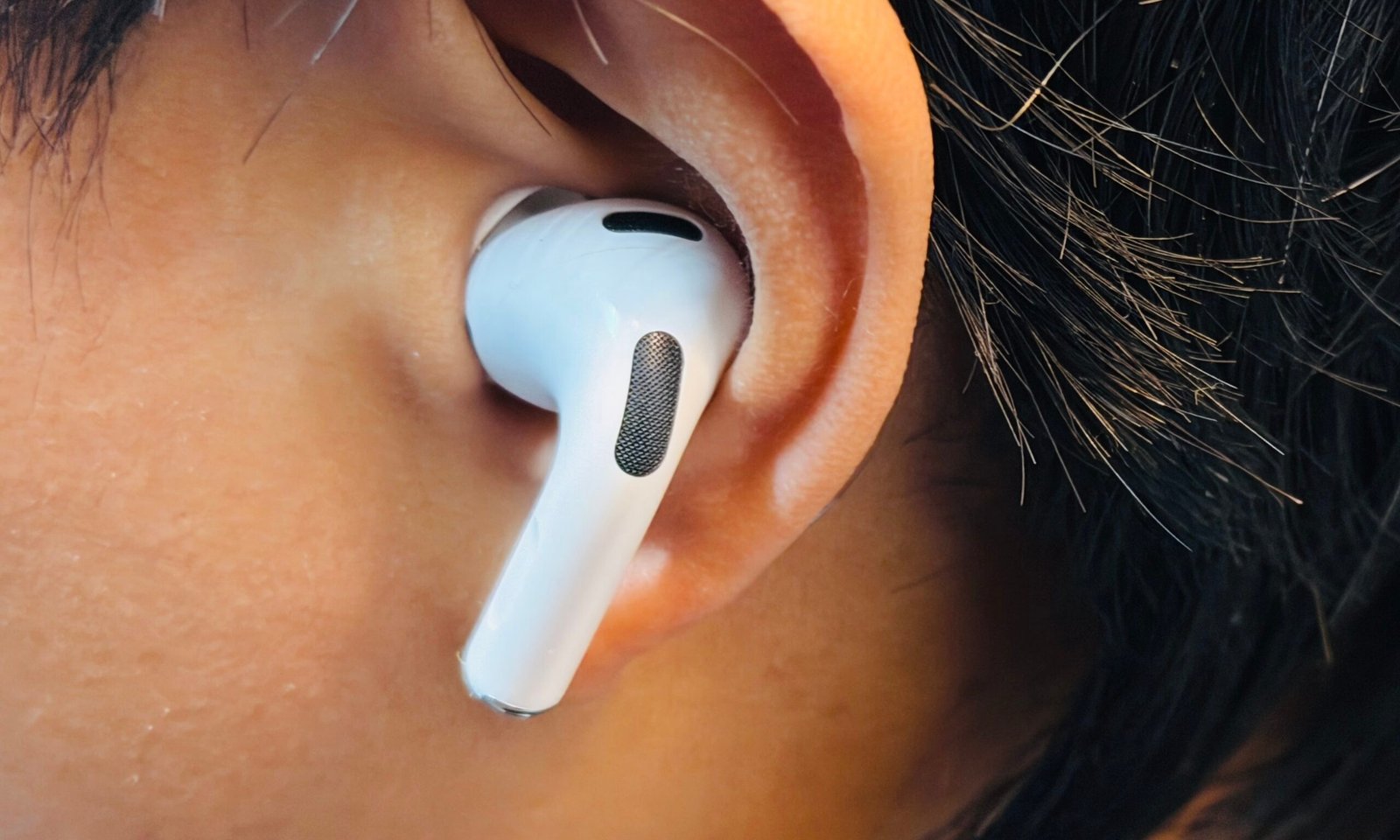
camera AirPods Pro

Just months after reports said Apple’s camera-equipped AirPods Pro were nearly ready for production, a well-known leaker claims the project has been shelved.

Back in May, Bloomberg dropped a bombshell: Apple’s camera AirPods Pro had entered “advanced” testing. Mass production, the report suggested, could begin soon. For anyone who’s followed the evolution from AirPods Pro 2 to the current AirPods Pro 3, it sounded like the next logical leap.

Now? A single post on X has thrown that timeline into doubt.

Kosutami, a prototype collector who has leaked accurate Apple hardware details before, wrote this week that the project has been “suspended.” No context. No explanation. Just that one word, correcting an earlier June update where they’d described the product’s development as “concluded” — a subtle but meaningful revision, as MacRumors noted.

So what actually happened? And more importantly: what were these things even supposed to do?

Not for selfies — for Siri’s eyes

Let’s clear one thing up right away. The cameras built into these AirPods weren’t meant for snapping photos or recording video. They were tiny infrared sensors designed to do one job: feed real-time visual data about the wearer’s surroundings to Siri.

Think of it as giving Apple’s voice assistant a pair of eyes that sees from your ears. You walk into a room, and Siri already knows what’s on the table. You approach a museum exhibit, and it whispers context in your ear. That was the vision.

Kosutami first claimed back in February that infrared cameras would let the AirPods Pro tap into Apple Intelligence. Other reliable sources later backed that up. The product, according to multiple reports, had been in development for about four years.

Apple was reportedly targeting a first-half 2026 launch. That window has already closed.

Is Siri the real problem here?

Here’s where it gets interesting — and possibly frustrating for Apple fans.

Bloomberg previously hinted that Apple might hold back the camera AirPods Pro if it wasn’t happy with the quality of its Visual Intelligence features. Sound familiar? It’s exactly the same cautious approach Apple took with Siri’s broader AI rollout. The company has been notoriously slow to ship half-baked AI features, preferring to wait until the experience genuinely works.

But that caution comes at a cost. If Siri’s visual smarts aren’t polished enough to justify the hardware, then the whole product — no matter how advanced the engineering — sits on a shelf.

There’s also the ongoing memory chip shortage, which may have complicated production plans. And one more thing: Kosutami’s track record isn’t flawless. They correctly predicted the iPhone 16 Pro’s metal-enclosed battery about ten months before launch. But they also claimed the AirPods Pro 3 would arrive in August 2024 — which didn’t happen.

Suspended doesn’t always mean canceled

“Suspended” is a vague word. It could mean Apple hit a technical snag and needs more time. It could mean the project is being reworked internally. It could also mean the whole thing is dead.

Only Apple knows. But here’s what’s worth watching:

  • If Siri’s Visual Intelligence improves dramatically in the next iOS update, the camera AirPods Pro might come back to life.
  • If Apple launches a competing product — like smart glasses with similar sensors — the AirPods project could be redundant.
  • If Kosutami’s source is simply wrong, we might hear a correction from Bloomberg or another outlet soon.

For now, the camera AirPods Pro sit in limbo. A promising idea, years in development, potentially undone by the very AI features it was built to enable.

It’s a reminder that even Apple — with its billions and its supply chain muscle — can’t always will a product into existence. Sometimes the software just isn’t ready. And sometimes, a single leaker’s post is enough to make you wonder if it ever will be.

Continue Reading
Click to comment

Leave a Reply

Your email address will not be published. Required fields are marked *

Artificial Intelligence

Nokia’s AI-RAN platform: a radio comeback that runs on NVIDIA

Published

on

Nokia AI-RAN platform

Nokia claims a first with GPU-accelerated radio platform

On July 15, Nokia unveiled what it calls the industry’s first commercial AI-native radio access network platform. Built on the company’s anyRAN software and NVIDIA‘s Aerial computing platform, the system promises to squeeze dramatically more performance out of existing spectrum. The vendor says it has already measured over 20% spectral efficiency gains in testing, with ambitions to hit 50% by 2027 and more than 100% by 2028. At that upper target, operators could effectively double the capacity of the frequencies they already own. Pilots are slated for late 2026, with commercial availability arriving in 2027.

The technical pitch is straightforward. Rather than swapping out base stations, carriers buy a software subscription and pick from three hardware paths: a GPU-powered plug-in card for existing AirScale sites, a standalone AI-RAN node, or a cloud-server build delivered through partners. Nokia frames this as the most significant shift in radio architecture in decades, and the announcement landed just days before its second-quarter earnings report.

Why this matters for Nokia’s struggling radio business

To read the launch only as a product story is to miss why it matters to Nokia. Radio has been chief executive Justin Hotard‘s hardest problem since he took over in 2025. At Nokia’s capital markets day in November of that year, he told investors the mobile business had not delivered acceptable returns. He folded it into a new Mobile Infrastructure segment alongside further cost cuts.

The NVIDIA partnership, announced in October 2025 with a $1 billion investment from the chipmaker for roughly a 3% stake, sits at the centre of that repair job. By building on NVIDIA’s silicon and CUDA software rather than its own custom chips, Nokia can cut a slice of costly in-house R&D and redirect it toward software. That is the shift Hotard has described as moving away from a legacy hardware model.

Investors have rewarded the story. Nokia shares have re-rated sharply through 2026 on the strength of its AI and cloud momentum. Omdia, whose analyst Rémy Pascal is quoted in Nokia’s own announcement, has put the cumulative AI-RAN opportunity above $200 billion by 2030. The direction of travel is real. The open question is how much of it Nokia can claim as a lead.

Is the Nokia AI-RAN platform really the first?

Here, the “industry’s first” label needs care. In June, Ericsson began selling a commercial AI-in-RAN software subscription that it says delivers up to 20% higher downlink throughput and up to 10% better spectral efficiency across more than 15 live deployments. Crucially, it runs on operators’ existing baseband silicon — no GPU required. On availability, Ericsson is already in the market.

Nokia’s claim to a first rests on a narrower definition: a GPU-accelerated AI-RAN platform, a different architecture from AI features layered onto existing hardware. Both statements can hold at once, which is exactly why the framing deserves scrutiny rather than a straight repeat.

Two different architectural bets

The divergence runs deeper than timing. Nokia has tied its radio roadmap to NVIDIA, and its chief technology officer, Pallavi Mahajan, has acknowledged that at least some of the Layer 1 software is bound to the underlying hardware. Ericsson has taken the opposite route by design, keeping its AI features silicon-independent to avoid that dependency.

Nokia points to merchant silicon from Marvell in its wider ecosystem and describes the platform as Open RAN-compliant. But the performance case it is selling — those spectral efficiency gains — currently runs through NVIDIA’s stack, for which no equivalent alternative exists today. The openness in the messaging and the NVIDIA dependency in the engineering are both features of the same launch.

A comeback in motion, not one already won

None of this makes the strategy wrong. Outsourcing the silicon race to the industry’s dominant AI-chip supplier is a defensible answer to a business Nokia had struggled to fix on its own. The subscription model also gives radio the recurring revenue its hardware cycles never did.

But the platform is not yet commercial. Its headline efficiency numbers are still two years out. At least one major rival reached the market first by a different road. For Nokia, this is a comeback in motion, not one already won, and its trajectory now runs, for better or worse, through NVIDIA.

See also: AI-native networks are no longer a 6G promise — what MWC 2026 proved about the shift toward GPU-driven radio architectures.

Want to learn more about AI and big data from industry leaders? Check out AI & Big Data Expo taking place in Amsterdam, California, and London. The comprehensive event is part of TechEx and is co-located with other leading technology events including the Cyber Security & Cloud Expo. Click here for more information.

AI News is powered by TechForge Media. Explore other upcoming enterprise technology events and webinars here.

Continue Reading

Artificial Intelligence

An OpenAI researcher is leaving to start an AI drug discovery company — and it’s already worth $2 billion

Published

on

AI drug discovery startup

Another OpenAI alum is betting big on AI for biology

Miles Wang, a researcher at OpenAI who focused on using artificial intelligence to speed up scientific discovery, is leaving the ChatGPT maker to found his own company. The new venture will build AI models for drug discovery. Four people familiar with the plans confirmed the move to TechCrunch.

Wang is in talks to raise roughly $200 million at a valuation of $2 billion, according to two sources. Lightspeed is in discussions to lead the round. Nothing is final yet — the deal could still shift — but the numbers signal serious investor appetite.

Wang himself disputed the reported funding figures and the description of his startup, but declined to provide corrections. Lightspeed did not respond to a request for comment.

What the startup will actually do

Details are still sparse, but sources say Wang’s company may focus on finding new uses for existing drugs — and possibly for drugs that failed in earlier trials. That’s a smart bet. Repurposing an FDA-approved drug cuts years off the timeline because safety data already exists. Getting to revenue faster is the name of the game.

Who else is joining

Several other OpenAI researchers are expected to leave with Wang and join the new company. Their names haven’t been disclosed yet.

The bigger picture: AI is flooding into biotech

Wang’s move is part of a wave. Just this week, Chai Discovery — a two-year-old startup that builds AI models to predict molecular interactions — announced a $400 million raise at a $3.8 billion valuation. Its co-founder, Josh Meier, also spent time at OpenAI as a researcher.

Then there’s Isomorphic Labs, the Google DeepMind spinout that develops AI for drug discovery. It raised a $2.1 billion Series B in May. The pattern is clear: investors are pouring money into AI-first biotech companies.

Who is Miles Wang?

Wang joined OpenAI in 2024 after dropping out of Harvard, where he was working on a bachelor’s degree in computer science. He’s young, unfinished with college, and now building a company worth billions — at least on paper. That’s a shift from a few years ago, when VCs were less comfortable betting on founders who hadn’t finished school. Today, it’s almost normal.

At OpenAI, Wang co-authored research papers on how AI models can automate and accelerate scientific discovery. That work is the foundation for what he’s building now.

Risks and reality checks

Valuations in AI biotech are climbing fast. But drug discovery is hard. Really hard. Most molecules fail in the lab, and even the best AI models can’t guarantee a hit. The space is crowded: Chai Discovery, Isomorphic Labs, Recursion Pharmaceuticals, and dozens of others are all chasing the same goal.

Wang’s edge might be his focus on drug repurposing rather than de novo discovery. That’s a lower-risk path, but it still requires solid science and real clinical data. The hype is real. The question is whether the models will deliver.

What’s next

If the funding closes as expected, Wang’s startup will join a growing list of AI-native drug discovery companies. The next few months should bring more details on the technology, the team, and the specific diseases the company plans to target.

For now, the message from investors is loud: they believe AI can change how we find new medicines. Miles Wang is betting his career on it.

Continue Reading

Artificial Intelligence

Google Maps could let Gemini order your food — here’s what we know

Published

on

Gemini food ordering

Google Maps might handle your next takeout order

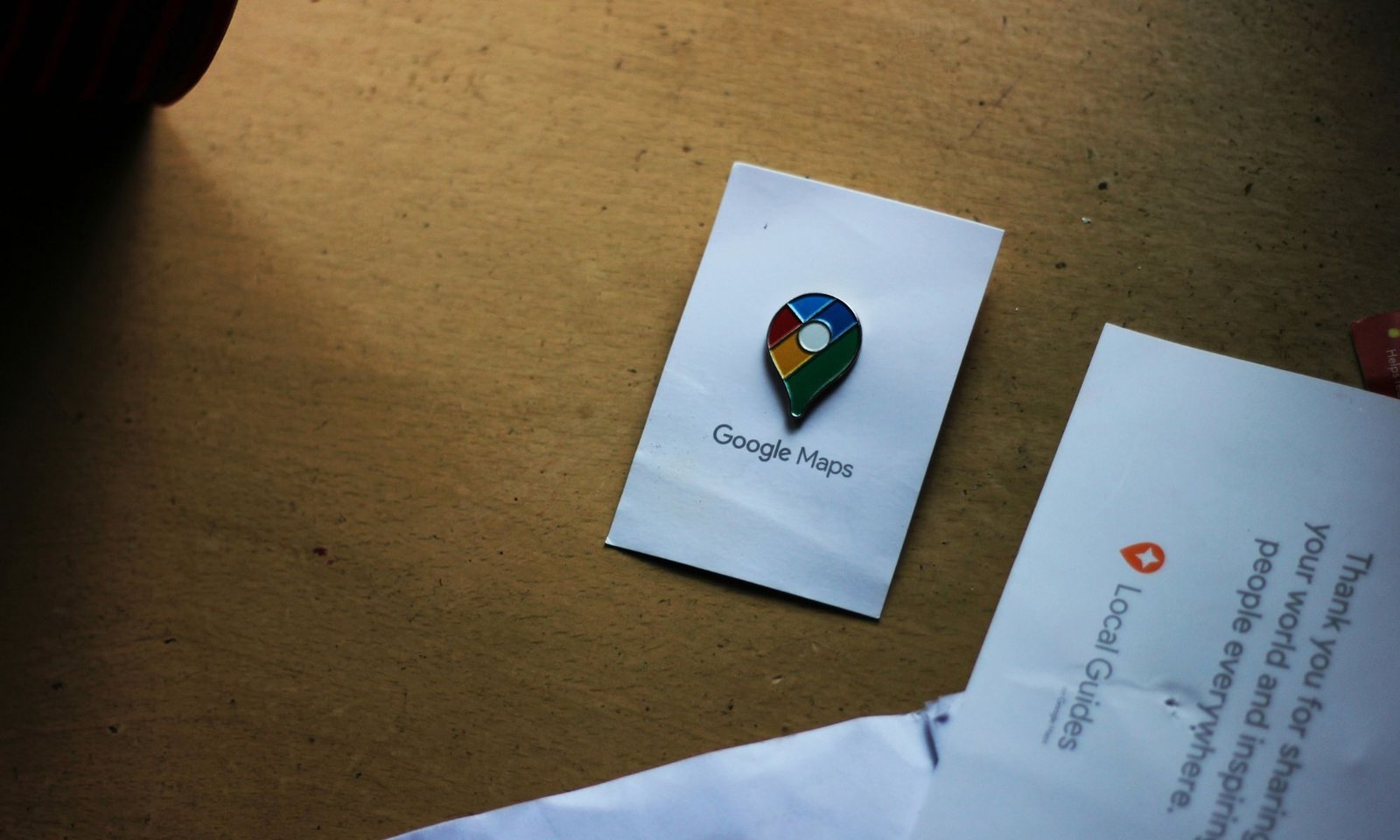
Google Maps has quietly transformed from a simple navigation tool into something far more ambitious. With Google‘s Gemini assistant now baked into the app, the company has been pushing hard to turn Maps into an AI-powered discovery engine. The next logical step? Letting the AI actually place your food order.

A deep dive into the latest Android beta reveals code that points to exactly that. According to Android Authority‘s APK teardown of Google Maps version 26.27.00.941319029, the app contains strings referencing an unreleased feature called “Ask Maps to order food.” It’s not live yet, but the text is telling.

The prompts include lines like: “Say what you’re craving, discover local favorites, and Maps will order for you – even while you’re on the go.” There are also buttons labelled “Try it out” and “Maybe later.” That’s about as clear a signal as you get from a teardown.

How Gemini food ordering would actually work

Right now, ordering takeout through Maps involves a multi-step ritual: search for a restaurant, browse photos and reviews, switch to a delivery app, re-find the place, build your cart, and finally check out. It works, but it’s clunky.

Google’s vision appears to be much simpler. You’d just tell Maps what you’re hungry for — maybe “a pepperoni pizza from somewhere nearby” or “the best pad thai within 3 miles” — and Gemini would handle the rest. The AI would identify suitable restaurants, place the order, and presumably handle payment through your stored Google Pay details.

It’s a classic agentic AI play. Instead of just answering questions, Gemini would complete a real-world task. That fits perfectly with Google’s broader strategy. Over the past year, the assistant has moved beyond summarising emails into booking appointments, managing calendar events, and even making phone calls on your behalf. Food ordering is the most practical extension yet.

Still plenty of unknowns

Don’t start planning your voice-ordered dinner just yet. There are major questions Google hasn’t answered.

  • Who handles the logistics? Will Maps integrate directly with restaurant POS systems, or rely on third-party delivery services like DoorDash or Uber Eats? The code doesn’t say.
  • Where does the processing happen? This could run entirely in the cloud, or it might lean on Google’s newer on-device AI capabilities. That distinction matters because Google recently showed off agentic AI features on the Pixel 10 series that can independently perform tasks, including placing orders. If Maps uses similar tech, the feature might debut exclusively on Pixel devices before expanding to other Android phones.
  • Will it actually launch? APK teardowns uncover code that’s being tested, not features that are guaranteed to ship. Google has a long history of prototyping capabilities that never see the light of day.

Why this matters for everyday users

For anyone who’s ever fumbled with a phone while commuting, trying to order dinner before the train arrives, the appeal is obvious. Reducing the friction between “I want food” and “food is on its way” saves real time. It also keeps you inside the Maps ecosystem longer, which is exactly what Google wants.

If the feature works as advertised, it could also change how people discover new places. Instead of scrolling through lists, you’d describe a craving and let the AI surface options you might not have found on your own. That’s a subtle but meaningful shift from browsing to asking.

And it fits a pattern. Google has been steadily weaving Gemini into Maps through features like Ask Maps, which lets you query the map with natural language. Food ordering would be the natural culmination of that effort.

What’s next for Gemini in Google Maps

Google isn’t commenting on the find, and there’s no timeline for a public rollout. But the company’s pace with Gemini integration has been aggressive. Every major app in the Google suite — Gmail, Docs, Calendar, Photos — now has some form of AI baked in. Maps is no exception.

The question isn’t really whether Google Maps will get AI-powered food ordering. It’s when, and how well it will work. If the company can pull off an experience that’s genuinely faster than tapping through a delivery app, it could become a default behavior for millions of users. If it stumbles — slow responses, wrong orders, limited restaurant support — it’ll be another forgotten experiment.

Given the trajectory, though, betting against Gemini’s expansion into everyday tasks feels unwise. Food ordering in Maps is coming. The only mystery is what it’ll look like when it arrives.

Continue Reading

Trending