Brussels moves on kids’ screen time
The European Commission is weighing a continent-wide social media ban for children under 13, a move that would force platforms like TikTok, Instagram and Snapchat to verify ages far more strictly than they do today.
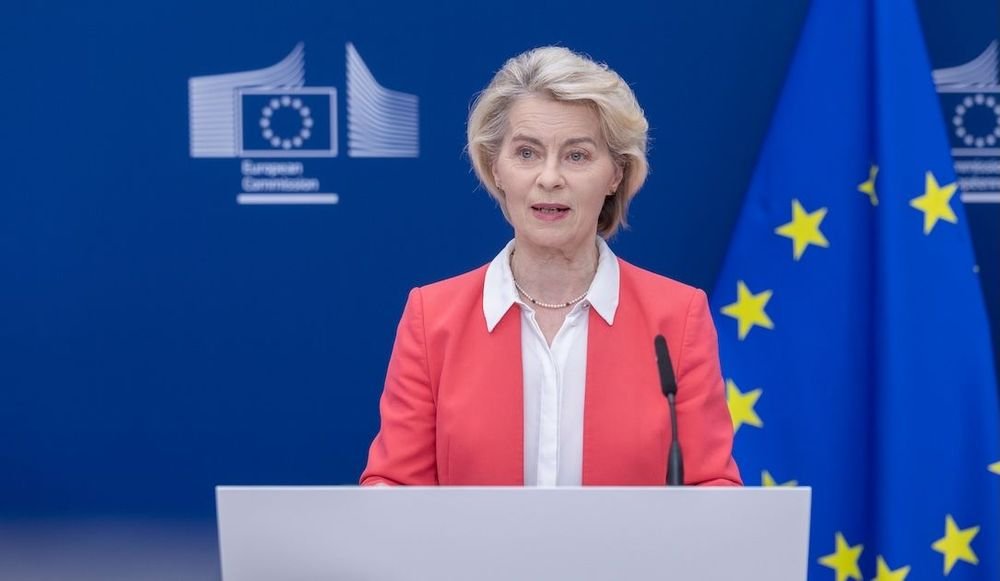
President Ursula von der Leyen told the Financial Times on Monday that she is considering a “harmonised EU-wide delay to social media” for kids under 13 who aren’t under a caregiver’s direct supervision. The idea: a legal start date, not just a terms-of-service checkbox.
“While ultimately it is up to parents to decide when children get their first smartphones, what we already have is a consensus that there needs to be a start date for the age children can join social media,” she said in a statement released Sunday.
Her proposal would give teens gradual access after turning 13, “depending on the proof given by the platforms that they are age-appropriate and safe for teenagers,” per the FT’s report.
Why age 13? And why now?
Thirteen isn’t arbitrary. Most platforms already require users to be at least 13, thanks to the US Children’s Online Privacy Protection Act (COPPA). But those rules are easily dodged — kids lie about birth dates, or simply tap “I’m old enough” without any verification.
The EU’s push would turn that soft restriction into hard law. Platforms would need to prove their services are genuinely safe for teens before granting access. That’s a heavy lift, and it’s exactly what von der Leyen is calling for.
“The status quo, a world where we continue to allow big tech unrestricted access to our children, will only consign another generation to more mental harm, addiction and misery,” she said.
The numbers behind the panic
Von der Leyen cited stark figures: European children now spend an average of four to six hours a day staring at screens.
“Six hours every day — this adds up to twenty years of their life,” she said. The line is dramatic, but it lands. Parents across the bloc are worried, and member states are feeling the heat.
She also drew a comparison that’s hard to argue with: society expects car manufacturers to include seatbelts and airbags. Why shouldn’t platforms be held to a similar standard of safety?
“It is clear we need age-appropriate restrictions to platforms,” von der Leyen said. “Because childhood will not wait. And once it is gone, we cannot give it back.”
Member states want more — maybe too much
Here’s the friction. Several EU countries, including France, Spain and Greece, have already imposed their own bans or are rushing legislation through their parliaments. Several are pushing for a cutoff of age 15, not 13.
Whether von der Leyen’s 13-threshold will satisfy those governments is an open question. Critics argue that 13 is too young, pointing to research on adolescent brain development and the particular vulnerability of mid-teens to social comparison and algorithmic rabbit holes.
The Commission’s proposal would also need to navigate the EU’s complex legislative machinery — a directive or regulation would require approval from both the European Parliament and the Council. That’s months, if not years, of negotiation.
What would enforcement look like?
That’s the trillion-dollar question. Age verification at scale is technically messy. Options include:
- Government-issued ID checks (privacy advocates hate this)
- Facial age estimation (creepy, but increasingly accurate)
- Parental consent workflows (easily gamed, but a start)
The Commission hasn’t specified which method it prefers. But the phrase “proof given by the platforms” suggests the burden will fall on tech companies to demonstrate their systems work — not on regulators to police every signup.
What happens next?
For now, this is a proposal in search of a legal vehicle. Von der Leyen’s comments are a signal to member states that the Commission is listening, and a warning to platforms that self-regulation has run its course.
The political winds are blowing in one direction. With national bans already popping up, a patchwork of rules across the bloc is the real risk — which is precisely why von der Leyen wants a harmonised approach.
Whether 13 or 15 becomes the magic number, the era of unchecked teen social media use in Europe appears to be ending. The question is how quickly, and at what cost to privacy and innovation.
For parents, the takeaway is simple: the EU is finally treating childhood as something worth protecting from the attention economy. That’s a shift worth watching.







 CyberSecurity6 months ago
 How To4 months ago
 CyberSecurity6 months ago
 CyberSecurity5 months ago
 Social Media5 months ago
 Infosecurity6 months ago
 CyberSecurity6 months ago
 Video4 months ago