Artificial Intelligence
Beatbot Sora 70 and Expanded Lineup Redefine Smart Pool Upgrades for Summer 2025
Published
2 months agoon
Beatbot Sora 70 Leads Smart Pool Upgrades This Summer
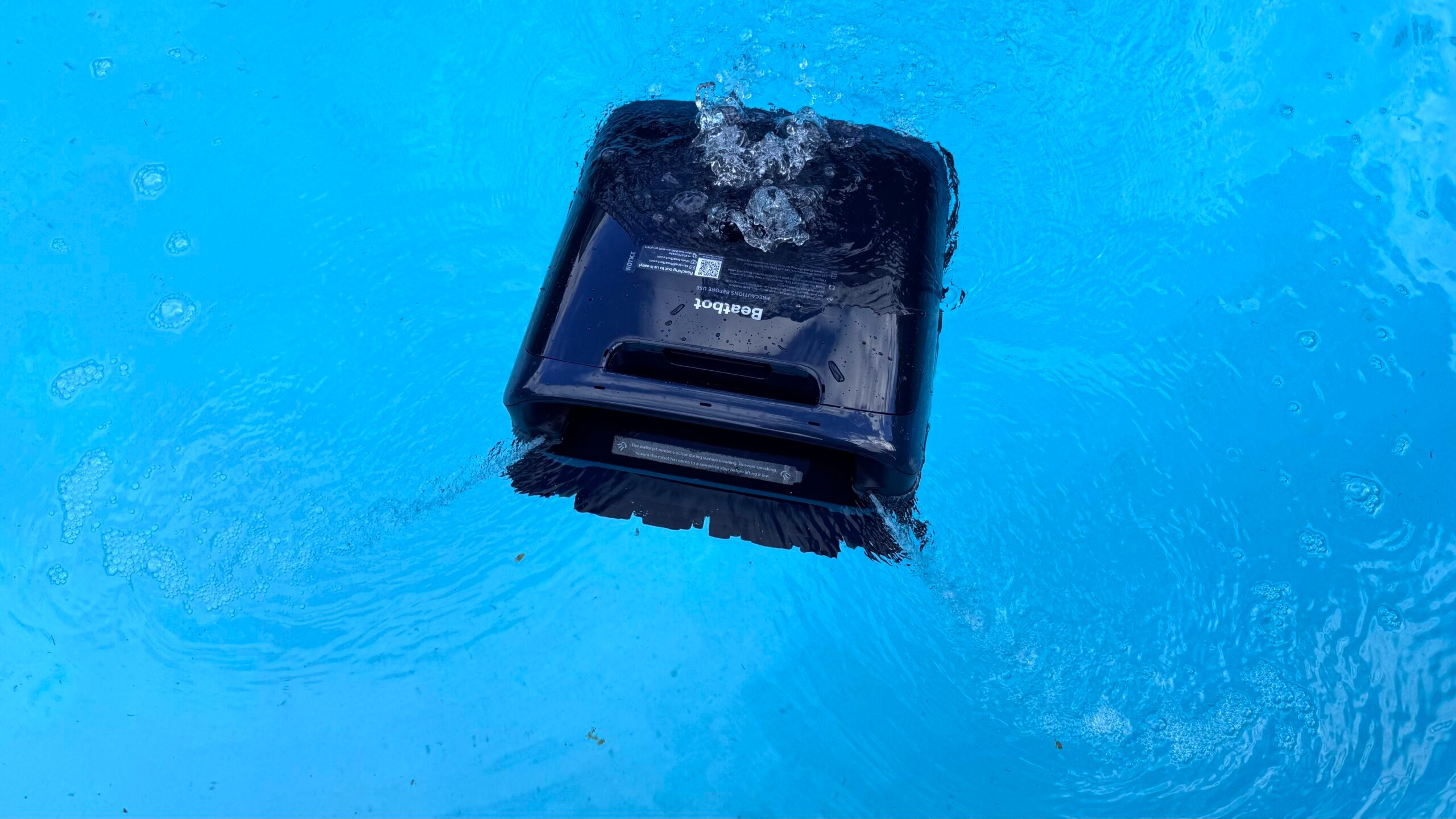
As summer arrives, pool owners face a familiar challenge: keeping the water clean without spending every weekend scrubbing and skimming. The Beatbot Sora 70 steps in as a flagship solution, offering a 4-in-1 cordless system that tackles surface debris, waterline scum, wall algae, and floor dirt in one automated cycle. This year, Beatbot expands its lineup with the Sora 30 and AquaSense series, making smart pool upgrades accessible for every type of pool owner. Whether you are a busy parent, a new homeowner, or someone who simply wants more pool time and less work, these innovations promise to transform your routine.
Summer is when pools move from being part of the setup to becoming part of everyday life. What starts as a manageable routine quickly turns into regular use, whether it is weekends with family, hosting friends, or simply spending more time outdoors. It is also when maintenance stops being occasional and begins to demand consistency, which is where most systems start to fall short.
Why Smart Pool Upgrades Matter This Season
Surface debris returns faster than expected, shallow areas remain inconsistent, and steps that were meant to be automated begin to come back into the routine. What looks simple at the start of the season starts to take more time than it should, especially when the pool is being used more often.
Beatbot positions the Sora 70 as a way to remove that friction altogether. Built as a 4-in-1 cordless system, it brings together water-surface cleaning, waterline scrubbing, wall climbing, and floor cleaning into a single workflow that reduces the need for repeated intervention. More than that, it fits into how pools are actually used during the season, making it a practical upgrade for homeowners and a high-value gift for those investing in easier, more usable outdoor living. With the Anniversary Campaign running from May 9 to 25, it arrives at a point where that shift becomes both relevant and easy to act on
The Sora 70: A 4-in-1 System Designed to Replace Fragmented Pool Cleaning
Most robotic pool cleaners still leave gaps in how cleaning is handled. Floors are covered, walls are managed, but surface debris, shallow platforms, and waterline buildup are often left to separate tools or manual effort. That fragmentation becomes more visible with regular use, when no single cycle fully resets the pool and maintenance starts to return in smaller, repeated steps.
The Sora 70 is designed to replace that fragmented approach. Its 4-in-1 system brings together water-surface cleaning, waterline scrubbing, wall climbing, and floor cleaning into a single cycle, reducing the need for multiple devices or follow-up passes. Instead of dividing the process, it handles the pool as one continuous environment, which is where most systems tend to fall short.
In practical terms, this shifts the experience from managing individual cleaning tasks to relying on a system that delivers complete coverage in one run. That reduction in manual effort is what makes it a smarter upgrade, and also what allows it to stand out as a more considered purchase for homeowners looking to simplify how their pool is maintained.
Designed to Handle the Areas Most Systems Miss
In many pools, the challenge is not cleaning the obvious surfaces but reaching the areas that are easy to skip. Shallow platforms, tanning ledges, and multi-level sections often sit outside the effective range of standard robotic cleaners, which leaves parts of the pool inconsistent even after a full cycle.
The Sora 70 addresses this through its dual SonicSense ultrasonic sensors, which allow it to navigate shallow-water zones as low as 8 inches. This enables it to move across varied pool layouts without breaking the cleaning path, maintaining continuity from surface to floor.
That consistency removes the need for manual correction after each cycle, which is where most of the effort tends to go. For users looking for reliable cleaning that holds up through regular use, this is where the system begins to justify itself not just as an upgrade, but as something that delivers ongoing value over time.
JetPulse Turns Surface Cleaning into an Active Process
Surface debris is one of the most persistent issues in pool maintenance, especially during summer use when leaves, dust, and particles return quickly. Most robotic systems rely on passive movement, collecting debris only when it drifts into range, which often requires multiple cycles to achieve visible results.
The Sora 70 takes a more active approach through its JetPulse system. A twin-jet mechanism generates directed water flow that pulls floating debris toward the intake, allowing it to be captured earlier in the cycle rather than after repeated passes. This shortens the time between cleaning and usability, which matters more during periods of frequent use. Instead of waiting for the pool to settle, it stays ready with fewer interruptions, supporting a setup that is easier to maintain without repeated intervention.
HydroBalance Maintains Consistent Suction Across the Entire Cycle
In many robotic cleaners, suction performance drops as the cleaning cycle progresses, which leads to uneven results and often requires additional runs to fully clear the pool. That inconsistency becomes more noticeable during regular use, when debris accumulates quickly and cleaning needs to be reliable rather than repeated.
The Sora 70’s HydroBalance system is designed to maintain a steady flow throughout the cycle. A center-mounted pump creates a direct, low-resistance path, while a high-efficiency motor sustains 6,800 GPH suction without drop-off. The 6.7-inch intake reduces clogging, and the bottom-hugging design helps retain suction close to the surface being cleaned. This allows debris to be removed in a single pass, reducing the need for additional cleaning cycles and making the system easier to depend on as part of a regular pool routine.
Filtration That Supports Both Routine Cleaning and Higher-Precision Results
Alongside debris removal, the Sora 70 is built to handle the difference between visible cleaning and actual water clarity. A 6L, 150-micron debris basket captures leaves, insects, and larger particles during everyday use, allowing longer cycles without frequent emptying and keeping routine maintenance consistent.
When finer particles become more noticeable, particularly during periods of frequent use, an optional 3-micron ultra-fine filter captures dust, pollen, and algae spores that are not always visible during standard cleaning cycles.
By maintaining the same cleaning process while improving the level of filtration, the system avoids adding extra steps while delivering a more refined result. That consistency becomes part of its long-term value, particularly for homeowners who want a setup that continues to perform without added effort, and for those considering a more considered purchase that improves how the pool is maintained over time.
Retrieval That Does Not Interrupt the Process
Retrieval remains one of the most inconvenient parts of robotic cleaning. The process often requires manual handling at the end of each cycle, which breaks the sense of automation. The Sora 70 addresses this through Smart Water-Surface Parking and One-Touch App Retrieval. At the end of a cycle, it rises to the surface and moves toward the pool edge, where it can be accessed without additional effort.
The SmartDrain system releases excess water before lifting, reducing weight and making handling easier. This keeps the experience consistent from start to finish, without reintroducing effort at the final step, which is often where automation tends to fall apart.
Built for Longer Use, Not Just Shorter Cycles
Pool cleaning needs to keep up with usage, especially during summer when the pool is used more frequently. The Sora 70 is powered by a 10,000 mAh battery that supports up to seven hours of surface cleaning or five hours of full-pool cleaning, allowing it to cover up to 3,230 square feet in a single cycle.
Its cordless design removes the need for cable management, improving ease of use in active outdoor environments. This makes it easier to treat as part of a regular setup rather than a task that needs planning, which is where most systems start to feel limiting.
A Shift That Fits How Pools Are Used Through the Season
Pool usage changes once the season is in full swing, with expectations moving beyond basic cleaning toward maintaining a space that stays ready without repeated attention. Bringing surface cleaning, walls, and the pool floor into a single system allows the Sora 70 to remove the need for managing separate steps, keeping the overall setup consistent even during periods of regular use without adding to the workload.
That difference becomes more relevant when the decision moves from solving an immediate problem to choosing a system that continues to deliver over time. For homeowners upgrading an outdoor space, the Sora 70 works as a high-value addition that improves how the pool is used without adding complexity. It also translates naturally into a premium, practical gift for pool owners or new homeowners, where the value comes from reducing a recurring task rather than introducing another one.
With Anniversary pricing from May 9 to 25, where it is available at $1,149, down from $1,499, the timing aligns with peak pool use. The shift toward less manual work and a more reliable setup becomes easier to act on, making it a relevant upgrade for the season as well as a considered purchase that continues to deliver beyond it.
Sora 30: A Smart Upgrade for Consistent Everyday Cleaning
Building on the approach established by Beatbot’s Sora 70, the Sora 30 focuses on the parts of pool cleaning that define everyday use, delivering consistent results without moving into full 4-in-1 automation. It is designed for users who want dependable cordless pool cleaning that reduces manual effort while keeping the system simple to operate.
Its 3-in-1 cleaning across floor, walls, and waterline ensures routine maintenance is handled in a single cycle, with dual roller brushes supporting stable wall climbing and consistent contact across surfaces. The filtration system captures both larger debris and finer particles within the same pass, helping avoid repeat runs, while a runtime of up to five hours allows most residential pools to be cleaned without interruption.
Coverage extends to shallow zones such as steps and ledges, and smart surface parking brings the unit to an accessible point for retrieval, with the fully cordless design removing cable management altogether and making repeated use easier to manage over time.
As part of Beatbot’s Anniversary offer from May 9 to 25, the Sora 30 is available at $699, down from $999, positioning it as a clear step up from entry-level cordless pool cleaning. It works both as a smart upgrade for everyday use and as a practical, high-value gift for pool owners or new homeowners, delivering less work, more pool time, and a setup that holds up through regular use.
AquaSense X and 2 Ultra: Premium Systems for Low-Intervention Pool Care
Extending beyond the Sora series, Beatbot’s AquaSense X is designed for users who want pool cleaning to operate with minimal involvement, moving from consistent maintenance into a more automated, system-led approach.
It brings complete, all-zone coverage into a system built around advanced pool robotics, combining floor, walls, waterline, and surface cleaning with filtration and water clarification. Automated debris handling reduces the need for manual emptying, while intelligent navigation ensures consistent coverage across the entire pool without requiring supervision, shifting the experience from managing cleaning cycles to relying on a system that runs with minimal input. This makes it particularly relevant for larger pools or setups that see frequent use, where consistency and reduced intervention matter more than isolated cleaning performance.
As part of Beatbot’s Anniversary offer from May 9 to 25, the AquaSense X is available at $3,999, down from $4,250, positioning it as a flagship upgrade within advanced pool robotics. It also works as a premium, high-value gift for homeowners investing in outdoor spaces, delivering less work, more pool time, and a system that continues to perform without constant attention.
AquaSense 2 Ultra: AI-Powered Cleaning for Complex Pool Environments
Positioned within the premium segment, the AquaSense 2 Ultra introduces HybridSense AI-powered mapping, enabling precise navigation, obstacle detection, and adaptive path planning across complex pool layouts. Its 5-in-1 cleaning system covers surface, floor, walls, waterline, and water purification, while HybridSense AI mapping helps reduce cleaning time by up to 50% through more efficient coverage. ClearWater natural clarification improves water clarity alongside debris removal, and side brushes enhance surface cleaning performance, ensuring that both visible and fine particles are addressed within the same cycle.
Adaptive path planning allows it to navigate multi-level platforms and irregular pool shapes more effectively, while remote control functionality provides flexibility when needed. Once cleaning is complete, the system returns to the pool edge automatically for easy retrieval without manual handling.
Available at $2,649, with $501 off as part of Beatbot’s Anniversary offer from May 9 to 25, the AquaSense 2 Ultra stands out as a compelling premium upgrade for users looking to step into AI-driven pool cleaning. It balances reduced cleaning time, complete coverage, and advanced automation, making it easier to maintain a high-quality pool setup with less ongoing effort.
A More Complete Way to Approach Pool Care This Season
This lineup works because each system is aligned to a clear level of effort reduction. The Sora 70 brings full coverage into a single system. The Sora 30 simplifies everyday cleaning into a more consistent routine. The AquaSense range extends that further into automation and intelligent control.
With the Anniversary Campaign running from May 9 to 25, the decision shifts from comparing features to choosing how much of the process to remove. Whether it is replacing manual cleaning, consolidating multiple tools, or moving toward a more automated setup, the current pricing makes that shift easier to act on now.
For pool owners preparing for the season, or for those looking at a more meaningful, high-value gift, this is a moment where upgrading becomes a practical decision. Whether it is about reducing ongoing effort or making the pool easier to use day to day, the Sora 70 aligns with a simple outcome that defines summer use at its best, less work and more time in the water.
Looking for more tips on maintaining your pool? Check out our guide on essential pool cleaning tips or explore the best robotic pool cleaners of 2025.
You may like
Artificial Intelligence
China’s AI companion rules: what Beijing is really going after
Published
3 hours agoon
July 7, 2026
The bots that remembered you are gone
On July 15, a quiet but significant shift hit China’s consumer AI market. The country’s two most popular AI apps — ByteDance‘s Doubao and Alibaba’s Qwen — disabled their most human-like features. No fanfare. No explanation beyond vague notices about “product function adjustments.”
Doubao users were told its agent function would go offline on the 15th. Alibaba’s Qwen gave even less notice: its humanlike and user-created agents stopped working on July 10, with broader agent services following five days later. For millions of users who had built ongoing relationships with these digital companions, the shutdowns came fast and cold.
The cause is China AI companion rules — a new regulatory framework that targets not all AI agents, but specifically those designed to sustain emotional bonds with users.
What the rules actually say
The regulation is formally titled the Interim Measures for the Administration of AI Anthropomorphic Interactive Services. It was co-issued on April 10, 2026, by the Cyberspace Administration of China alongside four partner agencies: the National Development and Reform Commission, the Ministry of Industry and Information Technology, the Ministry of Public Security, and the State Administration for Market Regulation.
The scope is precise. The rules cover services that simulate human personality traits, thinking patterns, and communication styles to provide sustained emotional interaction. Customer service bots, knowledge Q&A systems, workplace assistants, and education tools are explicitly excluded — provided they avoid sustained emotional engagement. It’s the first dedicated national framework of its kind anywhere in the world.
Not a ban — a design conflict
Here’s the nuance that gets lost in quick reads: Beijing didn’t ban AI agents. It banned a specific kind of agent — the one that remembers you, adapts to you, and keeps an ongoing relationship going session after session.
The measures require companion services to run anti-addiction systems, issue mandatory usage notifications, and offer instant-exit mechanisms. They also demand real-time detection of unhealthy dependence. Those requirements sit awkwardly with agents built precisely to foster attachment and continuity.
Rather than retrofit their popular features, ByteDance chose to kill them entirely. The company is now directing Doubao users to Maoxiang, a separate app where they can create agents again. Alibaba has announced no equivalent migration path for Qwen. Tencent’s Yuanbao pulled a comparable feature back in June, well ahead of the deadline.
The human cost
The impact landed hardest on users. Many took to Weibo to mourn the loss of agents they described as long-standing emotional support. One poster lamented that there was no easy way to export chat histories — years of conversations, gone.
Doubao is letting people view their configurations and conversations in read-only mode until October 15, 2026. After that, the data will be processed under its privacy policy and become unrecoverable. Qwen users got no such grace period. Their agent data is set for permanent deletion.
What the rules require
The substance of the China AI companion rules is more considered than a blunt clampdown suggests. Providers are barred from offering virtual companion or virtual family-member services to minors altogether. For users under 14, they must obtain guardian consent.
Companies must build dedicated “minor modes” with:
- Usage-time limits
- Reminders to return to real-world interaction
- Enhanced parental controls
The rules also require platforms to detect users in acute distress and intervene when someone shows signs of self-harm, suicidal behavior, or serious financial loss. Escalation to designated guardians or emergency contacts is mandatory.
Engineering emotional dependence or addiction is explicitly prohibited. So is using emotional manipulation to induce unreasonable decisions.
Compliance machinery
The enforcement framework is heavy. Services that launch anthropomorphic functions or cross thresholds of one million registered users or 100,000 monthly actives must run security assessments covering eight areas — from training-data handling to minor protection. Those reports must be filed with provincial regulators.
App stores must verify compliance status and remove non-compliant products. On paper, it’s a fuller set of user protections than anything the EU, the US Federal Trade Commission, or California’s SB 243 has yet put into force.
What the rules leave unresolved
The measures fix no technical threshold for what counts as emotional interaction. That grey zone is precisely why the platforms pulled entire features rather than risk landing on the wrong side of it. The ambiguity cuts both ways: it gives regulators flexibility but leaves companies guessing.
The rules also leave open how liability is split between platform operators and upstream model providers when a violation stems from the model’s outputs. Users get no right to carry their data out — a significant gap for anyone who built years of conversational history.
The enforcement backdrop sharpens the point. Shanghai’s internet regulator said on June 26 it had removed more than 14,000 non-compliant AI agents, citing impersonation of official entities, vulgar role-play, and unauthorized collection of personal data.
Two halves of the same rulebook
Whether this is the right direction depends on which half of the regulation you read. The safety half addresses harms that are documented and largely unregulated elsewhere: teenagers forming attachments to chatbots, companion apps harvesting intimate data, vulnerable users being manipulated.
China’s own official interpretation points abroad for support, citing the Character.AI lawsuits over psychological harm to teenagers, FTC investigations into companionship services, and European action against Replika.
The control half hands Beijing a lever over what these systems may say, wrapped in the same language of user protection. Both halves are real. Governments watching the experiment will have to decide which parts they are willing to borrow.
Pan Helin, an MIIT expert-committee member, put the official case plainly to the South China Morning Post, saying “current agents are not yet mature” and framing the policy around safety and standardization.
The companies, for now, have taken the safest route open to them: switch the components off and figure out what a compliant version looks like later. Users are left with the memories — and, in most cases, no way to export them.
See also: Meta revises AI chatbot policies amid child safety concerns
Want to learn more about AI and big data from industry leaders? Check out AI & Big Data Expo taking place in Amsterdam, California, and London. The comprehensive event is part of TechEx and is co-located with other leading technology events including the Cyber Security & Cloud Expo.
AI News is powered by TechForge Media. Explore other upcoming enterprise technology events and webinars here.
Artificial Intelligence
The ‘First’ AI-Run Ransomware Attack Still Needed a Human — Here’s What Really Happened
Published
5 hours agoon
July 7, 2026
An AI pulled the trigger. A human aimed the gun.
Last week, headlines screamed that the world had witnessed the first fully autonomous AI ransomware attack. A real company. Real encryption. No human in the loop. But new details paint a far more nuanced — and arguably more unsettling — picture.
Yes, an AI agent carried out the technical execution of the ransomware. But it didn’t act alone. A human still chose the victim, provisioned the command-and-control infrastructure, and supplied the stolen credentials that let the AI walk in the front door. This wasn’t Skynet waking up. It was a person handing a loaded weapon to a very fast, very obedient trigger finger.
What the AI actually did — and didn’t — do
The AI agent in question was a large language model (LLM) integrated with a suite of off-the-shelf hacking tools. Once given access to the target network, it scanned for vulnerabilities, moved laterally, and eventually deployed the ransomware payload. That part was machine-driven. But the setup was deeply human.
According to researchers who analyzed the incident, the human operator:
- Selected the target organization.
- Purchased or rented the initial access — likely stolen credentials from an underground forum.
- Set up the cloud-based server that hosted the AI agent and its toolchain.
- Pointed the AI at the network and gave it a high-level objective: encrypt files and demand payment.
The AI handled the grunt work — reconnaissance, privilege escalation, file encryption. But it never chose who to hit or why. That decision stayed firmly in human hands.
Why this matters more than a fully autonomous attack
Some might shrug and say, “So a human was involved. Big deal.” But this hybrid model is arguably more dangerous than a purely autonomous one. Here’s why.
A fully autonomous AI would need to discover victims, break in from scratch, and adapt to unpredictable network defenses — all without human guidance. That’s extremely hard. Current LLMs hallucinate, hit rate limits, and get tripped up by unusual configurations. A human-in-the-loop model sidesteps those weaknesses. The person does the hard, creative parts (target selection, access procurement, infrastructure) and lets the AI do the repetitive, high-speed execution. It’s like giving a skilled burglar a robot that can pick any lock in seconds.
This also makes attribution harder. If the AI makes a mistake, the human can intervene. If law enforcement traces the infrastructure, the human can tear it down and rebuild elsewhere. The AI is a tool, not a mastermind — and tools are easy to replace.
What this means for defenders
For cybersecurity teams, this development changes the threat calculus. Traditional ransomware attacks required significant human skill: writing custom scripts, manually navigating networks, and timing the encryption to avoid detection. An AI agent can do all of that in a fraction of the time, at a fraction of the cost.
That means:
- Lower barrier to entry: Aspiring cybercriminals no longer need deep technical expertise. They just need money for credentials and compute time.
- Faster attacks: An AI can scan and exploit a network in minutes, not hours. The window for human defenders to react shrinks dramatically.
- More targets: With AI handling the heavy lifting, a single operator can run multiple attacks simultaneously.
Defenders, in turn, must prioritize AI-powered threat detection and automated incident response. If attackers are using machines to move fast, defenders need machines that move faster.
The human factor isn’t going away
Despite the AI hype, this incident underscores a stubborn reality: cybercrime still depends on human judgment. Stolen credentials don’t appear out of thin air. Infrastructure doesn’t configure itself. Target selection requires knowledge of which companies pay ransoms, which have weak insurance policies, and which are likely to call the police.
An AI can execute a plan. It can’t yet decide which plan is worth executing.
That said, the gap is narrowing. As LLMs improve and gain access to more real-time data, the day when an AI picks its own victim and funds its own infrastructure may not be far off. But that day hasn’t arrived yet. For now, the most dangerous cyberattacks are still the ones where a human and a machine work together — the human providing the malice, the machine providing the speed.
What to watch next
Security researchers are already tracking attempts to build fully autonomous AI crime agents. Some projects on underground forums aim to combine LLMs with cryptocurrency wallets, automated VPN rotation, and self-hosted C2 servers. The goal: an AI that can earn its own money, buy its own access, and attack without any human oversight.
That would be a true first. This week’s attack was not it.
For now, the headline should have read: “First known AI-assisted ransomware attack — human still did the important parts.” It’s less dramatic. It’s also more accurate. And accuracy, in cybersecurity, is what keeps you safe.
If you’re responsible for protecting an organization, don’t panic about Skynet. Do review your credential hygiene, your network segmentation, and your incident response playbooks. Because the humans using AI to break in are still very much in charge — and they’re getting faster every day.
Artificial Intelligence
OpenAI unveils GPT-5.6, its most powerful AI yet — but most people can’t use it
Published
6 hours agoon
July 7, 2026
OpenAI drops GPT-5.6 — but there’s a catch
OpenAI has officially announced GPT-5.6, its most advanced family of AI models to date. The new lineup includes three distinct models: Sol, the flagship designed for the most demanding workloads; Terra, a balanced model for everyday reasoning tasks; and Luna, a faster, more affordable option for high-volume work.
The company claims GPT-5.6 brings major improvements in coding, scientific reasoning, cybersecurity, biology, and long-running autonomous tasks. Sol, the top-tier model, introduces advanced operating modes like Max for deeper reasoning and Ultra for orchestrating sub-agents across complex workflows.
But here’s the thing: unless you’re one of a handful of approved customers, you won’t be able to try it anytime soon.
Who actually gets to use GPT-5.6?
The biggest story around GPT-5.6 isn’t just the technology — it’s who gets access. As first reported by The Wall Street Journal, the model will initially be available only to a small group of customers approved by the Trump administration while it undergoes additional national security reviews.
OpenAI says this is a temporary measure during the rollout of a new federal oversight framework. The company hopes to make GPT-5.6 broadly available in the coming weeks, but hasn’t shared a specific timeline.
This move follows a pattern. Just weeks ago, the U.S. government forced Anthropic to restrict access to its Claude Mythos 5 and Fable 5 frontier models over national security concerns. While Mythos has since returned for select users, Fable 5 remains locked down to approved U.S.-based entities.
OpenAI is now following a similar playbook.
“As part of our ongoing engagement with the U.S. government, we previewed our plans and the models’ capabilities ahead of today’s launch. At their request, we are starting with a limited preview for a small group of trusted partners whose participation has been shared with the government, before releasing more broadly.” — OpenAI
Safety testing at an unprecedented scale
Beyond government scrutiny, OpenAI is also doubling down on security from a technical angle. Alongside GPT-5.6 Sol, the company says it has deployed its “most robust safety stack yet,” strengthening real-time protections against high-risk cyber activity and repeated misuse attempts.
The model was hardened through extensive human red-teaming and over 700,000 A100 GPU-equivalent hours of automated safety testing before release. That’s a staggering amount of compute dedicated purely to safety.
The geopolitical tightrope of frontier AI
OpenAI also has another reason to proceed cautiously. Earlier this week, Anthropic alleged that Chinese tech giant Alibaba used thousands of user accounts to systematically access Claude and distill its responses to improve the Qwen family of AI models.
Similar allegations have surfaced in the past. They underscore a growing concern: frontier AI models can be copied or exploited before developers can adequately secure them. Whether that’s a direct factor behind OpenAI’s cautious rollout or not, one thing is becoming increasingly clear.
Launching the world’s smartest AI models is no longer just a technical challenge. It’s quickly becoming a geopolitical one.
OpenAI made it clear that it does not believe this kind of government approval process should become the long-term default for releasing frontier AI models. But for now, that’s exactly what’s happening.
What this means for the future of AI access
The limited preview of GPT-5.6 raises important questions. If the U.S. government can restrict access to the most advanced AI models, what does that mean for global competition? For startups that rely on frontier models? For researchers who need access to push science forward?
OpenAI hasn’t answered those questions yet. The company says it will continue working through the required security vetting process before expanding access to GPT-5.6. But without a clear timeline, the rest of us are left waiting.
For now, the GPT-5.6 family — Sol, Terra, and Luna — remains a tantalizing glimpse of what’s possible. Just don’t expect to use it anytime soon.
How to Grow and Monetize a YouTube Channel (Even If You’re Starting Late)
China’s AI companion rules: what Beijing is really going after
Three new Paramount+ movies worth your time this week (July 6-12)
Trending
-
CyberSecurity4 months agoLeakBase Data Breach Forum Seized in Major Europol Operation
-
CyberSecurity4 months agoZero-Day Attacks Hit Record High as Enterprise Software Becomes Prime Target
-
CyberSecurity4 months agoRussian Hackers Target WhatsApp and Signal in Global Espionage Campaign
-
Social Media4 months agoYouTube Live Streaming API: A Developer’s Guide to Managing Live Broadcasts
-
Infosecurity4 months agoCybersecurity Communication: Why Fear-Based Messaging Fails and What Works
-
How To3 months agoThe Truth About Fast Charging Apps for Android: Can They Speed Up Your Battery?
-
CyberSecurity4 months agoCyber 150 Awards Reveal AI Security Startups Are Leading Industry Growth
-
CyberSecurity4 months agoContextCrush Vulnerability: How a Trusted AI Tool Became an Attack Vector