AI’s Dirty Secret: It’s Not Just Algorithms
Everyone talks about the model. The training data. The next breakthrough in reasoning. But here’s what keeps energy CEOs up at night: AI doesn’t run on code. It runs on electrons. And the grid is buckling.
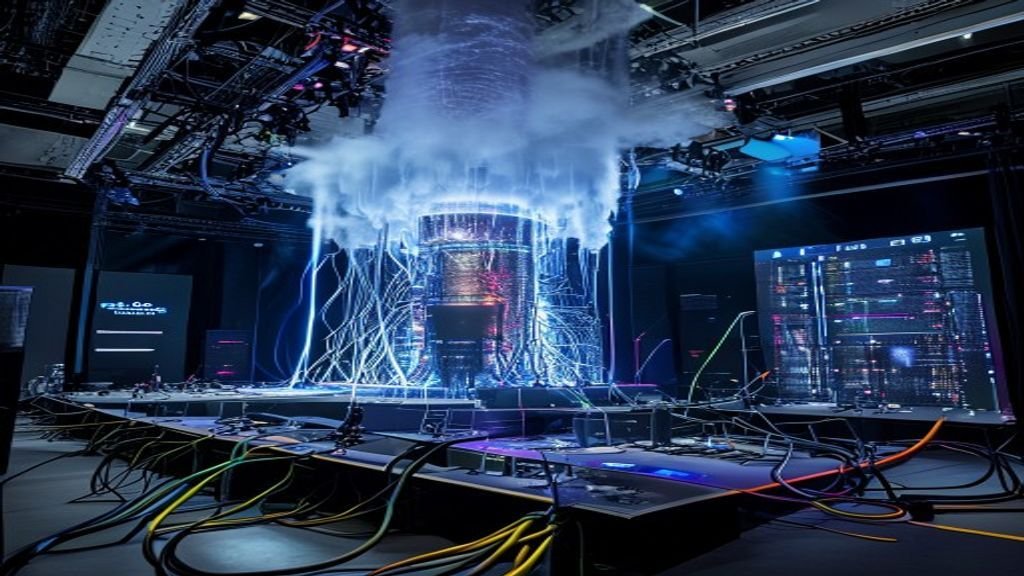
That’s the core tension driving the Smart Systems Stage at TechCrunch Disrupt 2026, happening October 13–15 at San Francisco’s Moscone Center. The agenda, released today, reads less like a typical tech conference lineup and more like a crisis-response strategy session. Fusion startups, grid modernizers, and data center operators will share the stage — because, increasingly, they share the same problem.
Fusion’s Race to the Grid
Commercial fusion has been “five years away” for decades. But this year feels different. Commonwealth Fusion Systems and Helion — two of the most heavily funded private fusion companies — are sending their top leaders to Disrupt. David Kirtley, Helion’s CEO, and Brandon Sorbom, Chief Science Officer at Commonwealth, will break down what’s actually changed.
They’re not just talking about plasma confinement or magnet technology. The panel, titled “Bringing Fusion to the Grid,” will address the hard stuff: regulatory pathways, construction timelines, and the sheer capital required to build a power plant that doesn’t exist yet. Can fusion scale before AI’s energy demand outruns everything else? That’s the question nobody has answered — yet.
From Twilio to Tokamaks
One of the more intriguing sessions features Inertia CEO Jeff Lawson. You know him as the founder of Twilio, the cloud communications giant. Now he’s leading one of the best-funded fusion startups in the world. In a fireside chat, Lawson will explain how scaling Twilio shaped his approach to talent, engineering, and — crucially — timelines.
Fusion has a reputation for over-promising. Lawson’s track record suggests he might be the one to change that narrative. Or not. Either way, the conversation should be brutally honest.
The Grid Is Cracking. Here’s Who’s Fixing It.
Electricity demand in the U.S. hasn’t grown much in two decades. Then AI happened. Suddenly, utilities are staring at projections that show demand doubling by 2030. And the infrastructure? It’s 1970s vintage.
The panel “Rewiring the Grid for the Electric Age” brings together Drew Baglino — founder and CEO of Heron Power, and formerly a top executive at Tesla — alongside Apoorv Bhargava, CEO of WeaveGrid, which specializes in grid-edge software. They’ll dig into where investment is flowing, how startups are bypassing legacy bottlenecks, and whether utilities can actually move fast enough.
Spoiler: They probably can’t. But the panel will explore how technology providers and nimble operators are building a more flexible grid anyway — often outside the traditional utility framework.
Data Centers vs. The Power Supply
AI’s insatiable compute demand has created a land grab for electricity. Data center operators are signing power purchase agreements years in advance, sometimes locking up entire regional grids. That’s squeezing everyone else — and it’s not sustainable.
The session “AI’s Power Problem” features Sara Spangelo, president and co-founder of Ambrosia Energy, and Bill Thayer, SVP and head of datacenter solutions at Bloom Energy. Expect a no-holds-barred discussion on whether the grid can keep up, what role on-site generation (like fuel cells) plays, and whether AI’s growth will hit a literal wall — the power wall — before 2030.
Thayer’s perspective is particularly sharp: Bloom Energy makes solid-oxide fuel cells that sit right next to data centers. He sees the problem from the inside. Spangelo, meanwhile, is building software to optimize energy consumption across fleets of assets. Together, they represent two sides of the same coin: generation and efficiency.
Why the Smart Systems Stage Matters Now
This isn’t a stage for theoretical debates. Every speaker on the Smart Systems Stage is building something real — a reactor, a grid platform, a power system. And every attendee, whether founder, investor, or operator, is trying to understand one thing: What’s actually constraining AI’s next wave?
The answer, increasingly, is power. Not algorithms. Not chips. Electrons.
Disrupt 2026 also includes every other stage, full networking, side events, and the rest of the speaker lineup. It’s a three-day immersion into the startup ecosystem — but the Smart Systems Stage is where the existential questions get asked. TechCrunch Disrupt 2026 tickets are still available at discounted pricing, but that window is closing fast.
If you’re building in energy, infrastructure, or AI, you need to be in that room. Because the future doesn’t run on hype. It runs on power.






 CyberSecurity7 months ago
 How To6 months ago
 How To6 months ago
 How To4 months ago

 How To5 months ago
 How To6 months ago
 Social Media7 months ago