Connect with us

Video

Beyond Viral: The Unconventional YouTube Formats Quietly Building Fortunes

Published

on

Forget everything you think you know about going viral. The real goldmine on YouTube isn’t found in chasing the latest dance trend or generic vlog; it’s buried in the bizarre, the specific, and the seemingly unmarketable. While most creators fight for scraps in oversaturated categories, a new wave of innovators is building empires on formats so weird they’re brilliant. This isn’t about luck—it’s about a fundamental shift in strategy that leverages obsession, specificity, and algorithmic love for the unusual.

Building on this, the central thesis is brutal yet liberating: the most crowded niches are often the easiest to crack precisely because everyone is doing the same thing. The path of least resistance is, paradoxically, the road less traveled. When you stop trying to appeal to everyone and start serving a hyper-specific someone, you unlock a level of audience loyalty and algorithmic favor that broad content can only dream of. Therefore, the key to a sustainable six-figure channel isn’t a bigger budget; it’s a narrower focus.

The Hidden Power of Micro-Niches

This strategy revolves around identifying and dominating a micro-niche. Consider the **miniature cooking format**. It’s not just about small food; it’s a mesmerizing fusion of artistry, precision, and ASMR-like satisfaction that hooks viewers. Similarly, **magnet fishing** transforms a quirky hobby into a treasure-hunting narrative, where every pull from the water holds a story. These **weird YouTube formats** succeed because they offer a complete, immersive world. They aren’t just videos; they are portals to a specialized interest. The algorithm, in turn, rewards this specificity because it can perfectly match the content with an audience that is demonstrably ravenous for it. Consequently, engagement metrics—watch time, comments, shares—skyrocket, sending powerful signals to YouTube that this is content worth promoting.

From Forgotten Junk to Premium Content

Furthermore, the transformation narrative is a potent engine for growth. Take the **restoration technique** mentioned. Watching a rusted, discarded piece of junk be meticulously returned to its former glory is storytelling in its purest form. It provides visceral satisfaction, a clear narrative arc (from broken to beautiful), and teaches skills. This format proves that value isn’t inherent in the subject, but in the process and the creator’s perspective. In addition, **dumpster diving strategy** operates on a similar principle, blending sustainability, treasure hunting, and resourcefulness into a compelling package. These channels thrive because they reframe everyday (or discarded) objects through a lens of potential and hidden value, creating content that is both surprising and deeply satisfying.

Building a Shockingly Loyal Underground Fanbase

However, the true magic of these unconventional paths is the community they foster. An **obsession-based format**—whether it’s cataloging every model of a specific vintage toy or exploring abandoned places of a certain era—cultivates a shockingly loyal underground fanbase. These viewers aren’t passive consumers; they are fellow enthusiasts, experts, and collectors. They gather in comment sections not to say “nice video,” but to debate minutiae, share their own finds, and create a shared knowledge base. This transforms a channel from a broadcast into a hub, making it incredibly resilient to algorithm shifts. As a result, monetization through direct audience support (like memberships or Patreon) often becomes more viable and substantial than reliance on ad revenue alone.

The Quietly Dominating Income Streams

Importantly, the financial model for these **six-figure YouTube channels** often looks different from traditional creator finance. The video hints at a **hidden income stream that makes low-view channels surprisingly wealthy**. This frequently points to affiliate marketing, direct sales (of found/restored items, plans, or kits), sponsored content from niche brands, and dedicated fan funding. A channel with 100,000 highly targeted, obsessed subscribers can easily out-earn a channel with 1 million dispassionate, general-interest followers. The revenue per viewer is exponentially higher because the trust and intent are stronger. Therefore, the goal shifts from sheer views to building a dedicated, commercial audience.

In conclusion, the landscape of YouTube success is being redrawn by creators brave enough to be weird. The formats explored—from miniature kitchens to riverbed treasure hunting—are blueprints for a new era of content creation. They prove that passion and specificity are the ultimate competitive advantages. If you’re sitting on a strange hobby or an obsession you think is too niche for YouTube, think again. That very specificity might be the foundation of your channel’s fortune. To see the full breakdown of these six unconventional blueprints and understand the strategic mindset behind them, watch the original analysis. It might just change your entire approach to the platform.

Continue Reading
Click to comment

Leave a Reply

Your email address will not be published. Required fields are marked *

Video

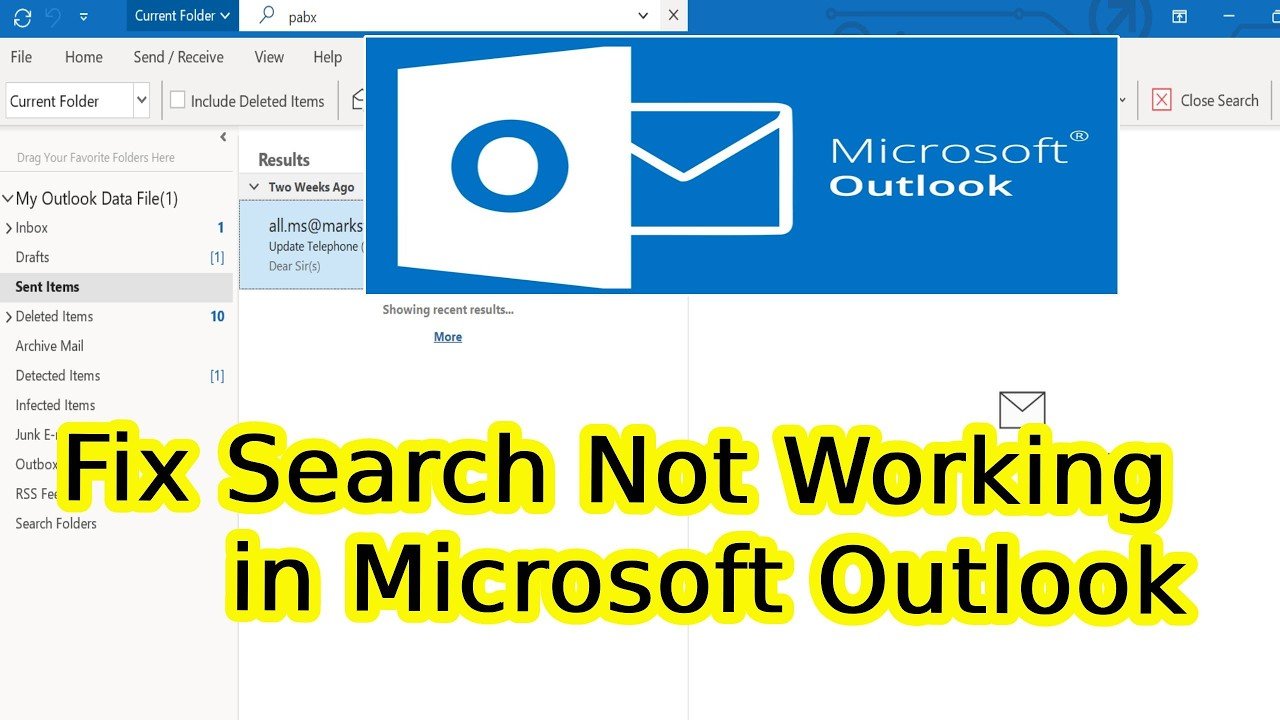
How to Fix Search Not Working in Microsoft Outlook – Step-by-Step Guide

Published

on

fix search not working in Microsoft Outlook

If you rely on Microsoft Outlook for daily email management, a broken search function can bring your workflow to a grinding halt. You type a name, subject, or keyword into the search bar, and nothing appears — no results, no suggestions, just an empty void. It’s frustrating, especially when you need to find a critical message in a hurry. Fortunately, there’s a straightforward solution. This guide walks you through two proven methods to fix search not working in Microsoft Outlook, helping you restore full search functionality without unnecessary stress.

Why Does Outlook Search Stop Working?

Before diving into fixes, it helps to understand why Outlook search fails. The most common culprit is a corrupted or incomplete search index. Outlook relies on a background indexing service to scan and catalog your emails, contacts, and calendar items. When this index becomes damaged, outdated, or misconfigured, the search feature stops returning results. Other factors include incorrect indexing settings, permission issues, or conflicts with third-party add-ins. However, the indexing problem is the most frequent offender, and the following methods address it directly.

Method 1: Adjusting Indexing Settings via Outlook Options

The first approach involves tweaking Outlook’s internal settings. This method is quick and often resolves minor indexing glitches. Building on this, you’ll need to access the Outlook Options menu.

1. Open Microsoft Outlook and click on the **File** tab located in the top-left corner.
2. From the left sidebar, scroll down and select **Options**.
3. In the Outlook Options window, click on the **Search** tab.
4. Under the “Sources” section, click **Indexing Options**.
5. If you see an “Access is denied” error, move to Method 2. Otherwise, ensure that Microsoft Outlook is checked in the list of indexed locations.
6. Click **Modify**, then confirm that **Microsoft Outlook** and your local drive (usually C:) are selected. Click **OK** to save changes.
7. Wait for the indexing process to complete. This may take a few minutes depending on your mailbox size.

As a result, Outlook will rebuild the search index automatically, and search functionality should return. If the issue persists, proceed to the second method.

Method 2: Rebuilding the Search Index from Windows

When the first method fails or you encounter permission errors, a more thorough approach is needed. This method uses Windows’ built-in Indexing Options to force a complete rebuild of the Outlook search index. It’s the most reliable way to fix search not working in Microsoft Outlook.

1. Press the **Windows key** on your keyboard and type “Indexing Options” into the search bar. Click on the result to open the Indexing Options window.
2. Click the **Modify** button. In the list that appears, ensure that **Microsoft Outlook** and **Local Disk (C:)** are both checked. If not, check them and click **OK**.
3. Now, click the **Advanced** button. Under the **Troubleshooting** section, click **Rebuild**.
4. A confirmation dialog will appear. Click **OK** to begin the rebuild process. This can take a significant amount of time, especially if you have a large mailbox. Leave your computer on and connected to power while it completes.
5. Once the rebuild finishes, restart your computer to apply the changes.

After reboot, open Outlook and test the search bar. In most cases, this resolves the problem completely. However, if search still doesn’t work, consider checking for Windows updates or repairing your Office installation.

Preventing Future Search Issues

Now that your search is working again, you can take a few proactive steps to avoid future breakdowns. First, keep both Windows and Microsoft Office updated to the latest versions. Updates often include fixes for indexing bugs. Second, avoid manually deleting or moving files from the indexing folder (usually located at C:ProgramDataMicrosoftSearch). Third, if you use multiple email accounts in Outlook, ensure each account’s data file is included in the indexing scope. Finally, periodically restart your computer to clear temporary glitches that may affect the indexing service.

Watch the Full Tutorial

If you prefer a visual walkthrough, the video tutorial linked below demonstrates both methods in real time. The creator shows exactly where to click and what to look for, making it easy to follow along. Whether you’re a casual user or a busy professional, this guide will help you fix search not working in Microsoft Outlook and get back to finding your emails instantly. Click play and solve the problem today.

Continue Reading

Video

5 Boring But Easiest Steps to Get 1,000 YouTube Subscribers (With Claude AI)

Published

on

get 1,000 YouTube subscribers

Growing a YouTube channel from scratch feels like shouting into the void. You post, you wait, and nothing happens. But what if the secret isn’t more effort, but smarter, simpler steps? In a recent video, Shane Hummus breaks down five boring but easiest steps to get 1,000 YouTube subscribers using Claude AI. This isn’t about flashy hacks or overnight stunts. It’s a repeatable system that even a total beginner can follow. Let’s dive into the key lessons and why they work.

Why Most Creators Focus on the Wrong Number

Many new YouTubers obsess over view counts. However, Shane argues that this is a distraction. The real metric to watch is subscriber conversion rate—how many viewers actually hit that subscribe button. Building on this, he explains that a video with 100 views and 10 subscribers is far more valuable than one with 1,000 views and zero subs. The goal isn’t just traffic; it’s trust. When you use Claude AI to craft content that resonates deeply, you naturally increase this conversion rate. As a result, your channel grows even with modest viewership.

The Street Food Vendor Trick That Changes Everything

One of the most counterintuitive tips in the video involves borrowing a tactic from street food vendors. Instead of posting on a rigid schedule, Shane recommends posting when your audience is most likely to be scrolling—and more importantly, when they’re ready to commit. For example, late evenings or weekends often see higher engagement. In addition, he suggests using Claude AI to analyze your niche and generate topic ideas that have proven demand. This eliminates guesswork and ensures every video has a higher chance of converting viewers into subscribers.

The Hidden Ratio That Separates Winners from Guessers

Shane introduces a simple but powerful ratio: the idea-to-subscriber ratio. Before you even film, you can predict whether a video will attract subscribers. The trick is to test your idea using Claude AI to generate a short script or hook, then gauge audience interest through comments or polls. If the idea doesn’t spark curiosity, it’s not worth filming. Therefore, this step saves weeks of wasted effort. By focusing on ideas that naturally trigger a psychological need to subscribe—like solving a specific problem or offering exclusive value—you create a funnel that converts without begging.

The One Step Almost Everyone Skips Before Publishing

Here’s a truth that stings: most creators hit publish without optimizing for first impressions. Shane reveals a setting hiding in plain sight that quietly multiplies views. It’s not about thumbnails or titles alone, but about leveraging Claude AI to write a compelling video description and pinned comment that reinforces why someone should subscribe. Moreover, he emphasizes the importance of a strong call-to-action that feels natural, not pushy. When you combine this with a consistent upload schedule that prioritizes quality over frequency, you build a channel that attracts subscribers organically.

How a Full Script Comes Together in Minutes Without Sounding Robotic

Many creators worry that using AI will make their content feel generic. However, Shane demonstrates how to use Claude AI to generate a script that sounds like you—not a robot. The key is to feed Claude your own notes, style preferences, and examples of your past work. Then, you edit the output to match your voice. This approach saves hours of writing while maintaining authenticity. As a result, you can produce more videos without burning out, which directly accelerates your path to 1,000 subscribers.

The Psychological Trigger That Makes Strangers Trust Your Channel Instantly

Trust is the currency of YouTube. Shane explains a simple psychological trigger: social proof. When new viewers see that others have subscribed and engaged, they’re more likely to follow. He recommends using Claude AI to craft comments or community posts that highlight your channel’s value. In addition, showcasing subscriber milestones in your videos creates a bandwagon effect. This low-effort tactic can dramatically boost your subscriber count over time.

What Happened When a Total Beginner Used This System

To prove his method works, Shane handed this exact system to a beginner with zero experience. The result? Within weeks, the beginner saw a steady increase in subscribers—not millions, but a solid, repeatable growth pattern. This confirms that the steps are not only easy but also effective for anyone willing to follow them. The key takeaway is consistency: apply these boring steps daily, and the numbers will follow.

Ready to See the Full System in Action?

If you’re tired of chasing vanity metrics and want a straightforward path to 1,000 subscribers, this video is for you. Shane breaks down each step with clear examples and shows exactly how Claude AI can simplify the process. Watch the full video to get the complete blueprint and start growing your channel today.

Continue Reading

Video

6 Boring But Easy Online Jobs That Are Always Hiring in 2026

Published

on

boring but easy online jobs

If you’re tired of chasing flashy side hustles that never pay off, you’re not alone. The truth is, some of the most reliable income streams come from roles that aren’t exactly glamorous. In his latest video, entrepreneur Shane Hummus breaks down six boring but easy online jobs that are always hiring in 2026. These positions might not make you an influencer overnight, but they offer stable pay, low stress, and a surprising amount of growth potential. Here’s what you need to know about these overlooked opportunities and why they could be the smartest career move you make this year.

Why Boring Jobs Are the Biggest Overlooked Opportunity

Most people assume that a good career has to be exciting or high-profile. However, Shane argues that the opposite is often true. Boring but easy online jobs tend to fly under the radar, meaning less competition and more demand. When a role isn’t trendy, companies struggle to fill it, which gives you leverage. As a result, these positions often come with better job security, higher pay relative to effort, and less burnout. The key is to recognize that “boring” doesn’t mean “bad”—it means stable.

The Morbid Remote Job Hiding in Plain Sight

One of the first roles Shane highlights is a remote position that deals with death and loss. It sounds grim, but it’s actually a growing field with consistent demand. Funeral homes, insurance companies, and legal firms all need people to handle paperwork, coordinate services, and provide compassionate support to grieving families. Because the topic is uncomfortable for many, fewer people apply, making it a prime example of a boring but easy online job that is always hiring. The work is meaningful, the hours are flexible, and the pay can be surprisingly good.

The Ex-Cop’s Blueprint for Turning a Taboo Industry Into an Empire

Shane shares the story of a former police officer who built a lucrative online business around a taboo subject: prison consulting. This expert helps inmates and their families navigate the complex legal and correctional system. While it might not be a typical work-from-home job, it’s a perfect illustration of how specialized knowledge can be monetized. The takeaway? If you have experience in an industry that others avoid, you can turn that into a thriving remote career. This ties directly into the concept of boring but easy online jobs—they often require niche expertise that most people overlook.

The Hidden Translator Job Between Two Industries

Another role that rarely shows up in standard job searches is the industry translator. This person bridges the gap between two fields—for example, a nurse who creates content for healthcare software companies, or an accountant who explains tax software to non-experts. Companies pay well for professionals who can speak both languages. In addition, this role leverages your existing skills without requiring you to start from scratch. It’s a classic example of a boring but easy online job that offers both flexibility and high earning potential.

The Nearly Unexpendable Role Most Companies Never Advertise

Some of the best boring but easy online jobs are never posted publicly. Shane explains that roles like ERP consultants, data entry specialists for government contracts, and legacy system administrators are often filled through networking or internal referrals. These jobs are critical to daily operations, so companies guard them closely. The trick is to position yourself as a reliable expert in a specific, unglamorous area. Once you’re in, you become nearly unexpendable. This is especially true for roles tied to enterprise software like SAP or Oracle, where training is expensive and turnover is low.

The Passive Strategy Behind a Channel That Hasn’t Posted in Months

Finally, Shane reveals a counterintuitive strategy: building an online presence around boring but easy online jobs can actually lead to passive income. He points to a channel that hasn’t uploaded new content in months but still earns revenue from evergreen videos. By creating helpful, no-frills tutorials about these roles, you can attract a steady stream of viewers and clients. This approach works because people are always searching for reliable, low-stress ways to make money online. The boring stuff, it turns out, is what everyone actually needs.

Final Thoughts

Whether you’re looking for a full-time remote job or a side hustle that won’t drain your energy, these six boring but easy online jobs are worth exploring. They prove that you don’t need a flashy title or a huge following to build a stable income. Watch the full video to get the step-by-step breakdown and start your journey toward a more secure, less stressful career in 2026.

Continue Reading

Trending