Connect with us

Infosecurity

Building a Lasting Information Security Career: The Three Essential Pillars

Published

on

Building a Lasting Information Security Career: The Three Essential Pillars

How does one chart a course to leadership in cybersecurity? This question echoes through conference halls and online forums, as professionals seek a reliable map for advancement. While no single route guarantees a corner office, certain foundational practices consistently separate those who thrive from those who simply survive. Based on the hard-won experience of industry leaders, three core principles—Mastery, Mentorship, and Management—form the bedrock of a resilient and rewarding information security career.

1. The Pursuit of Mastery: Beyond Technical Competence

Success in this field demands more than a checklist of certifications. True mastery is a mindset, a continuous journey rather than a final destination. This means that foundational knowledge is just the starting point.

The Engine of Passion

First and foremost, genuine curiosity must fuel your work. Does the challenge of a novel attack vector excite you? Does securing a complex network feel like solving a compelling puzzle? Passion transforms daily tasks into a mission, providing the stamina needed for long nights and complex problems. It’s the difference between having a job and building a vocation.

The Discipline of Lifelong Learning

Consequently, a commitment to perpetual education is non-negotiable. The threat landscape evolves daily, with adversaries constantly refining their tactics. Staying relevant requires a proactive approach to learning—whether through formal training, researching emerging threats, or experimenting with new tools. The most effective professionals are humble enough to admit what they don’t know and driven enough to fill those gaps.

Building on this, knowledge sharing becomes a professional responsibility. The cybersecurity community thrives on collaboration. By contributing to forums, presenting at local meetups, or simply explaining a concept to a colleague, you solidify your own understanding and strengthen the entire ecosystem. This collaborative spirit is a hallmark of a mature information security career.

2. The Power of Mentorship: A Two-Way Street

No professional is an island. Guidance from experienced veterans can accelerate growth, help navigate political landscapes, and provide crucial perspective during setbacks. Therefore, actively seeking a mentor is a strategic career move.

Look for someone whose judgment you respect and whose career path aligns with your aspirations. A good mentor offers more than technical advice; they provide wisdom, candid feedback, and connections. For more on finding the right guide, explore our resource on effective cybersecurity mentorship.

Simultaneously, make a point to mentor others. Teaching a junior analyst how to read logs or guiding a new manager through their first budget review forces you to articulate your knowledge clearly. This process often reveals gaps in your own understanding and deepens your expertise. Ultimately, being a mentor cultivates patience, improves communication, and builds a network of capable allies.

3. The Art of Management: Starting with Yourself

Technical skill alone rarely leads to the C-suite. The ability to manage—beginning with oneself—is the critical differentiator. This involves ruthless self-awareness. What are your core strengths? Where do you consistently struggle? Acknowledging weaknesses allows you to delegate effectively or seek targeted training.

Furthermore, personal accountability is paramount. Meet your deadlines, own your mistakes publicly, and consistently deliver on promises. This builds the trust and reliability that form your professional reputation. Setting clear, visible goals and tracking progress is a simple yet powerful practice for self-guidance.

Mastering the Skill of “Managing Up”

Equally important is learning to “manage up.” This is not manipulation; it’s the strategic alignment of your work with your manager’s goals and the organization’s needs. It requires understanding your boss’s pressures, priorities, and communication style.

To illustrate, observe how successful executive assistants operate. Their effectiveness often hinges on anticipating needs and clarifying expectations. You can adopt similar strategies: schedule regular check-ins, ask for clarification on ambiguous tasks, and proactively communicate how your projects support broader objectives. Developing this skill ensures your crucial security work receives the visibility and resources it deserves, a key step in any advanced information security career.

Integrating the Three Pillars for Long-Term Success

These three principles—Mastery, Mentorship, and Management—are deeply interconnected. The knowledge gained from continual learning (Mastery) makes you a valuable mentor. The perspective gained from mentoring others often improves self-management. The clarity from managing up allows you to focus your learning on the most impactful areas.

In practice, they create a virtuous cycle that propels career growth. Whether your aim is to become a CISO, a lead architect, or a renowned researcher, this triad provides a stable foundation. The path isn’t always linear, but by investing in these three areas, you build the resilience and adaptability needed to excel in the dynamic world of cybersecurity.

Ultimately, a fulfilling career in this field is built deliberately. It starts with a deep-seated passion for the work, is accelerated through shared wisdom, and is sustained by skilled navigation of the professional landscape. By focusing on these three pillars, you equip yourself not just for the next promotion, but for a lasting and impactful journey in defending our digital world.

Continue Reading
Click to comment

Leave a Reply

Your email address will not be published. Required fields are marked *

Infosecurity

The Hidden Danger in Your Network: Five Critical SSL Traffic Inspection Mistakes

Published

on

The Hidden Danger in Your Network: Five Critical SSL Traffic Inspection Mistakes

Modern cybersecurity relies on visibility. Yet, a fundamental tool for protection—SSL/TLS encryption—is paradoxically creating massive security blind spots across enterprise networks. While encryption secures communications, it also hides malicious activity from traditional security tools, turning a defensive measure into a potential vulnerability. This article examines the five most common network traffic inspection errors that organizations make, leaving them exposed to threats lurking within encrypted channels.

Error 1: The Oversight of Neglect

Perhaps the most fundamental error is simply ignoring the problem. Many organizations operate under a false sense of security, assuming their perimeter defenses are sufficient. Research indicates that a startling number of enterprises lack formal policies for managing encrypted traffic. For instance, fewer than half of organizations with dedicated Secure Web Gateways actually decrypt outbound web traffic. Even more concerning, a minority of those using firewalls, IPS, or UTM appliances inspect SSL traffic at all. This lack of attention creates a highway for attackers, who increasingly use encryption to bypass controls undetected.

Error 2: The Illusion of Inaccurate Solutions

Building on this, a second critical mistake involves misallocating security investments. Companies often deploy a suite of advanced solutions—next-generation firewalls (NGFW), intrusion prevention systems (IPS), data loss prevention (DLP), and malware sandboxes. However, these tools frequently treat SSL inspection as a secondary, add-on feature rather than a core capability. Consequently, they offer limited visibility, often restricted to basic web/HTTPS traffic. To achieve comprehensive inspection, organizations find themselves layering multiple, costly appliances, creating an operationally complex and inefficient security architecture that struggles to handle processor-intensive SSL decryption.

The Cost of Fragmented Visibility

This fragmented approach is not just expensive; it’s ineffective. Each appliance may see only a slice of the traffic, allowing threats to slip through the gaps between systems. The operational burden of managing decryption policies across disparate tools often leads to inconsistent enforcement and, ultimately, failure.

Error 3: The Paralysis of Start-Stop Initiatives

Therefore, many IT security teams find themselves trapped in a cycle of starting and stopping decryption projects. The initial technical implementation is often the easiest part. The real hurdles are legal, regulatory, and human. Complex data privacy laws, like GDPR or CCPA, can paralyze decision-making as Legal and Compliance teams grapple with implications. Simultaneously, employee pushback—questions like “Why is IT reading my emails?”—can derail projects due to fears over privacy and morale. This internal conflict frequently causes organizations to abandon comprehensive inspection efforts before they truly begin.

Error 4: Deploying a Weak Defense Strategy

On the other hand, failing to inspect encrypted traffic means playing defense with a critical weakness. Modern malware has fully adopted encryption as a standard evasion tactic. Notorious threats like the Zeus botnet and the Dyre Trojan use SSL/TLS channels for command-and-control (C2) communications and to download payloads after initial infection. By operating within encrypted streams, these threats remain invisible to security tools that cannot see inside the tunnel. Relying on perimeter defenses alone is akin to locking the front door while leaving the back door wide open and shrouded in darkness.

Error 5: Letting Cloud Complexity Cloud Judgment

Furthermore, the rapid shift to cloud applications has exponentially complicated the traffic inspection landscape. Services for social media, file storage, and software-as-a-service (SaaS) almost universally use SSL/TLS. This explosion of encrypted cloud traffic dramatically expands the “attack surface” that defenders must monitor. The environment becomes so complex that organizations struggle to develop a coherent strategy, unsure which traffic to decrypt for security purposes and which to leave encrypted for privacy. This ambiguity leads to inconsistent policies and dangerous gaps.

Building a Proactive Inspection Framework

So, how can organizations correct these network traffic inspection errors? A strategic, four-step approach is essential to eliminate blind spots and regain control.

First, take a complete inventory. You cannot secure what you cannot see. Map all SSL/TLS encrypted traffic flowing through your network—its sources, destinations, volume, and purpose. This baseline is critical for planning and scaling your decryption capabilities effectively.

Second, conduct a formal risk assessment. Collaborate closely with non-IT stakeholders in HR, Legal, and Compliance. Review existing policies from security, privacy, and regulatory angles. This collaborative effort is vital for creating a legally sound and socially acceptable action plan that addresses vulnerabilities without creating new legal or employee-relations risks. For more on policy alignment, see our guide on building a security-aware culture.

Third, empower your existing security infrastructure. Instead of buying more point solutions, seek to enhance your current NGFW, IPS, DLP, and analytics tools with centralized, high-performance decryption. The goal is to give all your security controls clear visibility into threats, even those hidden within formerly encrypted traffic, allowing for consistent policy enforcement across the board.

Finally, adopt a cycle of continuous refinement. The threat landscape and application mix are constantly changing. Constantly monitor, review, and enforce acceptable use policies for encrypted applications. This ongoing process ensures your inspection strategy adapts to new cloud services, updated regulations, and evolving attacker techniques. A robust security monitoring program is non-negotiable.

In conclusion, encrypted traffic is a double-edged sword. While essential for privacy, it creates significant risk if left uninspected. By recognizing and systematically addressing these five common network traffic inspection errors, organizations can move from a state of vulnerable blindness to one of informed, proactive security, ensuring their defenses are as robust in the encrypted world as they are in the clear.

Continue Reading

Infosecurity

A Fresh Look at Cybersecurity: Key Industry Challenges After Two Months on the Front Lines

Published

on

A Fresh Look at Cybersecurity: Key Industry Challenges After Two Months on the Front Lines

Stepping into the role of Deputy Editor at Infosecurity Magazine with minimal prior knowledge felt less like a disadvantage and more like a unique opportunity. This meant viewing the entire cybersecurity industry through an unfiltered lens, free from entrenched assumptions. The past eight weeks have been a rapid immersion into a world defined by both immense complexity and profound human simplicity.

The Human Element: The Unbreakable Link in the Security Chain

Perhaps the most striking revelation is that advanced technology alone cannot guarantee safety. Consequently, the strongest firewall or the most sophisticated encryption is rendered useless by a single uninformed click. This means that security is fundamentally a human issue, not just a technical one.

Building on this, the tactics used by threat actors have evolved. They increasingly rely on simple social engineering rather than complex code. Therefore, an organization’s resilience hinges on its workforce’s awareness and vigilance. As one expert framed it, technical defenses are pointless if staff are tricked by phishing lures.

Education as the Primary Defense

This reality shifts the priority from pure investment in tools to investment in people. Effective security education must demystify attacker methods, clarify what data is targeted, and, most critically, empower every employee to act as a sentinel. Creating a culture where reporting suspicions is encouraged is no longer optional; it’s essential for survival. For more on building this culture, see our guide on building a security-aware culture.

The Expanding Digital Frontier: IoT and Cloud Security

Simultaneously, the technological landscape itself is expanding at a dizzying pace. The Internet of Things (IoT) has moved from concept to commonplace, and cloud adoption is now ubiquitous. However, this rapid growth has created a vastly larger attack surface that many organizations are ill-prepared to defend.

On the other hand, the convenience of cloud-based systems and connected devices often overshadows security considerations in implementation plans. A seemingly innocuous IoT device, like a smart thermostat or connected sensor, can become a gateway for attackers if not properly secured. Relying on legacy infrastructure that wasn’t designed for this interconnected world is a strategic risk.

Confronting the Critical Skills Shortage

Underpinning both these challenges is a third, more systemic issue: a severe talent deficit. Companies across the globe are struggling to find qualified candidates to fill a growing number of critical security roles. This gap represents a fundamental vulnerability for the entire cybersecurity industry.

Addressing this shortage requires a dual-path approach. First, the pipeline must be established early, by sparking interest in cybersecurity within schools and universities. Digital-native youth need to see the field as a dynamic and impactful career path. Second, existing professionals require continuous, hands-on training to keep pace with evolving threats. Explore potential career paths in our cybersecurity career roadmap.

Looking Ahead: More Questions Than Answers

Admittedly, these three areas—the human factor, the risks of new technology, and the skills gap—likely only scratch the surface of the cybersecurity industry‘s complexities. Yet, they form a crucial triad that defines its current state. The journey from ignorance to understanding is continuous, and the landscape will keep shifting. The key lesson so far is that in cybersecurity, standing still is the greatest risk of all.

Continue Reading

Infosecurity

Navigating the New Frontier: A Guide to Transatlantic Data Security for US Businesses

Published

on

Navigating the New Frontier: A Guide to Transatlantic Data Security for US Businesses

For any US company with operations in the European Union, understanding the local mindset on data protection is no longer optional—it’s a critical business imperative. This applies equally to firms selling goods and to Trend Micro and other IT suppliers whose messaging must resonate with deep-seated European concerns. The landscape is defined by high cyber-threat levels and an evolving, stringent regulatory framework.

The European Security Reality: A Landscape Under Siege

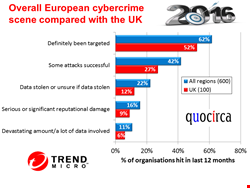
Recent research paints a stark picture. A study surveying 600 organizations found that well over half had been targeted by cyber-attacks in a single year, with a significant number suffering successful breaches, data theft, and serious reputational harm. Consequently, cyber-criminals rank as the foremost worry for European businesses, surpassing other threat actors. This pervasive threat environment forms the urgent backdrop against which all data protection discussions occur.

The Regulatory Earthquake: Understanding the GDPR

Building on this insecure foundation, the EU General Data Protection Regulation (GDPR) represents a seismic shift. While it standardizes rules across member states—a boon for international trade—it introduces formidable new obligations. Penalties for non-compliance can reach up to €20 million or 4% of global annual turnover. Moreover, the regulation mandates prompt breach notifications and enshrines a powerful ‘right to erasure’ for individuals. For US firms, adapting processes to this new reality is non-negotiable.

Priority Shift: Personal Data Takes Center Stage

This combination of rampant crime and strict privacy law has reshaped priorities. In Europe, protecting customers’ personal data now consistently outranks securing payment card information or intellectual property. The logic is clear: personal data breaches directly trigger GDPR penalties and erode consumer trust in ways that other data losses might not.

Bridging the Atlantic: From Safe Harbor to New Solutions

The legal framework governing data flows across the Atlantic is also in flux. Following the invalidation of the old Safe Harbor agreement, US businesses must navigate new, more complex arrangements. This means Transatlantic data security strategies must be built on current, legally sound mechanisms for transferring data. Therefore, simply applying US standards is insufficient; a genuinely European approach is required.

Technical Defenses: Aligning with European Concerns

European security priorities offer clear guidance for solution providers. The primary attack vectors causing alarm are exploited software vulnerabilities and compromised user identities. As a result, European defenses heavily focus on user awareness training, rigorous software scanning, and prompt update regimes. For US cloud providers, this creates a significant opportunity. They can effectively argue that their managed platforms are more likely to be updated promptly and secured proactively than many in-house systems.

However, a major caveat exists. With lingering doubts over data sovereignty, US providers are increasingly pressured to establish infrastructure within European borders. This move directly addresses data protection concerns and is becoming a standard expectation for doing business.

Beyond Prevention: The Critical Role of Response

European organizations operate under no illusions; they believe a breach is inevitable. This means assistance with post-breach measures is highly valued. While malware cleanup tools are widely deployed, there is a recognized need for capabilities to identify compromised systems, data, and users swiftly. This capability is crucial for executing an effective breach response plan—a document that must include procedures for notifying affected individuals and regulators, as well as managing public relations.

Surprisingly, fewer than half of European businesses currently have such a comprehensive plan in place. This gap represents a clear opportunity for knowledgeable US firms to offer guidance and services, helping to build resilience and trust. For more on building a response plan, see our guide on effective incident response frameworks.

The Road Ahead: Trade, Trust, and Technology

The volume of US-EU trade, particularly in technology, is immense. While agreements like the Transatlantic Trade and Investment Partnership (TTIP) may streamline future trade, they will not override the fundamental need for savvy data protection practices. Ultimately, success in the European market hinges on demonstrating a genuine commitment to Transatlantic data security. This involves combining robust technical defenses, full GDPR compliance, and a proactive response posture. By doing so, US companies can secure not just data, but also the long-term trust of European partners and customers. Learn how to align your strategy with our overview of key compliance checkpoints.

Continue Reading

Trending