Cyber Warfare Lessons: Dmytro Kuleba Headlines Infosecurity Europe 2026
The battlefield has evolved. It’s no longer just trenches and tanks; it’s servers, networks, and digital influence campaigns. This June, one of the architects of a nation’s defense against this modern warfare will take the stage in London.
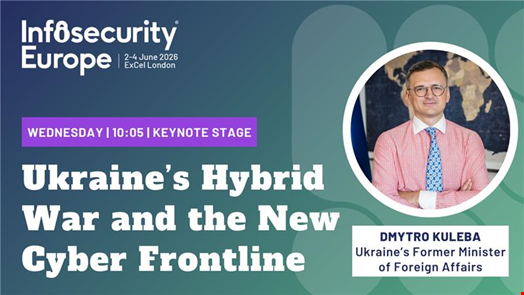
Infosecurity Europe has confirmed Dr. Dmytro Kuleba, Ukraine’s former Minister of Foreign Affairs, as the headline keynote speaker for its 2026 conference. The event runs from June 2nd to 4th at ExCeL London.
From the Diplomatic Front to the Digital Frontline
Kuleba served as Ukraine’s top diplomat from 2020 to 2024, a period defined by full-scale invasion. Alongside President Volodymyr Zelensky, he helped shape the nation’s strategic response to a multi-domain assault. His keynote, scheduled for Wednesday, June 3rd, carries a stark title: ‘Ukraine’s Hybrid War and the New Cyber Frontline.’
What can the global cybersecurity community learn from a nation under sustained digital siege? Kuleba plans to share critical, hard-won insights. He will detail the Russian playbook, where cyber-attacks on telecommunications were synchronized with kinetic missile strikes. He’ll explain how disinformation was weaponized to sow chaos and undermine morale.
Perhaps most urgently, his talk will argue that Western corporations are now the primary front line. In an era of “permanent shock,” what must their security teams understand to survive? The lessons from Kyiv are no longer theoretical; they are a blueprint for resilience.
A Continent Divided by Tension
Kuleba’s appearance underscores a central theme for the 2026 event: the inseparable link between geopolitics and cybersecurity. This focus is timely, given new research commissioned by Infosecurity Europe.
The 2026 Cybersecurity Trends study, conducted by Zing Insights among 396 professionals across six European nations, reveals a troubling trend. 59% of cybersecurity experts say rising geopolitical tensions are actively hampering collaboration across Europe.
The sense of fragmentation is pronounced. Majorities in the UK (62%), France (68%), and Denmark (69%) report that cooperation is becoming more difficult. Only 16% of respondents felt tensions had no impact.
Confidence in European cyber cooperation is split almost down the middle. While 42% believe their country is doing enough to collaborate, 43% say it is not. This concern is highest in the UK (53%) and Germany (57%), where professionals feel current models are falling short.
Yet, the value of working together remains undeniable. When asked about the benefits, 33% cited threat intelligence sharing as the top advantage. Another 27% pointed to stronger cross-border incident response coordination. The challenge is bridging the gap between clear need and political reality.
Setting the Strategic Stage
The geopolitical tone will be set early. On Tuesday, June 2nd, the morning sessions will be chaired by Ciaran Martin, a professor at Oxford University and former founding CEO of the UK’s National Cyber Security Centre (NCSC).
Martin’s experience is profound. He led the NCSC’s response to over 2000 nationally significant cyber-attacks, helping cement the UK’s reputation as a global cybersecurity leader. His perspective will frame a program designed around real-world state-level threats.
Further deepening the strategic discussion, a senior NCSC representative will deliver a separate keynote on ‘Cyber Security 2026 – State of the Nation’ on Tuesday. This session promises a clear-eyed assessment of the UK’s threat landscape and national priorities.
Attendees can expect a breakdown of how the threat picture is shifting and where the NCSC will focus its efforts in the coming years. The talk will also outline practical steps for security leaders in government, industry, and critical national infrastructure to align with national strategy and build large-scale resilience.
Securing Your Place at the Discussion
Registration for Infosecurity Europe 2026 is now open. Entry is free until May 5th, after which a £49 fee applies. This grants access to the expansive exhibition floor and all theatre sessions, including the keynotes by Dmytro Kuleba and the NCSC.
For cybersecurity professionals navigating an increasingly volatile world, the 2026 conference offers something rare: a direct line to the strategic thinking shaping our digital defenses. The lessons from Ukraine are not just history; they are a warning, and a guide, for what comes next.

















 CyberSecurity5 months ago
 How To4 months ago
 CyberSecurity6 months ago
 CyberSecurity5 months ago
 Social Media5 months ago
 Infosecurity5 months ago
 CyberSecurity5 months ago
 Video4 months ago