Connect with us

Infosecurity

Every Social Media Platform Brings Its Own Security Risks — Here’s What to Watch For

Published

on

Every Social Media Platform Brings Its Own Security Risks — Here’s What to Watch For

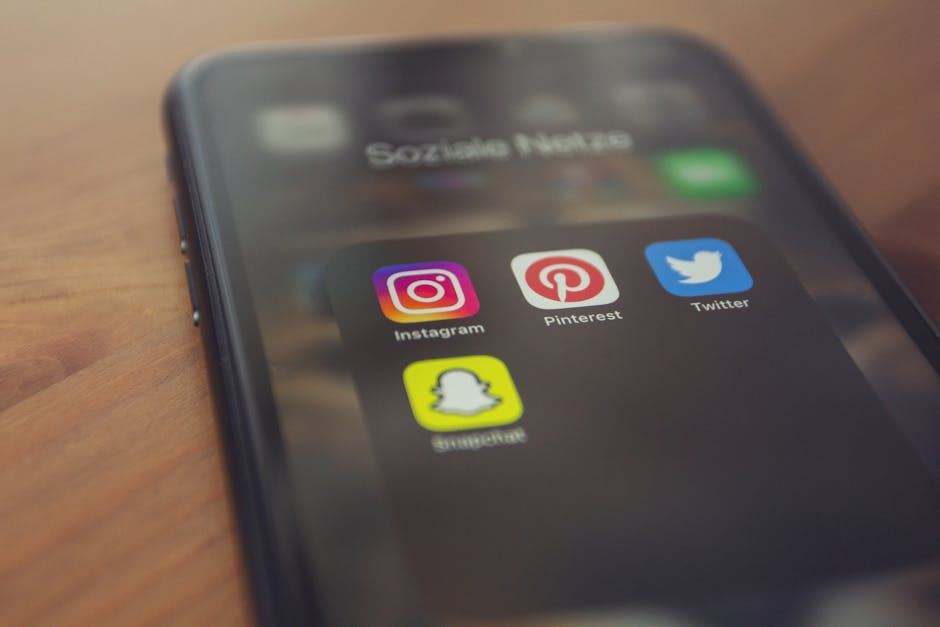
The holiday season is a time for rest and celebration, but cybercriminals never clock out. As 2016 winds down, security experts are already forecasting a rise in social media security risks that will target businesses and individuals alike in 2017. According to Mike Raggo, chief research scientist at ZeroFOX, each social network presents a unique set of dangers — and attackers are becoming more strategic about which platform they exploit.

Why does this matter? Because enterprises are rapidly adopting internal collaboration tools like Slack, Workplace by Facebook, and Microsoft Teams. These platforms boost productivity, but they also open new doors for malicious actors. “As these platforms evolve, they become more unregulated, presenting a variety of different threat vectors,” Raggo warned.

LinkedIn: A Goldmine for Corporate Reconnaissance

LinkedIn remains the top choice for nation-state actors and corporate spies. Raggo explained that impersonators frequently pose as recruiters to connect with employees inside target organizations. “We’ve seen fake accounts tailoring their skills and resumes to information security,” he noted. Some accounts even change their job titles over time to match different industries, making detection difficult.

This type of LinkedIn impersonation attack is part of a broader reconnaissance effort. Attackers profile individuals and their companies to gather intelligence. As a result, LinkedIn is expected to become one of the most targeted platforms for hackers in the coming year.

Facebook and Instagram: Phishing Through Giveaways and Apps

On Facebook and Instagram, the social media security risks often come in the form of fake giveaways, contests, and extreme discounts. These scams lure users into clicking links that request login credentials or credit card information. “In all scenarios, they’re phishing information,” Raggo said.

What’s more, forwarding sites can now detect the user’s device type. If someone is on a mobile device, the site may prompt them to download a malicious app. This trend will only intensify in 2017, with hackers using images and videos as vectors to spread viruses. Mobile malware, in particular, will become a more prominent threat. One wrong click could compromise a phone, laptop, or even an entire enterprise network.

How These Attacks Work

Attackers often hijack hashtags or impersonate legitimate brands to distribute malicious links. Shortened URLs make it nearly impossible for users to verify the destination site. According to Raggo, “With one simple click, an unsuspecting victim can completely compromise their laptop or phone.”

Twitter: A Hotbed for Malware and Account Hacks

Twitter continues to be a primary channel for distributing malware and launching phishing attacks. Hackers use hashtag hijacking, impersonation, and direct messages to spread malicious links. The platform also saw a surge in account breaches in 2016, including high-profile incidents like the Zuckerberg hack and the leak of 32 million passwords.

Raggo predicts that Twitter-based attacks will only increase. The platform’s real-time nature and use of shortened URLs make it an ideal environment for cybercriminals to operate.

How to Defend Against Social Media Threats

While it’s impossible to eliminate social media security risks entirely, Raggo recommends several practical steps. First, enable multi-factor authentication on every account. “Multi-factor authentication should be a standard security practice for everyone online today,” he emphasized. Second, avoid reusing passwords across social platforms. Third, businesses must constantly monitor their digital channels for impersonator accounts, phishing links, and scams.

Organizations should adopt a programmatic approach to managing social media security. This means setting up automated monitoring tools, training employees to recognize threats, and having a response plan in place. “With a few digital hygiene best practices, individuals can protect themselves and slow attackers down in a substantial way,” Raggo concluded.

For more insights, check out our guide on social media security best practices and learn how to prevent LinkedIn impersonation attacks.

Continue Reading
Click to comment

Leave a Reply

Your email address will not be published. Required fields are marked *

Infosecurity

ToxicPanda 2.0: The Android Trojan That Just Got a Whole Lot Scarier

Published

on

ToxicPanda 2.0 Android malware

The Numbers Behind ToxicPanda 2.0

It’s not every day a piece of malware goes from targeting 16 apps to 140. But that’s exactly what Zimperium‘s zLabs team found when they dissected ToxicPanda 2.0, the latest iteration of a nasty Android banking trojan. The research dropped on August 19, and it’s already turning heads in the mobile security world.

The expanded target list includes 140 banking and cryptocurrency apps specifically targeted for PIN theft. That’s not the whole story either. The malware also uses overlay-based credential theft against 349 financial institutions spread across 16 countries, with the heaviest concentration in Pakistan, South Africa, Mexico, Nigeria, and India.

Think about that for a second. The first ToxicPanda variant was a relatively small operation. This one is a full-blown industrial-scale phishing machine.

How the Attack Works

When a victim opens one of the targeted apps, ToxicPanda 2.0 reaches out to its command-and-control server and pulls down a malicious HTML overlay. The overlay looks like a legitimate login page, but it’s designed to capture credentials and PINs. The user thinks they’re typing their password into their bank’s app. They’re actually handing it to an attacker.

But that’s just the entry point. The real innovation in this variant is how it abuses the Android Accessibility Service.

Accessibility Service Abuse: A New Attack Vector

The Accessibility Service is a legitimate feature designed to help users with disabilities interact with their devices. ToxicPanda 2.0 turns it into a backdoor. According to the Zimperium report, the malware uses this service to enable wireless debugging, which then becomes a route to shell access.

“Once the malware gains shell user permissions, it starts executing high-privilege commands directly through the ADB [Android Debug Bridge] daemon,” the report explains. “The malware bypasses standard Android runtime consent prompts to grant itself broad permissions, neutralize OS background restrictions, silently enable critical components, and enforce persistence.”

In plain English: the malware gives itself superpowers without asking for permission. It can disable battery optimizations, keep itself running in the background, and make sure it survives reboots.

PIN Theft via Screen Overlay

Another new trick up its sleeve is stealing device lock credentials. Using a screen overlay attack, ToxicPanda 2.0 captures the victim’s PIN, pattern, or password when they unlock their phone. This gives the attacker persistent access to the device, even after the initial infection is cleaned up.

Combine that with the banking app overlays, and you’ve got a two-pronged attack: one for the device, one for the apps on it.

Why This Matters for Enterprises

Bradley Smith, deputy CISO at BeyondTrust, pointed out something crucial about this variant. “What stands out to me in this research is that ToxicPanda 2.0 does not break Android, it operates Android,” he said. “We’ve been seeing this pattern across mobile threats all year: abuse of legitimate platform features, accessibility services above all, rather than exploitation of vulnerabilities. There is no patch for a feature working as designed, so the control plane must move from patching to governing who and what gets those grants.”

That’s a sobering thought. You can’t patch your way out of this one. The features the malware abuses are working exactly as Google intended. The only defense is controlling who gets access to them in the first place.

Three Controls to Mitigate ToxicPanda

Smith offered three practical steps for enterprises looking to reduce their exposure:

  • Block sideloading on any device enrolled in corporate identity. This cuts off the primary infection vector.
  • Treat accessibility service grants as privileged access events, subject to logging and review. If an app suddenly asks for accessibility permissions, someone should be reviewing that request.
  • Alert when developer options or wireless debugging switch on across the managed fleet. This is possible via mobile device management (MDM).

These aren’t exotic controls. They’re basic hygiene, but they’re the kind of thing that gets overlooked until something like ToxicPanda 2.0 shows up.

The Bigger Picture: Mobile Threats Are Evolving

ToxicPanda 2.0 is part of a broader trend that security researchers have been tracking all year. Attackers are moving away from exploiting vulnerabilities and toward abusing legitimate features. Accessibility services, wireless debugging, ADB — these are all standard Android tools. They’re not bugs. They’re features, and that’s exactly why they’re so dangerous.

For users, the takeaway is simple: be careful what you install, especially if you’re sideloading APKs from outside the Google Play Store. For enterprises, the message is even clearer. The old patching mindset won’t cut it anymore. You need to govern access to these powerful features, log their use, and alert when something looks off.

ToxicPanda 2.0 might not be the most sophisticated malware we’ve seen this year, but it’s a wake-up call. The attack surface is bigger than ever, and it’s not going to shrink on its own.

Continue Reading

Infosecurity

AI-Powered Attacks on Siemens PLCs: What ICS Operators Need to Know Now

Published

on

Siemens PLC attacks

The Warning: AI Is Now Writing Exploit Scripts for Siemens S7 PLCs

Industrial control system (ICS) operators are facing a new kind of threat. Adversaries are using artificial intelligence to craft exploitation scripts specifically targeting Siemens S7 Series programmable logic controllers (PLCs). This isn’t a theoretical risk. It’s happening now, and it’s forcing a hard look at how critical infrastructure defends itself.

A joint advisory from CISA, the FBI, and other agencies—published on August 19—spells out the danger. Sectors like manufacturing, energy, water and wastewater, and food and agriculture rely heavily on these PLCs. The potential fallout is severe: disrupted industrial processes, safety incidents, unplanned downtime, equipment damage, and compromised sensitive data. In the worst cases, that translates to real-world harm—water service interruptions, energy grid instability.

How the Attacks Unfold: From Scanning to Lateral Movement

The attack chain is methodical. Threat actors first use legitimate scanning services like Censys and ZoomEye to find internet-exposed or poorly segmented Siemens S7 Series PLCs. Once they’ve identified a target, they deploy AI-generated scripts to probe for vulnerabilities. The advisory is blunt: PLCs connected to the internet are at high risk.

But the AI involvement doesn’t stop at initial access. It’s also being used to move laterally within networks and evade defenses. Attackers are combining open-source industrial automation libraries with AI-assisted scripting to create custom tools that mimic legitimate OT monitoring solutions. These tools can read and write to Siemens S7 PLC memory, configuration data, and ladder logic programs via the S7comm protocol.

The goal, according to the authoring agencies, appears to be persistent reconnaissance. They’re mapping out critical environments, understanding how they work, and positioning themselves for future disruptive operations. As the advisory states: “For capability development, actors are testing and refining their exploitation techniques against specific PLC models… For operational effects, actors are leveraging read access to understand target environments, enabling preparation and positioning for future write operations.”

Why This Marks a Turning Point in ICS Attacks

The use of AI to generate exploit scripts is a genuine evolution in threat actor capabilities. It lowers the barrier to entry. Scripts that once required deep PLC expertise can now be produced—or modified—with far less effort. This is a shift from manual, labor-intensive hacking to something faster and more scalable.

This advisory follows earlier warnings about Iranian state-backed hackers targeting internet-exposed industrial systems from brands like Rockwell Automation, Allen-Bradley, Schneider Electric, and Siemens. Those warnings were linked to attacks on water systems across multiple US states in early August.

Mitigation Steps: What ICS Operators Must Do Now

The advisory lays out a series of urgent measures. These aren’t optional checklist items; they’re essential to reducing risk. Key actions include:

  • Proactively hunt for indicators of compromise—watch for connections from non-engineering workstations, repeated connection attempts with varying parameters, or traffic from unexpected countries or IP ranges.
  • Conduct an immediate inventory of all Siemens S7 Series PLCs in your environment and apply critical patches.
  • Ensure PLCs are not accessible from the internet. Separate OT and IT networks entirely.
  • Strengthen access controls: restrict PLC access to authorized engineering workstations and enable multi-factor authentication for all remote access to OT networks.
  • Disable web servers and unused communication protocols on Siemens S7 devices.
  • Contact Siemens for model-specific hardening recommendations.

Special attention is needed for operators who work with third-party service providers or system integrators. These vendors may have remote access to PLCs, and asset owners may not even realize their systems are exposed. That’s a dangerous blind spot.

Expert Perspective: The Real Lesson Isn’t About AI

Benny Czarny, CEO and founder of OPSWAT, offers a grounded take. He argues that AI just makes it easier for attackers to create and modify scripts targeting PLCs. The barrier to attacking industrial systems is falling. But his conclusion isn’t to chase better AI detection.

“The real lesson for me is still the same: stop giving attackers a path to the critical system in the first place,” he said. “And do not rely on antivirus and sandboxes to protect your data flow.”

That’s a sobering reminder. The fundamentals of ICS security—network segmentation, access control, patching—still matter most. AI may change the speed and sophistication of attacks, but it doesn’t change the basics of defense. For those managing critical infrastructure protection, the message is clear: assume your systems are targets, and act accordingly.

For more on how to secure operational technology environments, check out our guides on OT threat intelligence and PLC vulnerabilities.

Continue Reading

Infosecurity

EU weighs social media ban for under-13s as von der Leyen pushes ‘start date’

Published

on

social media ban

Brussels moves on kids’ screen time

The European Commission is weighing a continent-wide social media ban for children under 13, a move that would force platforms like TikTok, Instagram and Snapchat to verify ages far more strictly than they do today.

President Ursula von der Leyen told the Financial Times on Monday that she is considering a “harmonised EU-wide delay to social media” for kids under 13 who aren’t under a caregiver’s direct supervision. The idea: a legal start date, not just a terms-of-service checkbox.

“While ultimately it is up to parents to decide when children get their first smartphones, what we already have is a consensus that there needs to be a start date for the age children can join social media,” she said in a statement released Sunday.

Her proposal would give teens gradual access after turning 13, “depending on the proof given by the platforms that they are age-appropriate and safe for teenagers,” per the FT’s report.

Why age 13? And why now?

Thirteen isn’t arbitrary. Most platforms already require users to be at least 13, thanks to the US Children’s Online Privacy Protection Act (COPPA). But those rules are easily dodged — kids lie about birth dates, or simply tap “I’m old enough” without any verification.

The EU’s push would turn that soft restriction into hard law. Platforms would need to prove their services are genuinely safe for teens before granting access. That’s a heavy lift, and it’s exactly what von der Leyen is calling for.

“The status quo, a world where we continue to allow big tech unrestricted access to our children, will only consign another generation to more mental harm, addiction and misery,” she said.

The numbers behind the panic

Von der Leyen cited stark figures: European children now spend an average of four to six hours a day staring at screens.

“Six hours every day — this adds up to twenty years of their life,” she said. The line is dramatic, but it lands. Parents across the bloc are worried, and member states are feeling the heat.

She also drew a comparison that’s hard to argue with: society expects car manufacturers to include seatbelts and airbags. Why shouldn’t platforms be held to a similar standard of safety?

“It is clear we need age-appropriate restrictions to platforms,” von der Leyen said. “Because childhood will not wait. And once it is gone, we cannot give it back.”

Member states want more — maybe too much

Here’s the friction. Several EU countries, including France, Spain and Greece, have already imposed their own bans or are rushing legislation through their parliaments. Several are pushing for a cutoff of age 15, not 13.

Whether von der Leyen’s 13-threshold will satisfy those governments is an open question. Critics argue that 13 is too young, pointing to research on adolescent brain development and the particular vulnerability of mid-teens to social comparison and algorithmic rabbit holes.

The Commission’s proposal would also need to navigate the EU’s complex legislative machinery — a directive or regulation would require approval from both the European Parliament and the Council. That’s months, if not years, of negotiation.

What would enforcement look like?

That’s the trillion-dollar question. Age verification at scale is technically messy. Options include:

  • Government-issued ID checks (privacy advocates hate this)
  • Facial age estimation (creepy, but increasingly accurate)
  • Parental consent workflows (easily gamed, but a start)

The Commission hasn’t specified which method it prefers. But the phrase “proof given by the platforms” suggests the burden will fall on tech companies to demonstrate their systems work — not on regulators to police every signup.

What happens next?

For now, this is a proposal in search of a legal vehicle. Von der Leyen’s comments are a signal to member states that the Commission is listening, and a warning to platforms that self-regulation has run its course.

The political winds are blowing in one direction. With national bans already popping up, a patchwork of rules across the bloc is the real risk — which is precisely why von der Leyen wants a harmonised approach.

Whether 13 or 15 becomes the magic number, the era of unchecked teen social media use in Europe appears to be ending. The question is how quickly, and at what cost to privacy and innovation.

For parents, the takeaway is simple: the EU is finally treating childhood as something worth protecting from the attention economy. That’s a shift worth watching.

Continue Reading

Trending