Connect with us

Social Media

Fizz lawsuit takes a turn: Startup accuses VC of leaking secrets to rival Sidechat

Published

on

Fizz lawsuit VC secrets

Fresh allegations in an old feud

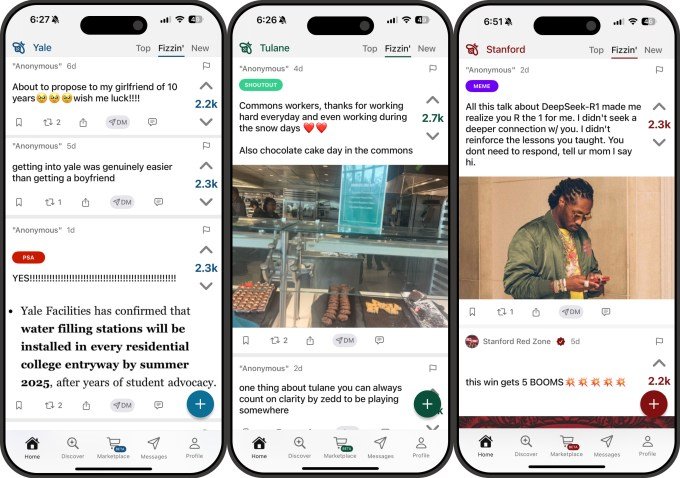
The legal battle between two anonymous college social apps just got a lot messier. Fizz, the Stanford-born platform where students gossip and network without using their real names, has accused a venture capitalist of playing both sides — and leaking the startup’s private playbook to its direct competitor, Sidechat.

In a new court filing reviewed by TechCrunch, Fizz claims that Jerry Lu, a partner at Seattle-based venture firm Maveron, met with Fizz’s founders under the pretense of exploring an investment. Instead, the startup alleges, Lu turned around and handed over confidential business details to Sidechat’s parent company, Flower Ave Inc.

The filing drops a bomb on a question that haunts every founder who pitches VCs: How safe is the sensitive data you share during fundraising?

What Fizz says Lu took — and where it went

Fizz’s founders, Teddy Solomon and Ashton Cofer, sat down with Lu in March 2022. According to the complaint, they shared non-public information about everything from user metrics and campus-launch strategies to the company’s ambassador program and product roadmap. Standard stuff for a pitch meeting — if you trust the person across the table.

The filing includes a screenshot of a text message showing Lu passing notes to Flower after that meeting. Fizz claims Lu continued feeding Sidechat information about the startup’s fundraising efforts and other strategic matters long after the initial conversation.

Lu eventually invested in Sidechat’s second seed round in October 2023, per PitchBook data. But Fizz’s lawyers argue he was coordinating with Sidechat as early as 2022 — well before that formal investment.

A mutual acquaintance and a leaked investor deck

The allegations don’t stop with Lu. Fizz also names Jack Burlinson, described as a mutual acquaintance of the founders and Lu, who allegedly shared Fizz’s investor deck and its fall summary for investors with Lu. That information, Fizz claims, then traveled directly to Sidechat.

Burlinson reached out to TechCrunch separately to push back. He said he had “no knowledge that Sidechat existed until this article” and that Lu approached him under false pretenses, claiming he wanted to invest in Fizz. “Jerry collected this information from me under false pretenses,” Burlinson wrote.

Neither Lu nor Maveron responded to requests for comment. Fizz declined to comment on the record.

Sidechat’s new owners say they inherited the mess

Kyle Venn, CEO of both Yik Yak and Sidechat, told TechCrunch that the alleged events happened long before his team acquired Sidechat in 2025. “No one on today’s operating team was involved,” Venn said via email. He stressed that the filing contains allegations, not court findings, and that Sidechat will address the matter through the legal process.

Venn added: “We’re currently focused on making a great product, not suing other apps.”

Flower Ave Inc. acquired Yik Yak, a once-dominant anonymous app, back in 2023. The company now runs both Yik Yak and Sidechat under Venn’s leadership.

Why this case matters for every startup founder

The Fizz lawsuit highlights a structural vulnerability in the venture capital model. Founders routinely hand over detailed financials, growth metrics, and product roadmaps during fundraising. They do it because they have to. But the system relies on a handshake-level assumption: that investors won’t shop that intel to portfolio companies or rivals.

This isn’t the first time that assumption has cracked. Several high-profile disputes in recent years have centered on VCs allegedly sharing confidential data. But the Fizz case is unusually vivid — a text-message screenshot, a named partner at a well-known firm, and a direct pipeline to a competitor.

Fizz originally sued Sidechat in 2023 over a laundry list of alleged dirty tricks: disrupting campus launches, spreading false rumors about hackers accessing Fizz’s data, filing fake spam reports to Instagram, and even paying students to delete the Fizz app. Lu wasn’t named in that original complaint. The new filing adds an insider-trading-style twist to an already bitter rivalry.

What happens next

The case is still in discovery. Fizz’s lawyers are likely to push for more communications between Lu, Maveron, and Sidechat’s previous owners. Sidechat’s new management will try to distance itself from actions taken before the acquisition. And Lu — unless he breaks his silence — will face questions about whether a standard pitch meeting turned into something far less ethical.

For founders watching from the sidelines, the lesson is uncomfortable but clear: Trust, but verify. And maybe think twice before sharing your full product roadmap with a VC who hasn’t committed.

Continue Reading
Click to comment

Leave a Reply

Your email address will not be published. Required fields are marked *

Social Media

Bluesky’s Toni Schneider makes it official: He’s no longer just the interim CEO

Published

on

Bluesky CEO Toni Schneider

From interim to permanent: Schneider takes the reins

Four months into the job, Toni Schneider is finally shedding the “interim” tag. The Bluesky CEO announced Friday that he’s now the platform’s permanent chief executive, putting an end to any speculation about a leadership search.

Schneider took over in March after Jay Graber stepped down as CEO to become Bluesky’s chief innovation officer. Graber had led the company since its early days as a Twitter spinoff. Schneider, who previously founded Automattic — the company behind WordPress and Tumblr — came in as an experienced hand from the investor side. He’s also a partner at True Ventures, a venture capital firm that, along with Automattic, has money in Bluesky.

“I’m four months into my interim CEO role at Bluesky, and it’s time for an update,” Schneider wrote on his personal blog. “Most importantly, as of today, the interim part of the title is gone. I’m loving the mission and the job, and I’m all in as Bluesky’s official CEO.”

What Schneider wants to build next

Schneider didn’t just make an announcement — he laid out a roadmap. One of his first priorities, he said, is to “create smaller spaces and more private communities” on the platform. That’s a notable shift for a social network that, until now, has focused heavily on the public, broadcast-style feed that made Twitter famous.

“That would unlock the next wave of growth and innovation,” Schneider wrote, without offering a detailed timeline or specific features. It’s a clear signal that Bluesky wants to compete not just with X (formerly Twitter) but also with private messaging apps and community-focused platforms like Discord or even Facebook Groups.

The Graber era: 43 million users and a new protocol

Under Graber’s leadership, Bluesky hit 43 million users. That’s small compared to X’s hundreds of millions, but impressive for a platform that started as a niche experiment. Graber also oversaw the expansion of the AT Protocol, the decentralized system that lets Bluesky and other apps share the same social graph.

The AT Protocol is Bluesky’s long-term bet. If it works, developers could build their own apps on top of Bluesky’s network — think Mastodon, but with better usability. It’s a vision that echoes what the web was supposed to be: open, interoperable, and not owned by any single company.

But the momentum has slowed

Lately, though, Bluesky has hit a rough patch. User growth has stalled. Engagement is down. Some observers have started asking whether the platform is dying. The numbers tell a mixed story: Bluesky saw a huge spike in sign-ups after Donald Trump’s re-election, when Elon Musk was most active in politics on X. But that surge didn’t last. The platform has since seen a drop-off.

Schneider acknowledged the challenge indirectly. “We’re at the very beginning of this story,” he wrote Friday. It’s a line that sounds optimistic, but it’s also an admission that Bluesky hasn’t yet proven it can sustain growth beyond a political news cycle.

Can Bluesky survive without the X exodus?

The big question hanging over Bluesky is whether it’s a real social network or just a refuge for people fleeing Elon Musk’s X. The spike after the 2024 U.S. election suggests the latter. But a healthy platform needs its own reason to exist — not just a reason to leave somewhere else.

Schneider’s answer is to build features that keep people around: private communities, smaller groups, better tools for conversation. It’s a strategy that worked for WhatsApp and WeChat, both of which started as simple messaging apps and grew into ecosystems. But Bluesky is starting from a much smaller base.

He also has the backing of deep-pocketed investors — Automattic and True Ventures are both insiders. That gives him time to experiment. But time isn’t infinite. Social media is a winner-take-most market, and Bluesky is competing against X, Threads, Mastodon, and a dozen other platforms.

What’s next for Bluesky under permanent leadership

Schneider’s first task is to stabilize the user base. That means proving Bluesky can grow even when there’s no political crisis driving people off X. His second task is to deliver on the AT Protocol promise — making it easy for developers to build on top of Bluesky without needing a PhD in decentralized systems.

Neither is easy. But Schneider has been through this before. He led Automattic through WordPress’s transition from a blogging tool to a web platform. He knows how to build infrastructure that attracts developers. And he knows how to manage a company that’s trying to grow without losing its soul.

“We’re at the very beginning of this story,” he said. For Bluesky, that story is still being written. Whether it becomes a footnote or a new chapter in social media depends on what Schneider does next.

Continue Reading

Social Media

Instagram Plus, Algorithm Control, and Episodic Reels: What Marketers Need to Know

Published

on

Instagram Plus features

Instagram Plus: A Paid Subscription Layer for Creators and Brands

In a move that signals a new era for the platform, Instagram has launched Instagram Plus, a $3.99/month optional subscription tier. This isn’t just a cosmetic upgrade — it unlocks exclusive Stories features and enhanced analytics that could change how marketers approach organic reach.

For businesses, the key draw is the ability to offer subscriber-only Stories. Think behind-the-scenes content, early access to product drops, or exclusive Q&As. This creates a direct revenue stream and builds deeper loyalty. But there’s a catch: you’ll need to consistently produce content that feels worth the price tag. A one-off exclusive won’t cut it.

The subscription also includes a verified badge (pending review) and priority support. For marketers, the real value lies in the data — detailed insights on subscriber engagement that can inform broader content strategies.

User-Controlled Algorithms: Putting the Power Back in Your Hands

One of the most talked-about updates is the ability for users to control how their feed is sorted. No longer are you stuck with a mysterious algorithm deciding what you see. Now, you can toggle between “Favorites” (showing only posts from accounts you choose) and “Following” (chronological order from everyone you follow).

For marketers, this is a double-edged sword. On one hand, it means your most engaged followers can choose to see your content first. On the other hand, casual followers may never see your posts if they stick with the default algorithmic feed. The takeaway? Invest in building a core audience that will manually add you to their Favorites list. That means stronger calls-to-action, exclusive perks, and consistent value.

This shift also forces a rethink of hashtag strategy. With users filtering their feeds, hashtag discovery becomes even more critical for reaching new eyes. Instagram hashtag research should now be a weekly priority.

Episodic Reels: A New Format for Serialized Content

Instagram is testing episodic Reels, allowing creators to post multi-part video series. Think of it as a mini-TV show within the app. Each episode can be up to 90 seconds, and viewers can subscribe to the series to get notified when a new part drops.

This is a massive opportunity for brands. Instead of one-off viral hits, you can now build narrative arcs that keep viewers coming back. A fashion brand could run a “7 Days of Outfit Ideas” series. A cooking channel could release “5-Minute Meals” weekly. The serialized format encourages repeat visits and higher retention.

But there’s a strategic nuance: each episode must stand alone while also hooking viewers into the larger story. If a new user discovers part 3, they should still get value. Marketers need to plan storyboards with clear entry points for new viewers.

How to Optimize Episodic Reels for Discovery

  • Use a consistent thumbnail style — make your series instantly recognizable in the feed.
  • Include episode numbers in the video or caption to avoid confusion.
  • Cross-promote previous episodes in the comments or via Stories.
  • Leverage the subscribe button — encourage viewers to follow the series, not just your account.

Stories Features That Go Beyond the 24-Hour Window

Instagram is also expanding Stories capabilities. The most notable addition is “Stories Highlights” that can now include interactive elements like polls, quizzes, and countdowns — features previously limited to live Stories. This means your evergreen Highlights can now be dynamic, not static.

For marketers, this is a goldmine. A product launch countdown can live in your profile permanently. A “This or That” poll in a Highlight can gather ongoing feedback. The key is to update Highlights regularly to keep them fresh and engaging.

Another under-the-radar feature is “Stories Insights” for business accounts. You can now see which specific Stories drove the most profile visits or website clicks. This data lets you refine your content mix — doubling down on what works and cutting what doesn’t. Pair this with Instagram Stories analytics for a complete picture.

What This Means for Your 2024 Marketing Strategy

These updates collectively point to a platform that’s becoming more fragmented — and more intentional. The days of a one-size-fits-all algorithmic feed are fading. Marketers now have to earn attention through subscriptions, series, and interactive Stories.

Here are three action steps to take today:

  1. Audit your current content — identify which pieces could be repackaged as a series or exclusive subscriber content.
  2. Test the Favorites feature — ask your top followers to add you to their list. Offer a small incentive like a discount code.
  3. Plan a 3-part Reel series — start small. A simple “how-to” in three parts can test the episodic format without overwhelming your team.

The bottom line? Instagram is betting that users want more control and deeper connections. Marketers who adapt — by creating subscription-worthy content and serialized stories — will win in this new landscape.

Continue Reading

Social Media

Elon Musk Announces X Will DM Users When Posts They Liked or Shared Get Corrected

Published

on

Musk Drops a New Feature for Community Notes

Elon Musk says X will soon send users a direct message — via X Chat — whenever a post they’ve liked, reposted, or replied to gets corrected by Community Notes. The announcement came from Musk himself on Tuesday. No launch date was given. The feature isn’t live yet.

It’s a simple idea with big implications. If you engaged with a misleading post, X will ping you directly. That’s a shift from the current system, where a correction lives on the original post — easily missed if you’ve already scrolled past.

Why This Matters for Misinformation

Community Notes has always faced a timing problem. A false post can rack up millions of views while contributors debate whether to attach a note. By the time a correction appears, the damage is done. The post has spread. People have formed opinions.

Musk’s DM alert aims to close that gap. It doesn’t stop the spread in real time, but it does bring the correction to people who already saw or shared the bad info. That opens the door for users to delete their own reposts or even publicly walk back a claim they helped amplify. In theory, it turns a passive correction into an active notification.

How Community Notes Actually Works

X’s fact-checking tool launched when the platform was still called Twitter. The goal was to let users police misinformation instead of relying on a central moderation team. Contributors suggest corrections, add missing context, and flag inaccuracies. A note goes live only when raters with historically different viewpoints agree it’s helpful.

Meta adopted a similar system last year as part of a broader moderation overhaul that ended its partnerships with professional fact-checkers. The crowdsourced model lets platforms offload responsibility — but it comes with trade-offs.

The Scale Problem

A 2025 study by Spanish fact-checking site Maldita found that 85% of proposed Community Notes never see the light of day. Only 8.3% get published. A separate analysis from the Digital Democracy Institute of the Americas (DDIA), covering 1.76 million notes published between January 2021 and March 2025, put the unpublished rate even higher at 90%.

That means the vast majority of suggested corrections are invisible. The system surfaces information only for a tiny fraction of disputed posts. Critics argue this weakens Community Notes precisely when it’s needed most — during breaking news or viral hoaxes.

What the DM Feature Does — and Doesn’t — Fix

The new alert addresses one specific weakness: user awareness. Right now, there’s no way for X to tell you that a post you boosted earlier was later corrected. You’d have to revisit the post manually. Many people never do.

A DM changes that. It puts the correction in your inbox. It’s proactive. But it doesn’t solve the underlying scale issue. If 90% of proposed notes never get published, most misleading posts will still lack corrections — and thus trigger no alerts.

Still, for the notes that do go live, the DM feature could meaningfully reduce the spread of false information. A user who receives a correction might delete their repost or share the note themselves. That’s a form of organic damage control.

When Will It Launch?

Musk didn’t offer a timeline. X did not immediately respond to a request for comment. The feature is not yet visible in the app or on the web. Given the company’s history of announcing features that take months to arrive — or never arrive at all — it’s wise to treat this as a roadmap item, not a guarantee.

If and when it does roll out, it’ll be worth watching how users respond. Will people appreciate the nudge, or will they find it intrusive? And will the alerts actually change behavior, or just clutter inboxes?

For now, the announcement signals that X is still investing in Community Notes despite its limitations. Whether those investments are enough to make crowdsourced fact-checking work at scale remains an open question.

Continue Reading

Trending