Connect with us

How To

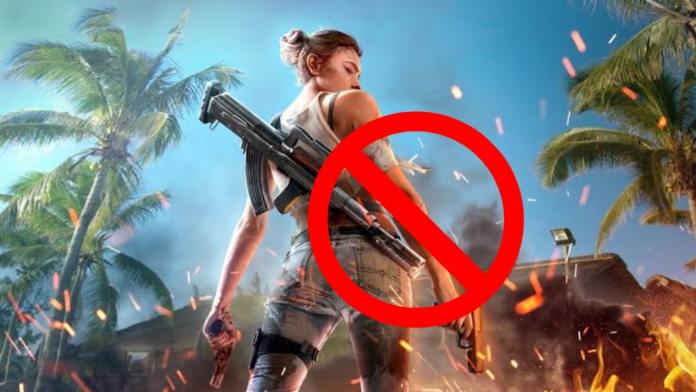
Free Fire Vanishes from Apple and Google Play Stores: The Full Story

Published

on

Free Fire Vanishes from Apple and Google Play Stores: The Full Story

The mobile gaming world was shaken when players discovered that Free Fire, the immensely popular battle royale title, had disappeared from both the Apple App Store and Google Play Store. This sudden removal of Free Fire and its enhanced version, Free Fire Max, left millions of players confused and searching for answers. The absence of an immediate official explanation only fueled widespread speculation and concern within the gaming community.

What Exactly Happened to Free Fire?

In a move that caught the community off guard, both the standard Free Fire and Free Fire Max were delisted from the major digital storefronts. Users who attempted to search for the game were met with empty results or, in some cases, were shown alternative titles like “Better Grand Mobile India.” This meant new players could no longer find or download the game through official channels, creating an immediate barrier to entry.

Consequently, the primary question on everyone’s mind was simple: why? The lack of a clear, public statement from either the game’s developer, Garena, or the platform holders created an information vacuum. Players who already had the game installed reported it was still functional, but the future for updates and new downloads became uncertain overnight.

The Official Silence and Mounting Speculation

As of the initial reports, no official reason was provided for the Free Fire removal. This silence is unusual and often points to complex underlying issues. Typically, app removals can stem from a range of factors, including alleged violations of platform policies, security concerns flagged during reviews, legal disputes, or government directives in specific regions.

Building on this, many observers drew parallels to other high-profile gaming app bans in certain markets, wondering if geopolitical or regulatory pressures were at play. Without a definitive statement, the community was left to piece together clues from social media chatter and tech forums. For reliable updates, players are advised to monitor official gaming news channels closely.

Immediate Impact on the Player Base

The removal had a direct and tangible effect on the game’s ecosystem. First and foremost, it fractured the community. Existing players could continue, but they faced anxiety over potential service interruptions or a lack of future updates. Newcomers were completely locked out, unable to join their friends in the battle royale arena.

This situation also raised practical concerns about account security and progress. Players worried about linking their accounts across devices or reinstalling the game after a phone reset. The uncertainty cast a shadow over the time and, in some cases, money invested in the game by its dedicated fanbase.

What Players Can Do in the Meantime

If you find yourself affected by this situation, there are several practical steps you can take. First, avoid downloading the game from unverified third-party websites, as these often pose significant security risks, including malware and data theft.

Stay Informed Through Official Channels

Your best source of information will be official communications. Follow Garena’s official social media accounts on platforms like Twitter, Facebook, and Instagram. Additionally, keep an eye on announcements from Apple and Google regarding policy changes that might affect gaming apps.

Explore Alternative Gaming Options

While waiting for a resolution, you might consider exploring other high-quality battle royale and shooter games available on the stores. Titles like Call of Duty: Mobile, PUBG Mobile, and Apex Legends Mobile offer similar team-based, last-player-standing gameplay. This could be a good opportunity to discover a new favorite while the Free Fire situation develops.

Looking Ahead: Possible Outcomes and Returns

The central question remains: will Free Fire return? History shows that apps can and do return to stores after addressing the specific issues that led to their removal. This often involves developers working with platform moderators to update the app to comply with revised guidelines or to resolve a disputed policy interpretation.

Therefore, the most likely path forward involves a period of negotiation and potential app modifications behind the scenes. Players should prepare for the possibility that if and when Free Fire returns, it might come with changes to its content, data handling policies, or in-game mechanics to satisfy store requirements.

In the broader context, this event highlights the fragile relationship between major app platforms and large-scale game developers. It serves as a reminder of the centralized control these digital storefronts hold over software distribution. For more insights into the mobile gaming landscape, check out our analysis on the future of mobile esports.

Ultimately, the saga of Free Fire’s removal is a developing story. The lack of initial transparency was frustrating for players, but it underscores the complex, often opaque processes that govern our digital app ecosystems. The gaming community’s response—a mix of concern, speculation, and adaptation—demonstrates the passion driving mobile gaming today. All eyes are now on Garena and the platform holders for the next chapter.

Continue Reading

How To

6 Movies You’ve Already Seen That Are Secretly The Count of Monte Cristo

Published

on

Count of Monte Cristo movies

The revenge plot that refuses to die

Even if you’ve never cracked open the 1844 novel or sat through one of its many adaptations, you know the shape of The Count of Monte Cristo. A young man, full of promise, gets betrayed by people he trusts. He’s thrown into a hellhole, left to rot. Then comes the escape, the hidden treasure, the new identity, and the slow, surgical dismantling of everyone who wronged him.

That formula is so sturdy that filmmakers keep borrowing it — often without a single mention of Alexandre Dumas. Sometimes it’s a coincidence. Often it’s not. Directors know the skeleton works, so they just dress it in different clothes.

Here are six movies that are, whether they admit it or not, The Count of Monte Cristo in disguise.

1. The Shawshank Redemption (1994)

The most obvious one, and the most beloved. Andy Dufresne is Edmond Dantès — a brilliant, innocent man railroaded into prison by a rival’s jealousy. He endures years of brutality, befriends a father figure (Red as a less glamorous Abbé Faria), and quietly digs his way out. The payoff isn’t a treasure chest of gold; it’s a lifetime of savings hidden under a fake name.

The parallel isn’t subtle, and Stephen King has acknowledged the influence. But the movie stands so tall on its own that most viewers never stop to think about the 1840s source material. It’s a revenge story about patience, and patience is the rarest weapon in cinema.

2. Oldboy (2003)

Park Chan-wook’s masterpiece takes the Monte Cristo template and drags it through hell. Oh Dae-su is imprisoned for 15 years without explanation — no trial, no crime, just a hotel room that becomes a cell. When he’s released, he has five days to find out who did this to him and why.

The twist at the end is so devastating that it rewrites everything you thought you knew. But strip that away, and you’ve got Dantès’ arc: wrongful imprisonment, a mysterious benefactor, a single-minded quest for vengeance. The corridor fight scene is iconic, but the structure is pure Dumas.

3. V for Vendetta (2005)

V is Edmond Dantès with a Guy Fawkes mask and a flair for the theatrical. He was betrayed by the state, experimented on, and left for dead in a fire. He emerges with a new identity, a hidden base, and a plan to tear down the entire system that destroyed him.

The difference is scale. Dantès wants to punish specific men; V wants to topple a fascist government. But the bones are identical — the wronged prisoner becomes something more than human, and the revenge becomes a public spectacle. It’s a political thriller built on a personal grudge, and that’s exactly what makes it work.

4. The Lion King (1994)

Wait. Stick with me here.

Simba is Dantès, exiled from his kingdom after a betrayal he didn’t deserve. Scar is Fernand Mondego — the jealous rival who engineers the downfall and steals the prize. The difference is that Simba doesn’t plan a meticulous revenge; he just comes home and takes back what’s his.

But the emotional core is the same. The hero loses everything, lives in obscurity, then returns transformed — older, wiser, and ready to confront the past. Add Timon and Pumbaa as the comic-relief version of Faria’s mentorship, and you’ve got a children’s movie that’s secretly a 19th-century revenge novel. Shakespeare did the same thing with Hamlet, so Disney clearly has a type.

5. The Count of Monte Cristo (2002)

Okay, this one isn’t secret. It’s literally the same story. But it deserves a mention because it’s the rare adaptation that actually understands the assignment.

Jim Caviezel plays Dantès with a simmering rage that never quite boils over, and Guy Pearce makes Fernand a genuinely hateable villain. The movie streamlines the novel mercilessly — the Abbé Faria’s role is compressed, the treasure is found in a single scene, and the revenge is more physical than psychological. But it captures the spirit: the transformation from naive sailor to cold, calculating aristocrat.

If you’ve only seen the 2002 version, you’ve seen the skeleton. The book adds layers of patience and cruelty that no two-hour film can contain.

6. John Wick (2014)

This one’s a stretch, but hear me out. John Wick is a man who had everything — love, peace, a quiet retirement — and lost it all to a betrayal. The theft of his car and the killing of his dog aren’t just random acts of violence; they’re the destruction of his last connection to his wife. That’s his trigger.

What follows is a rampage, not a careful plan. But the underlying structure is Monte Cristo: the wronged man who was once feared, now returned to exact a terrible price. The difference is that Dantès uses intelligence and money; Wick uses guns and a bulletproof suit. Both are unstoppable forces, and both are driven by grief dressed as vengeance.

It’s not a perfect parallel, but it shows how far the template can stretch. Action movies about revenge don’t need to be subtle about their influences — they just need to make you feel the weight of the wrong.

Why this story never gets old

Dumas understood something that most writers miss: revenge is only satisfying when the hero earns it. Dantès spends years in prison, years planning, years executing. The payoff isn’t just the punishment of his enemies — it’s the transformation of himself.

That’s why these movies work. Whether it’s Andy Dufresne crawling through a sewer or Simba climbing Pride Rock, the audience has watched the hero suffer, grow, and change. The revenge is the reward for that patience.

So the next time you watch a film about a betrayed man who returns from the dead to settle scores, you’re watching The Count of Monte Cristo. The name might change, but the story never does.

Continue Reading

Social Media

Hold Up, There’s a New Twitter in Town — And It’s Called Twitter.now

Published

on

Twitter.now social network

A Familiar Name, A Different Game

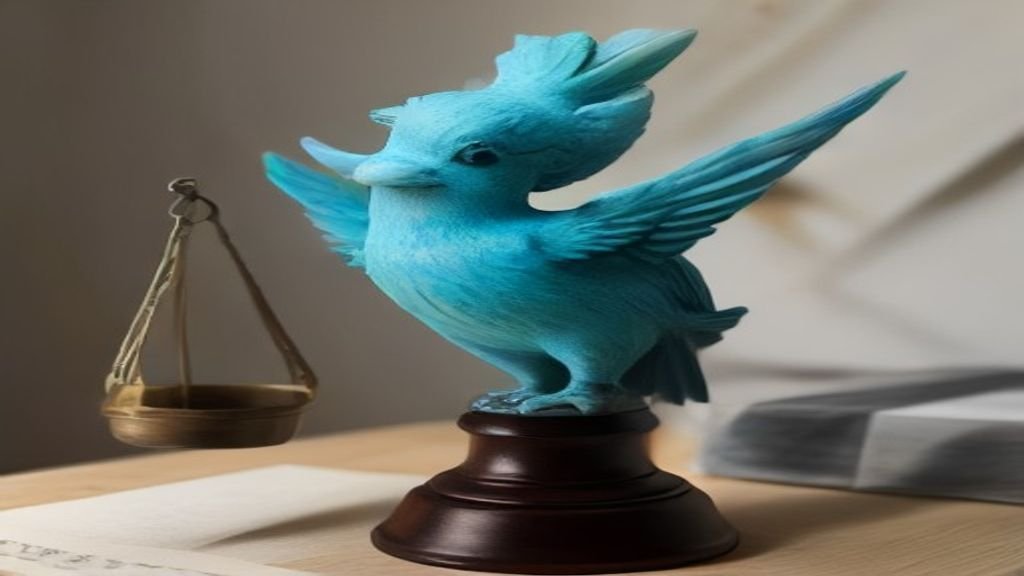
You read that right. There’s a new social network called Twitter.now on the block, and it’s being operated by a startup called Operation Bluebird. The founding team includes Stephen Coates, who once served as Twitter’s trademark counsel. That’s a detail that matters — because this isn’t just another microblogging clone. It’s a direct shot at the legacy of the bird.

According to Ars Technica, X Corp. sued the company last year, asking a Delaware judge to block Operation Bluebird from launching a platform called Twitter. But Operation Bluebird fired back, arguing that X had effectively abandoned trademarks like “Twitter” and “Tweet” when it rebranded to X in 2023. The case is still winding through the courts.

What Is Twitter.now, Exactly?

Coates laid out the vision in a LinkedIn post. “When X Corp. retired the Twitter brand, we saw an opportunity to build something new: a public square organized around trust, transparency, and user choice.” He was careful to distance the project from the old platform. “Twitter.now is not an attempt to recreate the old platform. We are building a different service, with trust signals that provide context for what users see and tools that allow people—not an opaque algorithm—to decide how much credibility and noise reach their feeds.”

Right now, the site is in testing. Early access costs $20. That’s a pay-to-play model, which is a bold move in a world where most social networks are free and ad-supported. But Operation Bluebird is betting that people will pay for something they can trust.

VERA: The AI That Grades Your Posts

The centerpiece of Twitter.now is an AI system called VERA. According to the company’s home page, VERA gauges posts, checks claims, and gives users the source of those claims, plus context. It then attaches a trust score to each piece of content. You’ll be able to set your preferred trust score threshold, and posts that fall below it get filtered out of your feed.

That’s an intriguing idea, but it raises a big question: who decides what’s trustworthy? The company says VERA is transparent about its reasoning, showing users the sources behind a claim. But AI moderation has a spotty track record, and the stakes are high.

VERA 2.0 Is Coming

Operation Bluebird told TechCrunch that VERA is currently in its initial version. “VERA 2.0, with expanded capabilities, is on the near-term roadmap, where the user will be able to set their app to only see posts above the threshold they choose,” the company said in an emailed statement. So the current version is just a taste of what’s planned.

The Moderation Minefield

Here’s the thing about social networks: moderation is a nightmare. As user numbers ramp up, platforms often find themselves forced to choose sides. The original Twitter had to navigate that minefield for years before Elon Musk took over. Bluesky has faced its own criticism lately for moderation missteps. And now Twitter.now is stepping into the same arena, armed with an AI that claims to solve the problem.

Will VERA actually work? That’s the million-dollar question. Trust scores are a noble concept, but they can be gamed. Bad actors could flood the system with fake sources, or the AI could develop blind spots. The company seems aware of this, which is why VERA 2.0 is on the roadmap. But in the fast-moving world of social media, a near-term roadmap can feel like a lifetime.

What’s at Stake in the Trademark Fight

The legal battle with X Corp. is still unresolved. X’s lawsuit sought an injunction to stop Operation Bluebird from using the Twitter name. Operation Bluebird’s defense hinges on the idea that X abandoned the trademark when it rebranded. That’s a clever argument, but it’s not a slam dunk. Trademark law is messy, and X has deep pockets.

If Operation Bluebird loses, the whole project could be dead on arrival. If it wins, we could see a wave of “retro” platforms trying to resurrect old brand names. Either way, this is a case worth watching.

Will Anyone Actually Pay $20?

That’s the other big question. Twitter.now is asking users to pay $20 for early access, and eventually a subscription fee. In a world where free Twitter alternatives like Bluesky and Threads exist, that’s a tough sell. But there’s a niche of users who are desperate for a platform that feels safe and credible. If VERA delivers on its promise, those users might be willing to open their wallets.

Operation Bluebird is positioning itself as the anti-algorithm, pro-user-choice network. It’s a compelling pitch, but the proof will be in the product. And right now, the product is still in testing.

The Bottom Line

Twitter.now is a bold experiment. It’s betting that trust can be quantified, that users want control over their feeds, and that people will pay for a better experience. The team has the legal chops — Coates knows trademark law inside out. But they’re up against a giant in X Corp., and the history of social media is littered with well-intentioned startups that couldn’t scale moderation.

Still, you have to admire the audacity. In a landscape dominated by a few big players, here’s a startup that’s willing to take on the legacy of Twitter, name and all. Whether it succeeds or crashes, it’s going to be interesting to watch.

If you’re curious, you can sign up for early access now. Just be prepared to pay $20 and to be patient while the kinks get worked out. And keep an eye on that Delaware courtroom — the next chapter of this story might be written there.

Continue Reading

How To

Android Phones Used to Be Made of Metal. Here’s Why Glass Took Over.

Published

on

glass replaced metal phones

Cast your mind back to 2012. The Android market was a very different place. Flagship phones were mostly plastic, sure, but then the metal wave hit. HTC led the charge with its iconic One series, and for a few years, aluminum was the material of choice for anyone who wanted a premium feel. Even budget phones like the HTC One V had metal bodies. Then, almost overnight, glass took over. What happened?

The Metal Era: A Quick Love Story

Metal felt like a revelation. It was cool to the touch, rigid, and gave a phone a sense of permanence that cheap polycarbonate just couldn’t match. Apple was doing the same with its iPhones, and the industry followed. The HTC One M7, with its zero-gap aluminum unibody, was a design masterpiece. It felt like a precision instrument.

But metal had a dirty little secret. It was a nightmare for antennas. Radio waves don’t pass through metal easily, which is why you saw those ugly plastic lines on the back of iPhones and HTC phones. It was a compromise, a visible scar on an otherwise beautiful design.

The Wireless Charging Problem

The real killer, though, was wireless charging. Qi wireless charging, which uses magnetic induction, simply doesn’t work through a solid slab of aluminum. The metal blocks the magnetic field. As wireless charging moved from a niche feature to a must-have, phone makers faced a choice: keep the metal and skip the feature, or switch materials.

They chose glass. It’s not because glass is better — it’s because glass is transparent to radio waves and magnetic fields. That one property solved two problems at once. It allowed for wireless charging and gave designers freedom with antennas, since the glass back doesn’t interfere with signal.

5G Made It Worse (for Metal)

Then came 5G. The new networks use a wider range of frequencies, including mmWave, which is even more easily blocked by metal. Designing a 5G phone with a metal unibody would have required so many antenna cutouts that the phone would look like a patchwork quilt. Glass, again, came to the rescue. It’s almost invisible to these signals.

So, the shift to glass wasn’t about aesthetics. It was physics. It was about keeping the phone slim while still delivering the features people demanded.

What We Lost (and Gained)

Let’s be honest: we lost something. Metal phones felt more durable. A drop that would shatter a glass back often just dented aluminum. And glass is a fingerprint magnet. You know the drill — you pull your phone out, and it’s covered in smudges within seconds.

But we gained wireless charging, which is genuinely convenient. And glass also allowed for better phone camera design, since the camera bump could be integrated more cleanly. Plus, glass can be colored and finished in ways metal can’t, giving us those gorgeous gradient finishes that were all the rage a few years ago.

Today, some brands are experimenting with ceramic and even titanium frames, like on the iPhone 15 Pro. But the back? Still glass. The physics haven’t changed.

So, Is Glass Here to Stay?

Probably. Unless someone invents a material that’s transparent to radio waves, scratch-resistant, and shatterproof — which doesn’t exist yet. Until then, we’re stuck with glass, cases, and the occasional heart-stopping moment when your phone slips from your hand.

It’s a trade-off, but it’s one the industry made willingly. The next time you set your phone on a wireless charger, you can thank the engineers who decided that a little fragility was worth the convenience. And if you’re feeling nostalgic for the metal era, you’re not alone. But don’t hold your breath for a comeback — the physics of wireless charging and 5G aren’t going anywhere.

Continue Reading

Trending