Connect with us

Artificial Intelligence

Gemini Nano 4 Will Transform Android Flagship Smartphones With Lightning-Fast AI

Published

on

Gemini Nano 4 Will Transform Android Flagship Smartphones With Lightning-Fast AI

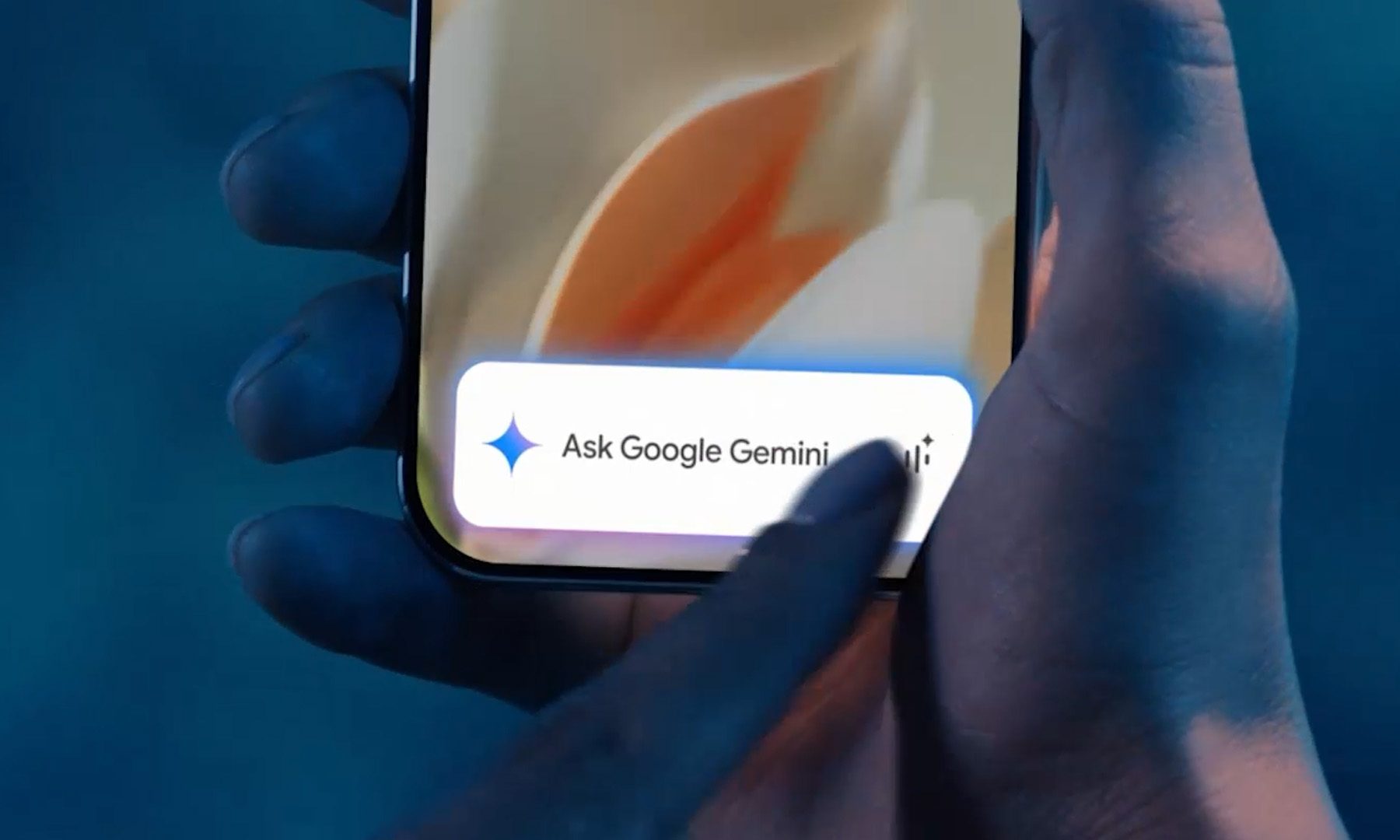
The landscape of smartphone artificial intelligence is about to change dramatically. Google has unleashed a developer preview showcasing Gemini Nano 4 capabilities that promise to revolutionize how Android flagship devices handle AI processing.

This technological leap forward represents more than just an incremental update. The new AI framework operates entirely on-device, eliminating cloud dependency while delivering unprecedented performance gains that could reshape user expectations for mobile intelligence.

Revolutionary Performance Gains With Gemini Nano 4 Technology

The numbers behind this advancement are staggering. Google’s latest Gemma 4 model foundation delivers performance improvements that quadruple processing speeds compared to previous generations. Additionally, the system achieves these gains while consuming 60 percent less battery power.

However, the real breakthrough lies in the architecture. Two distinct variants cater to different computational needs. The heavy reasoning variant handles complex analytical tasks, while the low-latency version prioritizes instantaneous responses for real-time applications.

This dual approach means developers can optimize their applications based on specific use cases. Need rapid-fire translations? The lightweight version delivers. Require deep analytical processing? The comprehensive variant handles complex reasoning without breaking stride.

Multilingual Capabilities Redefining Mobile Communication

Furthermore, language barriers become virtually nonexistent with support for over 140 languages. The system processes text, images, and audio through unified architecture, enabling seamless cross-modal interactions that feel natural and intuitive.

Consider the practical implications. Users can photograph foreign text, speak questions in their native language, and receive translated responses instantly. This isn’t science fiction—it’s the reality Google is preparing for Android flagship devices launching later this year.

The elimination of internet connectivity requirements for these features represents a fundamental shift. AI-powered smartphone capabilities become available anywhere, anytime, without depending on network coverage or cloud server availability.

Hardware Integration Driving Next-Generation Android Flagships

Nevertheless, hardware compatibility remains crucial for optimal performance. Qualcomm, MediaTek, and Google’s specialized AI chips will determine how effectively devices leverage Gemini Nano 4 capabilities.

Devices supporting AICore technology will experience the full benefits of this advancement. Those lacking proper acceleration hardware will fall back to CPU processing, which significantly impacts both speed and battery consumption.

This hardware divide creates interesting market dynamics. Manufacturers must now consider AI processing power as seriously as camera quality or display technology when designing flagship devices. Premium Android smartphones without robust AI acceleration risk falling behind competitors.

Developer Ecosystem Preparing For AI-First Smartphones

Meanwhile, Google’s strategic approach involves preparing developers well before consumer devices arrive. The AICore preview program allows application creators to build and test experiences using current hardware that will seamlessly transition to upcoming Gemini Nano 4-powered devices.

This forward-thinking strategy addresses a common technology adoption challenge. When new hardware launches, software often lags behind. By enabling development on existing hardware with guaranteed compatibility, Google ensures rich AI experiences will be available from day one.

Additional preview features are planned, including enhanced prompt controls and structured outputs. These tools will help developers create more sophisticated AI-driven applications that take full advantage of on-device processing capabilities.

Market Impact and Future Smartphone Competition

As a result, the competitive landscape for premium smartphones is evolving rapidly. Traditional differentiators like camera quality and display technology remain important, but AI processing capability is becoming equally critical for market success.

This shift affects purchasing decisions in meaningful ways. Consumers evaluating new devices must now consider AI acceleration hardware alongside conventional specifications. A phone with impressive cameras but weak AI processing may feel outdated within months of purchase.

The timeline remains somewhat uncertain, with device launches expected throughout the remainder of 2024. However, the specific models receiving first-generation Gemini Nano 4 support haven’t been officially announced.

Smart consumers planning upgrades should prioritize devices with confirmed AICore support and robust AI acceleration hardware. The difference between optimized and fallback performance will be immediately noticeable in daily usage scenarios.

Continue Reading
Click to comment

Leave a Reply

Your email address will not be published. Required fields are marked *

Artificial Intelligence

OpenAI’s GPT-5.5 Instant Update Makes ChatGPT More Fun to Talk To — Here’s Why That Matters

Published

on

OpenAI’s GPT-5.5 Instant Update Makes ChatGPT More Fun to Talk To — Here’s Why That Matters

For years, the AI race has been defined by benchmark scores, reasoning tests, and coding prowess. But OpenAI is now shifting gears. The latest GPT-5.5 Instant update focuses on something far more human: making conversations with ChatGPT feel natural, engaging, and genuinely enjoyable. This isn’t just a tweak under the hood — it’s a strategic pivot toward user experience over raw intelligence.

What’s New in the GPT-5.5 Instant Update?

OpenAI has rolled out a significant refresh to GPT-5.5 Instant, the default model powering hundreds of millions of ChatGPT users. According to the company’s release notes, the update zeroes in on conversational quality. Instead of spitting out generic responses, the model now aims to grasp the intent behind a user’s question and adapt its tone and depth accordingly.

Whether you’re asking for advice, researching options, planning a trip, or shopping for a product, GPT-5.5 Instant is designed to respond in a way that feels tailored to your needs. The company claims the model handles complex constraints more reliably and makes interactions feel less robotic. In short, it’s built to be more fun to talk to.

As OpenAI stated in its announcement: “We have a new version of GPT-5.5 Instant for you, and it’s much more fun to talk to.” That’s a bold claim — and one that signals a departure from the usual focus on factual accuracy and speed.

Why Better Conversational Quality Matters More Than Benchmarks

Let’s be honest: most people don’t use ChatGPT to solve advanced calculus problems or write code. They use it for everyday tasks — planning a weekend getaway, deciding which laptop to buy, or venting about a tough day. In these scenarios, conversational flow and emotional intelligence often matter more than raw processing power.

This GPT-5.5 Instant update prioritises understanding user intent. Instead of jumping straight into a generic answer, the model now tries to figure out whether you want practical recommendations, emotional support, detailed analysis, or just a quick fact. This shift makes ChatGPT feel less like a search engine and more like a thoughtful assistant.

Earlier updates to GPT-5.5 Instant focused on reducing hallucinations and improving factual accuracy. While those are important, the latest revision doubles down on the human side of the experience. The result? Conversations that feel more natural, relatable, and engaging.

How the Update Changes Everyday Interactions

Imagine you’re shopping for a new pair of running shoes. In the past, ChatGPT might have listed generic features like cushioning and durability. Now, with the new update, it might ask about your running style, preferred terrain, and budget before offering tailored suggestions. That’s a big difference.

Similarly, if you’re seeking advice on a career change, the model can adapt its tone — offering empathetic support one moment and practical steps the next. This flexibility is what makes the GPT-5.5 Instant update stand out. It’s not just about being smarter; it’s about being more attuned to what you actually need.

For businesses and content creators, this means more natural customer interactions and better user engagement. ChatGPT for customer service could see a significant boost in satisfaction rates as the model learns to read between the lines of user queries.

What This Means for the Future of AI Assistants

OpenAI’s latest move suggests a broader trend: the future of AI won’t be won by the smartest model on paper, but by the one people enjoy talking to the most. By making GPT-5.5 Instant more intuitive and personable, the company is betting that user experience will drive adoption and loyalty.

This update also highlights the growing importance of emotional intelligence in AI. As AI emotional intelligence trends continue to evolve, models that can genuinely understand and respond to human emotions will become indispensable.

Interestingly, this shift might resonate more with everyday users than any benchmark victory ever could. After all, what good is a super-smart assistant if it feels cold and impersonal? The GPT-5.5 Instant update aims to bridge that gap, making ChatGPT not just a tool, but a companion.

Final Thoughts: A Smarter, Friendlier ChatGPT

OpenAI has taken a calculated risk by prioritising conversational quality over benchmark scores. But early reactions suggest it’s paying off. Users are reporting more satisfying interactions, and the model’s ability to handle complex, multi-turn conversations has noticeably improved.

As AI continues to integrate into our daily lives, the ability to communicate naturally will become a key differentiator. The GPT-5.5 Instant update is a clear step in that direction. If you haven’t tried it yet, now might be the perfect time to see what a truly conversational AI feels like.

For more insights on how AI is reshaping communication, check out our guide on top AI communication tools in 2026.

Continue Reading

Artificial Intelligence

Google’s Gemini in Chrome Can Now See Exactly What You’re Looking At on Screen

Published

on

Google’s Gemini in Chrome Can Now See Exactly What You’re Looking At on Screen

Google has quietly rolled out a new capability for its AI assistant, Gemini, inside the Chrome browser. The feature, called “Select from screen,” allows users to highlight specific text or images from a webpage and send them directly to Gemini for contextual help. This marks a significant shift in how users interact with AI while browsing—moving from typing vague queries to pointing at exactly what they need assistance with.

Instead of manually describing a complex chart, a product description, or a confusing paragraph, users can now simply select the content on screen and let Gemini analyze it. The feature appears in Chrome’s “+” menu, functioning like an integrated screenshot tool that captures only the selected area.

How the Gemini Select from Screen Feature Works

Once activated, the tool overlays a selection interface on the current browser tab. Users can draw a box around any visible text or image, which is then automatically attached to a new conversation with Gemini. This eliminates the friction of copying, pasting, or describing content—making the AI assistant feel more like an extension of the browser itself.

For example, if you’re reading a research paper and need a quick summary of a dense paragraph, you can highlight it and ask Gemini to explain it. Similarly, if you see an image you want identified or a product you want compared, the AI can work with the exact visual or textual data you’ve selected.

This update is part of Chrome 149, though some users may need to restart their browser before the feature appears. Google has designed the tool to work with any webpage, whether it’s a news article, an e-commerce site, or a social media post.

Why This Matters for AI-Powered Browsing

The “Select from screen” feature is more than a convenience—it’s a fundamental change in how users interact with AI assistants. By giving Gemini direct access to what’s on screen, Google is moving beyond the traditional chatbot model toward an assistant that understands context and intent.

In the past, users had to describe what they were seeing, often leading to misunderstandings or incomplete answers. Now, Gemini can see exactly what you’re looking at, reducing ambiguity and making responses more accurate. This is especially useful for tasks like troubleshooting errors, comparing products, or extracting data from complex layouts.

Building on this, the feature also encourages more natural interactions. Instead of typing “What does this chart show?” you can simply select the chart and ask. The AI automatically knows what you’re referring to, making the conversation feel more fluid and intuitive.

Google’s Broader Vision for Computer Use

Interestingly, Google announced another major upgrade on the same day. Developers can now access computer use capabilities directly through Gemini 3.5 Flash, allowing AI agents to see, reason, and take actions across browsers, mobile apps, and desktop environments without relying on a separate model. This integration improves long-horizon tasks such as software testing, enterprise workflows, and multi-step automation jobs.

While the “Select from screen” feature is consumer-facing, it aligns with Google’s broader strategy: making AI aware of what users are actively doing. The company is positioning Gemini as an assistant that doesn’t just answer questions but helps complete tasks. As a result, the line between a chatbot and a productivity tool continues to blur.

What This Means for Everyday Users

For the average Chrome user, this update removes a common pain point. Have you ever struggled to describe a specific error message or a design element to an AI assistant? With the new feature, you can simply select it and let Gemini handle the rest.

Moreover, the tool works with both text and images, opening up possibilities for visual search, document analysis, and even creative tasks like generating captions or descriptions. It’s a small but powerful addition that makes browsing more efficient.

However, users should be aware that the feature requires an active internet connection and a Google account. It’s also worth noting that Google may use selected content to improve its AI models, so privacy-conscious users should exercise caution with sensitive information.

Final Thoughts on Gemini’s Screen Awareness

Google’s “Select from screen” feature is a clear answer to the growing demand for AI that understands what users are looking at. By reducing friction and improving context, it makes Gemini a more practical tool for daily browsing.

As AI assistants become more integrated into our digital lives, features like this will likely become standard. For now, Chrome users can enjoy a smarter, more intuitive way to interact with web content—just by pointing and clicking.

For more tips on using AI tools effectively, check out our guide on how to use Gemini in Chrome. And if you’re interested in other browser-based AI features, read about Chrome’s latest AI updates.

Continue Reading

Artificial Intelligence

Tecno’s EllaClaw AI Agent: The Smart Assistant That Cleans Your Phone and Runs Your Errands

Published

on

Tecno’s EllaClaw AI Agent: The Smart Assistant That Cleans Your Phone and Runs Your Errands

Most AI assistants are content to chat with you, but they rarely take action. Tecno aims to change that with EllaClaw, its beta-stage mobile AI agent that performs real tasks on your device instead of just answering questions. The company recently showcased the next version of EllaClaw, which now reaches deeper into your phone and your favorite apps.

What Makes the Tecno EllaClaw AI Agent Different?

Instead of being a passive conversationalist, EllaClaw acts as an active caretaker. It packs over 40 Smart Skills that let it optimize your device. You can ask it to free up RAM and CPU to fix lag, identify apps draining your battery, or cool down your phone when it overheats during heavy use.

As a result, your phone runs smoother and stays cooler. The agent also includes a Smart Data Guardian that monitors your mobile data usage—a thoughtful feature for anyone tired of running out before the month ends. Before making any major changes, EllaClaw checks in with you first, ensuring nothing happens behind your back.

How EllaClaw Learns Your Habits and Runs Errands

Building on its optimization skills, the Tecno EllaClaw AI agent learns your habits over time and uses that information to assist with daily routines. You can ask it to deliver morning briefings that pull in your calendar, weather, and news. It can also act as a trip assistant that books rides and sets departure alarms.

Furthermore, EllaClaw works across different apps, including shopping, food delivery, transportation, and smart home services. Instead of operating like a mysterious black box, it navigates your apps in a visible, human-like way, so you can watch each step. This transparency builds trust and gives you control.

Real-World Task Automation

For instance, you might tell EllaClaw to order your usual coffee from a delivery app while it simultaneously checks your calendar for free time. It can then set a reminder and notify you when the order arrives. This level of cross-app coordination is rare among current AI assistants.

Transparency and User Control at the Core

For now, EllaClaw remains an exploratory concept in closed beta. As Jack Guo, General Manager of Tecno, explained, the goal is to help “simplify everyday tasks, reduce friction and make advanced experiences more accessible, while ensuring transparency and user control remain central.”

This means that every action the agent takes is visible and reversible. You never lose authority over your device. In an era where AI often feels like a black box, this approach stands out.

To learn more about optimizing your phone, check out our guide on how to clean your Android phone. If you’re curious about other AI innovations, read about the best AI assistants of 2025.

What’s Next for the Tecno EllaClaw AI Agent?

Tecno says more details will come as development moves forward. EllaClaw is one of the few smartphone AI agents that actually seems to help users instead of aggravating them. It would be exciting to see it exit beta so that real-world performance can be tested.

However, the company hasn’t announced a public release date yet. Until then, users can only watch from the sidelines. But if EllaClaw delivers on its promises, it could redefine what we expect from mobile AI.

For more on Tecno’s ecosystem, see our review of the Tecno Camon 20 Pro.

Continue Reading

Trending