From stealth to unicorn talk in record time
Three months. That’s how long XDOF has been out in the open. And already, the robotics data startup is in late-stage conversations to raise a Series B at a valuation hovering around $1.2 billion, according to multiple sources familiar with the negotiations. The round would be led by 8VC.
Not bad for a company that didn’t even exist publicly until June.
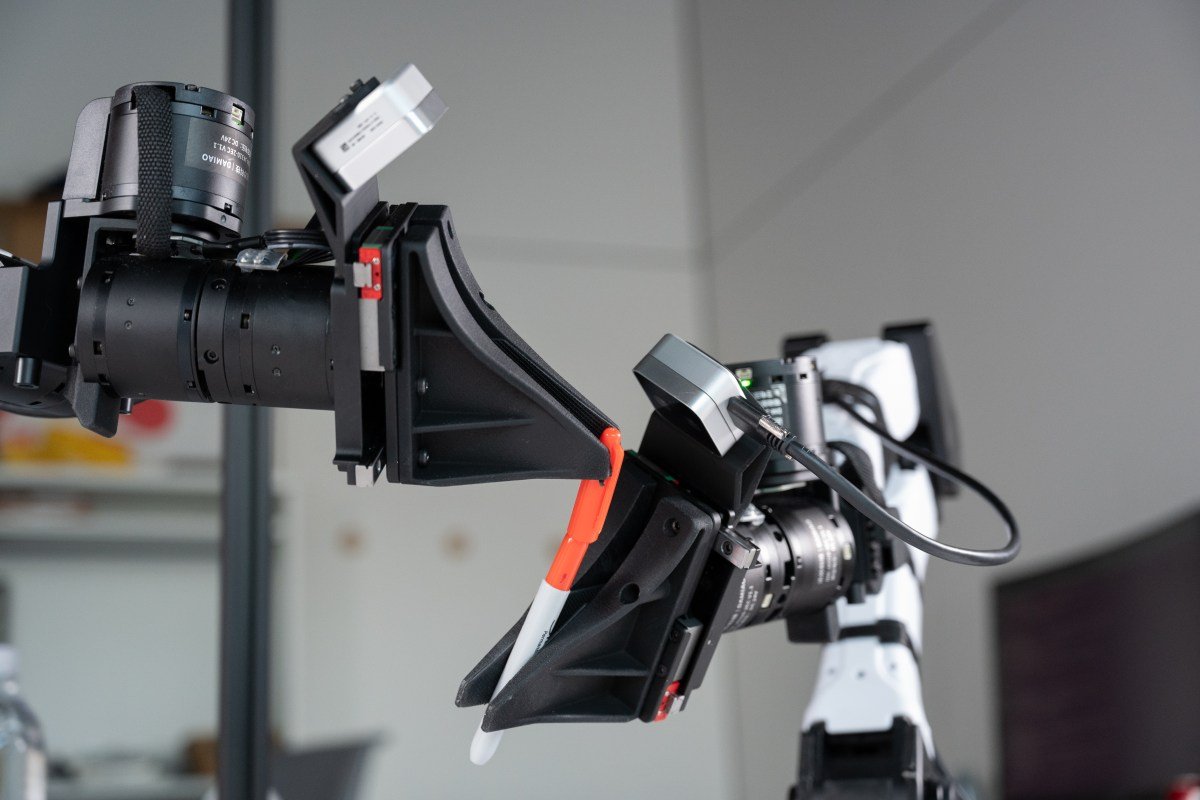
XDOF was co-founded in 2024 by UC Berkeley researchers Philipp Wu (CEO) and Fred Shentu (CTO). Their origin story traces back to a research project called GELLO — a low-cost teleoperation system that lets a human operator control a robotic arm from a distance. The goal? Generate training data for robots. That work produced an influential paper in robotics and, eventually, a company.
The startup’s Series A, a $70 million round announced in June, drew participation from Thrive Capital, Andreessen Horowitz, Lux, and Spark Capital. At the time, XDOF wasn’t planning to raise again so soon. But the market had other ideas.
Why investors are knocking on XDOF’s door
The reason for the sudden interest? Growth. Real, measurable growth.
XDOF’s annualized revenue is approaching $50 million, sources say. That kind of traction, so soon after a Series A, tends to make venture capitalists sit up and take notice. It also tends to make them pick up the phone.
“They weren’t out raising,” one person familiar with the situation told TechCrunch. “The VCs came to them.”
Terms aren’t final, and the total capital being raised remains unclear. TechCrunch couldn’t confirm whether the $1.2 billion valuation includes the new funding or sits on top of it. Both XDOF and 8VC declined to comment.
The Scale AI for physical robots
XDOF’s pitch is straightforward: it builds the data pipelines, collection tools, and annotation systems that frontier AI labs and robotics companies would rather not build themselves. Think of it as an outsourced data-supply chain for the robotics industry.
Investors describe XDOF as the Scale AI or Mercor of physical robotics — a nod to the data-labeling giants that powered the AI boom. The comparison makes sense. Large language models trained on the entire internet. Physical robots? They don’t have that luxury. There’s no massive, ready-made dataset of real-world robot interactions sitting online. That scarcity makes data collection the critical bottleneck on the road to general-purpose machines.
Wu felt that bottleneck firsthand as a PhD student. His research on how robots learn from large datasets kept hitting the same wall: “large-scale data to work with” simply didn’t exist, he told TechCrunch in June.
Building the ABC dataset
XDOF is tackling that problem head-on. The startup is partnering with UC Berkeley’s AI Research lab to release what it believes is the largest collection of high-quality robot training data ever assembled. The dataset is called ABC.
Collecting that data requires a hybrid approach. XDOF combines remote robot teleoperation with human collectors who wear sensors to record everyday tasks. Think folding clothes. Flattening boxes. The mundane, physical chores that robots still struggle to master.
The company plans to hire and train teams of data collectors around the world. Two main roles are emerging:
- Teleoperators who steer robots remotely to demonstrate tasks
- Egocentric operators who wear body sensors to capture natural movement data
Early traction and the competitive landscape
XDOF has already signed up 20 customers, including several frontier AI labs, according to previous statements to TechCrunch. That customer base, combined with the revenue trajectory, helps explain the valuation chatter.
But XDOF isn’t alone in this niche. Other startups chasing real-world data for robot training include Mecka AI. And the human-data platforms that started with LLMs — like Scale AI and Micro1 — are expanding beyond text and images into physical domains.
The race to build the data infrastructure for physical AI is heating up. Whoever wins it will effectively control the fuel supply for the next generation of robots. That’s a position worth paying up for.
Whether the $1.2 billion valuation holds remains to be seen. Deals at this stage can shift. But the fact that XDOF is even in this conversation — three months after emerging from stealth — says something about the demand for what it’s building.
For more on how data is shaping the future of AI, check out AI data labeling trends and robotics funding rounds in 2024.






 CyberSecurity7 months ago
 How To6 months ago
 How To4 months ago
 How To6 months ago
 How To5 months ago
 How To7 months ago

 How To6 months ago