Connect with us

Artificial Intelligence

Google Workspace Intelligence: How Gemini Becomes Your All-Knowing Work Assistant

Published

on

Google Workspace Intelligence: How Gemini Becomes Your All-Knowing Work Assistant

Imagine an assistant that knows your projects, your writing style, and your company’s brand guidelines without needing a briefing. This is the promise of Google‘s latest evolution: Workspace Intelligence. Building on the concept of Personal Intelligence for Gmail and Photos, Google is now applying a similar, context-aware AI layer across its entire professional suite. The core idea is simple yet profound: Gemini, Google’s AI, can now tap into the vast reservoir of information you store across Docs, Sheets, Slides, and Drive to act with unprecedented personalization.

What Exactly Is Workspace Intelligence?

At its heart, Workspace Intelligence is a connective framework. It removes the traditional barriers between your AI assistant and your actual work data. Instead of treating each document or spreadsheet as an isolated island, it allows Gemini to understand the relationships and content across your entire Workspace ecosystem. Consequently, when you ask a question or give a command, the AI can pull relevant context from emails, previous drafts, project plans, and company templates stored in Google Drive. This means less time spent searching for files and explaining background, and more time focused on the task itself.

The End of Context Switching

Google positions this feature as a solution to the constant, productivity-sapping need to switch between apps and dig through folders. For instance, if you’re writing a project report in Docs and need data from a quarterly review in Sheets, you no longer have to manually find and reference it. You can simply ask Gemini to incorporate the relevant figures, and Workspace Intelligence provides the necessary bridge. This seamless integration is designed to make the AI feel less like a tool and more like a knowledgeable colleague who’s been on the project from the start.

Transforming Ideas into Polished Work

So, how does this manifest in daily use? The applications are extensive. According to Google, Workspace Intelligence enables Gemini to “retrieve your relevant emails, chats, files, and information from the web to transform ideas into professionally formatted drafts.” More importantly, these drafts are designed to mimic your specific voice, adhere to your brand’s style, and utilize approved company templates automatically. This moves AI assistance beyond generic text generation into the realm of personalized, brand-safe content creation.

Building on this, the implications for efficiency are significant. In Google Docs, Gemini can now handle complex edits based on your historical preferences. Ask it to format an image, and it will apply edits consistent with your past choices. Need to address a batch of comments in a document? Gemini can autonomously make the suggested revisions based on your instructions, learning from the context Workspace Intelligence provides.

From Documents to Dynamic Presentations

The capability extends powerfully into visual and presentation work. Google highlights the ability to “one-shot” slide decks. You can ask Gemini to create a presentation on a specific topic, and it will use Workspace Intelligence to gather context, structure the narrative, and—critically—build the deck using your company’s official templates and visual styles. The result is a ready-to-present slide deck that looks like it came from your communications department, not an AI generator. This eliminates a huge amount of manual formatting and branding work.

Smart Inbox and Email Summaries

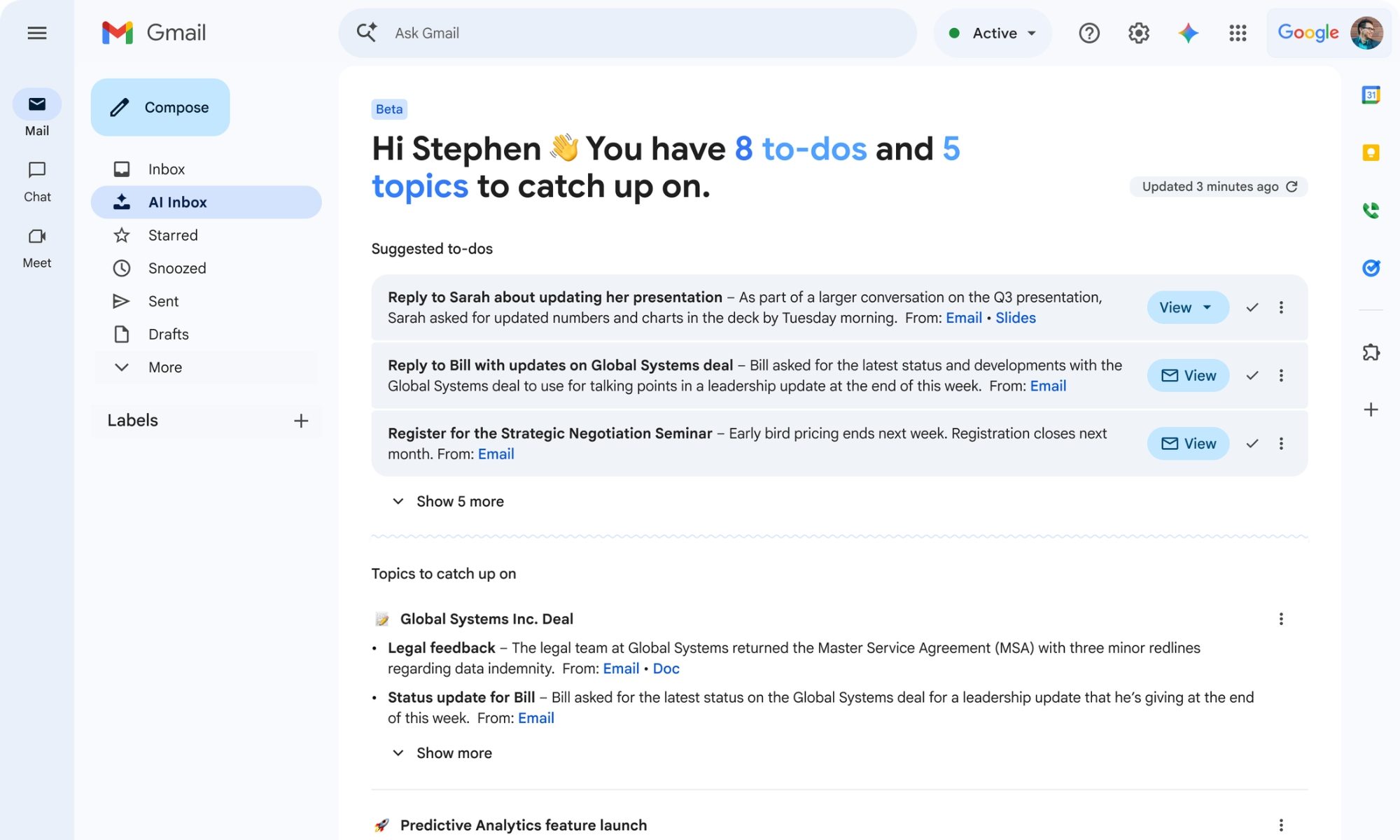
Furthermore, Workspace Intelligence integrates with your communication tools. The AI Inbox feature in Gmail, part of this package, reorganizes your email into a task-based workflow, helping you quickly identify action items and ongoing conversations. Similarly, AI Overviews for Gmail creates concise summaries of lengthy email threads, much like the AI Overviews in Google Search. This means you can catch up on a week-long project discussion in seconds, with all key decisions and action points extracted for you.

A Competitive Landscape for AI Assistants

This development places Google in direct competition with other advanced AI agents in the workspace. The functionality is reminiscent of what Anthropic‘s Claude can achieve, particularly through extensions in environments like Microsoft PowerPoint. The race is no longer just about which AI can write the best paragraph, but which can most deeply and usefully integrate into a user’s existing digital environment, understanding their unique history and needs. Workspace Intelligence is Google’s ambitious answer to that challenge.

In addition, this shift represents a broader trend in enterprise software: the move from passive tools to active, intelligent agents. The software isn’t just waiting for commands; it’s anticipating needs based on a deep understanding of your content. For businesses, the potential for consistency, speed, and reduced manual labor is enormous. For individual users, it promises a workday with fewer tedious tasks and more strategic thinking.

Ultimately, Workspace Intelligence is more than a feature update; it’s a reimagining of how we interact with our core productivity software. By giving Gemini a memory and a deep understanding of our work context, Google is betting that the future of work is not just assisted by AI, but profoundly partnered with it. As this technology rolls out, the measure of success will be how seamlessly it fades into the background, making complex, personalized work feel simple and intuitive.

Continue Reading
Click to comment

Leave a Reply

Your email address will not be published. Required fields are marked *

Artificial Intelligence

ChatGPT just got a lot less needy: Meet the GPT-5.6 family (Sol, Terra, Luna)

Published

on

GPT-5.6 Sol

OpenAI just dropped three new models — and the biggest change is how little you’ll need to babysit them

If you’ve ever asked OpenAI‘s ChatGPT to plan a weekend trip, you know the drill. First you ask for destination ideas. Then you ask for hotels. Then restaurants. Then an itinerary. Then you stitch it all together yourself. It’s like managing an intern who needs step-by-step instructions for everything.

That era might be ending. Today, OpenAI officially unveiled the GPT-5.6 family — three new models rolling out across ChatGPT, Codex, and the API. The flagship is GPT-5.6 Sol, joined by two cost-efficient siblings: Terra and Luna. The pitch is simple: these models do more on their own, with far fewer follow-up prompts.

Sol is the workhorse — and it comes with an Ultra mode

GPT-5.6 Sol is built for heavy lifting. OpenAI says it delivers better performance while burning fewer tokens than previous models. That’s a big deal for developers and businesses watching their compute costs.

The headline feature is Ultra mode. Instead of running a single AI process, Ultra splits complex tasks across multiple AI agents working in parallel. Think of it like assigning research, writing, editing, and fact-checking to four specialists instead of asking one person to do everything. OpenAI claims this speeds up problem-solving and improves final output quality.

For example, a coding project that used to require a dozen back-and-forth prompts might now get handled in one go. The model writes small programs, uses tools, checks its own progress, and decides what to do next — all with less hand-holding from you.

Terra and Luna: cheaper, faster, still capable

Not everyone needs the full power of Sol. That’s where GPT-5.6 Terra and GPT-5.6 Luna come in. These models are designed to handle everyday AI tasks — answering questions, summarizing text, light code work — at a significantly lower cost.

OpenAI says both models outperform competing options in their respective price brackets. For developers building AI-powered apps, that could mean better results without blowing the budget. The company hasn’t released exact pricing yet, but the message is clear: you no longer have to pay for Sol-level power just to get decent responses.

Max mode for accuracy, Ultra for complexity

OpenAI is also introducing a Max mode alongside Ultra. Max gives GPT-5.6 extra time to think through difficult questions, test different approaches, and double-check its work before responding. If accuracy matters more than speed — say, for legal research or financial analysis — Max is the setting to use.

Ultra goes further by deploying multiple AI agents simultaneously, trading extra computational power for better results on demanding jobs. The two modes give users a clear choice: speed, accuracy, or brute-force parallel processing.

Safety testing gets a major upgrade

OpenAI says the GPT-5.6 family went through its most extensive safety evaluation yet. The company combined human red-team exercises with automated evaluations to make the models more resistant to misuse — without restricting legitimate use. That’s a balancing act the industry has struggled with, but OpenAI says the new approach yields better guardrails.

When can you try it?

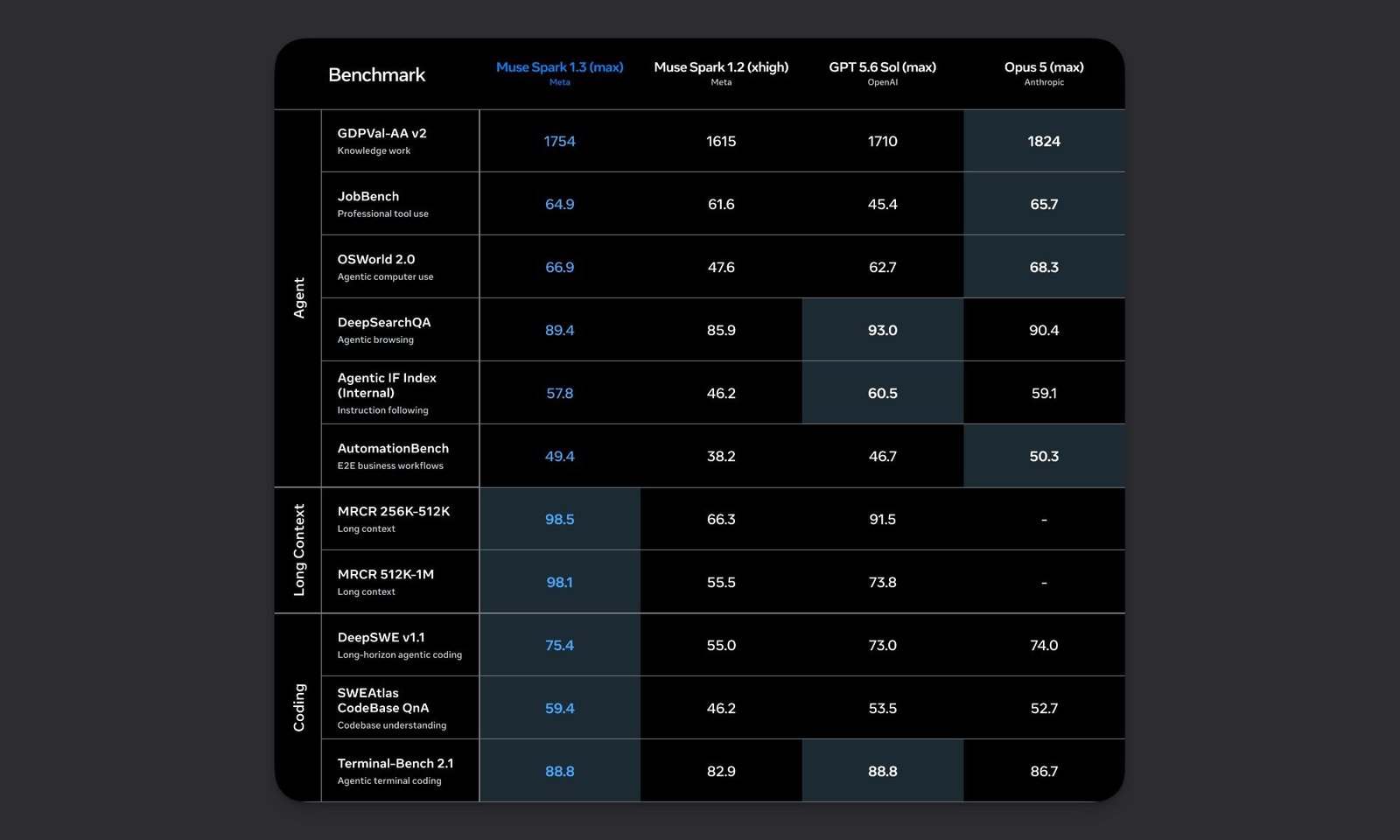
The GPT-5.6 family is rolling out today across ChatGPT, Codex, and the OpenAI API. Global availability should expand over the next 24 hours. For most ChatGPT users, the benchmark numbers won’t matter much. What will matter is whether the model actually saves you time.

Fewer prompts. Bigger tasks handled autonomously. Answers that require less back-and-forth. If OpenAI’s claims hold up, that could be the most practical upgrade in years. No more babysitting an AI that needs constant instructions — just give it the job and let it run.

For a deeper look at how OpenAI’s models compare, check out our guide to ChatGPT vs. Claude vs. Gemini: which AI assistant wins in 2025. And if you’re curious about image generation, read about how to send HD photos on WhatsApp — yes, AI is creeping into every app now.

Continue Reading

Artificial Intelligence

Bristol Myers Squibb buys Nvidia AI system for drug discovery

Published

on

Bristol Myers Squibb Nvidia AI

Bristol Myers Squibb invests in Nvidia’s latest AI supercomputer for drug discovery

Bristol Myers Squibb (BMS) is purchasing an Nvidia DGX SuperPOD powered by the chipmaker’s Vera Rubin architecture. The move marks the first time a life sciences company has acquired this specific system, designed to supercharge artificial intelligence across drug discovery and development.

The pharmaceutical giant said the new cluster will consist of eight DGX Vera Rubin NVL72 systems, each combining Nvidia Vera central processing units with Rubin graphics processing units. Financial terms were not disclosed.

Expanding computing capacity for research

BMS will use the infrastructure to train proprietary models and run predictions across its research programs. The system will handle work involving compounds, proteins, and other scientific data. This purchase expands BMS’s existing Nvidia infrastructure, which includes an older SuperPOD that company executives described as two or three generations behind Vera Rubin.

BMS has operated its current DGX SuperPOD for about three years. The company plans to combine it with the Vera Rubin system in a shared computing environment accessible from its research sites worldwide. The SuperPOD software stack can schedule training, prediction, and development workloads across the infrastructure. BMS said the expanded environment will give more scientists direct access to its computing resources.

Greg Meyers, BMS’s chief digital and technology officer, said computing requirements have increased as the company deploys larger AI models across its research organization. Erin Davis, vice president of research business insights and technology at BMS, said the existing infrastructure is operating at capacity. She attributed the demand to large-scale predictions involving large molecules and the development of internal foundation models.

Davis said the new system will not be limited to a small group of computational researchers. BMS plans to make it available across the research organization without the waiting periods and access limits associated with its current infrastructure.

Applying AI in drug discovery

BMS said AI informs the design of every small-molecule program and the majority of its large-molecule programs. The technology is applied to target identification, lead optimization, large-molecule predictions, and internal model development. The company said AI-enabled target identification has reduced some manual research work by several weeks. Large-molecule prediction workloads are also contributing to demand for additional graphics processing capacity.

Robert Plenge, BMS’s chief research officer, said the new system will allow scientists to evaluate more potential drug candidates during the early stages of development. “Maybe before we could do 10 and now we can do dozens,” Plenge said.

Computational screening allows researchers to assess potential compounds before selecting a smaller group for synthesis and laboratory testing. BMS applies this approach through a method it calls “Predict First,” which uses model-generated predictions to exclude molecules that do not meet the required properties before candidates are selected for synthesis.

Payal Sheth, senior vice president of therapeutic discovery sciences at BMS, said researchers use the predictions to identify molecules with the required combination of properties. “We use predictions as a way to prioritise synthesis of molecules with multi parameter optimisation,” Sheth said. “This ensures precious laboratory experiments are aligned with progressing molecules that have the highest probability of success.”

The method narrows the number of compounds sent for laboratory testing, allowing researchers to focus experiments on molecules that meet a program’s predicted requirements.

AI accelerates CELMoD compound development

BMS has also used AI to expand its library of CELMoD compounds, which are engineered to selectively degrade cancer-causing proteins. The company is studying the compounds in blood cancers and other diseases. BMS said the modeling work helped researchers examine additional protein targets and potential compounds before deciding which candidates to pursue experimentally.

The company is also using AI tools to shorten the time required to produce medicines for clinical trials. Plenge said the process has already been reduced by between 20% and 30% and could reach 50% in the coming years. He cited an experimental sickle cell disease treatment in early clinical development as one example of AI-supported research. Plenge said the treatment probably would not have been discovered without the company’s AI tools.

The figures refer to the time required to identify and produce candidates for clinical testing rather than their subsequent performance in trials.

BioNeMo toolkit enhances research capabilities

The Vera Rubin system will also give researchers access to Nvidia’s BioNeMo Agent Toolkit for biological and drug-discovery applications. BioNeMo provides tools for protein-structure prediction, molecular generation, molecular docking, sequence analysis, and genomics. It can also connect several computational tools within the same research workflow. BMS executives said human researchers will continue to review model outputs and decide which compounds or programs should advance.

Connecting research sites with unified infrastructure

BMS is introducing tools intended to reduce the specialist knowledge required to initiate complex computing tasks. The company said researchers will be able to start some prediction requests using natural-language instructions. The environment will be managed through Nvidia Mission Control, whose functions include cluster provisioning, infrastructure monitoring, and workload management, according to BMS.

The unified infrastructure will allow data and model outputs generated at one site to be used by teams elsewhere. BMS said datasets from a program in Lawrenceville, New Jersey, for example, can be incorporated into models used by researchers in San Diego. Sheth said the shared environment is intended to retain information from experiments and research programs across the organization.

“The compute infrastructure is what connects all of our scientists together and ensures that our learnings are institutionalised,” Sheth said.

The two SuperPODs will operate through a common data environment, allowing teams at different sites to access shared datasets and model outputs. BMS said the environment will include information from experiments, clinical readouts, and research partnerships. The company plans to allocate the new computing capacity across small- and large-molecule design, clinical research, and digital-twin applications. BMS did not provide details about the planned digital-twin work or the amount of capacity assigned to each area.

Performance gains and energy efficiency

Meyers said the Vera Rubin system will provide more computing capacity relative to its electricity use. BMS and Nvidia said the eight-system cluster will deliver up to 10 times the performance per megawatt of the infrastructure it replaces. “When you host these things, you have to pay an electric bill,” Meyers said. “Think of it as 10 times more compute capacity per watt spent … Electricity is not getting cheaper.”

BMS did not provide a specific deployment date or identify where the new system will be hosted.

For more on how AI is transforming the pharmaceutical industry, see AI-powered drug discovery trends and Nvidia’s role in healthcare AI.

Continue Reading

Artificial Intelligence

Google’s $180 Billion AI Bet Starts Paying Off as Cloud Revenue Soars

Published

on

Google Cloud revenue

The Cloud Is the Engine Now

For months, Wall Street has been asking the same question: Is Google spending too much on artificial intelligence? The company’s latest earnings report offers a clear answer — not yet.

Alphabet’s cloud business just delivered its best quarter ever. Google Cloud revenue hit $24.8 billion, an 82% jump from the same period last year. That handily beat the $22.46 billion analysts had predicted. Even more telling: last quarter’s growth was already a robust 63% to $20 billion. The acceleration is real.

What’s driving it? Enterprise AI adoption. Companies are buying into Google’s AI infrastructure and enterprise AI solutions at a furious pace. The cloud contracting backlog — work signed but not yet billed — now stands at a staggering $514 billion.

Profit Explodes, Revenue Hits New Highs

The numbers go beyond cloud. Alphabet’s quarterly profit soared to $112.1 billion, up from just $28.1 billion a year ago. Total revenue climbed 24% year-over-year to $119.8 billion. Even the core Google Services segment grew 15% to $94.5 billion.

This marks the company’s 12th consecutive quarter of double-digit revenue growth. But even by that standard, this quarter stands out. Alphabet earnings reports rarely show this kind of acceleration across every major business line.

Gemini Hits 950 Million Users

Google’s AI chatbot, Gemini, is also gaining traction. The app now has 950 million monthly active users, up from 750 million in Q4 2025. That’s a 27% increase in just a few months.

CEO Sundar Pichai summed it up during Wednesday’s earnings call: “Our AI investments are redefining what’s possible across every part of our business. We have exciting momentum across the board.”

The $180 Billion Question

Alphabet isn’t slowing down its spending. Capital expenditures — the money poured into data centers, chips, and infrastructure — are projected between $180 billion and $190 billion for the year. Analysts pressed Pichai hard on when those investments will actually pay off.

His answer was specific: “I think our compute capacity investments in ’27.” He pointed to “strong demand indicators, including long-term deals” and added that “the dynamics look healthier than where we were about a year ago.”

In other words, the payoff isn’t imaginary. It’s just not fully here yet.

What This Means for Investors

For anyone worried that AI spending is a black hole, the cloud numbers offer real evidence otherwise. Enterprise customers are voting with their wallets, and Google is collecting the revenue. The $514 billion backlog means future quarters are already largely locked in.

That doesn’t mean the risk is gone. Spending at this level is unprecedented. But the cloud business is now big enough — and growing fast enough — to justify the bet. If you’re tracking enterprise AI adoption trends, Google just became the strongest case study yet.

The next milestone? 2027. That’s when Pichai expects the infrastructure buildout to start generating its full return. Until then, the cloud numbers will keep telling the story.

Continue Reading

Trending