Connect with us

Artificial Intelligence

Google’s Gemini Projects Feature Will Transform How You Organize AI Conversations

Published

on

The endless scroll through scattered AI conversations is about to become a thing of the past. Google is quietly testing a revolutionary Gemini Projects feature that promises to solve one of the most frustrating aspects of AI chat management.

Currently, regular Gemini users face an overwhelming collection of conversations spanning everything from professional research to personal planning. However, this chaos appears headed for a solution through Google’s latest organizational innovation.

What Makes the Gemini Projects Feature Revolutionary

The Gemini Projects feature operates on a simple yet powerful concept: dedicated folders for your AI conversations. Rather than hunting through dozens of randomly ordered chats, users will soon categorize discussions based on topics, projects, or purposes.

This approach mirrors ChatGPT‘s successful folder implementation, but Google appears to be developing its own unique spin on conversation organization. The system integrates directly into Gemini’s existing interface without disrupting current workflows.

In addition, the feature maintains Google’s signature simplicity while addressing a genuine user pain point. No more scrolling endlessly to find that important brainstorming session from last week.

How Users Can Access Gemini Projects

Early adopters have discovered the feature through Gemini’s standard three-dot menu system. When hovering over any conversation in the web interface, users now see an “Add to project” option alongside familiar choices like Share, Pin, and Rename.

Clicking this new option reveals a popup window displaying existing project categories. Unfortunately, the current test version doesn’t allow new project creation directly from this menu, indicating the feature remains under active development.

Therefore, the functionality appears limited to assigning conversations to pre-existing project folders. This suggests Google is still refining the complete user experience before wider deployment.

Real User Experiences with Chat Organization

Reddit user medazizln became among the first to document this emerging Gemini Projects feature, sharing screenshots that confirmed its existence. The discovery sparked considerable interest across AI communities, with users expressing excitement about improved conversation management.

TestingCatalog News subsequently verified these reports, suggesting the appearance might be “unintended” rather than a deliberate beta release. This indicates Google may be conducting internal testing that accidentally became visible to select users.

Consequently, the feature’s current state reflects typical pre-release development, with core functionality present but refinements still needed. Users report the basic organization concept works well, even with limited creation options.

Timeline for Gemini Projects Feature Release

Google hasn’t announced any official rollout schedule for the Gemini Projects feature, maintaining their typical secrecy around product development timelines. Nevertheless, the fact that real users are encountering the feature suggests internal testing has progressed significantly.

Industry observers note that accidental feature appearances often precede official announcements by weeks or months. This pattern has held true for previous Google product launches, from Google Workspace updates to Search enhancements.

As a result, users might expect broader availability sometime in the coming months, though Google could adjust timelines based on testing feedback and technical refinements.

Benefits Beyond Simple Chat Sorting

The Gemini Projects feature addresses more than just visual clutter in conversation lists. Professional users juggling multiple clients or projects will find tremendous value in contextual conversation grouping.

Students and researchers can maintain separate project spaces for different subjects or assignments. Personal users benefit from distinguishing between entertainment, planning, and problem-solving conversations.

On the other hand, this organizational structure could enhance productivity by reducing cognitive load when switching between different types of AI interactions. Users won’t need to mentally filter through unrelated conversations to find relevant discussions.

Building on this foundation, Google might eventually introduce advanced features like project-specific settings, shared folders, or integration with other Workspace tools. The current implementation appears designed to support future enhancements while establishing core organizational functionality.

Continue Reading
Click to comment

Leave a Reply

Your email address will not be published. Required fields are marked *

Artificial Intelligence

OpenAI Faces Formal Government Investigation Over ChatGPT Security and Harm Concerns

Published

on

OpenAI Faces Formal Government Investigation Over ChatGPT Security and Harm Concerns

A significant regulatory storm has descended upon OpenAI. Just as the company appears to be accelerating toward a potential public offering, it now confronts a formal, high-stakes government investigation. This probe, initiated by Florida Attorney General James Uthmeier, moves beyond theoretical AI ethics debates into concrete allegations concerning national security, data practices, and tangible societal harm.

The Core Allegations Behind the OpenAI Investigation

Attorney General Uthmeier has framed the inquiry in stark terms. Consequently, the state’s demands for answers focus on activities allegedly linked to harming children, endangering citizens, and even facilitating a recent mass shooting. This represents a dramatic escalation from typical tech sector scrutiny. The investigation will reportedly examine whether OpenAI’s technology or the vast datasets powering ChatGPT could be exploited by foreign adversaries or malicious domestic actors.

Building on this, the subpoenas expected to be issued signal that this is a legally binding process, not a voluntary review. Therefore, OpenAI must provide detailed documentation and testimony. The scope suggests authorities are probing a spectrum of potential misuse, from criminal coordination and the generation of unsafe content to concerns about content that could encourage self-harm.

Why the Timing of This Probe Is Critical

This development arrives at a uniquely sensitive moment for OpenAI. On one hand, the company is widely viewed as a prime candidate for an initial public offering (IPO), with speculative valuations reaching astronomical figures. On the other hand, a formal government investigation introduces substantial uncertainty. Regulatory headwinds can directly impact investor confidence, potentially affecting valuation and the timing of any public listing.

In addition, the probe coincides with OpenAI’s aggressive push to integrate its AI models deeper into daily life, from search to enterprise software. Regulatory friction at this juncture could force a strategic recalibration. This means that growth plans and product roadmaps may need to be adjusted to address compliance and legal priorities.

The Broader Implications for the AI Industry

While the immediate target is OpenAI, the ramifications extend across the entire artificial intelligence sector. This investigation could establish a precedent for how state and federal authorities choose to regulate advanced AI systems. When a leading company faces allegations of this magnitude, it inevitably draws a regulatory spotlight onto its competitors and the industry’s standard practices.

As a result, other AI developers are likely reviewing their own safeguards and data governance policies with renewed urgency. The industry has long operated in a rapidly evolving landscape with minimal specific regulation. This probe may signal the end of that period, heralding a new era of structured oversight. For more on evolving AI policy, see our analysis on the future of AI governance.

Potential Outcomes and Next Steps

What happens next? The immediate path involves OpenAI responding to the state’s subpoenas. The company’s cooperation and the evidence uncovered will shape the investigation’s trajectory. Possible outcomes range from a settlement with mandated operational changes to a protracted legal battle. Either scenario would consume significant resources and executive attention.

This situation also raises fundamental questions about accountability in the AI age. Who is responsible when a powerful, general-purpose tool is misused? The investigation will test existing legal frameworks not originally designed for generative AI. The answers could influence not just OpenAI, but how all creators of foundational models manage risk and liability. Learn about emerging AI ethics frameworks being developed in response.

A Turning Point for AI Governance

The Florida Attorney General’s move marks a potential inflection point. It demonstrates that governmental bodies are willing to use existing legal tools to interrogate AI companies’ impact on public safety and national security. This proactive stance suggests that waiting for comprehensive federal AI legislation may no longer be the default regulatory approach.

Ultimately, the OpenAI investigation is more than a corporate story. It is a live case study in the complex collision between breakneck technological innovation and societal protection. The findings and conclusions will be closely watched by policymakers, investors, and the global tech community, setting the tone for AI’s next chapter. For ongoing coverage of tech sector legal developments, visit our tech policy news section.

Continue Reading

Artificial Intelligence

OpenAI’s New $100 ChatGPT Tier: A Strategic Shift Toward Premium AI Access

Published

on

OpenAI’s New $100 ChatGPT Tier: A Strategic Shift Toward Premium AI Access

The landscape of generative AI access is undergoing a significant recalibration. OpenAI has unveiled a new $100 monthly subscription tier for ChatGPT, strategically positioned between its existing $20 Plus and $200 Pro offerings. This move is far from a simple price adjustment; it represents a deliberate pivot toward catering to a specific, high-demand segment of the user base. Consequently, the era of one-size-fits-all AI access appears to be fading, replaced by a more nuanced, usage-based model.

Decoding the $100 ChatGPT Plan’s Target Audience

This new tier is not designed for the casual conversationalist or the occasional content brainstorm. Instead, it is engineered explicitly for power users and developers who consistently push the platform’s capabilities to their limits. Building on this, the plan offers substantially higher usage limits, particularly for Codex, OpenAI’s code-generation model. Users can expect approximately five times more capacity than the Plus plan provides, with temporary boosts potentially reaching ten times the standard limit for intensive coding sessions.

Why Heavy Users Are the New Focus

The data driving this strategy is compelling. OpenAI reports that Codex now serves over three million weekly users, a figure that has quintupled in just three months. This explosive growth, characterized by roughly 70% month-over-month expansion, creates a clear economic imperative. Therefore, dedicating a pricing tier to these resource-intensive workflows allows OpenAI to sustainably support the tool’s heaviest consumers without overburdening its infrastructure or diluting performance for lighter users.

A Clear Move Toward Usage-Based AI Pricing

This introduction signals a fundamental shift in how AI services may be monetized going forward. The initial vision of a universally accessible tool is evolving into a tiered ecosystem where computational cost directly correlates with subscription price. As a result, the $100 ChatGPT plan acts as a middle ground, acknowledging that professional and developer needs exist on a spectrum between casual use and enterprise-scale deployment.

In addition to elevated usage caps, the plan grants access to more advanced underlying models, deeper research functionalities, and enhanced tools for orchestrating multi-step, agent-style tasks. This means that for professionals integrating AI into their core workflow, the tier offers a justified step up. For a deeper look at how businesses are integrating these tools, explore our analysis on AI-driven workflow automation.

The Implications for AI Accessibility and Perception

However, this strategic refinement carries broader implications. The democratizing promise of AI now coexists with a reality of graduated access based on financial commitment. When a $100 monthly fee becomes the “mid-tier” option, it inevitably reshapes the public perception of AI from a novel utility into a premium professional tool. This transition mirrors the maturation paths of other transformative technologies, where initial broad access gives way to specialized, value-based pricing.

On the other hand, this model could ensure the long-term viability and continued advancement of these tools. The substantial computational resources required for advanced AI workloads are expensive. A sustainable business model that aligns price with usage helps fund the research and development needed for future breakthroughs. For insights into the future roadmap of these models, consider reading about next-generation AI architectures.

What This Means for the Average User

For the vast majority of users, the existing free and $20 Plus tiers will remain perfectly adequate. The new $100 ChatGPT plan is a niche product for a niche audience. This segmentation is ultimately healthy for the ecosystem, as it prevents power users from consuming disproportionate resources that could degrade the experience for everyone else. Ultimately, the creation of this tier is a sign of the platform’s success and the diverse, demanding ways people are employing it in their professional lives.

Looking ahead, we can anticipate further refinement of this tiered approach. As models grow more capable and use cases more defined, expect to see even more tailored subscription options. The key question will be balancing innovation and accessibility, ensuring that the ladder of AI capability has rungs accessible to all levels of interest and investment.

Continue Reading

Artificial Intelligence

Google Fuses NotebookLM into Gemini, Creating a Unified AI Research Hub

Published

on

Google Fuses NotebookLM into Gemini, Creating a Unified AI Research Hub

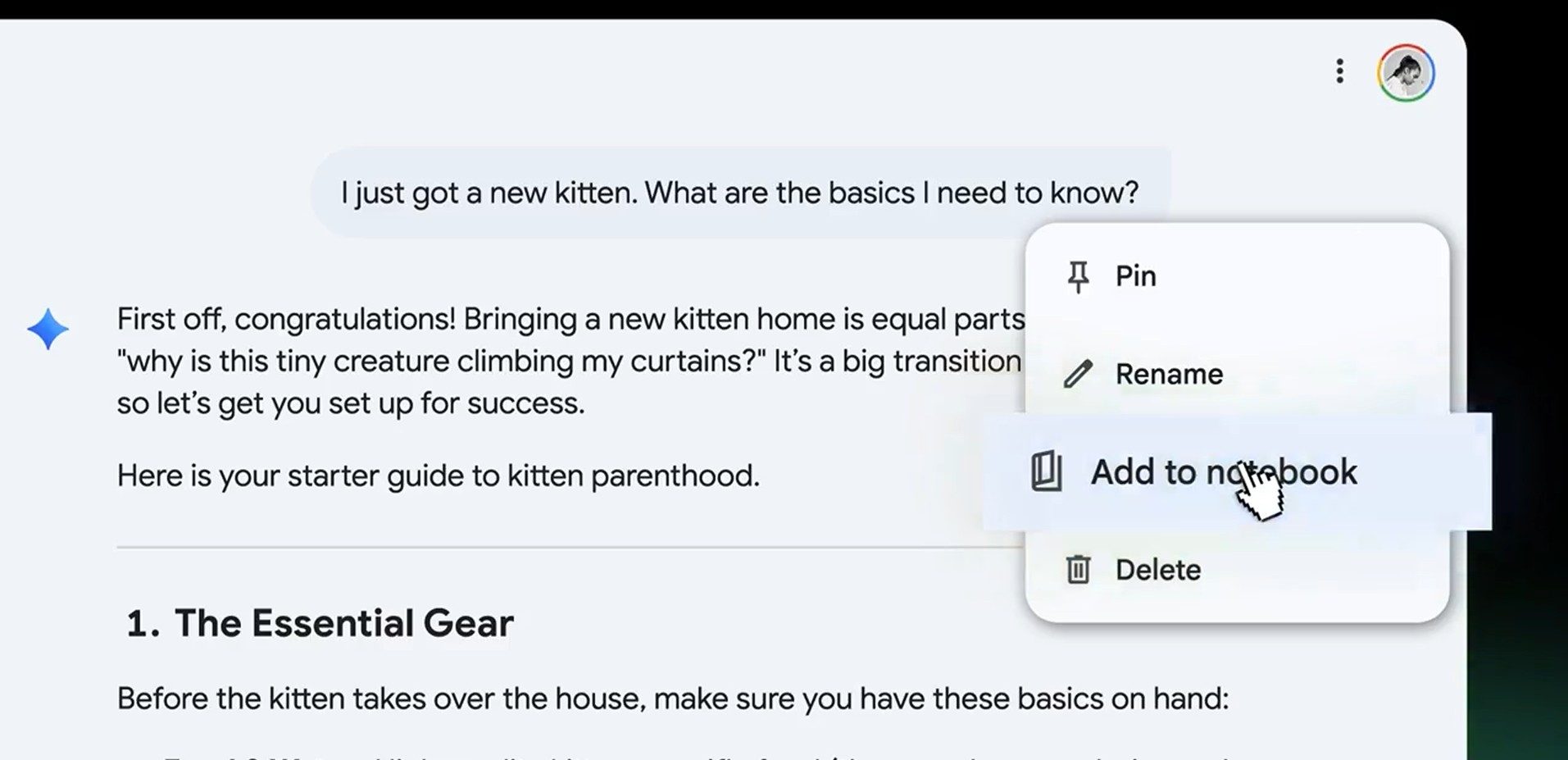
Google has taken a decisive step in reshaping its AI assistant. Starting today, the core functionality of NotebookLM is being woven directly into the Gemini experience. This integration, dubbed ‘Gemini Notebooks,’ marks a pivotal shift. It moves the platform from a reactive question-and-answer tool toward a proactive, context-rich workspace designed for sustained research and complex projects.

From Separate Tools to a Cohesive Workspace

Previously, users interested in grounding their AI interactions in personal documents had to navigate between different products. This new update eliminates that friction. Consequently, your saved research, PDFs, and notes now reside natively within Gemini’s interface, sitting side-by-side with your chat history and prompts. This structural change is fundamental. It means your curated material is no longer just a static library but becomes active, live context that directly informs the AI’s responses in real time.

How Live Context Transforms Conversations

The most significant upgrade lies in how Gemini now utilizes stored information. When you select a specific notebook or collection at the start of a chat, the AI automatically grounds its responses in that content. Therefore, you no longer need to repeatedly upload files or paste excerpts to steer the conversation. The system draws from your pre-organized sources seamlessly, ensuring outputs are relevant and factually anchored to your provided materials. This capability, a hallmark of NotebookLM’s original design, is now central to the Gemini experience.

Building a ‘Second Brain’ for Long-Term Projects

This integration reflects a broader industry trend toward AI systems with memory and continuity. Instead of treating each chat as an isolated event, Gemini can now maintain a thread of context across sessions. Building on this, the platform allows you to fold past conversations *into* new notebooks. Imagine a research project where early exploratory chats about a topic can be saved and later used as source material for a more focused, analytical discussion. This creates a virtuous cycle where research and conversation continuously reinforce and build upon each other.

In addition, the organizational aspect is crucial. Users can upload up to 100 sources for free and structure their chats into thematic collections. This organizational layer is what transforms a simple chatbot into a powerful project management aid. However, it’s important to note that the utility of this system is directly tied to the quality of the input. Disorganized or messy source material may limit the coherence and usefulness of the AI’s contextual responses.

Current Rollout and Future Implications

As of now, the rollout of Gemini Notebooks is initially available on the web for subscribers to Google’s AI Ultra, Pro, and Plus tiers. Support for the mobile Gemini app and broader access, including for free users, is expected to follow, though Google has not provided a specific public timeline.

This strategic move places significant pressure on competitors. By blending document-aware intelligence with persistent conversational memory, Google is positioning Gemini as a central hub for knowledge workers, students, and anyone engaged in research-heavy tasks. For more on how AI is changing workspaces, see our analysis on the future of AI productivity tools.

A New Phase for AI Assistants

Ultimately, this update signals a clear evolution in Google’s vision. Gemini is being reimagined not merely as a tool for quick answers but as a companion for ongoing, intellectually demanding work. The integration of NotebookLM’s strengths is the first major step in this direction. Looking ahead, the platform’s success will hinge on achieving feature parity across all devices and tiers, and on users adopting the new organizational workflows it enables. To understand the competitive landscape, explore our guide to AI-powered note-taking applications.

This means that the era of the ephemeral AI chat may be giving way to the age of the cumulative, context-aware AI workspace. The race is no longer just about who has the smartest model, but about who can best integrate that intelligence into the messy, document-rich flow of real human work.

Continue Reading

Trending