Connect with us

CyberSecurity

GrafanaGhost: How a Silent Exploit Evades AI Guardrails to Steal Enterprise Data

Published

on

GrafanaGhost: How a Silent Exploit Evades AI Guardrails to Steal Enterprise Data

A new and critical security threat, known as the GrafanaGhost exploit, is enabling attackers to siphon off sensitive corporate information from monitoring platforms without raising alarms. This method cleverly sidesteps both client-side protections and the very AI guardrails designed to prevent such breaches, operating silently in the background.

Consequently, organizations using Grafana for analytics and monitoring are at risk. The platform often houses a treasure trove of operational intelligence, from financial performance metrics to real-time infrastructure health and customer data, making it a prime target for cybercriminals.

The Mechanics of a Stealthy Attack

Unlike conventional attacks that rely on phishing or stolen passwords, the GrafanaGhost exploit functions by chaining together subtle weaknesses in application logic and AI behavior. Attackers don’t need to break in; they manipulate the system into doing their bidding.

This process unfolds in a multi-stage sequence. First, attackers craft requests that appear legitimate to the system. Next, they employ a technique called indirect prompt injection, which feeds hidden instructions to the AI. These instructions can include specific keywords that cause the AI model to temporarily disregard its own safety protocols.

Bypassing Defenses with Simple Tricks

Building on this, researchers found that the exploit uses surprisingly simple methods to bypass defenses. A flaw in how URLs are validated allows external, malicious domains to be disguised as trusted internal resources. Furthermore, by using protocol-relative URLs, the attack slips past domain checks.

“GrafanaGhost perfectly illustrates how AI integration creates a massive security blind spot,” noted Ram Varadarajan, CEO at Acalvio. “The system is used exactly as designed, but with instructions the AI cannot verify as malicious.”

The Invisible Threat to Enterprise Security

Perhaps the most alarming feature of this GrafanaGhost exploit is its complete stealth. From an administrator’s or user’s viewpoint, nothing is amiss. Dashboards load normally, and there are no phishing emails, suspicious login attempts, or system alerts to investigate.

Therefore, sensitive data—like financial telemetry or server state information—can be attached to outbound requests and sent to attacker-controlled servers, all disguised as routine system activity, such as rendering an image. The data exfiltration happens automatically and invisibly.

“The underlying attack pattern, indirect prompt injection leading to data exfiltration via rendered content, is a well-documented and legitimate attack type,” explained Bradley Smith, SVP and Deputy CISO at BeyondTrust.

Shifting the Cybersecurity Paradigm

This incident signals a broader shift in the threat landscape. Attackers are increasingly moving beyond traditional software vulnerabilities to target the logic and AI components of modern systems. Indirect prompt injection is becoming a weapon of choice.

As a result, traditional security playbooks are insufficient. Relying solely on application-layer security toggles is no longer viable when the attack exploits the system’s intended functions.

How to Defend Against AI-Enabled Data Theft

So, what can security teams do? Experts argue for a fundamental shift in strategy. Defense must move beyond monitoring what an AI agent is instructed to do and instead focus on its runtime behavior. What actions is it actually taking?

“To defend against this, security teams must move beyond application-layer toggles to network-level URL blocking and treat prompt injection as a primary threat rather than an edge case,” Varadarajan advised. Proactive monitoring for anomalous data flows, even from trusted processes, is now essential.

In addition, organizations should review and harden their Grafana deployment configurations and implement strict outbound traffic controls. Understanding the broader context of AI security vulnerabilities is also crucial for building a resilient defense.

Ultimately, the GrafanaGhost exploit serves as a stark reminder. As AI becomes deeply embedded in business tools, our security models must evolve just as quickly to monitor not just access, but intent and outcome.

CyberSecurity

Attackers weaponize dormant GitHub accounts to map corporate networks undetected

Published

on

dormant GitHub accounts

The quiet threat of ‘ghost’ accounts

When a GitHub account sits untouched for years, most teams assume it’s harmless. A forgotten developer profile, an old bot, a test user — nothing to worry about, right?

Wrong. According to Datadog Security Labs, attackers are actively weaponizing these dormant accounts. They call them ‘ghost’ accounts, and they’re a core part of a broader campaign to map out corporate GitHub organizations, repositories, and user accounts without raising alarms.

The technique is deceptively simple: automated scripts scrape the GitHub API using custom user agents that sound legitimate. The accounts themselves are often years old — meaning they pass basic age checks and don’t trigger the suspicion a fresh profile would.

How the enumeration works

Datadog’s report details several overlapping campaigns, all targeting the same thing: organizational structure. Attackers aren’t after code — at least not yet. They want the map.

By making API calls to list members of an organization, pull repository metadata, and check user profiles, they can build a detailed picture of who works where, what projects exist, and which accounts have elevated access. That reconnaissance is gold for a follow-up phishing attack or a credential-stuffing attempt.

OAuth tokens in the mix

It gets worse. Some of these campaigns don’t rely on ghost accounts at all. Instead, they use compromised OAuth tokens — keys that were either stolen or leaked — to authenticate as a legitimate user. Once inside, the attacker can scrape even more data because the API trusts the token.

This is a classic GitHub API abuse scenario: the API itself is working as designed. The problem is that the credentials behind the requests are not what they seem.

Why old accounts fly under the radar

Security teams often focus on new accounts and unusual login locations. A dormant GitHub account that suddenly starts making API calls? That’s harder to catch. The account already exists. It might have a history of commits, comments, or issues. The behavior shift is subtle.

Add in custom user agents that mimic popular tools like curl or official GitHub CLI clients, and you have a recipe for invisibility. The traffic looks normal. The account looks normal. Only the intent is malicious.

What organizations should do

There’s no single fix, but Datadog points to a few concrete steps that reduce the risk significantly:

  • Audit OAuth tokens regularly. Revoke any token that hasn’t been used in 90 days. Attackers love old, forgotten tokens.
  • Monitor API call patterns. A sudden spike in member enumeration or repository listing from a single account — especially an old one — is worth investigating.
  • Enforce two-factor authentication (2FA). It won’t stop a compromised token, but it makes ghost account takeovers much harder.
  • Review organization membership. Remove users who no longer work on the project. Every extra account is a potential entry point.

For more on securing your development pipeline, check out our guide on GitHub security best practices and how to handle compromised API tokens.

The bottom line

Attackers are getting smarter about blending in. They’re not smashing the front door — they’re using keys that were left under the mat years ago. Dormant GitHub accounts, old tokens, and legitimate-looking traffic are the new normal in corporate reconnaissance.

The takeaway? Clean up your digital attic. Every old account and every unused token is a liability. And in this case, the ghosts are very real.

Continue Reading

CyberSecurity

The Summer of Clearinghouses: Why One Platform Was Already Live When Everyone Else Was Just Talking

Published

on

clearinghouse announcements

Suddenly, Everyone Has a Clearinghouse

The past few weeks have felt like a parade of press releases. Company after company has stepped up to announce its own clearinghouse — a new platform, a new promise, a new way to handle data or transactions. It’s a crowded field, and the announcements keep piling up.

Our team joined the chorus, too. We announced Athena. But there’s a catch: when we told the world about it, the product wasn’t a PowerPoint slide or a beta waiting list. It was already live. Real customers were using it. Fixes were being shipped. The code had been running quietly for months.

Why the Rush to Announce?

It’s tempting to ask: why now? Why did so many clearinghouses suddenly emerge in the same window? Part of the answer is market timing. The industry has reached a point where a clearinghouse isn’t a nice-to-have; it’s becoming table stakes. Companies that don’t have one risk looking like they’re falling behind.

But there’s another layer. Announcing early can signal ambition to investors, partners, and customers. It builds buzz. It creates a narrative. The problem? Many of these announcements are vapor — promises without a product behind them. They’re built on roadmaps, not running code.

Athena: Built in Silence, Shipped in Secret

That’s where Athena broke the mold. The team behind it didn’t start building when the trend emerged. They started because customers kept asking for a solution — a real one, not a concept. So they built it. Quietly. No press releases, no teaser campaigns.

They took findings from early users and turned them into fixes. They iterated. They made mistakes, corrected them, and kept shipping. The product grew organically, shaped by actual demand rather than a product manager’s whiteboard.

“We only announced it now because everyone else started announcing theirs,” one team member said. The implication is clear: Athena was never about the announcement. It was about the work.

What Sets a Live Platform Apart

There’s a fundamental difference between a clearinghouse that’s been running for months and one that’s still in development. A live platform has battle scars. It has handled edge cases. It has real data flowing through it, which means real insights about what works and what doesn’t.

For customers, that difference matters. A live platform means:

  • Immediate value — no waiting for a launch date.
  • Proven reliability — bugs have been found and fixed.
  • Real feedback loops — the product evolves based on usage, not assumptions.

In a summer of clearinghouse announcements, Athena stands out because it was already doing the job while others were still drafting their blog posts.

The Noise vs. The Signal

So what should customers and industry watchers take away from this wave of announcements? First, it’s worth asking: is the product real? Can you use it today? Does it have a track record, even a short one?

Second, look for specificity. Vague claims about “revolutionizing” or “transforming” something are easy to make. Concrete numbers — users onboarded, transactions processed, bugs squashed — are harder to fake. Athena had those numbers before the first press release went out.

Finally, remember that a clearinghouse is only as good as the work behind it. The hype cycle will pass. What remains are the platforms that actually solve problems. In this summer of clearinghouses, one was already solving them — quietly, steadily, and without fanfare — long before the announcements started.

Continue Reading

CyberSecurity

LG to Ban Residential Proxies from Smart TV Apps After Security Study

Published

on

residential proxies

Why LG Is Cracking Down on Proxy SDKs

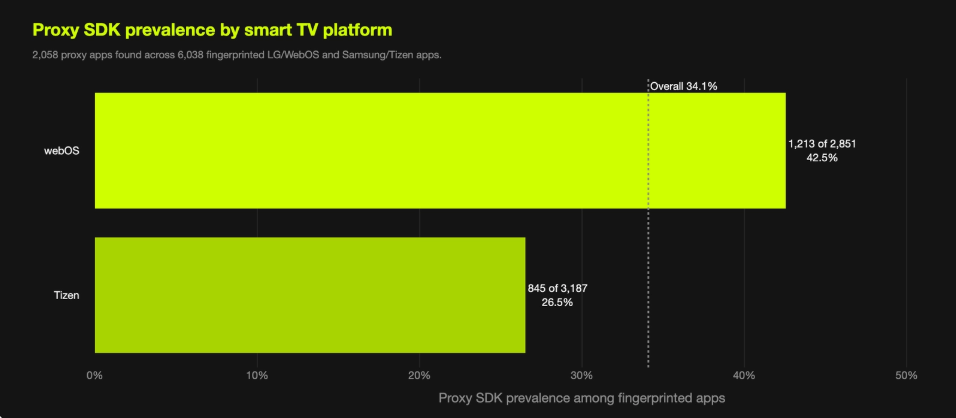
LG Electronics announced this week it will suspend any smart TV apps that turn televisions into always-on residential proxy nodes. The move comes less than a month after researchers revealed that over 42 percent of games and utilities on LG’s webOS store let unknown third parties route internet traffic through users’ TVs.

Security firm Spur published findings in early July showing that residential proxy software development kits (SDKs) have quietly infiltrated smart TV platforms. For Samsung’s Tizen OS, more than a quarter of apps contained similar components. The data suggests a systemic problem, not an isolated incident.

What Are Residential Proxies Doing in Your TV?

Residential proxy networks pay app developers to embed SDKs that turn a device into a proxy node. Paying customers then rent that node to route their own traffic through it. In LG and Samsung smart TVs, Spur found these SDKs bundled with everything from Pac-Man clones to screensavers and file managers.

A Pac-Man app from Bright Data even offers users a choice: watch ads or let the TV serve as a proxy node. Bright Data, which accounted for the majority of proxy SDKs on both platforms, did not respond to requests for comment.

Bright Data and other providers claim they follow rigorous know-your-customer processes to prevent abuse. They also say they deploy countermeasures that stop proxy customers from interacting with other devices on the user’s local network. But critics argue that a one-time consent prompt buried in a TV app is not enough.

LG’s Response: Suspensions and Policy Changes

LG Senior Vice President John Taylor told KrebsOnSecurity that the company is working with developers to remove residential proxy options from their apps. Developers that fail to comply will see their apps suspended.

“A residential proxy network is not an intended use for LG smart TVs,” Taylor said. “LG Electronics is working with developers to remove the residential proxy option from their apps on the webOS platform. If this option is not removed, these apps will be suspended.”

Taylor added that the review is “well underway now.” LG will also strengthen its evaluation process for developer-submitted apps, including those that incorporate proxy SDKs.

The Deeper Problem: Consent and Awareness

Spur’s Trevor Sutter put it bluntly: “A one-time consent prompt buried in a TV app is not a substitute for meaningful transparency, ongoing control, and platform oversight. The risk is amplified when consent comes from individuals within the household who use the device but shouldn’t give consent, such as minors.”

Most consumers do not think of their smart TV as a computer. They don’t audit apps or check for background network activity. That makes residential proxies particularly insidious. The device sits in the living room, always on, always connected — an ideal node for someone who wants to hide their traffic behind a real residential IP address.

Spur’s report notes that the problem is not that residential proxy networks exist, but that they are being embedded at scale in devices that most people cannot easily monitor.

LG’s Other Controversy: McAfee Bloatware

LG’s announcement comes amid criticism over another partnership. This week, the YouTube channel Gamers Nexus showed that certain LG LCD monitors automatically install an app promoting paid McAfee antivirus subscriptions. The app arrives through Windows Update without any approval prompt. Users reported that the software drivers push McAfee promotions without consent, triggering frustration among gamers and professionals alike.

LG has not yet commented on the McAfee issue. But the combination of proxy SDKs in smart TVs and unwanted antivirus promotions in monitors suggests a pattern: LG is comfortable embedding third-party monetization in its hardware, often without clear user consent.

What This Means for LG Users

For now, LG’s crackdown on residential proxies is a positive step. Users should check which apps are installed on their webOS smart TVs and remove any they do not recognize. If an app offers a choice between ads and “network sharing,” the safest option is to uninstall it entirely.

The company says it will continue to review apps and enforce the ban. Whether that translates into real change — or just a temporary PR move — remains to be seen. But for the millions of LG smart TV owners, the message is clear: your television should not be a tool for strangers to hide their internet activity.

As Spur’s research showed, the problem extends beyond LG. Samsung has not announced any similar action for its Tizen platform. Consumers who want to avoid residential proxies altogether may need to look beyond the app store — or consider whether they need a smart TV at all.

Continue Reading

Trending