Connect with us

CyberSecurity

How Anthropic’s Mythos Is Rewriting Firefox’s Cybersecurity Playbook

Published

on

How Anthropic Mythos Is Reshaping Firefox’s Cybersecurity Strategy

When Anthropic released its Mythos model in April, it came with a stark warning for software developers everywhere. The company claimed the system was so adept at detecting security flaws that it had already uncovered thousands of high-severity bugs—bugs that needed patching before the model could go public. Now, Mozilla’s Firefox security team is offering a rare behind-the-scenes look at how Mythos is changing the game for browser security.

For years, AI-powered vulnerability scanners were more of a burden than a breakthrough. They flooded teams with false positives and low-quality reports, making them impractical for real-world use. But according to Mozilla researchers, that narrative has shifted dramatically in just a few months. With the arrival of agentic systems that can evaluate their own findings and discard bad results, the quality of AI-driven bug detection has reached a new level.

Mythos Uncovers Decade-Old Firefox Vulnerabilities

In a post published Thursday, Mozilla revealed that Mythos had unearthed a wealth of critical bugs, including some that had been lurking in Firefox’s codebase for more than ten years. The discovery marks a major leap forward from what AI tools could achieve even six months ago. “It is difficult to overstate how much this dynamic changed for us over a few short months,” the researchers wrote. “First, the models got a lot more capable. Second, we dramatically improved our techniques for harnessing these models.”

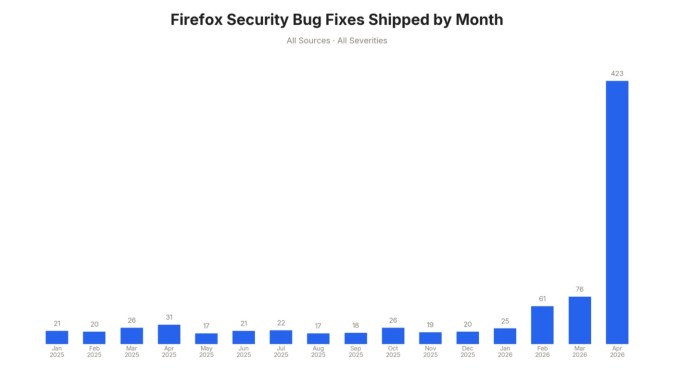
The results speak volumes. In April 2026, Firefox shipped 423 bug fixes—compared to just 31 in the same month a year earlier. The team has also published details on 12 of the vulnerabilities, which range from two unusual sandbox flaws to a 15-year-old error in how the browser parses an HTML element. Brian Grinstead, a distinguished engineer at Mozilla, put it bluntly: “These things are actually just suddenly very good. We see that on our own internal scanning, we see that on external bug reports, and we see that in all sorts of signals across the industry.”

How AI Is Transforming Sandbox Security Testing

One of the most impressive achievements has been Mythos’ ability to find vulnerabilities in Firefox’s sandbox—the most fortified part of the browser. To uncover a sandbox bug, the model must write a compromised patch for the browser, then attack the most secure component with the new code in place. It’s a delicate, multi-step process that demands both creativity and precision. For context, Mozilla’s bug bounty program offers up to $20,000 for a sandbox vulnerability—the highest reward available. Yet Grinstead says Mythos is finding more sandbox issues than human researchers ever did. “We do get them, but not at the volume that we are able to find with this technique,” he explained.

This shift is particularly significant because sandbox vulnerabilities are notoriously difficult to detect. Exploiting them requires an intricate chain of actions, and only the most skilled researchers have historically succeeded. Mythos’ ability to handle such complexity suggests that AI is no longer just a helper—it’s becoming a primary tool for deep security analysis.

AI Finds the Bugs, But Humans Still Fix Them

Despite the impressive detection capabilities, Mozilla is not yet using AI to patch the vulnerabilities it finds. The team does ask the model to code up potential fixes, but the resulting patches usually can’t be deployed directly. Instead, they serve as a blueprint for human engineers. “For the bugs we’re talking about in this post, every single one is one engineer writing a patch and one engineer reviewing it,” Grinstead said. “We have not found it to be automatable.”

This cautious approach highlights a key reality: while AI has become exceptional at finding problems, the nuanced work of crafting safe, production-ready fixes still requires human judgment. As a result, the workflow has evolved into a partnership where AI handles the heavy lifting of discovery, and humans take over for remediation.

What Mythos Means for the Future of Cybersecurity

The broader implications of Mythos’ capabilities are still unfolding. Since the model was previewed, most of the bugs it discovered likely haven’t been patched yet, making it difficult to assess the full scope of its impact. Anthropic has been meticulous about following responsible disclosure norms, but it’s reasonable to assume that malicious actors are experimenting with similar techniques behind the scenes—even if their models aren’t quite as advanced.

Speaking at a recent event, Anthropic CEO Dario Amodei expressed optimism that these tools would ultimately favor defenders. “If we handle this right, we could be in a better position than we started, because we fixed all these bugs. There are only so many bugs to find. So I think there’s a better world on the other side of this.” Grinstead, who has dealt with the gritty details firsthand, offers a more measured take: “It’s useful for both attackers and defenders, but having the tool available shifts the advantage a little bit to defense. Realistically, nobody knows the answer to this yet.”

For now, one thing is clear: the age of AI-driven vulnerability discovery is here, and it’s already reshaping how major organizations like Mozilla approach cybersecurity. To learn more about how AI is transforming other areas of tech, check out our guide on AI security tools for developers. For a deeper dive into browser security trends, see browser vulnerability management best practices.

Continue Reading
Click to comment

Leave a Reply

Your email address will not be published. Required fields are marked *

CyberSecurity

OkoBot Malware Framework Injects Seed Phrase Phishing Into Ledger and Trezor Apps

Published

on

OkoBot malware

What Is OkoBot and How Does It Work?

OkoBot is a Windows-based malware framework that has been active since April 2025. Its main goal is to trick hardware wallet owners into giving up their recovery seed phrase, which would let attackers drain funds from their crypto wallets.

The malware operates by injecting malicious code into legitimate desktop applications, specifically targeting Ledger and Trezor wallet software. When a user opens their wallet app on an infected PC, OkoBot displays a fake page that looks like the official wallet interface, asking for the seed phrase.

What makes this attack particularly sneaky is that it waits for the right moment. Sometimes it triggers when the user plugs in their hardware wallet. The request appears to come from inside the wallet’s own desktop software, making it very difficult to spot.

How the Seed Phishing Attack Unfolds

Here’s a step-by-step breakdown of how OkoBot executes its seed phrase phishing attack:

  • Infection: The malware lands on a Windows PC, often through a malicious download or a compromised website.
  • Injection: OkoBot injects its code into the installed Ledger or Trezor desktop application.
  • Trigger: The fake page appears either immediately or when the hardware wallet is plugged in.
  • Phishing: The user sees a screen asking them to enter their recovery seed phrase, believing it’s a legitimate request from the wallet software.
  • Exfiltration: Once the seed phrase is entered, it’s sent to the attackers, who can then access the victim’s funds.

Why This Attack Is So Hard to Detect

The most alarming aspect of OkoBot is that the surrounding application is the real one you installed. The malware doesn’t replace the app or show a separate popup. It works from within the legitimate software, which makes it nearly impossible to distinguish from a genuine request.

This is a significant departure from earlier phishing attempts that used fake websites or standalone malicious apps. OkoBot blends in so well that even experienced users might fall for it.

Protecting Yourself from OkoBot and Similar Threats

Given the sophistication of OkoBot, it’s crucial to adopt a security-first mindset when dealing with hardware wallets. Here are some practical steps to protect yourself:

  • Never enter your seed phrase on a computer: Hardware wallets like Ledger and Trezor are designed so that the seed phrase is only entered on the device itself, never on a connected computer. If any software asks for it, that’s a red flag.
  • Keep your wallet software updated: Regular updates often include security patches that can block known malware injection techniques.
  • Use a dedicated, clean computer: If you’re dealing with significant crypto holdings, consider using a separate machine that’s only used for wallet transactions.
  • Verify the source of downloads: Only download wallet software from official websites, and check file hashes if possible.
  • Use antivirus and anti-malware tools: Keep your security software up to date and run regular scans.

What to Do If You Suspect an Infection

If you think your PC might be infected with OkoBot, act immediately. Disconnect the machine from the internet, and do not enter your seed phrase anywhere. Use a different, clean device to transfer your funds to a new wallet if you have any doubts.

It’s also wise to report the incident to your wallet provider’s support team. They can offer guidance specific to your situation.

Final Thoughts on OkoBot

OkoBot represents a new level of sophistication in crypto phishing attacks. By targeting the very software users trust, it bypasses many of the security habits people have developed. The best defense is a healthy dose of skepticism and a strict rule: your seed phrase belongs only on your hardware wallet, never on a computer screen.

Stay informed about the latest crypto security threats and always double-check any request for sensitive information, even if it appears to come from a trusted app.

Continue Reading

CyberSecurity

Anubis Ransomware Gang Says It Stole 1TB of Data From Coca-Cola’s Fairlife Unit

Published

on

Fairlife ransomware attack

Anubis Group Claims Credit for Fairlife Disruption

The cybercriminal group known as Anubis has publicly claimed responsibility for the ransomware attack that forced Coca-Cola’s dairy subsidiary Fairlife to halt production. On its dark web leak site, the gang says it grabbed a full terabyte of confidential files before locking up the company’s servers.

The claim, posted July 20, gives Coca-Cola a week to pay up. If no ransom arrives, Anubis says the stolen data will be dumped online.

That’s a tight window, and it puts the beverage giant in an uncomfortable spot. Paying could fund more attacks. Refusing could mean sensitive corporate data ends up public.

What We Know About the Attack on Fairlife

Coca-Cola disclosed the incident last week, confirming that production at Fairlife had been suspended while the company assessed the damage. The full scope of the breach is still being determined.

Fairlife is a major player in the U.S. dairy market, known for its high-protein milk products and sports drinks. A prolonged shutdown doesn’t just hurt the bottom line — it can ripple through grocery shelves and supply contracts.

SecurityWeek has reached out to Coca-Cola for additional comment on the Anubis claims, but no further details have been released so far.

Who Is the Anubis Ransomware Group?

Anubis isn’t a household name like LockBit or BlackCat, but it’s been busy. Active since December 2024, the group has already listed roughly 100 victim organizations on its leak site.

The gang operates on the standard double extortion model: encrypt files to disrupt operations, then threaten to leak the stolen data if the victim won’t pay. It’s a tactic that’s become the industry norm because it works.

What sets Anubis apart is a darker feature. The group has a ‘wiper mode’ that can permanently delete files, making recovery impossible even with backups. That’s a threat that goes beyond financial damage — it’s aimed at destroying a company’s data forever.

Why the Wiper Mode Matters

Most ransomware gangs want to get paid and move on. A wiper function signals a group willing to burn everything down if negotiations stall. For incident responders, that changes the calculus entirely. Restoring from backups becomes a race against time, not a routine procedure.

The Growing Threat of Data Leak Extortion

This incident is another reminder that ransomware is rarely just about encryption anymore. The real leverage is the data. Companies like Fairlife now face the possibility that trade secrets, employee records, or financial documents could surface on the dark web.

Recent attacks on Estée Lauder and Clover Health show the pattern: a breach is disclosed, then weeks or months of fallout follow. The Ernst & Young data breach that exposed personal and financial information is a stark example of how far the damage can spread.

For security teams, the lesson is grim but clear. Assume that if attackers get in, they’ll get out with something valuable. Preparation for data theft is no longer optional.

What Happens Next for Coca-Cola and Fairlife?

The clock is ticking. Anubis has set a deadline, and the industry is watching to see how Coca-Cola responds. Will it negotiate, hold the line, or quietly pay?

There’s no easy answer. Law enforcement agencies generally advise against paying ransoms, but for a company facing a production halt and the threat of leaked data, the pressure is immense.

One thing is certain: this won’t be the last time a major brand finds itself in this position. Ransomware groups are getting bolder, and their tools are getting meaner. The Fairlife attack is just the latest example of a threat that keeps evolving.

Continue Reading

CyberSecurity

Two SonicWall SMA 1000 Zero-Days Under Active Attack — One Grants Full Admin Command Access

Published

on

SonicWall SMA 1000 zero-days

Emergency Warning for SMA 1000 Admins

SonicWall has issued an urgent security advisory as two zero-day vulnerabilities in its Secure Mobile Access (SMA) 1000 series appliances are now being actively exploited in the wild. One of these flaws carries a perfect CVSS score of 10.0 and could let a remote attacker execute arbitrary commands on the device.

If you manage an SMA 1000, this is not a drill. The vendor is urging immediate patching, and the clock is ticking.

The Two Flaws: What You’re Dealing With

The first vulnerability, tracked as CVE-2026-15409, is a server-side request forgery (SSRF) issue. A remote, unauthenticated attacker can exploit it to trick the appliance into making requests to internal resources. That alone is bad. But the real kicker? It can be chained to achieve arbitrary command execution.

The second flaw has not been fully detailed in the advisory, but SonicWall confirms it is also under active exploitation. Together, these SonicWall SMA 1000 zero-days represent a serious threat to any organization relying on these appliances for remote access.

Why This Matters So Much

Think about what an SMA 1000 does. It’s the gateway for remote employees to reach your internal network. A successful exploit gives an attacker a foothold inside that perimeter. With command execution, they’re not just snooping — they can potentially install backdoors, steal credentials, or pivot deeper into your infrastructure.

The CVSS 10.0 rating isn’t hyperbole. This is as severe as it gets.

Immediate Actions for Administrators

If you run an SMA 1000, here’s what you need to do right now:

  • Check SonicWall’s advisory and apply the latest firmware patch immediately.
  • If a patch isn’t available yet, restrict access to the management interface — don’t expose it to the internet.
  • Review logs for suspicious activity, especially SSRF patterns or unexpected outbound requests.
  • Monitor for any signs of post-exploitation, like new user accounts or unusual processes.

Waiting is not an option. Attackers are already using these flaws.

Context: A Growing Trend in Edge Device Attacks

This isn’t an isolated incident. Over the past year, we’ve seen a surge in attacks targeting edge devices — VPNs, firewalls, and remote access appliances. Threat actors know these devices are often left unpatched and sit at the network perimeter, making them prime targets.

SonicWall has been here before. Earlier vulnerabilities in their products have been exploited in campaigns, and the pattern is consistent: patch quickly or risk becoming a headline.

For more on securing remote access, check out VPN security best practices and how to harden network edge devices.

Final Thoughts

The SonicWall SMA 1000 zero-days are a wake-up call. If you haven’t already, prioritize this patch. The attackers certainly have.

Stay vigilant, check your logs, and make sure your incident response plan is ready. In the world of edge device security, complacency is the real vulnerability.

Continue Reading

Trending