Connect with us

How To

How to Change Your Chromebook Password: A Complete Security Guide

Published

on

How to Change Your Chromebook Password: A Complete Security Guide

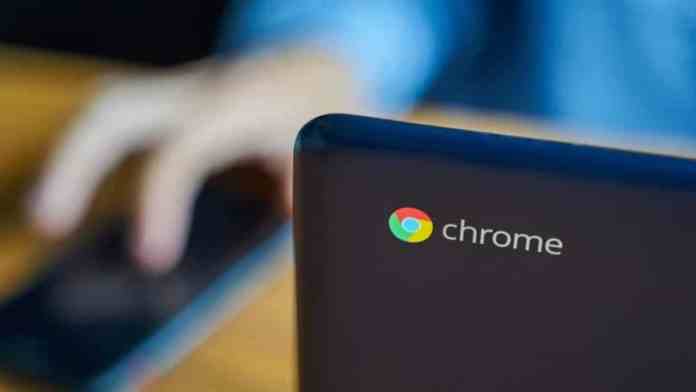
Your Chromebook password is more than just a login credential—it’s the key to your entire Google ecosystem. Understanding how to change your Chromebook password is essential for maintaining digital security in an age where our personal and professional lives increasingly exist online. This guide provides clear, actionable steps to update your credentials and enhance your device’s protection.

Why Changing Your Chromebook Password Matters

Before diving into the technical steps, let’s consider why regular password updates are crucial. Your Chromebook password is identical to your Google account password. This means a single credential grants access to Gmail, Google Drive, Photos, and countless other services. Consequently, changing this password regularly helps protect against unauthorized access and potential data breaches. Many security experts recommend updating passwords every three to six months, especially for accounts containing sensitive information.

Step-by-Step: How to Change Your Chromebook Password

Changing your Chromebook password is straightforward when you know where to look. The process occurs through your Google account settings, which sync across all your devices. Here’s the exact procedure:

First, open the Chrome browser on your Chromebook. Look for your profile picture in the top-right corner of the window and click it. From the dropdown menu, select ‘Manage your Google Account.’ This action opens your account management dashboard.

Next, navigate to the ‘Security’ section using the left sidebar. Scroll down until you find ‘Signing in to Google.’ Within this section, locate and click the ‘Password’ option. The system will prompt you to enter your current password for verification—this is a standard security measure.

After entering your current password, you may need to complete two-factor authentication if you have it enabled. Once verified, you’ll see fields to create and confirm your new password. Choose a strong, unique combination that includes letters, numbers, and symbols. Finally, click ‘Change Password’ to complete the process.

What Happens After You Change the Password?

This is important: changing your Chromebook password automatically updates your Google account password everywhere. Therefore, you’ll need to use the new password on any device or service where you’re signed into Google. This includes your smartphone, tablet, and any other computers. The change syncs almost instantly when your Chromebook is connected to the internet.

Resetting Your Chromebook Password From Another Device

What if your Chromebook is inaccessible, or you’re traveling without it? Fortunately, you can change your Chromebook password from any internet-connected device. This method is particularly useful if you suspect unauthorized access or simply forgot your current password.

To begin, open a web browser on another computer, smartphone, or tablet. Visit the Google account security page directly by going to ‘myaccount.google.com/security.’ Sign in with your existing credentials. Then, follow the same password change steps outlined earlier. Once completed, your new password will sync to your Chromebook the next time it connects to Wi-Fi.

Remember to use a secure network when making these changes, especially on public Wi-Fi. For enhanced security, consider using a virtual private network (VPN) when accessing your accounts from unfamiliar locations.

Setting Up a PIN for Faster Chromebook Access

While knowing how to change your Chromebook password is vital, many users prefer quicker login methods. Chrome OS allows you to set a six-digit PIN as an alternative to typing your full password each time. This feature balances convenience with security for everyday use.

To configure a PIN, click the system tray in the bottom-right corner of your screen (where the clock appears). Select the gear icon to open Settings. In the left menu, choose ‘Security and privacy,’ then click ‘Lock screen and sign-in.’ The system will ask for your current password to proceed.

After authentication, click ‘Change PIN’ and enter your desired six-digit code. You’ll need to confirm it once. Additionally, you can enable ‘Unlock automatically once PIN is entered’ for seamless access. Importantly, your password remains active as a backup—you can switch to it anytime using the ‘Switch to password’ option on the login screen.

Enhancing Security With Two-Step Verification

Changing your Chromebook password is just one layer of protection. For significantly stronger security, enable two-step verification (also called two-factor authentication). This adds an extra checkpoint whenever you or someone else attempts to sign in.

To activate this feature, return to your Google Account’s ‘Security’ section. Find and select ‘2-Step Verification.’ Google will guide you through setup, offering several verification methods. You can choose to receive prompts on your smartphone via the Google app, use an authenticator app like Authy, or get codes via text message.

During setup, Google will generate backup codes. Store these in a safe place—they’re your lifeline if you lose access to your primary verification method. With two-step verification enabled, even if someone discovers your password, they won’t be able to access your account without the second factor.

Best Practices for Chromebook Password Security

Now that you know how to change your Chromebook password, let’s discuss how to create strong ones. Avoid common words, personal information, and sequential numbers. Instead, use a mix of uppercase and lowercase letters, numbers, and special characters. Consider using a passphrase—a series of random words—which can be both secure and memorable.

Alternatively, use a password manager. These tools generate and store complex passwords for all your accounts, requiring you to remember only one master password. Many reputable options integrate seamlessly with Chrome OS.

Regularly review your account activity. Google provides a ‘Recent security activity’ page showing where and when your account was accessed. If you notice unfamiliar devices or locations, change your password immediately and review your security settings.

Troubleshooting Common Password Issues

Sometimes, despite following the steps correctly, you might encounter problems. If your new password isn’t working on your Chromebook, ensure the device is connected to the internet. The change needs to sync from Google’s servers. Try restarting your Chromebook or signing out and back into your account.

If you’ve forgotten both your password and recovery options, visit Google’s account recovery page. You’ll need to answer security questions or provide other verification information. This process can take time, which highlights why maintaining updated recovery options is crucial.

For more detailed troubleshooting, check our guide on fixing Chromebook sync issues. Additionally, if you’re managing multiple accounts, learn about setting up multiple users on your Chromebook for better organization.

The Future of Chromebook Authentication

Google continues to develop more secure and convenient authentication methods. Passkeys—a passwordless login standard—are becoming increasingly available. These use biometric data (like fingerprints or facial recognition) or device PINs instead of traditional passwords. While not yet universal, they represent the direction of digital security.

For now, mastering how to change your Chromebook password remains a fundamental skill. Combine this with a strong PIN and two-step verification for comprehensive protection. Your digital security is an ongoing practice, not a one-time setup.

By following this guide, you’ve taken important steps to secure your Chromebook and Google account. Remember to update your passwords periodically, monitor account activity, and stay informed about new security features. Your data’s safety depends on these proactive habits.

Continue Reading

How To

Your Motherboard Has 3 USB Upgrades Hiding in Plain Sight

Published

on

USB upgrades motherboard

Don’t Buy a New PC—Check Your Motherboard First

You’ve been staring at your PC case, frustrated by the lack of USB ports. Maybe your front panel has two slots, and both are occupied by a mouse and a headset dongle. You’re about to drop hundreds on a USB hub or, worse, a whole new motherboard.

Stop. Your current board likely has three USB upgrades hiding in plain sight. I’ve built and tested dozens of PCs over the past 20 years, and these are the tricks I use every time.

1. The Internal USB Header You Forgot About

Most motherboards have more than one internal USB header. That second header—often labeled USB 2.0 or USB 3.2 Gen 1—is sitting there, unused, under your graphics card. It’s not a secret; it’s just hidden behind cables and heat sinks.

Pop open your case and look. If you see a 9-pin or 19-pin connector with no cable attached, you’ve found your upgrade. You can buy a USB header splitter for under $10 and turn that single header into two or four ports. No soldering, no special tools—just plug and play.

This is the cheapest way to add ports. A splitter costs less than a pizza, and you’ll get two extra USB 2.0 ports on your rear I/O or front panel. Some splitters even come with a bracket that mounts to an empty expansion slot, giving you ports without opening the case again.

What About USB 3.2 Headers?

If your board has a 19-pin USB 3.2 Gen 1 header that’s free, you’re in luck. That one can push 5 Gbps—ten times faster than USB 2.0. A single 19-pin header can be split into two USB 3.2 ports, and some splitters add a USB-C port too. Just check your motherboard manual to confirm the header type before buying.

2. The USB-C Front Panel Header—If You Have It

Newer motherboards, especially those from 2020 onward, often include a USB-C front panel header. It’s a small, rectangular connector, usually near the 24-pin power connector. Most PC builders ignore it because their case doesn’t have a USB-C port on the front.

Here’s the trick: you can buy a USB-C front panel adapter that converts that header into a rear I/O port. Or, if your case has a 3.5-inch drive bay, get a bay-mounted USB-C hub. That gives you a fast USB-C port with 10 Gbps or even 20 Gbps speeds, depending on your board.

This upgrade is perfect for external SSDs, VR headsets, and fast-charging your phone. A USB-C port on the front of your case is something you’ll use every single day, and you probably didn’t know you could have it for free.

Check Your Manual First

Not every board has this header. If your motherboard was made before 2019, you might be out of luck. But if you have a mid-range or high-end board from the last few years, there’s a good chance it’s there. Look for a header labeled “USB-C,” “Type-C,” or “USB 3.2 Gen 2.”

3. The BIOS Setting That Boosts USB Power

Here’s the upgrade that costs absolutely nothing. Many motherboards have a BIOS setting that increases USB power delivery. It’s called “USB Power Delivery” or “USB Charger Boost,” and it’s often disabled by default.

Restart your PC, press Delete or F2 to enter BIOS, and look under the “Peripherals” or “USB Configuration” section. Enable the setting that says something like “USB Power Delivery” or “Always On USB.” This does two things: it increases the voltage to your USB ports, and it allows charging even when your PC is off.

The result? Your phone charges faster, and power-hungry devices like external drives won’t randomly disconnect. It’s a one-minute change that improves every USB device you own.

Don’t Forget the Software Side

Some motherboard manufacturers, like ASUS and MSI, have software that controls USB power too. Check your manufacturer’s utility app—there’s often a “USB Boost” or “Charging” tab that does the same thing without entering BIOS. It’s worth a look.

Putting It All Together

These three upgrades—using your spare internal headers, adding a USB-C port, and tweaking BIOS power settings—can transform your PC’s connectivity. You’ll add ports, boost speed, and improve charging, all without spending more than $30 or opening your case more than once.

I’ve done this on every PC I’ve built since 2015. It’s the kind of thing that makes you wonder why you ever considered buying a new motherboard. Your current board has more to give than you think.

So before you order that USB hub or start shopping for a new PC, open your case and take a look. The upgrade you need might already be hiding in plain sight.

Continue Reading

Social Media

Cut AI Costs, Build a Voice-Activated Content System, and More Marketing News

Published

on

reduce token usage

Why Token Usage Matters More Than You Think

If you’ve been using AI tools like ChatGPT or Claude for content creation, you’ve probably noticed something: the costs add up. Fast. That’s because every query you make—every prompt, every follow-up, every rewrite—consumes tokens. And tokens are the currency of the AI economy.

For marketers juggling multiple campaigns, token usage can quietly balloon. A single blog post might require dozens of interactions. Multiply that by a team of five, and you’re looking at a serious line item on your monthly software bill.

So how do you cut back without sacrificing quality? Start by batching your prompts. Instead of asking the AI to generate one section at a time, give it the full outline and ask for a complete draft. Fewer round-trips mean fewer tokens.

Another trick: use system prompts to set the tone and style upfront. That way, you’re not re-explaining your brand voice in every single message. It’s a small change, but it can cut your token usage by a significant margin.

Building a Voice-Activated Content System

Voice search isn’t new, but voice-activated content creation? That’s a different beast. Imagine dictating a rough idea to your phone, having the AI expand it into a full draft, and then publishing it with a few voice commands. It’s not science fiction—it’s becoming a practical workflow for busy marketers.

The key is to design your content system around voice-first interactions. That means optimizing your prompts for spoken language, which tends to be more conversational and less formal. You’ll also want to invest in a good transcription tool that can capture your thoughts accurately, even when you’re thinking out loud.

One marketer I spoke with uses voice memos to capture blog post ideas while commuting. Later, she feeds those transcripts into her AI tool and asks for a structured outline. The result? She saves hours of staring at a blank screen.

If you’re ready to try it, start small. Record a two-minute voice note about your next article topic. Then, paste the transcript into your AI assistant and ask for a first draft. You might be surprised at how natural the output sounds.

Tools to Get You Started

You don’t need a fancy setup. A smartphone, a decent microphone, and a subscription to a voice-to-text service are enough. Some AI platforms even have built-in voice input features now.

Marketers, Don’t Miss This Deal

Before we dive into the news, a quick heads-up: the 50% discount on Social Media Marketing World and AI Business World tickets expires tomorrow. If you’ve been on the fence, now’s the time to commit. The savings are substantial, and the sessions are packed with actionable insights.

I’ve attended in past years, and honestly, the networking alone is worth the price. You’ll meet people who are solving the same problems you are—and they’re usually happy to share what’s working.

This Week’s AI News for Marketers

Several updates this week caught my eye. First, a major social platform rolled out new AI-powered ad targeting features that promise to improve ROI. Early tests show a 15% increase in click-through rates, though the platform cautions that results vary by industry.

Second, there’s a new open-source language model that’s smaller but faster than its predecessors. For marketers on a budget, that could mean running AI tools locally without paying per-token fees. That’s a potential game-changer for small teams.

Finally, a leading analytics company released a report on consumer sentiment toward AI-generated content. The findings? Transparency matters. Audiences are more accepting of AI content when they know it’s AI-assisted—so don’t hide it.

Practical Tips to Keep Your AI Workflow Lean

Here’s a quick checklist to reduce token usage in your daily workflow:

  • Consolidate your prompts: Combine multiple requests into one message.
  • Use saved templates: Don’t rewrite the same instructions every time.
  • Limit the output length: Ask for a specific word count to avoid extra tokens.
  • Review and edit manually: Let the AI do the heavy lifting, then polish by hand.
  • Take advantage of free tiers: Use them for simple tasks that don’t require complex reasoning.

These small habits add up. Over a month, you could cut your token consumption by 30% or more—and that’s real money back in your pocket.

What’s Next for AI in Marketing?

The pace of change is relentless. Every week brings new tools, new features, and new best practices. The marketers who thrive are the ones who stay curious and adapt quickly.

If you’re looking for more in-depth guidance, check out our resources on AI marketing trends and social media strategy tips. And if you haven’t already, grab those discounted tickets before the deadline—you’ll thank yourself later.

That’s all for this week. Go enjoy your weekend, and maybe test out that voice-activated content system. Your future self will appreciate the efficiency.

Continue Reading

How To

6 Movies You Didn’t Know Were Inspired by Greek Mythology

Published

on

movies inspired by Greek mythology

The Ancient World Is Still Rolling the Credits

Greek mythology has been Hollywood’s silent co-writer for over a century. Sometimes it’s obvious — a sandal, a lightning bolt, a hero named Perseus. Other times, the gods slip in through the back door, wearing modern suits and speaking in corporate jargon. You’ve probably watched half a dozen of these films without catching the reference. That’s the point.

Here are six movies inspired by Greek mythology that are cleverer about their sources than you might think.

1. O Brother, Where Art Thou? (2000) — The Odyssey in Overalls

The Coen brothers’ Depression-era comedy is the most open about its lineage. The title itself is a nod to Preston Sturges, but the plot is pure Homer’s Odyssey — three escaped convicts wander through Mississippi, meeting a Cyclops (a one-eyed Bible salesman), a Siren (a trio of seductive singers), and a suitor problem straight out of Ithaca.

George Clooney’s Ulysses Everett McGill even shares his name with the Greek hero. The film doesn’t just copy the structure; it translates it into Americana. Blind prophets, river crossings, and a flood at the end — it’s all there, reimagined with bluegrass on the soundtrack.

2. Ex Machina (2014) — The Pygmalion Myth, Rebuilt in Glass and Code

Before Alex Garland made Civil War, he wrote a chamber piece about a programmer who visits a reclusive CEO and meets Ava, an AI with a face. The setup mirrors the myth of Pygmalion, the sculptor who fell in love with his ivory statue, Galatea, after the gods brought her to life.

But Garland flips the story. In the myth, the artist’s devotion is rewarded. In Ex Machina, the creator’s obsession becomes his undoing. Ava isn’t a passive muse; she’s a survivor. It’s a cold, clinical take on an ancient fantasy, and it cuts deeper because of it.

3. The Hunger Games (2012) — Theseus and the Minotaur, Televised

Suzanne Collins has admitted that Katniss Everdeen’s journey owes a debt to the myth of Theseus. Every year, Athens sent seven boys and seven girls to Crete to be devoured by the Minotaur in a labyrinth. Panem sends its tributes to an arena designed for maximum spectacle.

The parallels are structural more than literal. Katniss is a tribute who refuses to be a victim, much like Theseus used the thread of Ariadne to find his way out. The Capitol plays the role of King Minos, demanding sacrifice to maintain control. The movie, directed by Gary Ross, keeps that political edge sharp.

4. The Truman Show (1998) — A Modern Prometheus, Trapped in a Dome

Prometheus stole fire from the gods and gave it to humanity, then spent eternity chained to a rock with an eagle eating his liver. Jim Carrey’s Truman Burbank is a subtler version of that rebel. His “rock” is a giant television studio disguised as a town, and his eagle is the relentless gaze of millions of viewers.

When Truman finally sails his boat into the wall of his artificial sky, it’s a Promethean act of defiance. He doesn’t steal fire — he takes back his own life. The film, directed by Peter Weir, asks what it means to be a creator who controls every detail of another being’s existence. That’s a question the Greek gods themselves might have pondered.

5. The Matrix (1999) — Orpheus in a Trench Coat

Neo’s descent into the underworld to rescue a captive love isn’t exactly Orpheus’s journey — but the echoes are unmistakable. Morpheus, the character who guides him, is named after the Greek god of dreams. The film’s hero, played by Keanu Reeves, must believe in the impossible to escape the cave of shadows.

Plato’s Allegory of the Cave is the more direct philosophical ancestor, but the Orphic thread runs through the whole trilogy. Neo’s death and rebirth, his journey through the machine city, and his final sacrifice all carry the weight of ancient mystery cults. The Wachowskis were never shy about their influences — they just hid them behind bullet time and leather.

6. The Godfather (1972) — A Greek Tragedy in a Three-Piece Suit

Francis Ford Coppola’s mafia epic is often called a Shakespearean tragedy, but it owes just as much to the house of Atreus. Michael Corleone’s rise and fall mirrors Agamemnon’s — a man who sacrifices his family for power, then loses everything he tried to protect.

There’s even a direct nod to the myth of Medea. When Michael’s sister Connie goes mad with grief after her husband’s murder, her rage echoes the sorceress who destroyed her own children. The film’s structure — a cycle of revenge that consumes the avenger — is pure Greek tragedy. You don’t need a chorus to feel the doom closing in.

Why Hollywood Keeps Returning to These Myths

Greek mythology endures because it’s built on universal conflicts. Pride, revenge, love, sacrifice — these aren’t ancient concerns; they’re the same ones that drive every modern screenplay. Filmmakers don’t need to announce their sources. They just need to tap into the same emotional currents that made those stories last for millennia.

Next time you watch a movie about a reluctant hero or a doomed ruler, ask yourself: is there a myth hiding underneath? More often than not, the answer is yes.

More Cinematic Deep Dives

If you enjoyed this list, check out our breakdown of movies based on classic literature and films with hidden biblical references. You might be surprised by what’s lurking in your streaming queue.

Continue Reading

Trending