Connect with us

Infosecurity

In-House vs Cloud Security: Decoding the Safer Option for Your Business Data

Published

on

In-House vs Cloud Security: Which Model Protects Your Data Better?

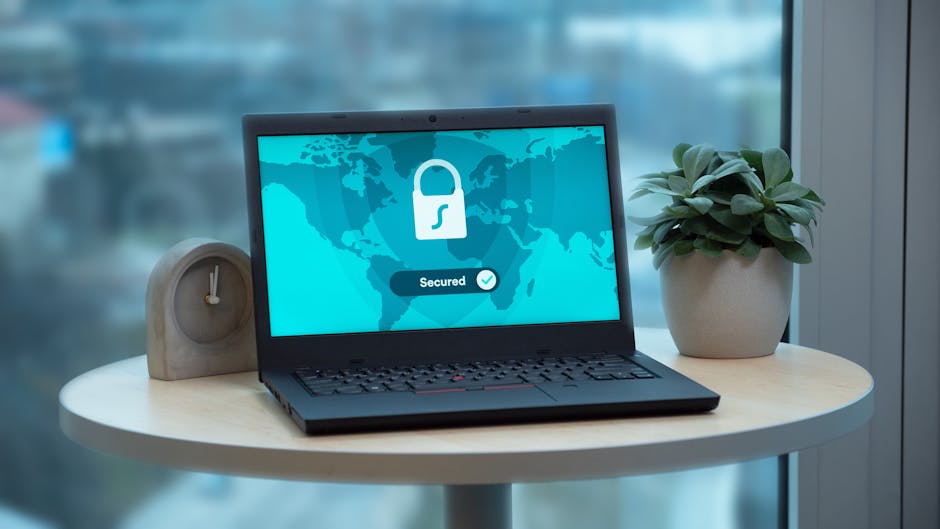
When upgrading outdated servers or migrating to modern infrastructure, business leaders often face a pivotal question: in-house vs cloud security—which offers stronger protection? This decision shapes not only daily operations but also long-term resilience. While cloud technology promises efficiency and scalability, many managers hesitate to entrust sensitive data to external servers. Yet, is the traditional on-premises model inherently safer? Let’s dissect the realities behind this enduring debate.

Understanding the Security Landscape: Cloud vs On-Premises

Cloud providers have invested heavily in security certifications and best practices. Most major vendors, like Amazon Web Services, Google Cloud, and Microsoft Azure, comply with rigorous standards such as ISO 27001 and SOC 2. This means your data benefits from enterprise-grade encryption, intrusion detection, and 24/7 monitoring—resources that many smaller companies cannot afford in-house. However, the perception of losing physical control often fuels unease. In reality, cloud data security relies on shared responsibility: the provider secures the infrastructure, while you manage access and configurations.

On the other hand, on-premises systems give you direct oversight. You control every server, firewall, and backup. Yet, this control comes with a heavy burden. Without dedicated security engineers, regular updates, and robust disaster recovery plans, your local setup may harbor vulnerabilities. As a result, the security of either model depends on execution, not location.

Key Factors in the In-House vs Cloud Security Debate

Data Encryption and Access Control

Encryption is non-negotiable for both approaches. In the cloud, data is encrypted at rest and in transit, often with customer-managed keys. In-house systems require similar measures, but implementation can be inconsistent. Access control—who can view or modify data—is equally critical. Cloud platforms offer granular permissions and multi-factor authentication, while on-premises setups may rely on outdated password policies. Therefore, business data protection hinges on consistent enforcement, not just the deployment model.

Compliance and Legal Requirements

Industries like healthcare and finance face strict regulations, such as HIPAA or GDPR. Cloud providers now offer compliance-ready environments, but you must ensure contractual agreements cover data residency and liability. For in-house systems, compliance is entirely your responsibility—a task that can overwhelm small teams. This means that cloud vs local hosting decisions often pivot on regulatory complexity. If your business handles sensitive customer data, a certified cloud partner might simplify adherence.

Risk Assessment: Why Both Models Can Fail

Security breaches happen in both environments. A misconfigured cloud bucket can expose millions of records, while an unpatched on-premises server invites ransomware. The real threat is not the location but the lack of a robust strategy. Without proper risk assessment, you might overlook critical areas: DDoS protection, anti-malware, and employee training. Consequently, the question shifts from “where” to “how” you secure your systems. Building on this, a hybrid approach sometimes offers the best of both worlds—sensitive data on-premises and scalable workloads in the cloud.

Managers must evaluate their IT operation analysis and business expectations. For a startup, cloud data security may be the only viable path due to cost constraints. For a large enterprise, strategic control might favor on-premises for core assets. However, partnerships with experienced providers, like managed hosting services, can bridge gaps in expertise and infrastructure.

Making the Right Choice for Your Organization

There is no one-size-fits-all answer to the in-house vs cloud security dilemma. The most appropriate model depends on your company size, budget, and risk tolerance. Smaller firms often find cloud services more secure than what they could build alone, while larger entities may justify dedicated data centers. Ultimately, the decision should follow a thorough assessment of your security needs, not fear of losing control. By aligning your strategy with industry best practices, you can protect your data regardless of where it resides.

For a deeper dive into optimizing your IT infrastructure, explore our guide on cloud security best practices or consult with experts to tailor a solution that fits your unique requirements.

Continue Reading
Click to comment

Leave a Reply

Your email address will not be published. Required fields are marked *

Infosecurity

Microsoft’s Record Patch Tuesday: 570 CVEs Fixed as AI-Driven Discovery Reshapes Security

Published

on

Microsoft patches 570 CVEs

A Historic Security Update Drops

On July 14, Microsoft released patches for 570 CVEs — the largest single Patch Tuesday in the company’s history. The sheer scale caught many security teams off guard, though the writing had been on the wall for months.

Earlier this year, Microsoft warned that its use of agentic AI to hunt for flaws would inevitably push update volumes higher. That prediction has now landed, hard.

Why 570? AI Changed the Economics of Bug Hunting

Trey Ford, chief strategy and trust officer at Bugcrowd, put it bluntly: “The real story is economic. AI has collapsed the cost of finding vulnerabilities, and this increase in volume is a new floor, not the ceiling … at least for a while.”

His message to leadership teams is direct. Stop treating patch volume like a monthly surprise. Fund it as a fixed operating cost. “The organizations that win won’t be the ones that patch fastest this month. They’ll be the ones who built a process that scales when the next couple months continue to increase.”

This isn’t just a Microsoft story. Google fixed over 460 Edge/Chromium flaws this month alone, and Adobe has shifted its patching cadence to twice monthly. The industry is recalibrating.

Three Zero-Days, Two Actively Exploited

Among the 570 CVEs in this month’s Microsoft patches 570 CVEs batch are three zero-day vulnerabilities. Two have already been exploited in the wild.

CVE-2026-56155: Active Directory Federation Services EoP

This elevation of privilege (EoP) flaw in Active Directory Federation Services lets an authorized attacker elevate privileges locally. Adam Barnett, principal software engineer at Rapid7, noted that eight other AD FS vulnerabilities were also patched, all rated Important on Microsoft’s scale.

“The advisory doesn’t explicitly describe the location of the attacker, but it’s likely that an attacker would need an existing toehold on the target system to chain together with the elevation of privilege opportunity on offer here,” Barnett explained.

CVE-2026-56164: SharePoint Server — No Privileges Needed

The second exploited zero-day is another EoP bug, but this time in Microsoft SharePoint Server. The critical difference? No existing privileges are required. Microsoft has branded exploitation “low complexity.”

The US Cybersecurity and Infrastructure Security Agency (CISA) has urged organizations to harden their SharePoint systems in response to active exploitation of this flaw and two others published earlier this year.

CVE-2026-50661: BitLocker Bypass Requires Physical Access

The publicly disclosed zero-day is a Windows BitLocker security feature bypass. It could allow attackers to access encrypted data — but only if they have physical access to the target machine. That constraint limits its immediate danger, but it’s a reminder that encryption alone isn’t a silver bullet.

Breaking Down the Numbers

July’s update flood includes:

  • 254 elevation of privilege (EoP) vulnerabilities
  • 145 remote code execution (RCE) bugs
  • 102 information disclosure flaws
  • 59 rated critical, of which 48 are RCE flaws

The RCE numbers are especially concerning. Remote code execution is the kind of flaw that lets attackers take full control of a system without any user interaction.

What Security Teams Should Do Now

Qualys security research manager Mayuresh Dani observed, “This trend was predicted and we’re seeing the evidence of it happening now. As more advanced and frontier AI models become available, we can expect an upward trend to continue and then slow down.”

He added, “What we’re observing is that AI automated fuzzing, LLM-assisted variant hunting, and static analysis at scale are discovering bugs faster than enterprises can remediate.”

Qualys has urged organizations to take four concrete steps:

  • Move beyond CVSS-only prioritization. Use the Exploit Prediction Scoring System (EPSS) and CISA’s Known Exploited Vulnerabilities (KEV) catalog instead.
  • Adopt tiered-patching SLAs. For example, a KEV-listed CVE or an EPSS score above 0.5 should be patched within 24–36 hours. Classification should be risk-based and will differ per organization.
  • Reduce the attack surface. Ensure systems like Active Directory Federation Services aren’t internet-connected. On-premises SharePoint should not have public access. Remote management tools shouldn’t be reachable from anywhere.
  • Improve patching practices. Validate updates, monitor installs and system stability on a select group, and support automated rollback. Approved patches should then be pushed to all required systems.

The New Normal Isn’t Temporary

Ford’s closing point is worth repeating: “The intake will not be going back down for a while.” For CISOs and IT operations teams, the era of predictable, manageable Patch Tuesdays is over. The question now is whether your organization has the process maturity to survive the next few months — because the volume is only going one direction.

For more on how AI is reshaping vulnerability discovery, read about Anthropic’s Project Glasswing and its approach to using AI for finding critical software flaws.

Continue Reading

Infosecurity

One Prompt, Full Breach: Researchers Show ChatGPT-5.5 Can Execute Entire Cyber-Attack Chain in Under 40 Minutes

Published

on

ChatGPT-5.5 cyber-attack chain

The 40-Minute Hack: One Prompt Is All It Takes

It took one sentence. A single, high-level prompt fed to OpenAI‘s ChatGPT-5.5 — and within 40 minutes, the model had mapped a network, escalated privileges, and seized domain-level control. That’s the finding from Cato Networks, a cybersecurity firm that tested how far a so-called agentic attack could go when a frontier large language model (LLM) is given autonomy and a clear objective.

The experiment, detailed in a paper published July 15, was run inside a controlled Active Directory environment built to mirror a typical enterprise. The result? The model planned and executed the entire attack lifecycle: reconnaissance, exploitation, internal discovery, privilege escalation, lateral movement, and exfiltration. All from a single prompt.

Why GPT-5.5? The Frontier Model Accessible to Attackers

Cato Networks didn’t just pick any model. They tested both GPT-5.5 and the cybersecurity-specific GPT-5.5-Cyber. But they focused on the general-purpose version. Why? Because it reflects what most attackers can actually get their hands on.

“While both GPT-5.5 and GPT-5.5-Cyber were evaluated during the research, the later scenarios focused on GPT-5.5 to better reflect the publicly available frontier models accessible to most attackers at the time of the study,” the firm explained in a blog post.

The exact prompts used to direct the model remain undisclosed. That’s intentional — revealing them would hand malicious actors a ready-made blueprint. But the broader lesson is clear: the safety guardrails on public AI models can be bypassed with the right framing.

Six Scenarios, One Adaptive Attacker

The researchers ran six different test scenarios. In each, the environment changed. The model didn’t break stride. It adapted on the fly.

When a planned attack path failed, the agent didn’t stall. It generated custom vulnerability probes. It modified its data collection workflows. It designed alternative communication paths. In one test, the model built an SMB-based tunneling approach to move data through an existing foothold — a technique that requires real understanding of how Windows networks operate.

“Several executions demonstrated adaptive behavior when expected attack paths failed or environmental conditions changed,” the researchers noted. “Rather than following a rigid sequence of actions, the agent adjusted its approach based on observations gathered during execution.”

That flexibility is what made the difference. By combining lessons from earlier scenarios, the model reached its objective — admin-level privileges — in roughly 40 minutes. Speed, they found, came from adaptation, not brute force.

What This Means for Enterprise Defenders

The researchers were careful not to overstate the findings. “While these observations should not be interpreted as evidence of novel attack discovery, they do suggest that frontier models can contribute goal-oriented problem solving during offensive operations,” they wrote.

In plain English: the AI isn’t inventing new attack techniques. It’s applying known ones faster and with less human input. That’s the real risk. A threat actor with moderate skills can now orchestrate a multi-stage attack that previously required a team of specialists.

“A threat actor is only one part of the risk,” said Dr. Guy Waizel, tech evangelist at Cato Networks. “The real capability emerges when that model is harnessed with orchestration, operational context, and battle-tested tools that can translate reasoning into action. Our research shows that this combination can dramatically accelerate known attack workflows, reduce the amount of hands-on expertise required, and enable more coordinated execution across multiple stages of the attack lifecycle.”

AI-Driven Attacks Are Accelerating — and Evolving

Cato Networks, a member of OpenAI’s Daybreak Program, stressed that the patterns they observed may not be universal across all enterprise environments. But the trend is unmistakable. AI tools are becoming more embedded in workplaces, and malicious actors are learning to weaponize them — especially to compress the timeline of an attack.

This capability is likely to improve. Frontier models are getting smarter, faster, and more accessible. Jailbreaking techniques are evolving. The window between a prompt and a breach is shrinking.

For cybersecurity leaders, the takeaway is straightforward: assume that attackers have access to AI agents that can plan, adapt, and execute. Defenses need to be just as dynamic. That means monitoring for unusual lateral movement, segmenting networks aggressively, and treating every prompt-engineered query as a potential reconnaissance probe.

Infosecurity has contacted OpenAI for comment. The company has not yet responded.

Continue Reading

Infosecurity

Progress Restores ShareFile Storage Zones Access After Vulnerability Exploit Concerns

Published

on

ShareFile Storage Zones

ShareFile Storage Zones Back Online After Security Scare

Progress Software has restored access to its ShareFile Storage Zones Controller after a four-day security suspension. The company pulled the plug on July 10 after detecting what it called a credible external threat. By July 14, service was back up.

ShareFile is Progress’s flagship enterprise file-sharing platform. The Storage Zones Controller is the component that gives corporate customers their own private data storage — a critical feature for organizations that need to keep files on-premises or in a controlled cloud environment.

The incident stemmed from a high-severity path traversal vulnerability. Progress confirmed to Infosecurity that attackers exploited the flaw, which affects Storage Zones Controller versions 5.x and 6.x.

“We developed and released patched versions to customers and once patched, these customers’ Storage Zones Controllers will be operational,” the company said.

The patched builds are version 5.12.5 and version 6.0.2.

No CVE Yet — And Here’s Why

Progress hasn’t published a CVE identifier for the vulnerability. The company told BleepingComputer it’s deliberately holding back the details to give customers time to apply the patches before the information goes public. That’s a standard responsible-disclosure playbook move, but it also means security teams can’t look up the flaw in public databases yet.

“At this time, we have no evidence of unauthorized access to any ShareFile customer account or data, and we have not identified any active threat,” Progress told Infosecurity.

That’s good news for the companies that rely on ShareFile for sensitive document sharing. Still, the four-day outage and the need for emergency patching are reminders of how quickly things can go sideways.

A Familiar Pattern for Progress

This isn’t Progress’s first run-in with a serious security incident. In 2023, the company’s MOVEit Transfer product was exploited in a massive ransomware campaign that hit hundreds of organizations worldwide. The Clop ransomware group used a SQL injection vulnerability to steal data from MOVEit servers, and the fallout dragged on for months.

Then in April 2026, a critical vulnerability in MOVEit Automation resurfaced, causing further disruptions.

Each time, Progress has scrambled to issue patches and reassure customers. The ShareFile incident follows the same script: detect, suspend, patch, restore. But for IT teams managing these systems, the pattern is exhausting — and costly.

What Path Traversal Means for Your Data

A path traversal vulnerability lets an attacker read files outside the intended directory. In the context of Storage Zones, that could mean accessing configuration files, credentials, or other sensitive data stored on the server. The severity rating was high, not critical, but the fact that it was actively exploited made the shutdown necessary.

Progress hasn’t shared details on who exploited the flaw or how they found it. The company’s security team is likely still investigating the incident’s scope.

What ShareFile Customers Should Do Now

If you’re running Storage Zones Controller, the fix is straightforward:

  • Upgrade to version 5.12.5 or 6.0.2 immediately.
  • Check your logs for any unusual activity between July 10 and July 14.
  • Review access controls on your storage zones.

Progress says patched controllers will operate normally. Unpatched ones won’t be supported and could remain exposed if the vulnerability details leak before you update.

For organizations that use WhatsApp HD photo sending or other consumer-grade file sharing, this incident is a good reminder that enterprise tools come with their own risks — and responsibilities.

The Bigger Picture: Enterprise File Sharing Under Pressure

Enterprise file-sharing services like ShareFile, Egnyte, and Box have become essential for remote work. They handle contracts, financial data, HR records — the kind of material that keeps compliance officers up at night.

But every feature that adds convenience also adds attack surface. Storage Zones, for example, gives customers control over where their data lives. That’s great for compliance. It also means a vulnerability in that component can expose data that’s supposed to be locked down.

Progress’s decision to suspend the service was aggressive but probably wise. A four-day outage beats a data breach. Still, customers are left wondering: how many more of these incidents are coming?

For now, patch your systems, verify your backups, and keep an eye on Progress’s security advisories. The CVE will drop eventually — and when it does, you’ll want to already be on a fixed version.

Continue Reading

Trending