Connect with us

Artificial Intelligence

Microsoft Copilot Agent Mode: Now It Can Actually Do Real Work Inside Word, Excel, and PowerPoint

Published

on

Microsoft Copilot Agent Mode: Now It Can Actually Do Real Work Inside Word, Excel, and PowerPoint

Microsoft has just rolled out a significant upgrade for Office users: Microsoft Copilot Agent Mode. This new feature, which the company calls “vibe working,” transforms Copilot from a passive assistant into an active agent that can directly edit, restructure, and enhance your documents, spreadsheets, and presentations. For subscribers of Microsoft 365 Copilot and Microsoft 365 Premium, this is now the default experience—and it’s also available on Personal and Family plans.

What Is Microsoft Copilot Agent Mode?

Until recently, Copilot within Office apps was largely a Q&A tool. It could answer questions about your data or suggest ideas, but it struggled to take direct action inside your files. Sumit Chauhan, President of the Office Product Group at Microsoft, acknowledged this gap. She noted that when Copilot first launched, the underlying AI models simply weren’t capable enough to command the applications directly.

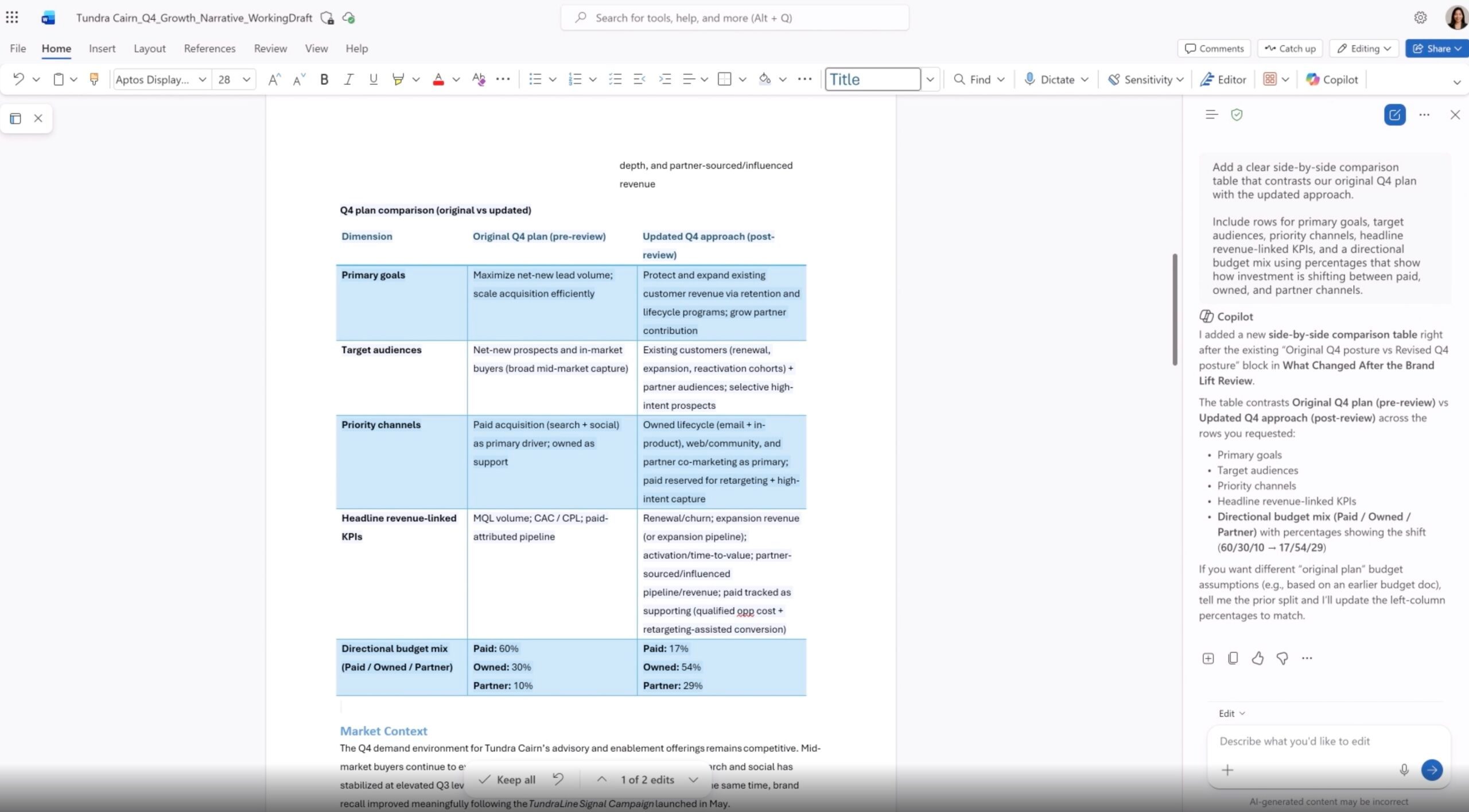
However, models have shown remarkable improvement in instruction following and multi-step reasoning over the past year. Agent Mode is built on those improvements and can now execute complex edits without losing your original intent. A sidebar shows you every step Copilot is taking in real time, so you’re never left guessing what it changed.

For more on how AI assistants are reshaping productivity, check out our guide on AI productivity tools for 2025.

How Agent Mode Works in Word, Excel, and PowerPoint

In Word: Drafting, Rewriting, and Restructuring

In Microsoft Word, Agent Mode can draft entire sections, rewrite existing paragraphs, restructure documents, and adjust tone—all without you lifting a finger. It understands context, so if you ask it to “make this more formal” or “shorten this section,” it does exactly that. The sidebar lets you approve or reject each change, giving you full control.

In Excel: Direct Edits, Formulas, and Visuals

Excel users will see the biggest transformation. Agent Mode makes changes directly inside your workbook, adding formulas, tables, and visuals to turn raw data into actionable insights. Early data from Microsoft shows that engagement in Excel jumped 67%, satisfaction rose 65%, and new user retention increased 50% after the rollout. This means you can ask Copilot to “calculate quarterly growth” or “create a pivot table from this data,” and it will do the work for you.

If you’re interested in similar tools, read our comparison of Copilot vs. ChatGPT for Excel automation.

In PowerPoint: Update Decks While Preserving Templates

In PowerPoint, Agent Mode can update existing decks with fresh information while respecting your company’s template styling. Need to refresh a quarterly report? Just tell Copilot to “update sales figures from the latest dataset,” and it will replace charts, text, and images while keeping your brand consistent.

What’s Next for Microsoft Copilot Agent Mode?

Microsoft says deeper editing for complex workflows and more transparency around changes are next on the roadmap. The company has been making several Copilot-related moves lately, from launching smarter research tools in Copilot Cowork to cleaning up its presence in Windows 11 apps. All of this positions Copilot as a serious productivity tool—not just a gimmick.

Building on this, businesses should expect tighter integration with other Microsoft services, such as Teams and SharePoint, in the coming months. For now, Agent Mode is a game-changer for anyone who spends hours formatting documents or crunching numbers.

To see how this fits into the broader Microsoft ecosystem, explore our article on Microsoft 365 AI updates for 2025.

Final Thoughts: Is Agent Mode Worth It?

Yes, if you’re already a Microsoft 365 subscriber. Agent Mode turns Copilot from a passive helper into an active participant in your workflow. It saves time, reduces errors, and lets you focus on strategy rather than manual edits. As Microsoft continues to refine the experience, expect even more powerful capabilities—like multi-step reasoning and deeper transparency—to arrive soon.

Continue Reading
Click to comment

Leave a Reply

Your email address will not be published. Required fields are marked *

Artificial Intelligence

OneDrive’s New AI Feature Names Your Files So You Don’t Have To

Published

on

OneDrive’s New AI Feature Names Your Files So You Don’t Have To

Renaming files might seem like a minor chore — until you face a folder stuffed with documents named Document1, Scan_04182026, or FinalFINALv3. Fortunately, Microsoft is stepping in with a smart solution. A new OneDrive AI feature, called Copilot Suggested Rename, is set to change how we handle file naming. According to the Microsoft 365 roadmap, this tool will roll out starting June 2026. It reads your file’s content and automatically recommends clear, descriptive names, saving you valuable time.

How Does the OneDrive AI Feature Work?

The Copilot Suggested Rename tool is built directly into the rename dialog inside OneDrive on the web. When you trigger a rename, Copilot scans the file’s content and presents three context-aware name suggestions right within the dialog box. You simply click one to apply it instantly.

Additionally, the feature appears in the post-upload toast notification — the pop-up that shows after you upload a single supported file. This means you can rename a file immediately after it lands in OneDrive, without navigating away from your workflow.

Supported File Types for AI File Naming

This OneDrive AI feature works across a broad range of formats. Microsoft Office documents — including Word (DOCX), PowerPoint (PPTX), and Excel (XLSX) — are fully supported. It also handles PDFs, Markdown files, and images. These formats cover the vast majority of files most people store online.

Currently, the feature is web-only. It will be available for both personal and business OneDrive users on the web. A desktop or mobile rollout may follow later, though Microsoft hasn’t confirmed a timeline yet.

Why AI File Naming Matters

File naming has long been a low-priority problem that many desktop and computer users have simply ignored. But at scale, it becomes genuinely annoying. A folder full of generic names like Document1 or Scan_04182026 can slow down productivity and create confusion. By integrating AI-powered rename suggestions directly into the OneDrive rename dialog, Microsoft is addressing a real pain point.

For more tips on managing your digital files, check out our guide on how to organize files in OneDrive. You might also find our article on best OneDrive tips and tricks useful.

When Can You Expect This OneDrive AI Feature?

Copilot Suggested Rename is currently in development. According to the Microsoft 365 roadmap, the rollout will begin in June 2026. While that may seem far off, the feature promises to be a significant upgrade for anyone who regularly deals with messy file names.

In conclusion, this OneDrive AI feature is a practical step toward smarter file management. Instead of manually typing descriptive names, you’ll let AI do the heavy lifting. The result? Cleaner, more organized folders with minimal effort.

Continue Reading

Artificial Intelligence

Next-Gen Siri Will Sync Your AI Chats and Spread Them Across Apple’s Walled Garden

Published

on

Next-Gen Siri Will Sync Your AI Chats and Spread Them Across Apple’s Walled Garden

Apple is finally ready to give Siri a serious shot in the arm. According to a new report from Bloomberg’s Mark Gurman, the company is working on a next-gen Siri that will synchronize AI conversations across all your devices using iCloud. This move signals Apple’s intent to turn its voice assistant into a persistent, connected AI system—one that lives deep inside the company’s tightly controlled ecosystem.

Instead of a simple voice tool, Siri is expected to evolve into a conversational AI assistant capable of maintaining synced chat histories across iPhones, iPads, Macs, and other Apple hardware. This puts it in direct competition with products like ChatGPT and Google Gemini.

What the Next-Gen Siri Upgrade Entails

Gurman reports that Apple is internally testing a completely redesigned Siri interface that looks and feels like a modern AI chatbot app. The new experience includes a dedicated chat-style interface, persistent conversation history, and cloud synchronization powered through iCloud.

This means you could start an AI conversation on your iPhone and pick it up right where you left off on your Mac or iPad. Apple is positioning this seamlessness as a key differentiator, leveraging its ecosystem advantage rather than competing purely on raw AI model performance.

A Deeper Integration Across Apple’s Platforms

The report also suggests Apple is integrating Siri more deeply across its software platforms as part of future versions of iOS, iPadOS, and macOS. Internally, Apple is already preparing features for iOS 28 while work continues on iOS 27.

However, the AI-focused Siri upgrade has faced multiple delays over the past two years. Apple has struggled to modernize Siri’s underlying architecture quickly enough. Gurman notes that several Apple AI projects, including AI-powered AirPods and smart home products, were also slowed by delays tied to Siri’s redevelopment.

How Apple’s AI Strategy Differs from Competitors

Apple has been noticeably slower than rivals like Microsoft and OpenAI in rolling out consumer-facing AI products. While competitors aggressively integrated generative AI into search, productivity apps, and smartphones, Siri has increasingly felt outdated.

But Apple’s strategy appears different. Instead of creating a standalone chatbot platform, the company seems focused on embedding AI deeply into its hardware ecosystem and user workflows. This could make Siri more useful for existing Apple users, especially if conversation syncing works smoothly across devices.

On the other hand, this approach further strengthens Apple’s famously closed ecosystem. The best experiences will likely remain limited to users who are fully invested in Apple hardware.

Apple’s Hardware Push: Smart Glasses and More

At the same time, Apple is preparing for a broader hardware push built around AI experiences. Bloomberg reports the company is developing smart glasses aimed at competing with Meta’s Ray-Ban smart glasses. Siri is expected to play a major role in those products as well.

Additionally, Apple is reportedly working on updated HomePods and refreshed Apple TV products that could rely heavily on the new Siri platform.

When Will the Next-Gen Siri Arrive?

Apple is expected to reveal more about its AI plans during upcoming WWDC announcements. However, Bloomberg suggests the most ambitious Siri upgrades may not fully arrive until iOS 28. For now, Apple’s challenge is clear: it no longer just needs to improve Siri. It needs to convince users that its version of AI is worth waiting for after years of falling behind competitors already moving at full speed.

Building on this, users who want to explore similar AI capabilities today might consider alternative AI chatbot apps or optimizing their current Siri experience.

Continue Reading

Artificial Intelligence

Photoshop Is Being Eaten by the Prompt Box: The New Face of AI Image Editing

Published

on

Photoshop Is Being Eaten by the Prompt Box: The New Face of AI Image Editing

After a recent trip, I faced a familiar pile of photos needing cleanup. A stray object here, an awkward background detail there. My first instinct was Photoshop, but the full subscription feels steep for someone who isn’t a pro. Mobile apps? My thumbs are too clumsy for precision taps.

So I turned to the obvious alternative: AI image editing. Every tech company seems convinced the prompt box is the future. Why not describe the edit and let the machine handle it? Sometimes it worked beautifully. Other times, it felt like a polite argument with software that kept misunderstanding simple requests. This experience revealed that AI image editing is evolving fast—but not necessarily getting simpler.

Why Every Editor Wants to Become a Chat Box

The appeal is clear. Most people never wanted to become Photoshop monks, memorizing layers, masks, and blend modes. They just wanted to erase a person, fix a crooked shot, or generate a decent graphic without a tutorial. The prompt box skips the ceremony. It doesn’t ask if you know what a layer mask is. It asks for a result.

Companies like Adobe are embedding Firefly deeper into Photoshop, while Canva offers a buffet of “Magic” buttons. Google‘s Gemini, ChatGPT image generation, Midjourney, Ideogram, and Runway all circle the same idea: editing should feel like asking for help, not operating complex software. This shift makes conversational photo editing a growing trend.

For casual users, this is liberation. A 20-second prompt can achieve what once required patience or a friend who owed you a favor. The old barrier was technical; the new one is fuzzier: knowing what looks right, what looks fake, and where the machine decided to improvise.

When Editing Becomes Negotiation

However, asking for help isn’t the same as getting help. Anyone who has used AI photo tools for more than five minutes knows the dip when a result is almost right—but somehow more annoying. The person is removed, but the background looks like melted wallpaper. The lighting improves, but the photo now resembles a luxury dentist ad. The object moves, but the AI adds a mysterious extra finger.

This is where editing becomes negotiation. You’re not just editing the image; you’re editing the request. “Make it warmer, but don’t make it fake. Remove that object, but keep the background natural.” Old tools were annoying because they made you learn rules. Prompt-based editing is annoying because it pretends language is enough—which is generous nonsense. Language is mushy, visual judgment is slippery, and AI models can be confidently wrong.

The Reality of Iterative Edits

The first result is often the best sales pitch. It looks shockingly good at a glance. Then you ask for corrections: fix the lighting, restore detail, reduce waxy skin. After a few rounds, the image drifts. Details soften, faces turn into blobs, and the clean edit becomes less impressive the harder you try to fix it.

For professionals, this can be useful but not relaxing. Boring work gets faster, but supervision gets heavier. Someone must catch flattened images, broken compositions, or softened details before anyone else sees them. The job shifts from doing to directing—which sounds clean until the AI gives everyone porcelain skin.

The Future of Image Editing

For casual users, the interface gets friendlier and power gets closer. But the frustration gets harder to name. When a traditional editor annoyed you, at least the villain had buttons. When an AI editor misinterprets a reasonable request, it feels like a conversation going badly.

Photoshop will survive. Powerful tools usually do. But its old logic is being absorbed into a simpler, stranger interface. The future of editing may not be learning where the tools are—it may be learning how to talk to a machine that keeps pretending it understood you.

Building on this, the key is to embrace AI image editing while staying critical. Use prompts as a starting point, not a final answer. Always check for AI hallucinations like extra fingers or weird textures. For more insights, check our guide on comparing top AI photo tools and prompt engineering tips.

Ultimately, the prompt box is eating Photoshop’s lunch—but the meal isn’t fully cooked yet. Editors who adapt will thrive, but they’ll need to sharpen both their visual eye and their conversational skills.

Continue Reading

Trending