Connect with us

Artificial Intelligence

Microsoft Copilot in Excel Gets Smarter: Reusable Skills, Live Data Connectors, and Full Edit Transparency for Finance Teams

Published

on

Microsoft Copilot in Excel Gets Smarter: Reusable Skills, Live Data Connectors, and Full Edit Transparency for Finance Teams

If your daily grind involves endless spreadsheets, repetitive calculations, and manual data entry, there is finally some good news. Microsoft Copilot in Excel has received a significant upgrade designed specifically for finance professionals. The new features focus on three pain points: automating repeatable tasks, pulling live data from trusted sources, and maintaining a clear audit trail of every change made by the AI. This update promises to transform how teams handle financial modeling, closing processes, and variance analysis.

What Are Copilot Skills and How Do They Work?

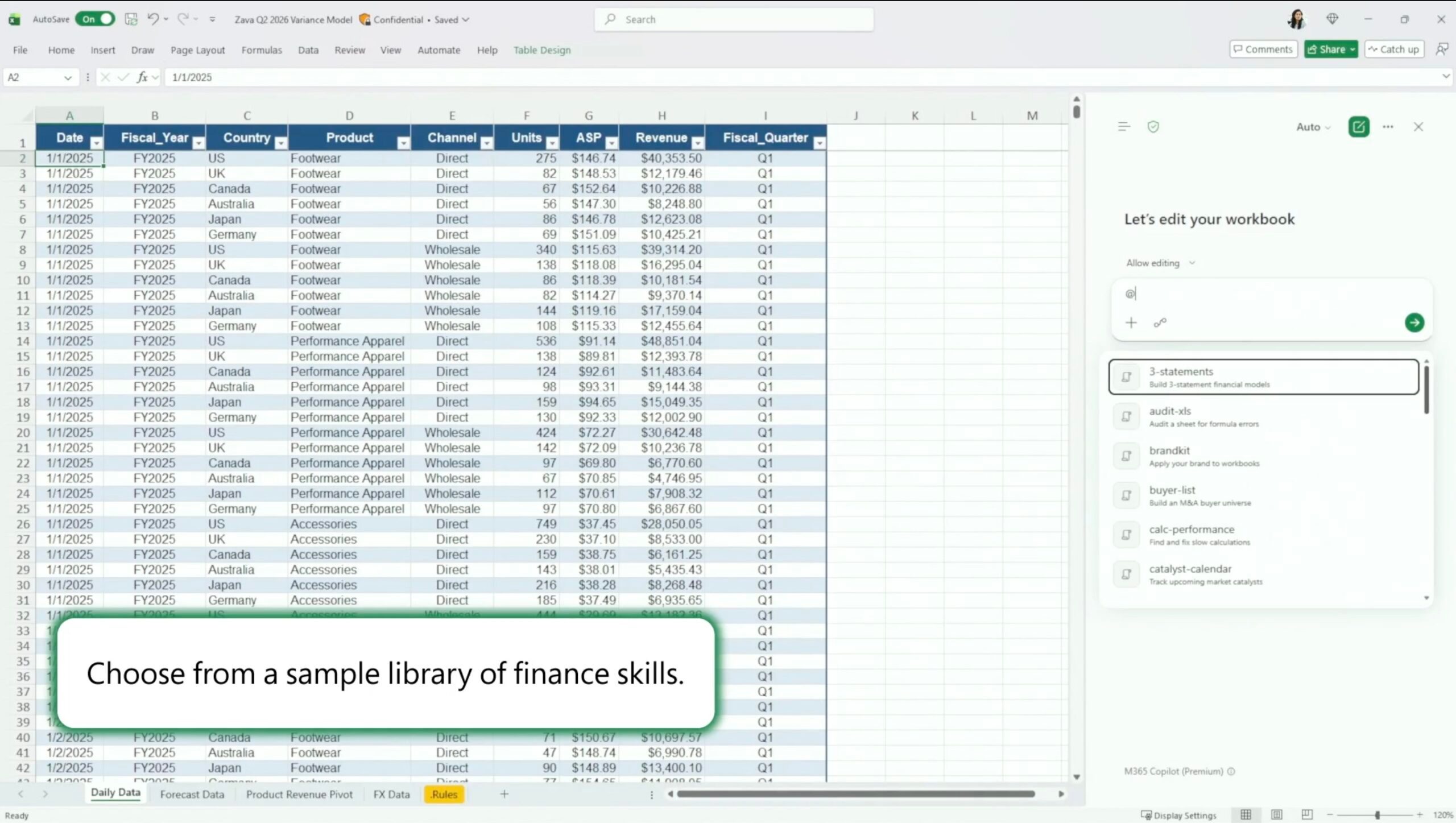
The headline feature of this update is called Skills. Think of it as a way to teach Copilot your specific workflow once, and then reuse it across any workbook. Instead of typing the same detailed prompt every time you need to build a discounted cash flow (DCF) model or compile a monthly report, you simply save a SKILL.md file in OneDrive. From that point on, Copilot follows your instructions, formatting, and structure automatically.

Microsoft also offers prebuilt finance skills for common tasks. For those who need something more tailored, building your own skill is straightforward. Later this year, partners like LSEG, Ramp, Rogo, and Vena will sell their own skills through the Microsoft Marketplace. This ecosystem could turn Copilot into a central hub for specialized financial analysis.

How to Get Started with Custom Skills

To create a custom skill, you write a SKILL.md file that describes the steps, formulas, and outputs you want Copilot to follow. Save it in a designated OneDrive folder, and Copilot will recognize it the next time you open a relevant workbook. This approach eliminates the need to repeat instructions, saving hours each week for finance teams who deal with recurring reports.

Live Data Connectors: Real-Time Numbers Without Copy-Paste

Another major enhancement is the ability to pull live data directly into Excel through new connectors. Microsoft Copilot in Excel now integrates with CB Insights, Daloopa, FactSet, Morningstar, PitchBook, and S&P Global. These join the existing LSEG and Moody’s connectors that were introduced in May. The result is less time spent copying and pasting data from external reports and more time analyzing current numbers.

It is worth noting that some of these connectors require a separate subscription. However, for finance teams that rely on these data sources daily, the convenience and accuracy of live data can justify the cost. This feature ensures that your models are always based on the most recent information, reducing the risk of stale data skewing your analysis.

Full Transparency: Tracking Every Edit Copilot Makes

Trust has always been a challenge when using AI in finance. Microsoft addresses this with a new Plan with Copilot mode. Before Copilot makes any changes, it lays out exactly which ranges, formulas, and assumptions it will touch. You can review and approve these changes before they are applied. After the edits are made, the Show Changes pane clearly distinguishes between changes made by Copilot and those made by human teammates.

This level of transparency builds on Excel’s existing Agent Mode and comes shortly after Microsoft’s acquisition of the finance AI startup Fintool. Together, these moves signal that Microsoft is serious about making AI trustworthy for financial work. For auditors and compliance teams, this traceability is a game-changer.

Availability and Rollout

These updates are live now for Microsoft 365 Copilot customers using Excel on the web, Windows, and Mac. Custom Skills are rolling out to all users over the next month. If you are a finance professional who spends hours in Excel, now is the time to explore these new capabilities. For more on how AI is transforming office productivity, check out our guide on best AI tools for productivity.

In addition, you might want to learn about Microsoft Copilot vs ChatGPT for a broader comparison of AI assistants. And if you are new to Excel automation, our Excel formulas cheat sheet can help you get started.

Overall, this update makes Microsoft Copilot in Excel a more powerful and reliable assistant for finance teams. By automating repetitive tasks, integrating live data, and providing full edit transparency, Microsoft is addressing the core needs of financial professionals. The future of spreadsheet work looks faster, smarter, and more trustworthy.

Continue Reading

Artificial Intelligence

Google’s Gemini Notebook Now Lets You Cite Books You Own — Here’s How It Works

Published

on

Gemini Notebook Expert Intelligence

Google’s Notebook AI Just Got Smarter — With Your Bookshelf

If you’ve ever wished your AI assistant could quote directly from a cookbook you own, or pull a specific argument from a biography sitting on your digital shelf, here’s the news you’ve been waiting for.

Google is rolling out a new capability for Gemini Notebook (the tool formerly known as NotebookLM) called Expert Intelligence. The name sounds fancy, but the idea is simple: instead of only drawing from documents you upload or pages you link, the AI can now tap into digital books you’ve actually purchased from the Google Play Books library.

That’s right — your personal library becomes a source. No more copy-pasting excerpts or hoping the AI finds a relevant PDF. If you own the book, you can cite it directly.

How Expert Intelligence Works in Practice

Let’s say you’re planning a week of dinners built entirely around chicken and spinach. Instead of scouring the web, you can ask Gemini to pull recipes from a Martha Stewart cookbook you own. The AI will search the text, pull relevant passages, and cite them as sources.

But it doesn’t stop at recipes. You can turn any owned book into a variety of formats:

  • Infographics — visual summaries of key concepts from the book.
  • Audio Overviews — listen to a conversational recap of the material.
  • Quizzes — test your understanding based on the book’s content.

It’s a natural extension of what NotebookLM already does with uploaded sources, just with a much more curated pool of knowledge.

Not a Free-for-All: Sharing Has Limits

Here’s a catch that’s worth knowing before you get too excited. If you create a shared notebook and add a book as a source, your collaborators can’t just freeload off your purchase. They’ll need to own or buy their own copy of the book to fully use Expert Intelligence. Google’s being careful about copyright, and that’s probably wise.

Which Publishers Are On Board?

The feature launches with a solid lineup of major publishers. We’re talking Bloomsbury, De Gruyter Brill, Johns Hopkins University Press, Macmillan Publishers, O’Reilly Media, and Penguin Random House. All told, that’s over 100,000 titles available from day one.

That’s a big deal for students, researchers, and lifelong learners who already rely on NotebookLM for organizing their research.

Free Book Offer — But Act Fast

To kick things off, Google is giving away one free book to users in the US. The catch? It’s “while supplies last,” so you’ll want to check the app sooner rather than later if you’re interested.

It’s a smart marketing move, honestly. Get people hooked on the feature with a freebie, and they’ll likely buy more books to keep using it.

What About the Main Gemini App and Search?

Right now, Expert Intelligence is available only in the Gemini Notebook app and its web dashboard. But Google has confirmed it’s planning to bring the feature to the core Gemini app and AI mode in Search down the road.

That expansion could be huge. Imagine asking Gemini in Search to explain a concept “according to this book” and getting a cited answer pulled straight from the text. It’s a glimpse of where AI-assisted research is heading.

Featured Notebooks: Extra Insights from Authors

Beyond the book-citing feature, Google has partnered with a handful of authors to create Featured Notebooks. These offer additional insights that go beyond what’s in the book itself — think of them as bonus material, but integrated right into your research workflow.

It’s a nice touch that adds value for readers who want more context or behind-the-scenes thinking from the authors they admire.

Why This Matters for Your Research Workflow

If you’re already using NotebookLM for projects, this is a meaningful upgrade. You no longer have to juggle between your book library and your notes app. The books you own become part of your AI-powered research stack.

That said, it’s not a replacement for critical thinking. The AI is still pulling from what it finds, and you should always verify the context. But as a starting point for essays, reports, or even just personal learning, it’s a powerful tool.

For more on how to get the most out of Google’s AI tools, check out our guide on using NotebookLM for research and our rundown of Google AI features for productivity.

So, is Expert Intelligence worth trying? If you own books on Google Play Books and you’re already in the Notebook ecosystem, absolutely. Just remember to check the free book offer before it runs out.

Continue Reading

Artificial Intelligence

Google Dreambeans AI app: Your personalized daily feed is now free — here’s how it works

Published

on

Dreambeans AI app

Google just made Dreambeans free — what changed?

Google has quietly dropped the paywall on Dreambeans, the Dreambeans AI app that curates a personalized daily feed of stories just for you. Starting now, any Google Account holder in the US can try it without spending a dime. The news first surfaced via 9to5Google, and it’s a significant shift from the app’s earlier rollout.

Dreambeans first appeared in June, but only for Google AI Ultra subscribers. Later, it expanded to AI Pro users. Now? It’s open to everyone. That’s a big deal for anyone curious about AI-driven content discovery but not ready to pay for a subscription.

Setup isn’t instant, though. Google says it takes about a day for the app to generate your first set of stories. The app itself is available on both Android and iOS, so you can start the process on your phone and check back tomorrow morning.

How the Dreambeans AI app builds your daily feed

Think of Dreambeans as a hyper-personal version of Google Discover, but smarter. With your permission, it taps into several Google services to understand what you care about. Here’s the breakdown:

  • Gmail and Workspace — Provides real-world context like receipts, bookings, or an upcoming flight.
  • Google Photos — Picks up on the people and places you frequently capture.
  • Calendar — Notes events and appointments that might spark story ideas.
  • YouTube — Tracks your active hobbies and viewing habits.
  • Search history — Flags interests you’re just beginning to explore.

Every morning, the app stitches these data points into a fresh batch of story suggestions. That could be a hike worth trying, a new restaurant in your neighborhood, or an event happening nearby. It’s not just generic content — it’s tailored to your life.

Custom artwork, not stock photos

One of the coolest touches? Each story comes with custom artwork generated by the Nano Banana image generator. Instead of boring stock photos, you get illustrated scenes that often depict you and people you know. It adds a personal, almost whimsical feel to the feed.

More Google Labs experiments worth trying

Dreambeans isn’t the only experiment coming out of Google Labs lately. If you run a small business, Pomelli can now build your entire brand identity from scratch — from your color palette to a full working website. That’s a serious time-saver for entrepreneurs who don’t have design skills.

For music lovers, ProducerAI lets you describe a song idea and walk away with actual beats, album art, and even a music video to match. It’s a wild tool for hobbyists and creators alike.

If you’re a student, there’s another perk worth noting. Google is offering a free year of Gemini AI Pro through a new student hub. That’s a smart move if you want to test premium AI features before committing to a subscription elsewhere.

Is Dreambeans the next big thing in AI feeds?

Honestly, it’s too early to say. But the move to make it free suggests Google is serious about gathering user feedback and refining the product. The AI feed space is getting crowded, with competitors like Microsoft and various startups pushing their own personalized content engines.

What sets Dreambeans apart is the depth of integration. It’s not just scraping public data — it’s reading your inbox and your photo library. That’s powerful, but it also raises privacy questions. You’ll need to weigh the convenience against the data access.

For now, if you’re in the US and curious, it’s worth giving it a shot. The setup takes a day, but the payoff is a feed that actually feels like it knows you.

Continue Reading

Artificial Intelligence

Sony Music, Warner Chappell sue Anthropic, accusing AI lab of ‘brazen’ copyright theft

Published

on

Sony Music Warner Anthropic lawsuit

Publishers take Anthropic to court over training data

Sony Music Publishing, Warner Chappell, and a coalition of other music publishers have filed a lawsuit against Anthropic and its co-founders, Dario Amodei and Benjamin Mann. The complaint, lodged late Friday in the U.S. District Court for the Northern District of California, accuses the AI lab of running a “brazen campaign of illegally torrenting, scraping, and downloading copyrighted works.”

This is more than a routine licensing dispute. The publishers are alleging what they call “blatant theft” — that Anthropic used thousands of copyrighted songs, lyrics, and sheet music to train its Claude AI models without permission or payment.

Anthropic isn’t staying quiet. “We disagree with the publishers’ claims and we intend to defend ourselves robustly in court,” a spokesperson told TechCrunch in an emailed statement.

Not the first IP fight for Anthropic

This isn’t Anthropic’s first rodeo in court over intellectual property. Some of the same lawyers behind this case previously represented Concord Music Group and Universal Music Group in a January lawsuit. They also led the Bartz v. Anthropic case, where a group of authors accused the company of using copyrighted books to train Claude.

In the Bartz case, a judge ordered Anthropic to pay $1.5 billion. The ruling was nuanced: using copyrighted works to train AI was deemed legal, but obtaining that content through piracy was not. That distinction matters here.

What’s different this time?

The new lawsuit is notably broader than its predecessors. It accuses Anthropic of “flagrant piracy” through illegal torrenting to secure millions of copies of books — including works containing lyrics and sheet music. The publishers argue this wasn’t just a copyright gray area; it was outright theft on a massive scale.

Legal experts will likely debate whether this case breaks new ground or simply extends the arguments from Bartz. Either way, the music industry is clearly drawing a line in the sand.

Why the music industry is pushing back

For publishers, the stakes couldn’t be higher. If AI companies can freely train on copyrighted music without compensation, the value of their catalogs could plummet. Lyrics, after all, are the backbone of countless streaming services, karaoke apps, and print publications.

This lawsuit isn’t just about money. It’s about control — who gets to decide how creative works are used in the age of generative AI.

What happens next

Anthropic has vowed to fight the claims. The company’s defense will likely hinge on the same arguments that partially succeeded in Bartz: that training on copyrighted material is transformative and should be allowed under fair use.

But the piracy angle complicates things. Torrenting, even for AI training, carries a different legal weight than simply scraping publicly available data. If the publishers can prove Anthropic knowingly engaged in illegal downloads, the court may not be sympathetic.

This case is one to watch. It could set a precedent for how AI companies source their training data — and whether the music industry can demand a slice of the AI pie.

For more on how AI is reshaping creative industries, check out our piece on AI music generation copyright issues and how AI companies handle licensing disputes.

Continue Reading

Trending