Connect with us

Infosecurity

Navigating the New Frontier: A Guide to Transatlantic Data Security for US Businesses

Published

on

Navigating the New Frontier: A Guide to Transatlantic Data Security for US Businesses

For any US company with operations in the European Union, understanding the local mindset on data protection is no longer optional—it’s a critical business imperative. This applies equally to firms selling goods and to Trend Micro and other IT suppliers whose messaging must resonate with deep-seated European concerns. The landscape is defined by high cyber-threat levels and an evolving, stringent regulatory framework.

The European Security Reality: A Landscape Under Siege

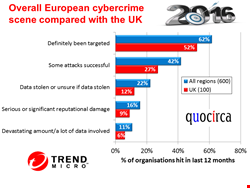
Recent research paints a stark picture. A study surveying 600 organizations found that well over half had been targeted by cyber-attacks in a single year, with a significant number suffering successful breaches, data theft, and serious reputational harm. Consequently, cyber-criminals rank as the foremost worry for European businesses, surpassing other threat actors. This pervasive threat environment forms the urgent backdrop against which all data protection discussions occur.

The Regulatory Earthquake: Understanding the GDPR

Building on this insecure foundation, the EU General Data Protection Regulation (GDPR) represents a seismic shift. While it standardizes rules across member states—a boon for international trade—it introduces formidable new obligations. Penalties for non-compliance can reach up to €20 million or 4% of global annual turnover. Moreover, the regulation mandates prompt breach notifications and enshrines a powerful ‘right to erasure’ for individuals. For US firms, adapting processes to this new reality is non-negotiable.

Priority Shift: Personal Data Takes Center Stage

This combination of rampant crime and strict privacy law has reshaped priorities. In Europe, protecting customers’ personal data now consistently outranks securing payment card information or intellectual property. The logic is clear: personal data breaches directly trigger GDPR penalties and erode consumer trust in ways that other data losses might not.

Bridging the Atlantic: From Safe Harbor to New Solutions

The legal framework governing data flows across the Atlantic is also in flux. Following the invalidation of the old Safe Harbor agreement, US businesses must navigate new, more complex arrangements. This means Transatlantic data security strategies must be built on current, legally sound mechanisms for transferring data. Therefore, simply applying US standards is insufficient; a genuinely European approach is required.

Technical Defenses: Aligning with European Concerns

European security priorities offer clear guidance for solution providers. The primary attack vectors causing alarm are exploited software vulnerabilities and compromised user identities. As a result, European defenses heavily focus on user awareness training, rigorous software scanning, and prompt update regimes. For US cloud providers, this creates a significant opportunity. They can effectively argue that their managed platforms are more likely to be updated promptly and secured proactively than many in-house systems.

However, a major caveat exists. With lingering doubts over data sovereignty, US providers are increasingly pressured to establish infrastructure within European borders. This move directly addresses data protection concerns and is becoming a standard expectation for doing business.

Beyond Prevention: The Critical Role of Response

European organizations operate under no illusions; they believe a breach is inevitable. This means assistance with post-breach measures is highly valued. While malware cleanup tools are widely deployed, there is a recognized need for capabilities to identify compromised systems, data, and users swiftly. This capability is crucial for executing an effective breach response plan—a document that must include procedures for notifying affected individuals and regulators, as well as managing public relations.

Surprisingly, fewer than half of European businesses currently have such a comprehensive plan in place. This gap represents a clear opportunity for knowledgeable US firms to offer guidance and services, helping to build resilience and trust. For more on building a response plan, see our guide on effective incident response frameworks.

The Road Ahead: Trade, Trust, and Technology

The volume of US-EU trade, particularly in technology, is immense. While agreements like the Transatlantic Trade and Investment Partnership (TTIP) may streamline future trade, they will not override the fundamental need for savvy data protection practices. Ultimately, success in the European market hinges on demonstrating a genuine commitment to Transatlantic data security. This involves combining robust technical defenses, full GDPR compliance, and a proactive response posture. By doing so, US companies can secure not just data, but also the long-term trust of European partners and customers. Learn how to align your strategy with our overview of key compliance checkpoints.

Continue Reading
Click to comment

Leave a Reply

Your email address will not be published. Required fields are marked *

Infosecurity

Bug Bounty Programs: How Companies Pay Hackers to Make the Internet Safer

Published

on

Bug Bounty Programs: How Companies Pay Hackers to Make the Internet Safer

In today’s digital landscape, where cyber threats evolve daily, a controversial yet increasingly common defense has emerged. Major corporations are opening their virtual doors and inviting outsiders to probe for weaknesses. This practice, known as bug bounty programs, represents a fundamental shift in cybersecurity philosophy. Instead of viewing all external hackers as adversaries, companies are financially incentivizing them to become allies in the fight for stronger digital defenses.

The Rising Tide of Ethical Hacking

Cybercrime has surged to epidemic levels, pushing application security to the forefront of corporate priorities. While rigorous internal testing and automated scans are essential, they have inherent limitations. No development team, no matter how skilled, can guarantee their code is completely flawless. This reality creates a critical security gap. Consequently, an external perspective is not just beneficial; it’s becoming a necessary component of a robust security posture. Building on this, bug bounty initiatives formalize this external scrutiny, creating a structured channel for vulnerability discovery.

How Bug Bounty Programs Operate

At their core, these programs are simple: companies publicly offer cash rewards to independent security researchers—often called ethical hackers—who responsibly report security flaws in their software or websites. The goal is straightforward: find weaknesses before malicious actors do. Giants like Microsoft and Facebook were early adopters, and their experiences have shaped the industry. For instance, a security manager from Google’s Vulnerability Reward Program highlighted the dual benefit: an increase in bug reports leads to more fixes, ultimately creating a safer experience for users while fostering positive relationships with the research community.

This means that a symbiotic ecosystem has developed. Researchers gain recognition and financial reward, while companies receive detailed intelligence about their security blind spots. It’s a proactive strategy, turning potential threats into a distributed security team.

The Security Calculus: Reward Versus Risk

Naturally, the security of the bug bounty process itself is scrutinized. Handing over vulnerability details to external parties carries inherent risk. The primary concern is “double-dipping,” where a researcher might collect a bounty from a company and then sell the same vulnerability information on the black market. As managers of programs like the Zero Day Initiative (ZDI) admit, preventing this entirely is nearly impossible. The system operates largely on trust and reputation.

Therefore, organizations have established clear rules of engagement. They rely on an honor system, banning researchers who violate responsible disclosure policies. Facebook pioneered a formal approach to this challenge, publishing a policy that promises legal protection to researchers who follow specific guidelines. Their policy assures hackers that if they report a bug in good faith and allow a reasonable time for a fix, the company will not pursue legal action or involve law enforcement. This framework is designed to build trust and encourage transparency.

Managing the Insider Threat

Almost all reputable bug bounty programs now require participants to agree to a responsible non-disclosure policy. Violating this agreement typically results in permanent exclusion from the program and potential legal consequences. However, in the long-term view, many bounty payers accept a calculated risk. Their primary defense is speed. The logic is that even if a vulnerability is later sold maliciously, it will be rendered obsolete by the patch that the company rapidly develops and deploys. The security, then, hinges on the agility of the response.

The Underlying Philosophy of Bug Bounties

The driving idea behind these programs is pragmatic. Catching every malicious hacker on the anonymous web is a futile endeavor. Instead, the focus shifts to fortifying the digital “house” itself. If you eliminate the bugs and the exploits, you remove the tools hackers need to cause harm. It’s a strategy of prevention over pursuit. In addition, these programs create a powerful economic disincentive for researchers to act maliciously. A steady, legitimate income from bounties and a respected reputation in the ethical hacking community can be more valuable than a one-time black-market sale.

As a result, bug bounty programs have matured from a niche experiment into a cornerstone of modern application security. They acknowledge that perfect, bug-free code is a myth and that collective intelligence is a powerful weapon. While not without their challenges and risks, these initiatives demonstrate that sometimes, the best way to defend a castle is to pay the most skilled climbers to show you where the walls are weak. For more on modern cybersecurity strategies, explore our guide on effective security frameworks or learn about building a career in ethical hacking.

Continue Reading

Infosecurity

The Hidden Cost of Free Encryption: Why Amazon’s Certificate Manager Puts Your Keys at Risk

Published

on

The Hidden Cost of Free Encryption: Why Amazon’s Certificate Manager Puts Your Keys at Risk

When Amazon Web Services launched its Certificate Manager (ACM) in January, many businesses celebrated what seemed like a breakthrough. Here was a way to obtain SSL/TLS certificates without the usual administrative headaches—and at zero cost. This move appeared perfectly timed as the industry pushes toward universal encryption. However, beneath this convenience lies a dangerous trade-off that could undermine your organization’s entire security posture.

The Convenience Trap: Why Free Isn’t Always Better

Amazon ACM promises to eliminate the complexity traditionally associated with certificate management. By issuing certificates directly through Amazon’s own certificate authority and Amazon Trust Services, the platform automates provisioning for services like Elastic Load Balancers and CloudFront distributions. Currently available in the US with global expansion planned, this service represents Amazon’s strategic entry into the CA business. Yet this convenience comes with significant hidden costs that every security professional must understand.

How Amazon ACM Changes the Certificate Landscape

Unlike traditional certificate authorities, Amazon isn’t trying to compete directly in the certificate sales market. Instead, the company aims to simplify security implementation within its own ecosystem. This approach reflects a broader industry trend toward free domain-validated certificates. While this democratizes encryption, it also creates new vulnerabilities that malicious actors are eager to exploit.

AWS Certificate Manager Security Risks: The Cloud Storage Problem

Perhaps the most critical issue with Amazon ACM involves where private keys are stored. When ACM issues certificates, the corresponding private keys remain within Amazon’s cloud infrastructure. This practice violates a fundamental security principle: private keys should never be stored outside hardware security modules (HSMs) under the organization’s direct control. The further keys travel from your premises, the greater the risk becomes.

By storing keys in the cloud, organizations essentially transfer trust to Amazon’s security protocols. You must rely on Amazon to ensure that only authorized personnel can access these cryptographic keys. This creates a single point of failure that sophisticated attackers would love to target.

Why Attackers Love Cloud-Stored Keys

Malicious actors—whether hacktivists, nation-state attackers, or disgruntled employees—actively hope organizations will make this exact mistake. Cloud-stored keys are dramatically easier to compromise than those secured in properly configured HSMs. Once attackers obtain a private key, they gain powerful advantages: they can sell it on darknet markets, establish encrypted channels within your network, or disguise their activities as legitimate encrypted traffic.

This creates a dangerous paradox. As more organizations adopt free certificates through services like ACM, the overall security of internet communications could actually weaken. Compromised keys become tools that attackers use to hide within the very encryption meant to protect data.

Management Limitations That Increase Vulnerability

Beyond storage concerns, Amazon ACM suffers from significant management shortcomings that further elevate security risks. The service provides no visibility into certificates issued by other authorities, creating blind spots in your security monitoring. At present, ACM only works with AWS Elastic Load Balancing and Amazon CloudFront, limiting its utility in hybrid or multi-cloud environments.

Lifecycle management presents additional challenges. All ACM certificates have fixed 13-month validity periods with automatic renewals that occur without administrator notifications or controls. To opt out of automatic renewal, organizations must open a service case—a cumbersome process that could delay critical security responses.

The Revocation and Failover Gap

Perhaps most alarmingly, Amazon ACM lacks robust mechanisms for responding to compromises. If Amazon’s certificate authority were breached, there’s no quick way to revoke affected certificates. The service requires manual case creation for revocation requests, creating dangerous delays during security incidents. Furthermore, ACM doesn’t support automated failover to secondary certificate authorities as recommended by NIST guidelines.

These limitations mean that in a breach scenario, organizations could remain vulnerable for extended periods while attackers continue using compromised certificates.

Balancing Convenience and Security in Practice

This doesn’t mean businesses should avoid Amazon ACM entirely. For organizations deeply invested in the AWS ecosystem, the service offers undeniable operational benefits. The ability to quickly encrypt transactions supports the agile development practices that cloud environments enable. However, security teams must recognize that ACM alone doesn’t provide adequate protection for cryptographic keys and certificates.

Building on this reality, organizations need layered security approaches. While ACM can handle routine encryption needs, critical systems and sensitive data require more robust protection. This might involve maintaining separate certificate authorities for different security tiers or implementing additional monitoring for ACM-issued certificates.

Enterprise Security Demands More Than Convenience

As certificate security experts have warned, it’s only a matter of time before cybercriminals begin exploiting free AWS certificates to hide malicious activities within encrypted traffic. These certificates work well for rapid application development and prototyping, but they fall short of enterprise-grade security requirements. Global 5000 companies particularly need solutions that provide both convenience and comprehensive protection.

Therefore, while Amazon ACM represents an important step toward simplified encryption, organizations must approach it with clear-eyed understanding of its limitations. The service reduces management complexity but doesn’t enhance—and may actually diminish—your security posture regarding key and certificate protection.

Moving Forward with Awareness

Security professionals should develop specific policies for ACM usage within their organizations. Determine which applications and data can safely use ACM certificates versus those requiring more secure alternatives. Implement additional monitoring to detect unusual certificate-related activities, and establish clear procedures for responding to potential compromises. For more guidance on secure cloud implementations, consider consulting specialized resources.

Ultimately, the rise of free certificate services represents both opportunity and risk. By understanding the specific vulnerabilities associated with Amazon ACM, organizations can make informed decisions that balance operational efficiency with genuine security. The convenience of free encryption shouldn’t come at the cost of compromised keys and certificates that could enable devastating breaches.

Continue Reading

Infosecurity

The Six Faces of Modern Cybercrime: Who’s Really Targeting Your Data?

Published

on

The Six Faces of Modern Cybercrime: Who’s Really Targeting Your Data?

In today’s digital landscape, the nature of cyber threats has transformed dramatically. While financial theft remains a powerful driver, the modern cybercriminal suspects now pursue a far wider range of prizes: intellectual property, state secrets, political disruption, and even personal notoriety. This evolution means every organization, regardless of size, must understand the specific adversaries at their gates.

Building on this, a clear framework for categorizing these threats is essential for effective defense. Dr. Adrian Nish, Cyber Head of Threat Intelligence at BAE Systems, has identified six distinct archetypes of digital offenders, each with unique motivations and methods that define the contemporary threat matrix.

1. The Mule: The Exploited Weak Link

At the lowest rung of the criminal ladder sits ‘The Mule.’ This suspect represents the casual, often low-skilled operative. Typically operating from anonymous locations like internet cafes or public Wi-Fi, their primary role is to launder stolen funds or goods. Consequently, they are the most exposed and likely to face arrest, driven by a volatile mix of greed and fear. For organizations, they are rarely the mastermind but a critical symptom of a broader criminal operation.

2. The Professional: The 9-to-5 Cyber Felon

In stark contrast, ‘The Professional’ approaches cybercrime as a day job. This individual often has roots in traditional organized crime and possesses sophisticated knowledge for evading detection. Their activities are diverse: managing cold-calling scams, developing malicious software for others, or maintaining illicit supply chains. Therefore, they operate with a professional network and a reputation to uphold, making them a persistent and calculated threat.

3. The Nation State Actor: The Geopolitical Saboteur

Perhaps the most formidable suspect is ‘The Nation State Actor.’ Working directly or indirectly for a government, their goals are espionage, intelligence gathering, or creating international incidents. Motivated by nationalism or strategic disruption, they employ extreme measures to conceal their activities. Critically, their connection to state apparatus grants them immense resources and near-total immunity from prosecution, allowing them to operate with alarming freedom. Understanding this actor is key to advanced threat intelligence.

Why Nation-State Threats Are Different

This means that their attacks are not mere crimes but acts of digital warfare. The objective is rarely quick financial gain but long-term strategic advantage, whether through stolen blueprints, compromised infrastructure, or sown discord.

4. The Getaway: The Youthful Provocateur

Named for their typical escape from serious legal consequences, ‘The Getaway’ suspect is often a young, digitally-native individual. Their technical skills may be basic, but their drive for peer recognition and rapid learning is intense. As a result, they are frequently manipulated by more seasoned criminals who use them as proxies or diversions. While their individual impact might be limited, they serve as a fertile recruitment pool for more serious threats.

5. The Activist: The Ideologically Driven Hacker

Driven by conviction rather than cash, ‘The Activist’ uses cyber tools to advance a political, religious, or social agenda. They target specific organizations or individuals they oppose, aiming to disrupt operations and damage reputations. This suspect often operates in a moral gray area, blurring the line between protest and terrorism. Their funding frequently comes from decentralized networks of ideologically aligned sponsors, making their operations hard to trace and predict.

6. The Insider: The Threat From Within

Finally, the most insidious of the cybercriminal suspects may already be inside your walls. ‘The Insider’ can be a malicious employee, a coerced staff member, or a well-meaning but negligent colleague. Their authorized access and knowledge of internal systems make them uniquely dangerous. A disgruntled worker might deliberately sabotage data, while a careless click on a phishing email by an otherwise trusted employee can open a backdoor for external attackers. Defending against this requires robust internal security protocols and a strong security culture.

The Blurring Lines of Cyber Threats

Dr. Nish warns of a troubling trend: the boundaries between these groups are beginning to blur. For instance, espionage actors are increasingly leveraging common criminal tools and infrastructure. This convergence creates a significant risk of misclassification. If investigators mistake a state-sponsored attack for simple criminal activity, they may drastically underestimate its severity and fail to allocate appropriate resources for response.

On the other hand, modern attacks are rarely the work of a single suspect type. Complex breaches often involve a coalition: a Nation State Actor might use criminal infrastructure, Activists might publicly leak data stolen by Professionals, and Insiders might enable access for any of the above.

Building an Effective Defense Strategy

So, what does this mean for your organization’s security posture? First, a one-size-fits-all defense is obsolete. Your security measures must be adaptable to threats ranging from low-skill social engineering to advanced persistent threats (APTs).

This means that investing in a dedicated internal Threat Intelligence capability is no longer a luxury but a necessity. The ability to accurately attribute an attack’s origin and motive is the first step toward an effective containment and eradication strategy. When internal expertise is limited, establishing relationships with external subject matter experts becomes critical for navigating the complex aftermath of a breach.

Ultimately, by understanding the six core cybercriminal suspects—their motives, methods, and evolving collaborations—organizations can move from a reactive stance to a proactive, intelligence-driven defense. In the shifting puzzle of modern cybercrime, knowing your adversary is more than half the battle won.

Continue Reading

Trending