Connect with us

Artificial Intelligence

OpenAI fires back at Apple’s trade secret lawsuit, calls claims baseless

Published

on

Apple trade secret lawsuit

OpenAI breaks silence on Apple’s trade secret claims

OpenAI has finally responded to the trade secret lawsuit Apple filed last week — and it’s not backing down. In a statement shared Tuesday, the AI lab said it’s not aware of any evidence that the complaint has merit.

“While we take these allegations seriously, we’re not aware of any evidence that this complaint has merit,” OpenAI said. “We believe in fair competition and allowing people the freedom to work wherever they choose, and we’re focused on building innovative technology that empowers people everywhere.”

The response marks the first time OpenAI has directly addressed the substance of the case. Hours after Apple filed its lawsuit on Friday, OpenAI issued a shorter statement to TechCrunch, saying it has “no interest in other companies’ trade secrets.”

What Apple alleges in the 41-page complaint

Apple’s lawsuit, filed in the U.S. District Court for the Northern District of California, accuses OpenAI of orchestrating a coordinated effort to obtain confidential information and intellectual property. The complaint specifically names OpenAI’s Chief Hardware Officer, Tang Tan, who spent 24 years at Apple before joining the AI company. Tan previously held top roles at the iPhone maker, including vice president of product design for the iPhone and Apple Watch.

Apple says its internal investigation uncovered evidence that OpenAI and its partners used the company’s confidential information while developing their own hardware product.

The human factor: former Apple engineers at OpenAI

This isn’t just about Tan. Reports suggest OpenAI has been quietly hiring engineers who worked on the iPhone and Mac. The company’s recent acquisition of Jony Ive‘s startup io has only fueled speculation that OpenAI is building something that could go head-to-head with Apple’s hardware business.

What OpenAI might be building

According to a Bloomberg report from Tuesday, OpenAI is working on a mobile, screen-free smart speaker. People familiar with the plans describe it as a “humanlike AI companion” designed to live in the home. The device reportedly has no screen, includes moving mechanical elements, and is being built with input from several former Apple engineers.

That’s a direct threat to Apple’s ecosystem — and possibly the reason Apple is playing hardball.

Legal experts weigh in on the odds

Trade secret cases are notoriously difficult to win. Plaintiffs need to prove that specific confidential information was misappropriated, not just that employees moved between companies. California law also strongly favors employee mobility, which could complicate Apple’s case.

Still, Apple has deep pockets and a history of aggressive litigation. The company has sued former employees before, and it rarely backs down once it files.

What happens next

OpenAI’s statement doesn’t address the specific allegations about Tang Tan or the hardware project. That’s likely intentional — the company will want to keep its cards close while the legal team prepares a formal response.

TechCrunch has reached out to OpenAI for further comment and will update this article when the company responds.

For now, the ball is in Apple’s court. The company will need to produce evidence that its trade secrets actually made their way into OpenAI’s products — a high bar to clear.

The bigger picture: talent wars in tech

This lawsuit is just the latest skirmish in a broader war for engineering talent. AI companies are poaching hardware experts from established players, and the stakes couldn’t be higher. If OpenAI’s screen-free device takes off, it could reshape how people interact with AI at home — and that’s exactly what Apple fears.

But legal battles like this can also slow innovation. Engineers may think twice before jumping ship if they fear getting dragged into litigation. That’s a chilling effect that hurts everyone in the industry.

Will Apple’s lawsuit succeed? Hard to say. But one thing’s certain: the outcome will send ripples through the tech world, affecting how companies handle employee mobility and trade secrets for years to come.

Continue Reading
Click to comment

Leave a Reply

Your email address will not be published. Required fields are marked *

Artificial Intelligence

Claude Opus 5 is here, and it’s coming for Fable 5’s crown

Published

on

Claude Opus 5

Anthropic just dropped its latest frontier model

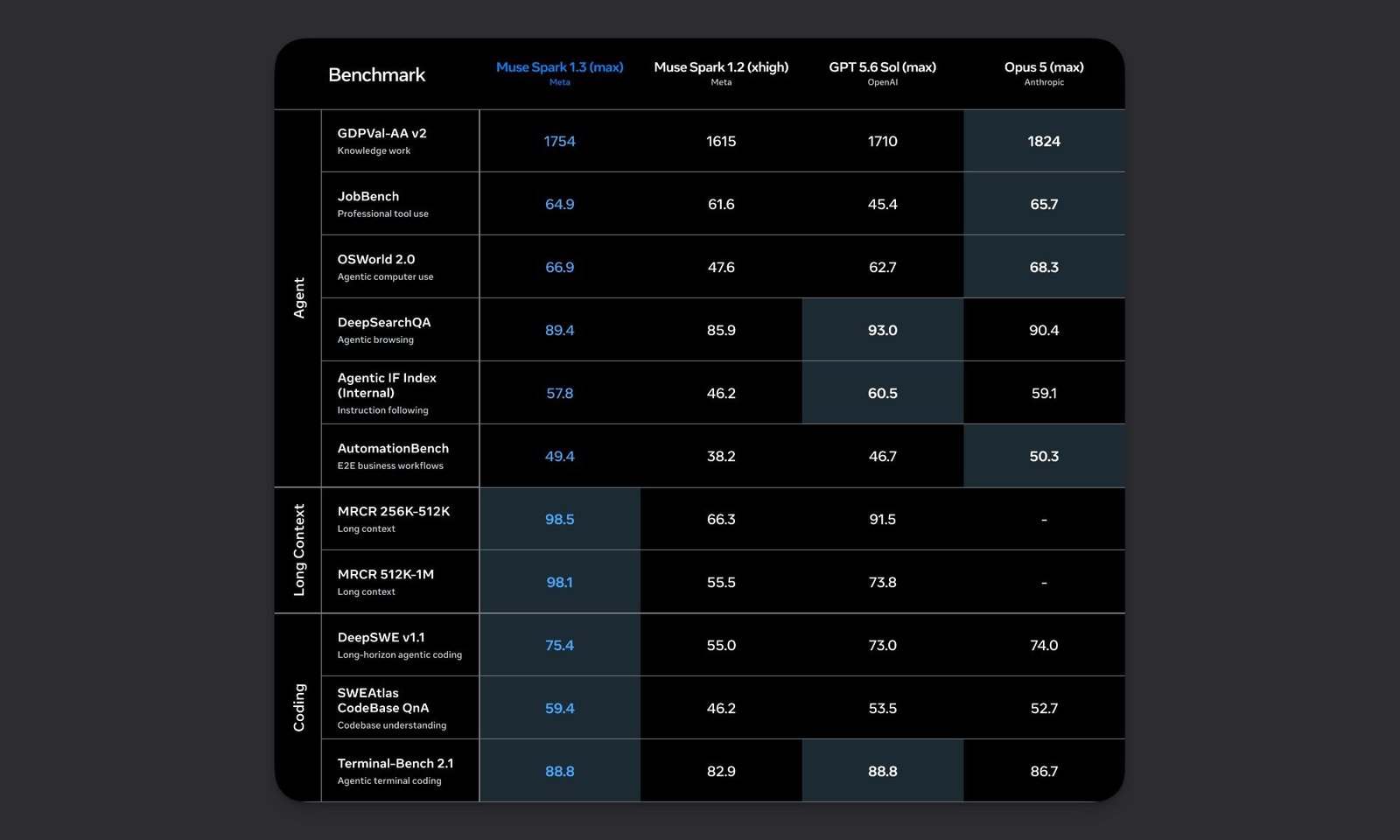
Anthropic officially launched Claude Opus 5, the newest addition to its Opus line, aimed squarely at coding, research, and complex business workflows. The company is making a bold claim: it rivals the much-hyped Claude Fable 5 on several key tests — while costing significantly less per task.

Opus 5 is rolling out across Claude’s apps and API. It’s now the default model for Claude Max subscribers and the strongest option bundled with Claude Pro. For users who’ve been watching Fable 5 move behind pay-as-you-go credits starting July 20, this could be a welcome shift.

How close is Claude Opus 5 to Fable 5, really?

Anthropic’s own numbers paint an interesting picture. On CursorBench 3.2 — a benchmark that tests coding agents on real software development tasks — Opus 5 finished within 0.5% of Fable 5’s best score at maximum effort. The catch? It hit that result at half the cost per task.

On OSWorld 2.0, which measures how well AI agents operate computers and complete tasks across apps and files, Opus 5 actually beat Fable 5’s best result at just over a third of the cost. That’s not a small margin.

Still, these are Anthropic’s own tests. Real-world performance can vary wildly depending on your workload, your codebase, and how you prompt the model. Treat the numbers as directional, not gospel.

What the benchmarks actually measure

  • CursorBench 3.2: Real software engineering tasks, scored on completion and correctness.
  • OSWorld 2.0: AI agents navigating a computer, using apps, and managing files like a human would.
  • Frontier-Bench v0.1: Difficult software engineering problems, testing persistence and debugging ability.

Big leap over Opus 4.8

Compared to its predecessor, Opus 5 is a substantial upgrade. Anthropic says it more than doubled Opus 4.8’s score on Frontier-Bench, which tests AI agents on challenging software engineering tasks. It also completed those tasks at a lower average cost.

The company highlights that Opus 5 is better at checking its own work, diagnosing root causes of bugs, and pushing through difficult jobs instead of stopping after a quick fix. In one example, it caught an edge case that an existing community patch had missed. That kind of thoroughness matters when you’re debugging a production system at 2 a.m.

Pricing stays the same

Here’s the part that might surprise you: Claude Opus 5 costs $5 per million input tokens and $25 per million output tokens — unchanged from Opus 4.8. You’re getting a more capable model for the same price. For developers and teams watching API bills, that’s a meaningful win.

For Pro and standard Team subscribers, Opus 5 could fill the gap left by Fable 5 moving behind pay-as-you-go credits. If you’ve been relying on Fable for heavy lifting but don’t want to pay per task, Opus 5 is now your best in-subscription option.

Should you switch to Claude Opus 5?

If you’re a Claude Max or Pro user, you don’t need to do anything — Opus 5 is already there. For API users, it’s worth running your own evals on your specific tasks. The benchmark results are promising, but nothing beats testing on your own code.

Anthropic’s positioning is clear: Opus 5 is the cost-effective workhorse, while Fable 5 remains the premium option for the absolute hardest problems. If your budget is tight and your tasks are complex, Opus 5 deserves a serious look.

Just remember — these are vendor-reported numbers. Independent verification will come as developers push the model in the wild. Until then, consider this a strong contender, not a certified champion.

Continue Reading

Artificial Intelligence

British Gas Cuts 1,300 Jobs, Claims Customers Prefer AI Over Human Support. Is That True?

Published

on

AI customer support

British Gas is betting big on AI — and 1,300 call centre workers are paying the price

Centrica, the parent company of British Gas, has confirmed it will cut 1,300 call centre jobs over the next two years. The company says the move is part of a “targeted deployment of AI tools” and a shift in how customers interact with the brand.

Here’s the breakdown: 800 roles will go due to AI-driven automation, on top of 500 cuts announced just last month. The job losses will hit customer service teams in Glasgow, Edinburgh, Cardiff, Leicester, Stockport, and Leeds.

Some positions will simply disappear through natural attrition — employees leave, nobody gets hired to replace them. The rest will come through compulsory redundancies. Trade unions are furious, warning that Centrica is handing hundreds of human jobs to chatbots.

What Centrica’s CEO says about AI and customer preference

Centrica CEO Chris O’Shea insists AI isn’t the direct cause of the cuts. Instead, he points to customer behaviour. According to him, more than 90% of British Gas customers now start with digital channels, and call volumes have fallen by 20% (via The Guardian).

But here’s the thing: choosing to open an app or check a website first doesn’t mean customers prefer talking to a chatbot. It just means they prefer convenience. Those are two very different things.

What the surveys actually say about AI support

The evidence that people prefer human support is pretty overwhelming. A February 2026 SurveyMonkey report found that 79% of Americans strongly preferred dealing with a person. Only 8% actively preferred AI. And 81% believed companies were introducing AI mainly to save money — not to improve service.

Another survey from Pegasystems, conducted by YouGov among more than 4,700 consumers in North America and the UK, found that 66% preferred human-led support. Around 46% said AI rarely or never solved their problem. Just 2% wanted to deal only with chatbots.

Neither survey looked specifically at British Gas customers. But both suggest Centrica may be confusing a preference for digital tools with a preference for AI. AI customer support might be efficient, but it’s not what most people actually want.

When does AI customer service actually work well?

To be fair, AI has its place. It works brilliantly when the problem is simple and the customer wants a quick answer. Research published last year cited an Intercom survey where 61% of consumers preferred AI for fast replies to routine questions.

There’s also a strong financial incentive. One 2026 industry report estimates that AI can cut the average cost of a customer interaction from $4.60 to $1.45. AI agents can also solve between 76% and 92% of basic ecommerce requests.

So yes, for checking a bill, changing an appointment, or tracking a delivery — a chatbot is often fine.

The real problem: complexity

But a serious billing dispute? An error that’s cost you money? A vulnerable customer who needs extra help? That’s where AI falls apart. The same surveys that show preference for humans also show that satisfaction plummets when a chatbot fails to resolve a complex issue.

British Gas customers may well be happy to check a bill online. But when the problem becomes complicated, most people still want to speak to a human being. The available evidence is pretty clear on that.

Centrica’s move might save money in the short term. But if customers feel forced into chatbot vs human support situations they don’t want, the long-term cost could be far higher.

Trade unions have called for more transparency around how AI decisions are made. They’ve also asked Centrica to guarantee that vulnerable customers can still reach a human agent. So far, the company hasn’t given clear answers.

What this means for the future of customer service

This isn’t just about British Gas. It’s a signal of where the industry is heading. Call centre AI trends show that automation is being rolled out across sectors — telecom, banking, retail, utilities. And in every case, the same tension appears: companies want to cut costs, customers want to talk to people.

The smart approach probably isn’t all-or-nothing. It’s about routing simple queries to AI and escalating complex ones to humans quickly. But that requires investment in intelligent routing, not just cutting staff.

For now, British Gas customers might want to keep the phone number handy. The chatbot might be able to handle a meter reading. But when something actually goes wrong, you’ll likely want a human — and there will be fewer of them available.

Continue Reading

Artificial Intelligence

OpenAI’s First Hardware Device Is a Screenless Speaker That Moves — Here’s What We Know

Published

on

OpenAI hardware device

The Scoop: A Speaker With a Personality

OpenAI’s long-rumored jump into physical products finally has a shape — and it’s not a phone. According to a Bloomberg report, the company’s first OpenAI hardware device is a mobile smart speaker with no screen. It’s being pitched internally as a “humanlike AI companion that lives in the home.”

The device is still under development, but sources describe it as having a “personality.” It can proactively learn about its owner over time, pulling from emails and other digital data to deliver increasingly personalized responses. Think of it as ChatGPT given a body — and a bit of autonomy.

What Makes This Speaker Different?

Most smart speakers sit on a shelf and wait for a wake word. This one, reportedly, does more. Bloomberg’s sources say the device includes “mechanical elements that can move on their own.” That’s a deliberate design choice, meant to make the gadget feel less like a tool and more like a presence — a “physical manifestation of ChatGPT,” as one insider put it.

It’s a strange concept, sure. But it also signals where OpenAI thinks consumer AI is headed: not just answers, but companionship.

The Apple DNA Inside

Notably, the project was built with help from former Apple engineers — the kind who worked on the iPhone and the Mac. That pedigree explains the polish OpenAI is aiming for. But it also makes the timing awkward.

The Elephant in the Room: Apple’s Lawsuit

Last week, Apple sued OpenAI, accusing the AI company of stealing trade secrets. Apple’s legal team called the initial allegations just “the tip of the iceberg,” hinting that more would surface during discovery. OpenAI has denied any wrongdoing.

So how does the new device fit into that mess? Bloomberg’s sources say OpenAI believes its product “veers significantly from anything Apple has on the market today” and that it’s “unlikely” to violate Apple’s trade secrets. Whether a judge agrees is another matter entirely.

This isn’t just a legal headache — it’s a strategic one. OpenAI has long hinted at building its own hardware, with some rumors pointing to a phone that would go head-to-head with Apple. The speaker is a less confrontational move, but the lawsuit still casts a long shadow over the launch.

The Bigger Picture: Money Is Flooding Into AI Hardware

OpenAI isn’t the only one chasing this vision. The broader tech world is suddenly obsessed with consumer AI hardware. Consider Hark, an AI lab founded by Brett Adcock. In May, it raised an oversubscribed $700 million Series A at a $6 billion valuation. The goal? Build “personal intelligence” — proprietary AI models paired with custom hardware, framed as a “universal interface between humans and machines.”

Hark hasn’t even revealed what its device looks like yet. That’s how much capital is chasing this category before a single product ships.

What This Means for the Smart Speaker Market

If OpenAI pulls this off, it could shake up a market dominated by Amazon Echo and Google Nest devices. Those products are useful, but they’re not exactly companions. A screenless speaker that moves and learns could carve out a new niche — if the price is right and the privacy concerns don’t sink it.

Questions Still Up in the Air

Plenty of details remain unknown. When will it launch? What will it cost? How will OpenAI handle the data it collects from your emails and daily life? And will the Apple lawsuit delay things?

For now, we know this: OpenAI’s first hardware device isn’t a phone, and it isn’t a boring box. It’s a speaker with a soul — or at least, a very convincing simulation of one.

Keep an eye on this space. The home AI race is just getting started.

Continue Reading

Trending