Connect with us

Artificial Intelligence

OpenAI’s GPT-5.5 Instant Update Makes ChatGPT More Fun to Talk To — Here’s Why That Matters

Published

on

OpenAI’s GPT-5.5 Instant Update Makes ChatGPT More Fun to Talk To — Here’s Why That Matters

For years, the AI race has been defined by benchmark scores, reasoning tests, and coding prowess. But OpenAI is now shifting gears. The latest GPT-5.5 Instant update focuses on something far more human: making conversations with ChatGPT feel natural, engaging, and genuinely enjoyable. This isn’t just a tweak under the hood — it’s a strategic pivot toward user experience over raw intelligence.

What’s New in the GPT-5.5 Instant Update?

OpenAI has rolled out a significant refresh to GPT-5.5 Instant, the default model powering hundreds of millions of ChatGPT users. According to the company’s release notes, the update zeroes in on conversational quality. Instead of spitting out generic responses, the model now aims to grasp the intent behind a user’s question and adapt its tone and depth accordingly.

Whether you’re asking for advice, researching options, planning a trip, or shopping for a product, GPT-5.5 Instant is designed to respond in a way that feels tailored to your needs. The company claims the model handles complex constraints more reliably and makes interactions feel less robotic. In short, it’s built to be more fun to talk to.

As OpenAI stated in its announcement: “We have a new version of GPT-5.5 Instant for you, and it’s much more fun to talk to.” That’s a bold claim — and one that signals a departure from the usual focus on factual accuracy and speed.

Why Better Conversational Quality Matters More Than Benchmarks

Let’s be honest: most people don’t use ChatGPT to solve advanced calculus problems or write code. They use it for everyday tasks — planning a weekend getaway, deciding which laptop to buy, or venting about a tough day. In these scenarios, conversational flow and emotional intelligence often matter more than raw processing power.

This GPT-5.5 Instant update prioritises understanding user intent. Instead of jumping straight into a generic answer, the model now tries to figure out whether you want practical recommendations, emotional support, detailed analysis, or just a quick fact. This shift makes ChatGPT feel less like a search engine and more like a thoughtful assistant.

Earlier updates to GPT-5.5 Instant focused on reducing hallucinations and improving factual accuracy. While those are important, the latest revision doubles down on the human side of the experience. The result? Conversations that feel more natural, relatable, and engaging.

How the Update Changes Everyday Interactions

Imagine you’re shopping for a new pair of running shoes. In the past, ChatGPT might have listed generic features like cushioning and durability. Now, with the new update, it might ask about your running style, preferred terrain, and budget before offering tailored suggestions. That’s a big difference.

Similarly, if you’re seeking advice on a career change, the model can adapt its tone — offering empathetic support one moment and practical steps the next. This flexibility is what makes the GPT-5.5 Instant update stand out. It’s not just about being smarter; it’s about being more attuned to what you actually need.

For businesses and content creators, this means more natural customer interactions and better user engagement. ChatGPT for customer service could see a significant boost in satisfaction rates as the model learns to read between the lines of user queries.

What This Means for the Future of AI Assistants

OpenAI’s latest move suggests a broader trend: the future of AI won’t be won by the smartest model on paper, but by the one people enjoy talking to the most. By making GPT-5.5 Instant more intuitive and personable, the company is betting that user experience will drive adoption and loyalty.

This update also highlights the growing importance of emotional intelligence in AI. As AI emotional intelligence trends continue to evolve, models that can genuinely understand and respond to human emotions will become indispensable.

Interestingly, this shift might resonate more with everyday users than any benchmark victory ever could. After all, what good is a super-smart assistant if it feels cold and impersonal? The GPT-5.5 Instant update aims to bridge that gap, making ChatGPT not just a tool, but a companion.

Final Thoughts: A Smarter, Friendlier ChatGPT

OpenAI has taken a calculated risk by prioritising conversational quality over benchmark scores. But early reactions suggest it’s paying off. Users are reporting more satisfying interactions, and the model’s ability to handle complex, multi-turn conversations has noticeably improved.

As AI continues to integrate into our daily lives, the ability to communicate naturally will become a key differentiator. The GPT-5.5 Instant update is a clear step in that direction. If you haven’t tried it yet, now might be the perfect time to see what a truly conversational AI feels like.

For more insights on how AI is reshaping communication, check out our guide on top AI communication tools in 2026.

Continue Reading
Click to comment

Leave a Reply

Your email address will not be published. Required fields are marked *

Artificial Intelligence

Apple’s Camera-Equipped AirPods: Why They Might Not Be the ‘Pervert Pods’ Everyone Fears

Published

on

camera-equipped AirPods

The Rumor That Set the Internet on Edge

Picture this: you’re on a crowded train, and the person across from you is wearing AirPods. Now imagine those tiny earbuds have cameras. Creepy, right? That’s the fear that erupted when reports surfaced that Apple is working on camera-equipped AirPods. The internet, predictably, dubbed them “pervert pods.”

But here’s the thing — the reality might be far less sinister than the memes suggest.

What the Leaks Actually Reveal

The rumors gained traction after video footage surfaced in Apple’s macOS 26.7 RC (release candidate) — the final test version before public release. The clip shows a man holding a book while wearing AirPods, chatting with Siri about it. The audio track says: “With Visual Intelligence, your world becomes savable. See something you like? Just ask me to save it for later.”

Further evidence comes from code referencing a “Hair Detected” error. This would warn users when their hair blocks the AirPods’ camera. It’s a small detail, but it confirms the hardware is real — and that Apple is thinking about real-world usage.

Why These Aren’t Spy Cameras

Here’s where the narrative shifts. According to a report from Bloomberg’s Mark Gurman, these cameras won’t record photos or video. At all. As Gurman put it: “The cameras essentially act as eyes for the Siri digital assistant and aren’t designed to take photos or video. These components — located in both the right and left earbuds — allow the device to capture visual information in low resolution.”

So what’s the point? The goal is to feed visual data to Siri, which is getting a major AI upgrade in September with iOS 27. Instead of pulling out your iPhone to ask about something, you just look at it and speak. A book, a recipe’s ingredients, a street sign — Siri can see it and respond.

This isn’t surveillance. It’s a hands-free way to interact with your environment. Think of it as a smart assistant with eyes, not a hidden camera.

The LED Indicator: A Double-Edged Sword

Apple isn’t ignoring the privacy elephant in the room. Gurman reports the new AirPods will include an LED indicator that lights up whenever the device shares visual data to the cloud. That’s a transparency move — but it’s also a risk.

The LED could visually lump AirPods in with other AI wearables already facing public skepticism, like Meta‘s Ray-Bans, Snap’s Specs, or Google’s AI glasses. Apple can control what the cameras do, but it can’t control what people assume they do. A tiny light on an earbud might not be enough to reassure a nervous public.

The Visibility Problem

Gurman himself questioned the LED’s visibility given the AirPods’ small size. If the light is too small to see, it defeats its purpose. But if it’s too prominent, it could make wearers self-conscious. It’s a delicate balance.

A Strategic Bet on a Screen-Free Future

For Apple, this is about more than just a hardware refresh. It’s a bet that consumers want to interact with technology without staring at a screen. By baking AI access into a socially acceptable wearable, Apple is pushing toward a future where you don’t need to pull out your iPhone every five minutes.

That’s a compelling vision. Walking directions that whisper in your ear without checking your phone. Cooking help that sees your ingredients. A world where your devices work in the background, not in your face.

But it’s also a gamble. AirPods are currently a seamless accessory — people wear them all day without a second thought. Adding cameras, even benign ones, changes that perception. It forces people to wonder: is that person recording me?

The Privacy Tightrope Apple Must Walk

Apple has built its brand on privacy. That’s why this is riskier than a typical product launch. The company needs to convince consumers that the cameras are for Siri’s benefit, not for surveillance.

The LED indicator is a start, but it’s not enough. Apple will need a massive education campaign. It’ll need to explain, repeatedly, that these cameras can’t save photos or video. It’ll need to show, not just tell, how the data is processed and protected.

If Apple gets this right, it could redefine how we interact with AI. If it gets it wrong, the “pervert pods” label will stick — and that’s a PR nightmare no company wants.

For now, the leaked footage and code suggest Apple is thinking carefully. But in the court of public opinion, careful thinking isn’t always enough. The cameras are coming. The question is whether we’ll accept them.

Continue Reading

Artificial Intelligence

Gemini Notebook’s new Collections bring order to your research chaos

Published

on

Gemini Notebook Collections

Google finally gives NotebookLM users a way to breathe

Google hasn’t even finished rebranding NotebookLM, and it’s already fixing one of the biggest pain points for heavy users: a cluttered dashboard.

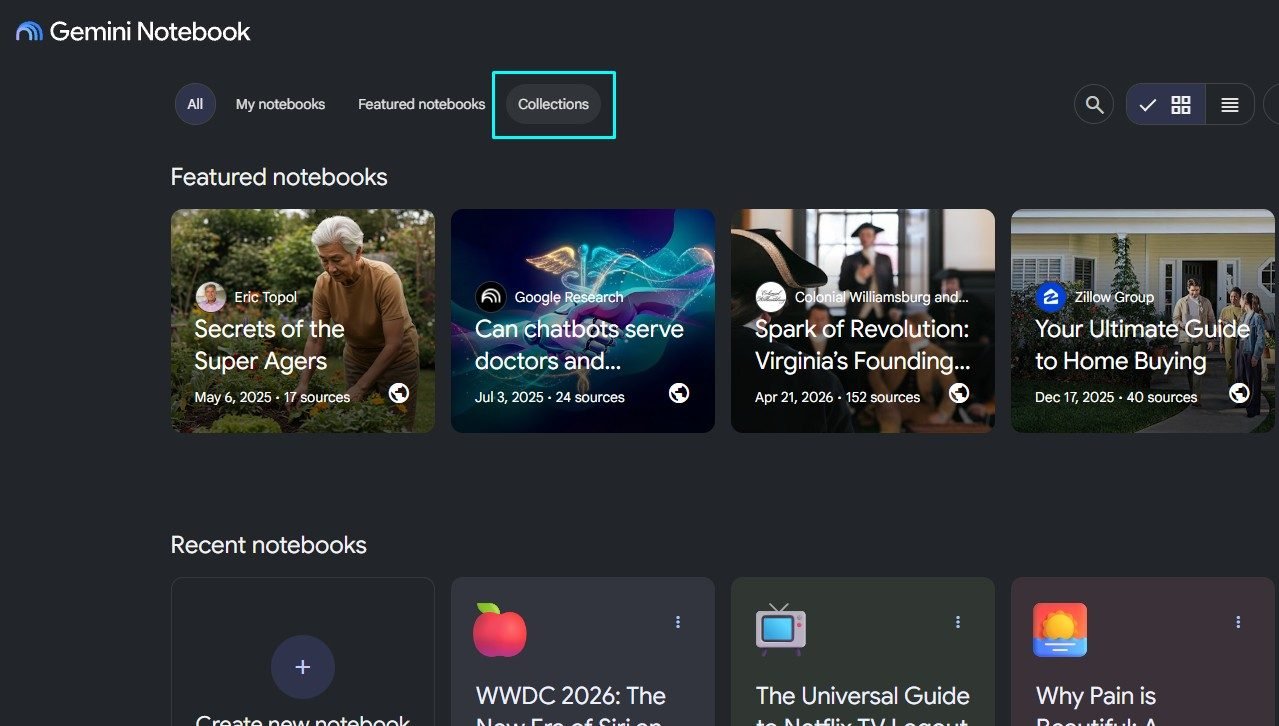
Starting this week, Gemini Notebook Collections are rolling out to everyone. The new tab lets you group related notebooks while keeping everything visible under My Notebooks. No forced reorganization. No rigid folder trees. Just a little structure for the chaos.

The timing makes sense. Google is tying the former NotebookLM more tightly into Gemini and Google Search, turning a standalone research tool into something that follows you across the company’s AI products. More places for notebooks means more notebooks. And more notebooks means you need a way to sort them.

Collections act like labels, not folders

The core idea is refreshingly simple. A notebook can belong to multiple Collections at once. That research project on climate policy could sit under both “Work” and “Environment” without duplicating a single file or forcing you to pick one permanent home.

Think of Collections like photo albums or playlists. They’re flexible by design. Anything that doesn’t need sorting stays ungrouped under My Notebooks, so your existing library doesn’t get turned upside down.

Google’s own announcement on X put it plainly: “zero rigid folder structures with maximum flexibility.” You can add notebooks to as many collections as you want, or skip the whole system entirely if it doesn’t fit your workflow.

Why this matters for heavy researchers

If you’ve ever stared at a wall of 50 notebooks with no way to tell them apart, you know the pain. Collections give crowded dashboards some breathing room without introducing a complicated filing system you’ll have to maintain forever.

The setup is deliberately basic. That’s a feature, not a bug. Google isn’t asking you to reorganize everything — just to group what needs grouping.

Organization becomes critical as Notebooks spread

This update isn’t happening in a vacuum. Notebooks can now appear inside the Gemini app, where you can work with uploaded material alongside your previous chats and custom instructions. Changes sync with the separate Gemini Notebook service, so the same project continues seamlessly across both products.

Google is also pulling Gemini Notebook into Search results. With notebooks gaining more places to appear and more ways to accumulate information, leaving them in one increasingly crowded library would become frustrating fast.

Collections add an organizational layer before that expansion makes the dashboard impossible to navigate. Smart timing, honestly.

What Collections still don’t give you

Let’s be clear about the limits. Google hasn’t announced nested Collections, automatic sorting, or anything resembling a full file-management system. You can group notebooks, but you can’t build a detailed hierarchy or hand the cleanup over to Gemini.

That leaves Collections with a narrow job: divide a growing library into useful groups without duplicating projects or removing anything from the main dashboard.

For anyone already drowning in notebooks, that may be enough. But if you were hoping for the control of a proper folder system with subfolders and drag-and-drop organization, you’ll find this pretty basic.

How to start using Collections today

Ready to tidy up? Here’s what you need to know:

  • Open Gemini Notebook and look for the new Collections tab at the top of your dashboard.
  • Create a collection and give it a name — anything from “Q3 Research” to “Recipes I’ll never cook.”
  • Add notebooks by selecting them from your existing library. A notebook can live in multiple collections simultaneously.
  • Leave ungrouped notebooks alone if they don’t need sorting. They’ll stay visible under My Notebooks.

The rollout is gradual, so if you don’t see the tab yet, check back in a few days. Google typically pushes these updates to all users within a week or two.

For more on how to get the most out of Google’s AI tools, check out our guide on using Gemini for research projects and tips for organizing your digital workspace.

Continue Reading

Artificial Intelligence

The future of AI may hinge on this one behind-the-scenes protocol update

Published

on

MCP update

Why everyone’s missing the real story about AI progress

Whenever a new AI model drops, the hype machine goes into overdrive. We hear about how much smarter it is, how quickly it answers, how photorealistic its outputs have become. But here’s the uncomfortable truth: none of that matters if the AI can’t reliably plug into the apps and services you use daily.

That’s why an upcoming update to the Model Context Protocol (MCP) caught my eye. It’s not a flashy new chatbot or a breakthrough model. Most people will never even notice it’s happening. Yet it could quietly make the entire AI ecosystem far more robust.

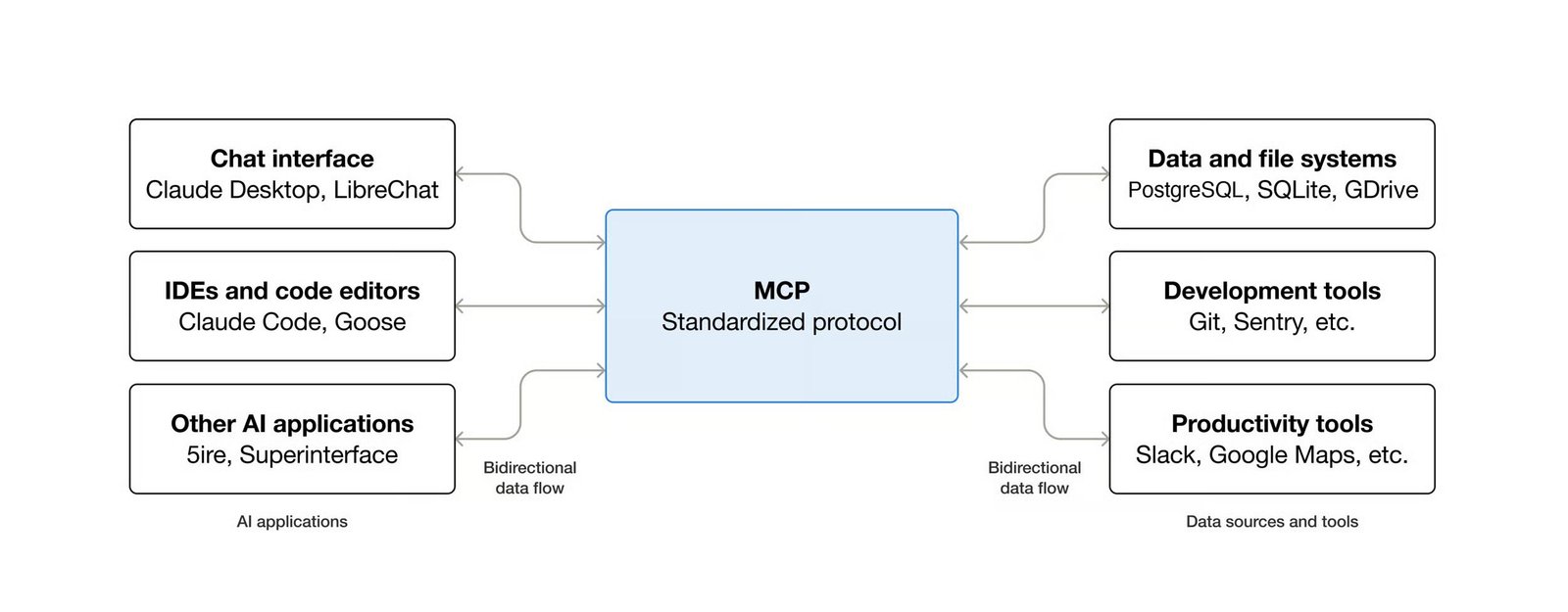
If you’ve never heard of MCP, think of it as a universal translator for AI. It lets assistants like ChatGPT, Claude, or Gemini safely talk to Gmail, Slack, calendars, databases, and countless other tools. Instead of every company inventing its own proprietary bridge, MCP provides a shared rulebook.

The problem isn’t the AI — it’s the plumbing

It’s tempting to assume AI only improves when companies release beefier models. In practice, many of today’s growing pains have nothing to do with intelligence. They’re infrastructure issues.

Imagine calling a friend every few minutes and having to reintroduce yourself each time. That’s roughly how many AI services operate today. Servers burn extra cycles tracking who’s talking to them, especially when millions of people hit the same service simultaneously. The next MCP version changes that dynamic. Instead of forcing one server to manage every conversation, the protocol makes requests easier to shuffle between different servers.

Sounds like a minor technical tweak, right? But it strips away a surprising amount of complexity for companies running AI at scale. That translates into faster responses, lower costs, and fewer bottlenecks — even if you never see the change.

What the MCP update actually does

The upcoming revision targets a core inefficiency in how AI systems authenticate and route requests. Current implementations often require a single server to hold context for an entire session. That works fine in a demo, but it crumbles under real-world load.

The new approach decentralizes that responsibility. Requests become more portable, so they can be handled by whichever server is best positioned at the moment. It’s a bit like upgrading from a single checkout line to a system that dynamically opens new lanes as queues grow.

For developers, this means less time wrestling with session management and more time building features. For users, it means AI tools that feel more responsive and reliable — even during peak usage spikes.

Why this matters beyond the tech bubble

This update won’t suddenly make your favorite chatbot feel like a genius overnight. What it does is lay the groundwork for AI to move beyond isolated chat windows and into your everyday workflow. That’s the direction the industry is heading: AI that drafts emails, updates your CRM, books meetings, and queries internal databases — all without you juggling a dozen logins.

That vision only works if the underlying connections are solid. MCP is the glue, and this update makes the glue stickier.

Sometimes boring is exactly what AI needs

I’ll admit, a protocol update isn’t headline-grabbing material. But it’s precisely these unglamorous fixes that separate a promising demo from a dependable product.

Consider how far we’ve come. Early AI integrations were brittle — one change in an API could break everything. MCP’s standardized approach changes that calculus. It creates a stable foundation that both startups and tech giants can build on.

That’s why this quiet update deserves attention. It’s not about teaching AI a new trick; it’s about fixing the pipes so everything else flows. And while that may not sound thrilling today, it’s exactly the kind of improvement that makes tomorrow’s AI feel effortless and genuinely useful.

For more on how AI is evolving beyond chatbots, check out our guide to AI-powered productivity tools or how to connect AI assistants to your daily apps.

Continue Reading

Trending