Connect with us

How To

Samsung quietly renamed Adaptive Battery — and it might be why you’re missing notifications

Published

on

Samsung Adaptive Battery

Why your notifications are suddenly going quiet

Over the last couple of weeks, I’ve missed a few package delivery alerts, some Slack pings, and a doorbell notification on my Pixel 9. It’s the kind of thing that drives you up the wall — you check your phone, and there’s nothing. Then you realize hours later that a delivery driver rang and you never knew.

Tracking this down, I found out that while turning off Adaptive Battery is one way to make sure you don’t miss any notifications, Samsung has moved and renamed the setting, making it even harder to find. It’s a sneaky change that could be costing you more than just a missed ping.

What is Adaptive Battery, and why does it matter?

Adaptive Battery is Android’s built-in feature that learns how you use your phone and limits background activity for apps you rarely open. It’s supposed to save battery life without you noticing. But when it works too aggressively, it can delay or completely suppress notifications from apps you actually care about.

On a Pixel, you can toggle it off in Settings > Battery > Adaptive Preferences. Simple. But on Samsung devices, the feature has been rebranded and buried. If you’re not looking for it, you’ll never find it.

What Samsung renamed it to

Samsung now calls it Adaptive Battery — wait, no. They’ve actually renamed it to Battery Optimization in some versions of One UI, and in others, it’s tucked under App power management. The exact name varies depending on your device and software version, which makes it even more confusing.

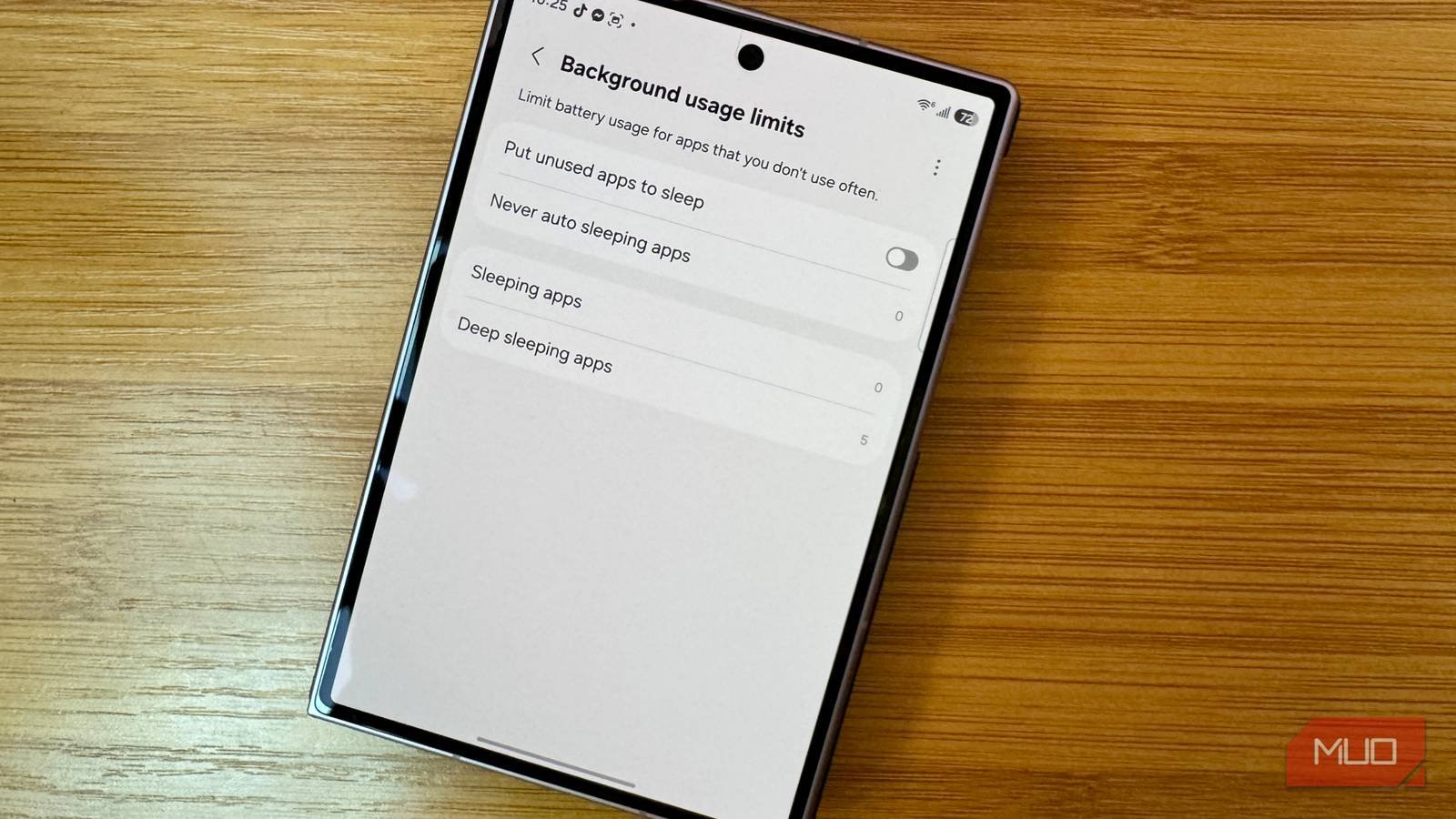
On recent Galaxy phones running One UI 6 or 7, you’ll find it under Settings > Battery > Background usage limits. There, you’ll see a toggle for Adaptive Battery — but only if you know to look for it. Samsung has also added a separate Deep sleeping apps list, which can silently put apps to sleep and block their notifications entirely.

How to find the renamed setting on your Samsung phone

If you’re missing notifications on a Galaxy device, here’s where to look:

  • Open Settings and go to Battery.
  • Tap Background usage limits (or App power management on older One UI versions).
  • Turn off Adaptive Battery if you want apps to run freely.
  • Check the Deep sleeping apps list and remove any apps you need notifications from.

You can also search for “Adaptive Battery” in the Settings search bar. On some devices, it still shows up under that name, but on others, you’ll only see “Battery Optimization.” It’s inconsistent, and that’s the problem.

Why Samsung buried the setting

Samsung’s goal is battery life. By hiding the toggle, they push most users to leave the feature on, which means their phones last longer on a charge. But that comes at a cost: you might miss important notifications without realizing why.

It’s a trade-off. If you’re someone who relies on timely alerts — for work, deliveries, or even security cameras — you might want to disable it for specific apps rather than globally. You can do that by tapping on an app in the Deep sleeping or Sleeping apps list and selecting Never sleep.

What about the Pixel 9?

On my Pixel 9, the issue was different. Adaptive Battery was on, but a recent update seemed to make it more aggressive. Turning it off fixed the missed notifications, but it did drain the battery faster. The fix is the same: go to Settings > Battery > Adaptive Preferences and toggle it off.

If you’re using a Samsung phone, you might also want to check Notifications > App notifications to make sure nothing is blocked at the system level. Sometimes it’s not just battery optimization — it’s a combination of settings working against you.

Final thoughts: don’t let a hidden setting cost you

Hidden settings are a pain, but they’re not impossible to find. If you’re missing notifications, the first thing to check is your battery optimization settings. On Samsung, that means digging into Background usage limits and Deep sleeping apps. On Pixel, it’s the straightforward Adaptive Battery toggle.

It’s worth the five minutes it takes to check. Because the next package delivery might not wait for you to figure out why your phone went silent.

For more tips on managing your Android device, check out our guide on Android notification settings and Samsung One UI battery tips.

Continue Reading

Social Media

Content Anchoring, New Instagram Tactics, and Industry News: What Marketers Need to Know

Published

on

content anchoring

Content Anchoring: A New Way to Think About Your Strategy

Content anchoring isn’t just a buzzword—it’s a practical approach to making your brand’s message stick. The idea is simple: you create a central piece of content that serves as the anchor for all your other marketing efforts. Think of it as your North Star, guiding every post, video, and newsletter you publish.

Why does this matter now? With attention spans shrinking and algorithms constantly shifting, marketers can’t afford to scatter their efforts. Anchoring your content gives you a consistent thread that ties everything together. It builds trust, reinforces your expertise, and makes your messaging more memorable.

How to Implement Content Anchoring Today

  • Pick a core topic that aligns with your audience’s biggest pain point.
  • Create one flagship asset—like a comprehensive guide, a webinar, or a case study—that dives deep into that topic.
  • Repurpose that anchor into shorter posts, infographics, and email snippets across your channels.

This isn’t about creating more content; it’s about creating content that works harder. When every piece points back to your anchor, you’re not just posting—you’re building a narrative.

New Instagram Tactics: What’s Working Right Now

Instagram keeps evolving, and the tactics that worked last quarter might already feel stale. The latest updates focus on authenticity and direct engagement. Carousels are still a favorite, but now they’re being used for storytelling rather than just listicles. Short-form video, especially Reels, continues to dominate reach.

One tactic gaining traction is the ‘close friends’ feature for exclusive content. Marketers are using it to create a sense of VIP access, which boosts loyalty and encourages more intimate interactions. Another is the shift toward SEO on Instagram—optimizing your bio and captions with keywords is becoming as important as it is on Google.

Don’t overlook the power of interactive stickers in Stories. Polls, quizzes, and emoji sliders aren’t just fun; they’re data goldmines. They give you immediate feedback and tell the algorithm that your content is engaging.

Practical Instagram Tips You Can Use

  • Test ‘close friends’ for exclusive behind-the-scenes content.
  • Write captions with search intent—think about what users might type to find you.
  • Use carousels to tell a story across 5-8 slides, not just to share tips.

These tactics aren’t revolutionary, but they’re effective because they align with how users actually behave on the platform. Instagram wants to keep people on the app longer, and your content should help it do that.

Industry News: The Half-Price Ticket Sale You Shouldn’t Miss

If you’re a marketer, you’ve probably heard of Social Media Marketing World and AI Business World. Right now, they’re offering 50% off all tickets—but only this week. That’s a significant discount for events that are packed with actionable insights.

Why should you care? These conferences bring together industry leaders who share case studies, emerging trends, and networking opportunities that you can’t get from a blog post alone. Whether you’re focused on social media strategy or the intersection of AI and business, there’s something for you.

The sale ends soon, so if you’ve been considering attending, this is your chance to save money while investing in your professional growth. Don’t wait until the last minute—these tickets tend to sell out.

Quick Recap: Your Actionable Takeaways

Let’s wrap up with what you can actually use today. Content anchoring gives you a strategic focus, Instagram tactics help you engage better, and industry events offer learning opportunities that pay off in the long run.

Here’s your checklist:

  • Identify your anchor content and create a flagship asset.
  • Update your Instagram strategy with one new tactic this week.
  • Check out the ticket sale before it ends.

Stay ahead of the curve by keeping an eye on these trends. The marketing world moves fast, but with these insights, you’re not just keeping up—you’re leading.

Continue Reading

How To

Hyundai’s 600-Mile EREV Could Finally End Range Anxiety for EV Buyers

Published

on

Hyundai 600-mile EREV

The 600-Mile Promise That Changes Everything

Range anxiety. It’s the single biggest reason millions of drivers still refuse to go electric. You’ve heard the complaints: charging takes too long, stations are too sparse, and winter range drops like a stone. Hyundai thinks it has the answer, and it’s not a bigger battery.

The Korean automaker is working on an extended-range electric vehicle (EREV) that targets a staggering 600 miles of driving range. That’s roughly double what most mainstream EVs offer today. For context, a Tesla Model 3 Long Range manages about 341 miles. The Hyundai Ioniq 6? Around 361. This new platform would blow both out of the water.

And here’s the kicker: it doesn’t rely on a massive, expensive battery pack to get there.

What Exactly Is an EREV?

An EREV sits in a clever middle ground between a pure battery-electric vehicle and a plug-in hybrid. The wheels are always driven by an electric motor. The gasoline engine, when present, never directly powers the wheels. Instead, it acts as a generator, spinning to recharge the battery while you drive.

Think of it as a mobile power plant on wheels. You get the instant torque and silent operation of an EV, but with a gas tank as a safety net. When the battery depletes, the engine kicks in to keep you moving. No charging stops, no anxiety, just miles.

This isn’t a new concept. The original Chevrolet Volt used this architecture over a decade ago. But Hyundai is taking the idea to an entirely new scale, aiming for a combined range that makes even the longest road trips feel trivial.

How It Differs From a Traditional Hybrid

It’s easy to confuse an EREV with a standard hybrid like the Toyota Prius. The key difference is the battery capacity. A conventional hybrid has a tiny battery and can only travel a mile or two on electric power alone. An EREV like Hyundai’s will offer a substantial all-electric range—likely 90 to 100 miles—before the generator even needs to wake up.

For daily commuting, you’d rarely burn a drop of gasoline. The engine only fires up on longer journeys, acting as a range extender rather than a primary power source.

Why 600 Miles Matters More Than You Think

Charging infrastructure is improving, sure. But it’s still far from perfect. Even with fast chargers popping up everywhere, a cross-country trip in a pure EV requires planning. You need to map out charging stops, hope stations are functional, and budget extra time for the process. A 600-mile range changes that calculus entirely.

Consider this: the average American drives about 40 miles per day. A 600-mile range means you could theoretically drive for two weeks without charging or refueling. For road trips, you could drive from New York to Chicago, from Los Angeles to Denver, or from Miami to Atlanta—all on a single tank and charge.

This isn’t just about convenience. It’s about removing the psychological barrier that keeps people in gasoline cars. When you know you can drive 600 miles without stopping, the fear of being stranded evaporates.

Hyundai’s EREV Strategy: What We Know So Far

Hyundai has been tight-lipped on specifics, but the company confirmed that the EREV platform is under active development. The technology is expected to debut in the next few years, likely first appearing in larger vehicles like SUVs where range is a premium concern.

The company’s approach is pragmatic. Instead of chasing ever-larger battery packs—which add weight, cost, and environmental impact—Hyundai is betting on a more efficient total system. The EREV architecture allows for a smaller battery, reducing the vehicle’s carbon footprint during production while still delivering exceptional range.

It’s a smart play for a market that’s growing increasingly skeptical of EV practicality. While some automakers are doubling down on pure electric, Hyundai is offering a bridge—a vehicle that satisfies both the desire for electric driving and the need for gasoline-like range.

Potential Challenges Ahead

No technology is without its drawbacks. An EREV is more mechanically complex than a pure EV, with both an electric motor and a gasoline engine to maintain. There’s also the question of emissions. While the generator runs efficiently, it still burns fuel, producing tailpipe emissions that pure EVs avoid entirely.

And then there’s the market perception problem. Some environmental advocates view EREVs as a compromise—a half-step that doesn’t fully commit to electrification. Hyundai will need to convince buyers that this isn’t a step backward, but rather a smarter way forward.

What This Means for the EV Market

If Hyundai delivers on its 600-mile promise, the ripple effects will be significant. Rivals like Toyota and Honda, who have been cautious about full electrification, would suddenly look prescient. Pure EV makers like Tesla might face new pressure to improve their range numbers or drop prices.

More importantly, it could finally win over the skeptics—the millions of drivers who say they’d consider an EV “once the range is good enough.” At 600 miles, the range is more than good enough. It’s better than most gasoline cars on the road today.

The question now is execution. Can Hyundai build this at scale? Can it keep the price competitive? And will the driving experience feel as refined as a pure EV? If the answers are yes, this could be the vehicle that finally convinces the mainstream to make the switch.

For more on how Hyundai is reshaping its electric lineup, check out our breakdown of Hyundai’s electric vehicle lineup for 2026. And if you’re weighing the pros and cons of different powertrains, our guide to EREV vs PHEV vs BEV explains the differences in plain English.

Continue Reading

Social Media

Flipboard acquires Graze, the feed builder working to monetize the open social web

Published

on

open social web

Why Flipboard just bought a two-person startup

Flipboard, the news magazine app that has pivoted hard toward the open social web, announced Wednesday that it’s acquiring Graze, a Portland-based startup that lets people build, customize, and monetize feeds on Bluesky.

It’s a small deal — Graze raised just $1 million at the start of 2025 and has only two employees. But the acquisition says a lot about where Flipboard CEO Mike McCue thinks the social internet is heading.

Graze has been live for 21 months. In that time, its feeds have pushed out over 41 billion posts to roughly 12 million users, according to the company. Today, more than 7,000 feeds run on its platform, and about 60% of that traffic is monetized.

How Graze makes money without tracking you

The core idea is simple: curators build feeds around a topic or community, and brands buy ad placements in those feeds. The curator gets to approve which ads run. The revenue is split 70/30 in favor of the feed creator.

What makes this different from the ads you see on Facebook or Google is the absence of cross-site tracking. No following users around the web. No surveillance-style profiling.

Instead, ads are contextual. A brand that wants to reach game developers buys a spot in a feed run by game developers. The audience is the context.

McCue told TechCrunch that the adtech “doesn’t have to surveil anybody, and it doesn’t have to violate people’s privacy.” He added: “The key thing is that all the economics aren’t just going to one player. The ad revenue is being shared with the feed builder.”

From Surf app collaboration to full acquisition

Flipboard had already been using Graze’s technology inside its new app, Surf, which is designed as a browser for the open social web. That collaboration revealed something: the two companies were building toward the same vision, but duplicating each other’s work.

Graze co-founder and CEO Devin Gaffney realized his startup could move faster with a partner that already had the advertising infrastructure — and the brand relationships — that Graze lacked.

Post-acquisition, Flipboard will keep using Graze’s tech and let users build their own feeds. That capability will expand beyond Bluesky to everything running on the AT Protocol, including Flipboard’s own app.

What is the AT Protocol, anyway?

The AT Protocol is an open technical standard that lets different apps share the same underlying social network. Think of it as a common language for social platforms. Bluesky is built on it, and so is Surf. The idea is that you shouldn’t be locked into one company’s app to access your social graph.

The human side of feed curation

McCue made an interesting point in the interview about how users actually think about these feeds.

“They don’t think of it as, like, ‘I’m joining Bluesky’ or ‘I’m joining the social web, the open social web.’ They just think I’m joining The Tea because ‘I care about women’s sports,'” he said, referencing a Surf community feed called Bet on Her.

That’s the bet Flipboard is making: people will follow interests, not platforms. And if that’s true, then the people who curate those interest-based feeds deserve a cut of the ad money.

What this means for the open social web

The acquisition is another signal that the open social web is moving from a niche experiment to something with real economic structure. Flipboard has been investing heavily in this space, and Graze gives it a proven monetization layer.

For feed creators, the deal means more tools and, potentially, more revenue opportunities. For brands, it offers an alternative to the surveillance-based ad model that has dominated digital advertising for two decades.

Whether that alternative scales remains to be seen. But with Flipboard’s infrastructure behind it, Graze’s approach to contextual ads on open social web feeds just got a much bigger stage.

Terms of the deal were not disclosed.

Continue Reading

Trending