Connect with us

Artificial Intelligence

Siri’s Long-Awaited Upgrade: Apple Teaches Its Assistant to Handle Multiple Commands at Once

Published

on

Siri’s Long-Awaited Upgrade: Apple Teaches Its Assistant to Handle Multiple Commands at Once
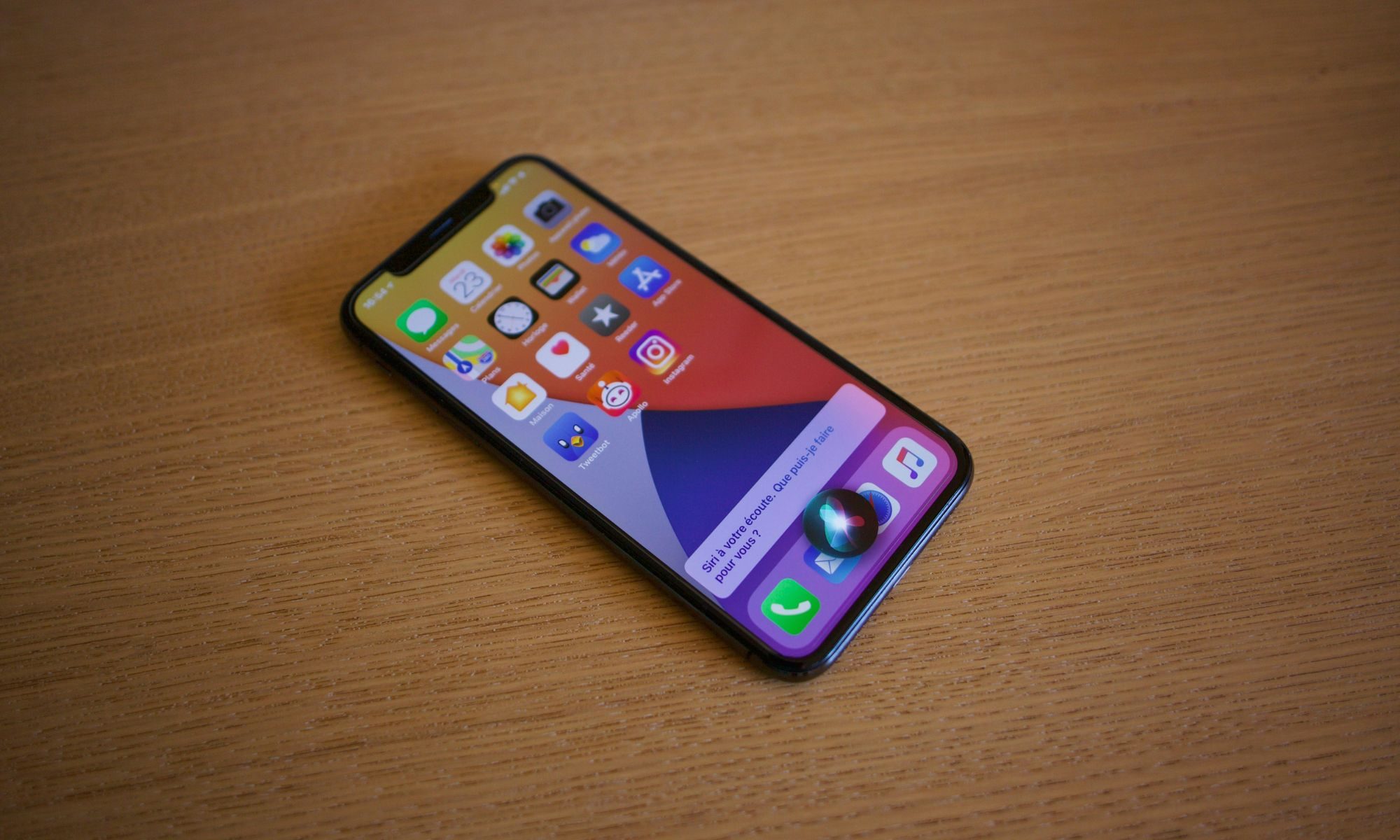
For years, users of Apple‘s Siri have faced a familiar, frustrating routine: issuing one simple command, waiting for a response, then repeating the “Hey Siri” wake phrase to ask for the next task. That cycle may finally be ending. According to a report from Bloomberg‘s Mark Gurman, a foundational update is coming with iOS 27 that will allow Siri to understand and execute Siri multi-step commands in a single, continuous request.

Why This Basic Feature Is a Game Changer for Daily Use

Imagine telling your phone, “Remind me to call the dentist at 3 PM, text my partner I’m running late, and play my afternoon playlist.” Today, that requires three separate interactions. Soon, it could be one. This shift addresses the core friction that has long plagued Siri: inefficiency. Consequently, what seems like a simple technical fix is actually a critical usability overhaul. It transforms Siri from a single-task command line into a potential workflow assistant.

The End of the Repetitive “Hey Siri” Loop

Building on this, the constant need to re-engage the assistant is a primary reason users abandon voice tools. Each repeated wake word is a tiny barrier, and those barriers add up. By streamlining multi-step processes, Apple isn’t just adding a feature—it’s removing a major point of abandonment. This could be the key to making Siri a habitual tool rather than an occasional novelty.

A Signal of Apple’s Broader AI Ambitions

However, this move is about more than just checking a box on a feature list. It serves as a public signal that Apple is prioritizing practical, daily-driver AI within its broader Apple Intelligence strategy. The goal is to create a digital assistant that operates with conversational flow and contextual awareness, not just isolated voice triggers. Therefore, the ability to handle Siri multi-step commands is a foundational step toward that more intelligent, agent-like future.

Playing Catch-Up in the Assistant Arena

On the other hand, this announcement inevitably highlights how far behind Siri has fallen. Competing assistants from Google and Amazon have supported complex, multi-action requests for years. For many in the tech world, Apple’s move prompts a reaction of, “Wait, it couldn’t already do that?” This underscores a persistent challenge: Apple is often late to implement baseline AI features, even as it strives to integrate them seamlessly into its ecosystem.

This means that while multitasking is a welcome improvement, it merely brings Siri to the starting line of modern expectations. True competition now revolves around understanding nuance, maintaining context across conversations, and executing tasks across different applications intelligently. As a result, Apple has significant ground to cover beyond this update.

The Road Ahead for Siri

Looking forward, all indications point to this capability launching with iOS 27, likely unveiled at WWDC 2026. If history is a guide, this will be the first of several enhancements aimed at revitalizing Siri. We can anticipate deeper integration with first- and third-party apps, more proactive suggestions, and perhaps even the ability to handle chained commands based on the outcome of previous ones. For a deeper look at what’s next, explore our analysis on the future of voice assistants.

Will This Save Siri?

Ultimately, the success of this upgrade won’t be measured by its existence, but by its execution. Can Siri reliably parse a three-part command involving a reminder, a message, and a smart home action? Will it work seamlessly with apps like Calendar, Messages, and Home? The answer to these questions will determine if Siri transitions from a source of mild amusement to a genuine productivity tool. In short, the mission is clear: Apple must make Siri not just smarter, but effortlessly useful.

Continue Reading
Click to comment

Leave a Reply

Your email address will not be published. Required fields are marked *

Artificial Intelligence

Apple Intelligence Briefly Appears in China, Highlighting Regulatory Roadblock
Published

on

Apple Intelligence Briefly Appears in China, Highlighting Regulatory Roadblock

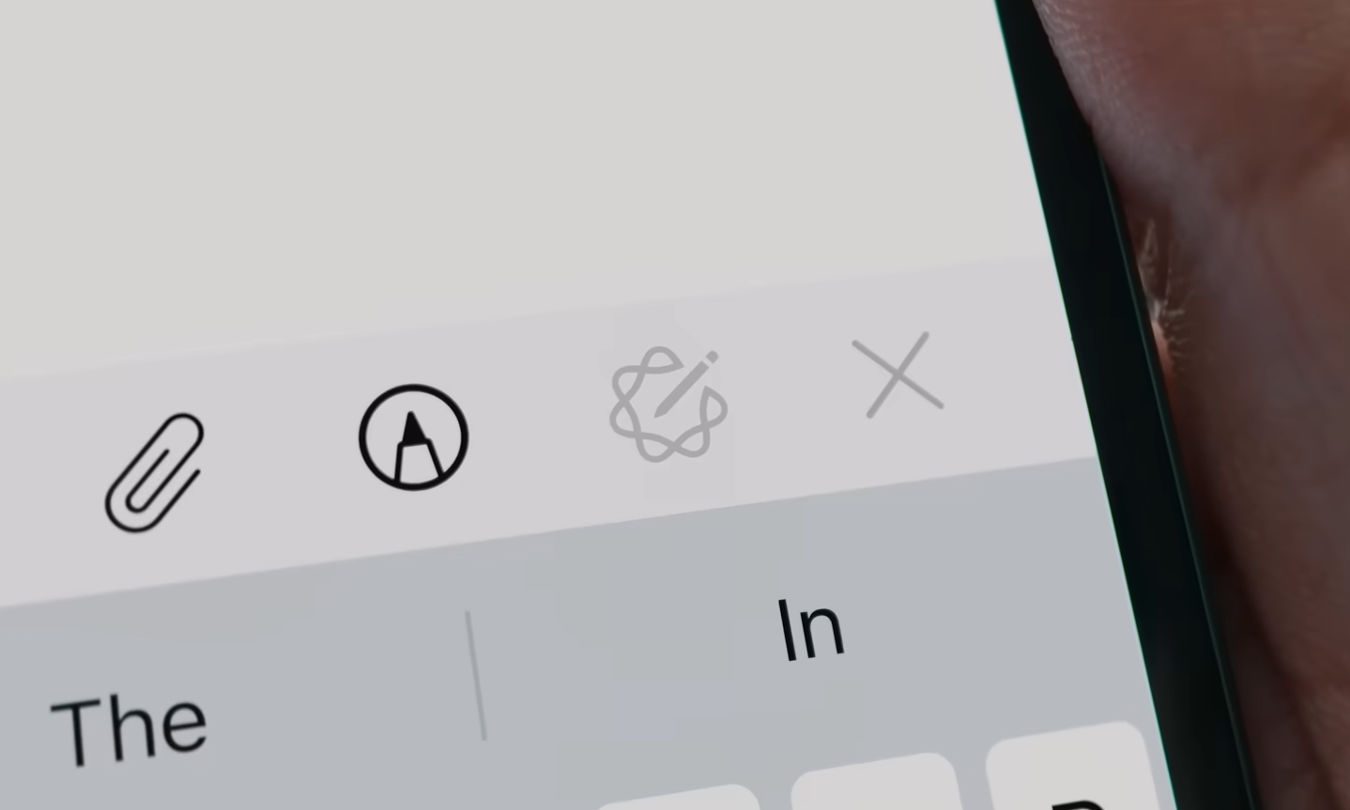
In a fleeting glimpse of what might have been, Apple‘s flagship AI suite, Apple Intelligence, made a surprise appearance on iPhones in China. This unexpected reveal, which occurred through an iOS developer beta, was swiftly shut down, serving as a stark reminder of the complex regulatory landscape that continues to delay the feature’s official launch in one of the world’s largest markets.

The Sudden Appearance and Swift Disappearance

This was no random software bug. Instead, the fully localized interface for Apple Intelligence and an enhanced Siri appeared within the Settings app for users who had installed a specific iOS 26.5 developer beta. Screenshots shared online showed menus and options translated into Chinese, mirroring the design already familiar to users in the United States and Europe. Crucially, there was no official announcement or promotional push from Apple, making the event feel more like an accidental leak than a planned preview.

As a result, the feature’s rapid removal strongly indicates it was not yet cleared for public testing or release in the region. This brief window into a seemingly finished product highlights how close the technical implementation may be, while simultaneously exposing the non-technical barriers that remain firmly in place.

Why China Remains a Major Hurdle for Apple Intelligence

While Apple Intelligence has been available in many regions since late 2024, its absence in China points to a much bigger story. The core challenge is regulatory. China mandates that AI services operating within its borders must obtain government approval and comply with strict local data and content rules. This forces foreign companies like Apple to adapt their global strategies significantly.

Therefore, Apple cannot simply flip a switch to enable Apple Intelligence in China. The company has been actively exploring partnerships with domestic tech giants that already operate government-approved AI systems. Building on this, reports have linked Baidu and Alibaba to these discussions, though potential deals have reportedly faced obstacles over data privacy and technical integration. The version that briefly appeared did not have a publicly confirmed local partner, leaving a critical piece of the puzzle unresolved.

The Partner Problem and Privacy Concerns

Securing the right local partner is not just a formality; it’s a necessity. A Chinese partner would likely handle the cloud processing and data management for Apple Intelligence features that require it, ensuring all operations comply with national laws. However, this introduces complex negotiations. Apple is famously protective of user privacy, and aligning its standards with a third-party partner’s infrastructure and China’s regulatory framework is a delicate balancing act. Past talks have reportedly stalled over these very issues, creating a significant roadblock.

What the Leak Tells Us About Apple’s Progress

The fact that a localized build of Apple Intelligence exists within a developer beta is highly telling. It signals that Apple’s engineering teams have likely completed a significant portion of the work required for the Chinese market. The software appears to be functionally ready, with interfaces translated and integrated into the system settings. This means the delay is not primarily about coding or design.

Instead, the path forward is now dominated by business development and regulatory compliance. Apple needs to finalize a partnership agreement that satisfies both its own principles and Chinese authorities. Only after securing the necessary approvals can the company proceed with a stable public release. Consequently, the timeline for Apple Intelligence in China depends less on software engineers and more on lawyers and government liaisons.

The Road Ahead for Apple AI in China

For Chinese iPhone users eagerly awaiting these advanced AI features, the message is one of cautious optimism. The recent leak confirms that Apple Intelligence is indeed on its way and in an advanced state of preparation. However, the immediate removal underscores that the final gatekeepers are not in Cupertino, but in Beijing.

Looking forward, the strategy is clear but challenging. Apple must navigate the intricate requirements for operating AI in China, which may involve compromises unseen in other markets. The company’s commitment to the region is undeniable, but its ability to launch a globally consistent AI experience there remains in question. For more on how Apple adapts its services worldwide, explore our analysis on Apple’s global services strategy.

Ultimately, the brief appearance of Apple Intelligence serves as a powerful teaser. It proves the capability is there, waiting in the wings. The question is no longer if Apple can build it, but when and under what conditions the company can finally turn it on for millions of users in China. Until the regulatory side catches up, Apple Intelligence will remain just out of reach, a feature seen one moment and gone the next. To understand how other tech firms handle similar challenges, read about navigating tech regulation in Asia.

Continue Reading

Artificial Intelligence

How iOS 27 and Apple Intelligence Might Rescue the Frustrating Shortcuts Experience
Published

on

How iOS 27 and Apple Intelligence Might Rescue the Frustrating Shortcuts Experience

For many iPhone users, the Shortcuts app represents a paradox. It promises immense power—the ability to automate complex tasks with a single tap—yet delivers an experience that often feels archaic and needlessly complicated. While the rest of iOS has evolved with sleek interfaces and intuitive gestures, Shortcuts has remained stubbornly stuck in a past era of manual configuration. This dissonance between potential and usability has long been the app’s defining headache. However, a significant shift appears imminent. Building on this, the upcoming iOS 27 update, powered by Apple Intelligence, presents a compelling vision: transforming Shortcuts from a chore into a genuinely helpful, conversational assistant.

The Core Problem with Today’s Shortcuts App

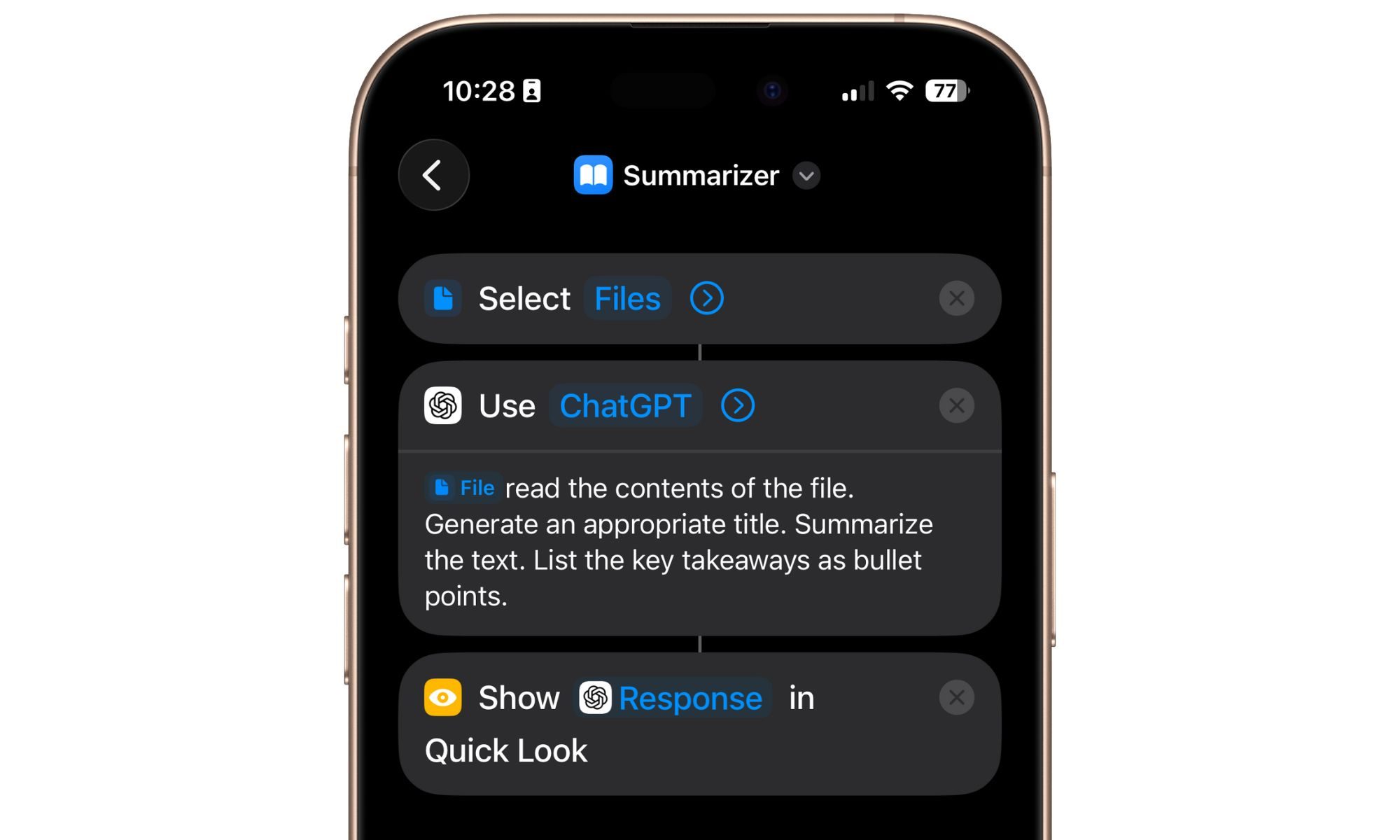
Currently, creating a shortcut feels less like modern computing and more like assembling IKEA furniture without the picture guide. You must hunt through nested menus, drag and drop individual “actions,” and understand how they logically chain together. The process is procedural, not intuitive. This means that for the average user, the barrier to entry is simply too high. The app’s immense capability is locked behind a steep learning curve, rendering it a tool for enthusiasts rather than a mainstream feature. Consequently, a powerful system designed to save time often ends up consuming it during setup.

How iOS 27 and AI Could Redefine Automation

The proposed solution centers on a fundamental change in interaction. Instead of manual construction, iOS 27’s Shortcuts app is rumored to leverage Apple Intelligence to understand natural language commands. Imagine simply telling your iPhone what you need. You could say, “Text my partner my ETA when I leave the office,” or “Start my evening playlist and dim the smart lights when I get home.” The AI would interpret the intent, identify the necessary components (location triggers, messaging actions, music apps, smart home controls), and build the automation sequence automatically. This shift from a visual programming interface to a conversational one is monumental. It moves the cognitive load from the user to the system, where it belongs.

From Overwhelming to Effortless

This approach directly targets the app’s primary weakness: accessibility. By removing the need to understand the underlying “blocks” of automation, Apple Intelligence could make powerful workflows available to everyone. The focus shifts from *how* to build a shortcut to simply *describing* the desired outcome. This is not just a new feature; it’s a complete philosophy change for the app. For instance, discovering useful automations could become as simple as asking, “What shortcuts would be helpful for my morning routine?” The AI could then suggest and create relevant options based on your app usage and habits.

The Potential Impact on Daily iPhone Use

If executed well, an AI-powered Shortcuts app in iOS 27 could fundamentally alter how we interact with our iPhones. Automation would cease to be a niche power-user feature and become a seamless, background layer of intelligence. Routine tasks—logging workouts, compiling expense reports from photos, managing daily summaries—could be delegated to personalized shortcuts created through conversation. This means that the iPhone becomes more proactive, anticipating needs based on verbal commands rather than requiring manual programming for every scenario. The potential is for the device to feel less like a tool and more like a competent assistant. To explore more about how automation is changing, check out our guide on the future of iPhone productivity.

What This Means for the Future of iOS 27 Shortcuts

The integration of Apple Intelligence suggests a future where the Shortcuts app might not even feel like a separate app. Its functionality could be woven directly into Siri and system-wide search. The goal appears to be making automation an invisible, ambient capability. While the current app is a sandbox you must enter to build things, the iOS 27 vision points to a context-aware system that offers to create shortcuts for you based on repetitive tasks it observes. This evolution could finally deliver on the original promise of Shortcuts: effortless efficiency. Therefore, the success of this update won’t be measured by new complex actions, but by how many people who previously found the app “janky” now use it without a second thought.

Of course, the proof will be in the execution. The AI must reliably parse vague human language into precise technical instructions—a non-trivial challenge. However, the direction is clear and addresses years of user frustration head-on. For anyone who has ever opened the Shortcuts app only to close it in confusion, iOS 27 offers a beacon of hope. It represents a chance to move beyond the clunky, puzzle-like interface and into an era where your iPhone truly understands what you mean, not just what you tap. For a deeper look at Apple’s AI strategy, read our analysis on how Apple Intelligence works behind the scenes.

Continue Reading

Artificial Intelligence

Beatbot Sora Series: The Wire-Free Pool Cleaner That Simplifies Your Spring Routine

Published

on

Beatbot Sora Series: The Wire-Free Pool Cleaner That Simplifies Your Spring Routine

That first warm weekend of spring. You step outside, coffee in hand, ready to enjoy your backyard oasis. Then you see it. The layer of pollen on the water’s surface. The leaves settled on the bottom from the last storm. The familiar dread sets in. Another weekend lost to the skimmer net, the vacuum hose, and the inevitable backache.

What if it didn’t have to be that way? What if your pool could clean itself while you finally got to relax in it? That’s the promise of the Beatbot Sora Series, a lineup of cordless robotic cleaners designed to turn a chore into a distant memory. And with the ongoing Spring Sale, making the switch is more affordable than ever.

The All-in-One Cleaning Powerhouse: Beatbot Sora 70

Imagine a single device that tackles every part of your pool. The surface, the walls, the floor, and that grimy waterline. For years, that required multiple tools. The Sora 70 changes the game. It’s a 4-in-1 robotic cleaner that consolidates your entire arsenal.

No more untangling power cords or dragging hoses across the deck. With a robust 10,000mAh battery, it runs for up to five hours wire-free. Its Advanced JetPulse system and 6800 GPH suction power make short work of stubborn dirt and debris. When it’s done, it parks itself at the surface for easy pickup, and its massive 6-liter basket means fewer trips to empty it.

Complete, automated cleaning is no longer a luxury. During the Spring Sale (March 25 – April 5, 2026), the Sora 70 is available for $1,199, a 20% discount off its $1,499 list price.

Deep Cleaning Without the Hassle: The Beatbot Sora 30

Not every pool needs constant surface skimming. If your priority is scrubbing every inch of your pool’s interior, the 3-in-1 Sora 30 is your machine. It focuses on the walls, floor, and waterline with impressive precision.

One of its smartest features? Platform detection. It can actually climb up onto pool ledges and shallow steps to clean areas most robots ignore. That means no more getting on your hands and knees to scrub those edges yourself.

Equipped with the same powerful 6800 GPH suction and dual roller brushes, it delivers a meticulous, five-hour clean. It’s built for busy homeowners who want results without the supervision. For a limited time (April 1 – April 5), grab the Sora 30 for $799, saving $200 off the original $999 price.

Your First Step to Automation: The Beatbot Sora 10

Ready to ditch the manual labor but not sure where to start? The Sora 10 is the perfect entry point into robotic pool care. Think of it as your gateway to free weekends.

Just place it in the water and let it go. Its powerful suction handles the pool floor and waterline for up to 300 minutes per charge. It’s designed for reliability and simplicity, ensuring a consistently clean pool without a steep learning curve or a steep price.

As part of the Spring Sales event (April 1 – April 5), the Sora 10 is priced at just $549, down from $699. It’s an accessible way to turn a time-consuming task into a fully automated process.

More Spring Cleaning Deals from Beatbot

The Sora Series is the star of the show, but Beatbot’s Spring Sale extends across their entire lineup with discounts up to 40%. Whether you’re looking for advanced water monitoring or a dedicated skimmer, there’s a deal to be had.

Highlights include the AquaSense 2 Ultra for $2,649 (16% off), the A100 Pro for $1,399 (26% off), and the iSkim Ultra for $599 (a full 40% off). Bundles like the AquaSense 2 + iSkim Ultra offer even greater value at $1,498.

Upgrading your pool care this spring isn’t just about crystal-clear water. It’s about reclaiming your time. It’s about trading hours of work for moments of relaxation. With Beatbot’s automated cleaners and current promotions, a simpler, more enjoyable pool season is finally within reach.

Continue Reading

Trending