Connect with us

How To

Slack started as a video game that nobody wanted to play

Published

on

Slack began as a failed video game

Slack began as a failed video game — and that’s the whole point

Before Slack became the backbone of remote work, it was something else entirely: a video game. Not a good one, either. In fact, it was a game that almost nobody wanted to play.

The story of Slack is one of those rare origin tales where a spectacular failure in one industry becomes a world-changing success in another. It’s a reminder that the best ideas often come from the ashes of the worst ones.

The game that flopped: Glitch

Back in 2009, a small team led by Stewart Butterfield — the same guy who co-founded Flickr — was working on a massively multiplayer online game called Glitch. It was quirky, colorful, and ambitious. Players could collect resources, build things, and explore a whimsical world.

There was just one problem. Nobody played it.

Glitch launched in 2011 after years of development. By 2012, the team pulled the plug. The game had failed to attract a meaningful audience, and the money was running out. Butterfield later described it as “a spectacular disaster.”

From game chat to workplace chat

Here’s where the story takes a sharp turn. During Glitch’s development, the team built an internal chat tool to communicate with each other. It was fast, searchable, and — most importantly — it worked better than anything else on the market.

When Glitch died, the team realized they were sitting on something far more valuable than a failed game. That chat tool became Slack.

Butterfield and his team pivoted hard. They rebranded, redesigned, and relaunched the product as a workplace communication platform in August 2013. Within a year, Slack had tens of thousands of daily active users. By 2015, it was valued at nearly $3 billion.

Today, Slack serves millions of users worldwide. It’s used by startups, Fortune 500 companies, and everyone in between. And it all started with a game that bombed.

Why this story matters for founders

There’s a lesson here for anyone building something new. Failure isn’t always the end. Sometimes it’s just the beginning of something you couldn’t see yet.

Slack’s origin story is a case study in pivoting — the art of recognizing when your original idea isn’t working and having the courage to try something completely different. Butterfield didn’t cling to Glitch out of pride. He let it go, and in doing so, he built something bigger.

What made the chat tool so good?

  • Speed: It was built for real-time communication, not email lag.
  • Search: Every message was indexed and searchable instantly.
  • Integrations: It connected with other tools developers already used.
  • Simplicity: The interface was clean, not cluttered with features nobody needed.

These weren’t accidental. They were the direct result of building a tool for a specific, demanding audience: the game developers themselves. When they opened it up to the world, the world showed up.

The legacy of a failed game

Glitch is mostly forgotten now. A few screenshots and archived videos remain. But its DNA lives on in Slack. The same team, the same culture, the same obsession with making communication effortless.

It’s a strange legacy for a game that nobody wanted to play. But it’s also a beautiful one. Sometimes the thing you build for yourself turns out to be the thing the whole world needs.

Next time you send a message on Slack, remember: you’re using the ghost of a dead video game. And that’s exactly what makes it work.

Continue Reading
Click to comment

Leave a Reply

Your email address will not be published. Required fields are marked *

How To

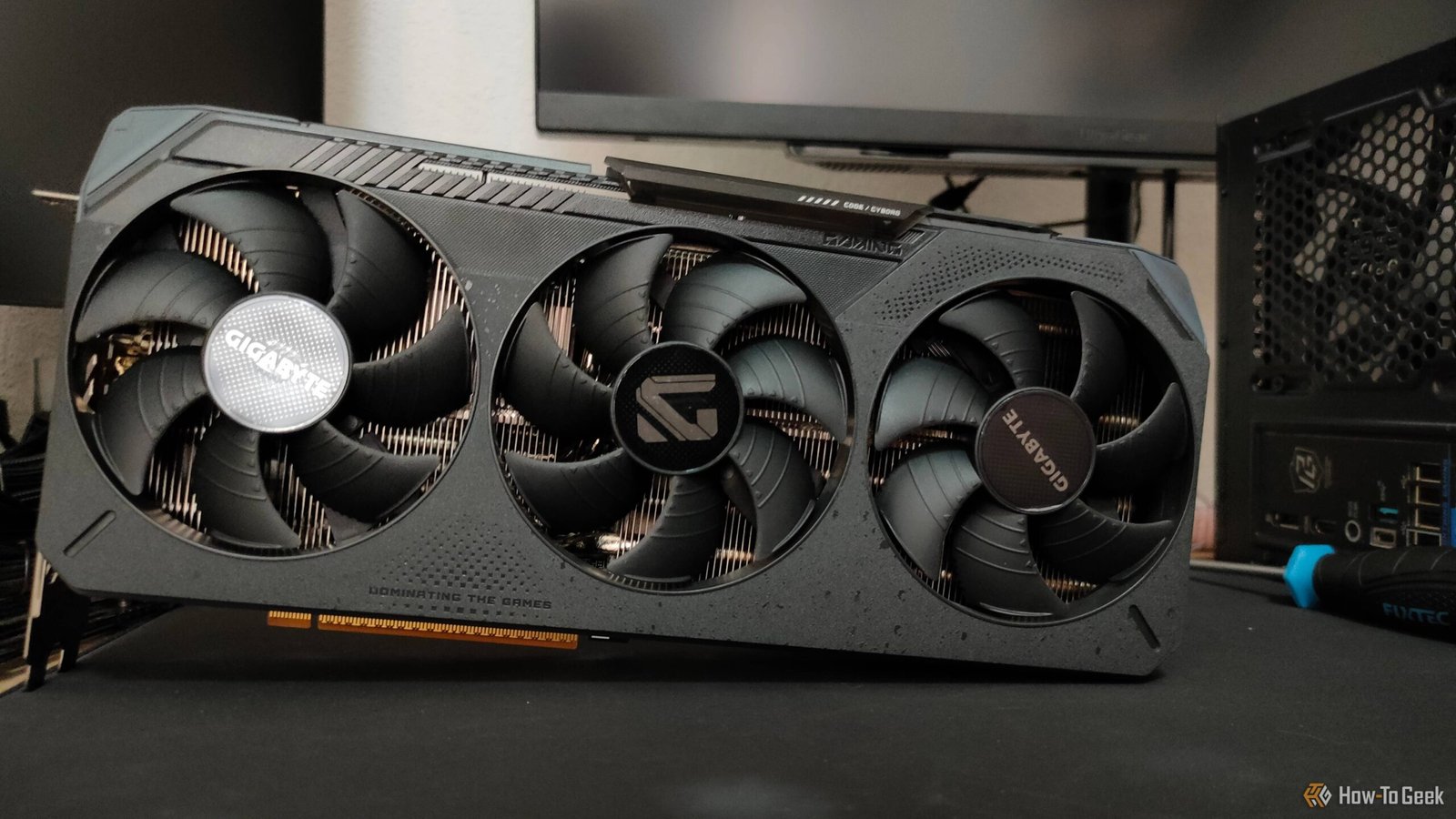
From paper launches to melting connectors: The worst GPUs of all time, ranked

Published

on

worst GPUs of all time

Nvidia GeForce RTX 4090: The $1,600 power connector that melted

When Nvidia launched the RTX 4090 in late 2022, it was the fastest consumer GPU ever made. But within weeks, reports started flooding forums: the new 12VHPWR power connector was literally melting. The problem? A poorly designed adapter that could overheat if the cable wasn’t seated perfectly — or if it was bent too sharply inside a case.

Nvidia eventually blamed user error, but the damage was done. For a flagship card that cost $1,600 at launch, this wasn’t just a defect. It was a worst GPU moment in an otherwise stellar generation. The RTX 4090 remains a beast for gaming and AI workloads, but its launch will forever be tied to fire hazards and RMA horror stories.

The connector fiasco in numbers

Over 100 confirmed cases of melted connectors were documented by Gamers Nexus alone. Nvidia revised the adapter months later, but the trust was gone. If you’re building a high-end PC today, you’re still gambling on that 12VHPWR plug — and that’s a problem Nvidia has yet to fully solve.

Intel Arc A770: The comeback that never was

Intel entered the discrete GPU market in 2022 with the Arc A770, promising to challenge Nvidia and AMD. The hardware was ambitious: 16GB of VRAM, ray tracing support, and XeSS upscaling. But the drivers were a disaster. Games that ran fine on any Nvidia or AMD card would crash, stutter, or refuse to launch on Arc.

Intel fixed many of the driver issues over the following year, but for early adopters, the Arc A770 was a frustrating, unfinished product. By the time it worked well, buyers had already moved on. It’s a textbook case of why worst GPUs aren’t always slow — sometimes they’re just broken.

AMD Radeon RX 7900 XTX: The vapor chamber that failed

AMD‘s Radeon RX 7900 XTX launched in December 2022 as a flagship competitor to Nvidia’s RTX 4080. But within weeks, reviewers and users noticed something alarming: the card would overheat and throttle under load, with GPU hotspot temperatures exceeding 110°C. The culprit was a defective vapor chamber in some reference models.

AMD acknowledged the issue and offered replacements, but the damage to the RX 7900 XTX’s reputation was real. For a $1,000 card, this was unacceptable. The worst graphics cards in history share a common thread: they fail at the basics. The 7900 XTX failed at staying cool.

Nvidia GeForce RTX 4060 Ti: The 8GB embarrassment

In May 2023, Nvidia released the RTX 4060 Ti with 8GB of VRAM — at a time when games like Hogwarts Legacy and The Last of Us Part I were already exceeding 8GB at 1080p. Gamers were furious. Why would Nvidia ship a $400 card with such limited memory?

The answer was obvious: market segmentation. Nvidia wanted to push buyers toward the more expensive 16GB version (which cost $500 and barely sold). But the 8GB RTX 4060 Ti became a punchline. It’s one of the worst GPUs of all time not because it’s slow, but because it’s insulting.

Nvidia GeForce RTX 4080 12GB: The card that got cancelled

Originally announced as the RTX 4080 12GB alongside a 16GB version, this card caused immediate backlash. The two “4080” models had completely different specs: different memory buses, different core counts, and different performance levels. Gamers called it deceptive, and Nvidia quickly backtracked.

In October 2022, Nvidia “unlaunched” the 12GB model, rebranding it as the RTX 4070 Ti months later. The whole episode was a PR disaster. It’s a rare case of a worst graphics card that never even hit shelves — but the confusion and anger it caused still haunt Nvidia’s reputation.

AMD Radeon RX 6500 XT: The 4GB card that couldn’t even play modern games

Released in January 2022, the RX 6500 XT was supposed to be an entry-level card for budget gamers. But AMD cut so many corners that it was nearly unusable. It had only 4GB of VRAM — at a time when even $200 cards had 6GB or 8GB. Worse, it lacked hardware encoding for video streaming and had no 4K output support.

In benchmarks, the RX 6500 XT was slower than the RX 570 from 2017. It couldn’t run Call of Duty: Warzone at 1080p without stuttering. It’s widely considered one of the worst GPUs of the modern era, and a low point for AMD’s Radeon division.

Nvidia GeForce GTX 970: The 3.5GB lie

The GTX 970 was a popular mid-range card when it launched in 2014. But users soon discovered a dirty secret: Nvidia advertised it as having 4GB of VRAM, but the last 0.5GB was accessed at a much slower speed. In practice, the card performed like it had 3.5GB of fast memory and 0.5GB of slow memory.

The class-action lawsuit that followed forced Nvidia to pay out $30 million in refunds. The GTX 970 is a classic example of a worst GPU that sold millions — but left a bitter taste for everyone who bought one.

Intel Arc A750: The driver nightmare continues

Intel’s second attempt at a discrete GPU, the Arc A750, launched alongside the A770 in 2022. It was cheaper, but it inherited the same driver problems. Games that relied on older DirectX 9 or 11 APIs ran poorly or not at all. Intel promised fixes, but they came slowly.

By the time the drivers were stable — around mid-2023 — the A750 was already obsolete in terms of performance. For budget-conscious buyers, it was a gamble that rarely paid off. The A750 is another entry on the list of worst graphics cards that could have been great if Intel had just waited until the software was ready.

Nvidia GeForce RTX 3080 12GB: The paper launch that angered everyone

In January 2022, Nvidia released an updated RTX 3080 with 12GB of VRAM and a slightly faster core. But stock was virtually nonexistent. Scalpers bought up every unit, and the card was sold at double its $699 MSRP for months. Gamers who couldn’t find a standard RTX 3080 were left frustrated.

The 12GB version was a paper launch — a product that existed mostly on paper and in press releases. It’s a reminder that the worst GPUs of all time aren’t always the slowest; sometimes they’re the ones you can’t even buy.

Nvidia GeForce RTX 4060: The 60-class card that barely improved

When Nvidia released the RTX 4060 in June 2023, expectations were low. The RTX 3060 had been a solid 1080p card, and the 4060 needed to beat it. It did — by about 15%. But that was only with DLSS 3 Frame Generation enabled. Without it, the 4060 was barely faster than the 3060, and sometimes slower in ray tracing.

At $299, it wasn’t a bad deal. But for a generation-to-generation upgrade, it was disappointing. The RTX 4060 is a worst GPU in the sense that it represents everything wrong with modern GPU launches: tiny performance gains, reliance on upscaling, and a lack of meaningful innovation.

The common thread: Why these GPUs failed

Whether it’s melting connectors, broken drivers, or deceptive marketing, the worst graphics cards in history share one thing: they broke the trust between manufacturers and users. A GPU is the most expensive component in a gaming PC. When it fails — literally or metaphorically — it leaves a lasting impression.

If you’re shopping for a new GPU today, learn from these mistakes. Read reviews from multiple sources. Check for known issues like connector problems or driver bugs. And never, ever buy a card based on promises of future fixes. The best GPU is one that works out of the box.

For more on avoiding bad hardware, check out our guide on how to choose a graphics card and our ranking of the best GPUs for gaming in 2025.

Continue Reading

Social Media

WhatsApp revamps CarPlay and Android Auto, adds iPad sign-ups, PDF editing, and music sharing

Published

on

WhatsApp Apple CarPlay Android Auto

Big update for drivers: CarPlay and Android Auto get smarter

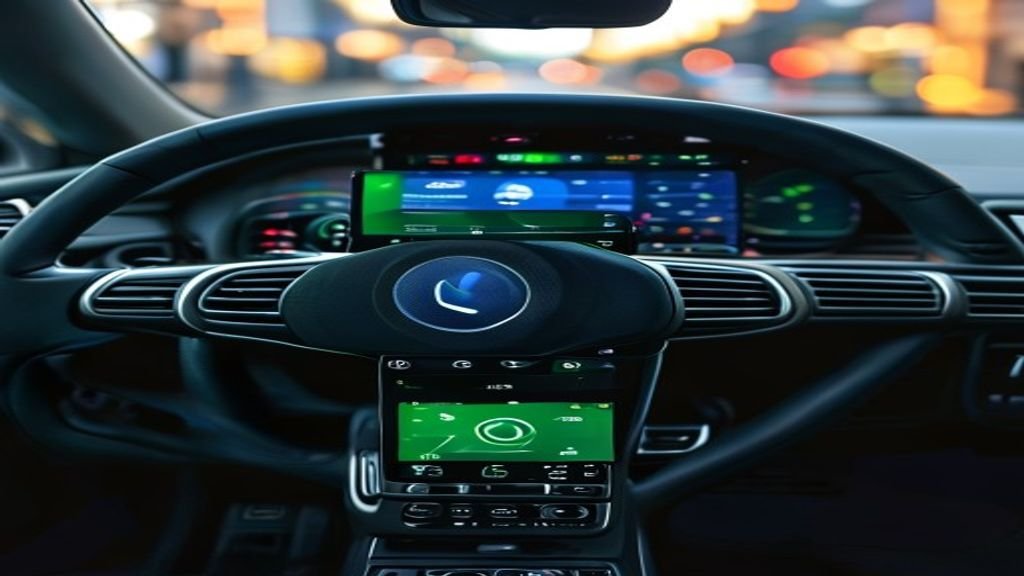
WhatsApp is rolling out a major overhaul of its integration with both Apple CarPlay and Android Auto. The goal? Make the app genuinely useful behind the wheel, not just a stripped-down version of the mobile experience.

Previously, drivers could only compose messages or place calls. Now, WhatsApp lets you hear incoming messages read aloud, reply by voice, view your full call history, and access your favorite contacts — all from the car’s infotainment screen. It’s a big step toward safer, hands-free communication on the road.

These upgrades are part of Meta’s broader push to turn WhatsApp into a truly cross-device platform, not just a phone-first messenger.

iPad gets standalone sign-up — no phone required (well, almost)

Last year, WhatsApp launched a dedicated iPad app. But there was a catch: you had to link it to your phone. That’s changing now.

Users can register for a WhatsApp account directly on their iPad, without needing a primary phone to stay connected. The app works as a standalone account — not a companion device. You still need a phone number to receive the one-time passcode during setup, but after that, the iPad runs independently.

A WhatsApp spokesperson told TechCrunch that this was one of the most requested features since the iPad app launched. It’s a smart move for users who want a separate WhatsApp identity on their tablet, or for those who don’t always carry their phone.

How iPad registration works

  • Download WhatsApp from the App Store on your iPad
  • Enter your phone number and verify via SMS or call
  • Set up your profile — it’s now a standalone account
  • Your chats and contacts are independent from your phone

This is a clear signal that WhatsApp sees tablets as first-class devices for messaging, not just secondary screens.

Share what you’re listening to — right on Status

Another new feature lets you share a song directly from Apple Music or Spotify to your WhatsApp Status. It’s a small addition, but it taps into the growing trend of using Status for personal expression — like Instagram Stories but inside WhatsApp.

When you share a track, it appears as a status update that friends can tap to listen. No more screenshots or copy-pasting links. It’s simple, native, and feels right at home in the app.

PDFs open and edit inside WhatsApp — no extra app needed

WhatsApp is also making document handling much smoother. You can now open PDFs directly inside the app — no need to download them first. Once open, you can highlight text and add annotations, all within the chat window.

This feature is available on both web and desktop versions. For anyone who regularly receives contracts, invoices, or forms via WhatsApp, this is a time-saver. It’s not a full PDF editor, but for lightweight markup, it gets the job done.

A growing list of updates — usernames, subscriptions, and more

These new features add to a busy few months for WhatsApp. Just weeks ago, the company launched usernames, letting people share their profile without revealing their phone number. That’s a privacy win for anyone cautious about sharing personal digits.

In late May, Meta also introduced WhatsApp Plus — a subscription tier that unlocks extra features like profile customization, super reactions, and story insights. It’s part of a broader “Plus” push across Instagram and Facebook, signaling that Meta is serious about monetizing WhatsApp beyond business messaging.

All these updates point in one direction: WhatsApp wants to be more than a chat app. It’s aiming to be a full communication hub — for your car, your tablet, your desktop, and your phone. Whether you’re driving, working, or just sharing a song, the app is slowly becoming a platform that follows you everywhere.

Continue Reading

How To

Linux Mint Isn’t the Best Windows Replacement Anymore — Here’s What Is

Published

on

Linux Mint Windows replacement

The Cinnamon Comfort Zone Isn’t Enough

For over a decade, Linux Mint has been the default recommendation for anyone jumping ship from Windows. Its Cinnamon desktop felt familiar — a taskbar, a start menu, system tray icons — and it just worked out of the box. No command-line acrobatics required.

But 2026 is a different world. Windows 10 support ended last October. Millions of users are finally making the switch. And the Linux ecosystem has evolved fast. Mint, frankly, hasn’t kept pace.

That’s not to say Mint is bad. It’s still a solid, stable distro. But the title of “best Windows replacement” belongs to someone else now.

What Made Linux Mint the King

Mint’s rise wasn’t accidental. In the early 2010s, Ubuntu was pushing its Unity desktop — a radical, phone-inspired interface that confused traditional PC users. Mint offered a lifeline: a classic desktop that felt like home.

Its Cinnamon desktop, now on version 6.4, still gives you a panel at the bottom, a menu button on the left, and system tray on the right. You can right-click the desktop. You can minimize windows. It’s comfortable.

Mint also shipped with multimedia codecs and proprietary drivers pre-installed or one-click away. No hunting for Flash or MP3 support. For Windows refugees in 2012, it was a revelation.

The Problem: Stagnation in a Moving Market

Here’s the thing — comfort can become complacency. While Mint polished Cinnamon, other distros rethought the entire onboarding experience.

Take Zorin OS. Its layout switcher lets you choose between a Windows-like panel, a macOS-style dock, or even a GNOME 2 layout. You pick your poison at first boot. Mint’s customization? You get Cinnamon. That’s it.

Or consider Ubuntu itself. GNOME in 2026 is a different beast. Extensions like Dash-to-Panel and ArcMenu give you a Mint-like taskbar with far more flexibility. Ubuntu’s installer now detects Windows BitLocker and offers seamless dual-boot. Mint’s installer? It works, but it’s simpler — and simplicity isn’t always better when you need to handle encrypted partitions.

What a Modern Windows Replacement Needs

Switching operating systems is a big deal. People don’t just want a familiar desktop. They want:

  • Hardware compatibility out of the box — especially for Wi-Fi, Bluetooth, and fingerprint readers.
  • Easy software installation — preferably a store-like experience with Flatpak, Snap, or AppImage support.
  • Gaming performance — Steam Proton and NVIDIA driver support are non-negotiable now.
  • Touchscreen and hybrid support — more laptops have touch displays than ever.
  • Long-term stability without sacrificing newer kernels — you need both security updates and hardware enablement.

Mint checks some of these boxes, but not all. Its default kernel is conservative. Its NVIDIA driver management, while improved, still lags behind Ubuntu’s automated ubuntu-drivers tool. And touch support in Cinnamon? Let’s just say it’s not a priority.

The Distros That Have Pulled Ahead

So who’s actually the best Windows replacement in 2026? The answer depends on your hardware and tolerance for change, but a few clear winners have emerged.

Zorin OS 17 — The Most Windows-Like Experience

Zorin OS has taken the crown for pure familiarity. Its layout switcher is genius — you can literally make it look like Windows 11, Windows 10, or even Windows 7. The Pro edition (paid, but worth it) includes pre-installed software and additional layouts.

Zorin also ships with a custom GNOME session that feels snappier than stock GNOME. It includes WINE pre-configured for running some Windows apps. And its update manager is dead simple — no terminal needed.

Ubuntu 24.10+ — The Power User’s Choice

If you want the broadest software support and the most up-to-date drivers, Ubuntu wins. Its Snap package format is controversial among purists, but for a new user, the Ubuntu Software Center just works. Steam is one click away. NVIDIA drivers install automatically during setup.

Ubuntu’s GNOME desktop, with a few extensions, can mimic Windows closely enough. And you get faster kernel updates than Mint, which means better support for new hardware.

Pop!_OS 24 — For Gamers and Developers

Pop!_OS from System76 has its own Cosmic desktop (now in Rust). It ships with a dedicated graphics-switching tool for laptops with both integrated and discrete GPUs. That’s a killer feature for gamers.

Pop also includes built-in tiling window management — which sounds intimidating but actually makes multitasking way easier once you try it. For Windows users who do any coding or graphic design, it’s a serious upgrade.

Where Linux Mint Still Shines

Let’s be fair. Mint isn’t obsolete. It’s still the best option for a specific type of user: someone with older hardware who just wants a stable, low-maintenance desktop for web browsing, email, and office work.

Mint’s Xfce edition runs beautifully on 4GB RAM machines. Its update policy is conservative — you won’t get broken by a kernel regression. And the community forums are among the friendliest in open source.

But for a Windows 10 refugee in 2026 — someone with a modern laptop, a desire to game, or a need for hybrid tablet support — Mint is no longer the automatic answer. Zorin, Ubuntu, and Pop!_OS have all surpassed it in different ways.

The crown has shifted. And honestly? That’s good for everyone. Competition makes Linux better.

Continue Reading

Trending