Connect with us

Social Media

Stop the Scroll Without AI: A Human Writer’s Blueprint for LinkedIn Content That Actually Gets Shared

Published

on

LinkedIn content without AI

The Real Problem With LinkedIn Posts (It’s Not You)

You’ve been posting consistently on LinkedIn for weeks. Maybe months. The likes trickle in. A comment here, a reaction there. But the kind of traction that actually builds a professional following? It’s not happening.

Here’s the hard truth: the platform is flooded with AI-generated sludge. Generic advice, recycled quotes, and bland observations that all sound like they came from the same bot. Readers can smell it. They scroll past it.

That’s your opening. The gap between what most people post and what actually earns attention is widening. And you don’t need a single AI tool to exploit it.

Why Human-Written LinkedIn Content Wins Right Now

LinkedIn’s algorithm has always favored posts that keep people on the platform. But in 2025, the bar is higher. Users are tired of perfectly polished, soulless content. They want voice. They want a point of view. They want to feel like a real person is on the other side of the screen.

This is where writing LinkedIn content without AI becomes your unfair advantage. A human-written post carries micro-signals that machines can’t fake: a slightly awkward but honest sentence, a surprising personal anecdote, a moment of genuine vulnerability. Those signals stop the scroll.

Let’s break down a three-part framework that works. No templates. No prompts. Just a way to think about your next post.

Part 1: The Hook That Earns the First Glance

Your opening line has one job: make someone stop. Not like. Not comment. Just pause their thumb for one extra second.

Most people start with a question or a stat. Those can work, but they’re overused. A stronger tactic is a specific, concrete observation that challenges a common belief. For example:

  • Instead of: “Struggling to get leads on LinkedIn?”
  • Try: “I sent 50 cold DMs last week. Exactly 3 people replied. Here’s what I learned.”

The second version works because it’s personal, numerical, and promises a lesson. It also signals that the post was written by someone who actually did something, not a bot generating fluff.

What to Avoid in Your Hook

Don’t open with a generic truth like “In today’s fast-paced business world.” That’s a dead giveaway. Also avoid questions that your reader has heard a hundred times before. If your hook could be swapped into any other post on LinkedIn, rewrite it.

Part 2: The Middle That Holds Attention

You’ve got the click. Now you need to keep them reading. This is where most LinkedIn content falls apart. The middle becomes a list of bullet points or a generic lesson that feels like it was copied from a blog post.

Instead, tell a mini-story. It doesn’t have to be dramatic. A short narrative about a specific client conversation, a mistake you made, or an unexpected result from a small experiment works beautifully. Keep it tight. Three to five sentences max for the story.

Then, extract the lesson. This is the part of your LinkedIn content strategy where you deliver value. Show what you learned and how it applies to the reader’s situation. Be specific. If you can include a number or a timeframe, do it.

For example: “After that call, I changed one thing in my proposal template. My close rate went from 20% to 35% in two months.” That’s concrete. That’s believable. That’s human.

Short Paragraphs Are Your Friend

On LinkedIn, no one reads long blocks of text. Keep paragraphs to two or three sentences max. Use line breaks generously. Make the post scannable. The eye needs rest points, and white space is a cheap way to provide them.

Part 3: The Close That Drives Shares

Shares are the holy grail of LinkedIn engagement. A share puts your post in front of a new audience, often with the sharer’s endorsement attached. To earn that, your ending needs to do one thing: invite the reader to add their own experience.

The best way to do this is a call for participation that feels genuine. Instead of “What do you think?” (which everyone writes), try something like: “If you’ve tried a similar approach and it backfired, I’d genuinely love to hear what happened.” Or: “What’s one piece of advice you’d give to someone just starting out? Drop it in the comments.”

The key is specificity. A vague ask gets vague responses. A focused ask invites people who actually have something to say. And those engaged commenters are the ones most likely to share your post with their network.

Practical Tips for Writing LinkedIn Content Without AI

You don’t need to be a professional writer to make this work. You just need to be willing to sound like yourself. Here are a few ground rules I use:

  • Write like you talk. Read your post out loud. If it sounds stiff, rewrite it. Your natural speaking voice is your best asset.
  • Use contractions. “It’s” not “it is.” “Don’t” not “do not.” This alone makes your writing feel warmer.
  • Cut every word that doesn’t add value. If a sentence still makes sense without a word, delete it. Short is strong.
  • Post at a consistent time. Experiment with morning and lunch slots. Track which times get the most views for your specific audience.

One more thing: don’t worry about going viral. Viral is a lottery. Consistency and genuine connection are a strategy. Write one solid post per week for three months, and you’ll build a following that actually trusts you.

Why This Approach Beats AI-Generated Content

AI tools are useful for many things. Brainstorming ideas. Summarizing long documents. Drafting email templates. But for LinkedIn content that builds relationships? They fall short.

LinkedIn is a professional network, but it’s still a human network. People connect with people, not with output. A post written from personal experience, with a specific voice and a clear point of view, will always outperform generic AI-generated content in the long run.

The algorithm may reward frequency, but it rewards authenticity more. And authenticity is something no machine can replicate.

So next time you sit down to write a human-written LinkedIn post, skip the AI tools. Open a blank document. Think about one thing that happened this week that taught you something. Write it in your own voice. Use the three-part framework. And hit publish.

You might be surprised how far being human can take you.

Continue Reading
Click to comment

Leave a Reply

Your email address will not be published. Required fields are marked *

Social Media

TV Time is shutting down. Its original founder is building Bingers, a new home for TV fans

Published

on

Bingers app

TV Time is going dark. A familiar face is stepping up.

More than 25,000 people have signed a petition begging TV Time to stay alive. But the popular TV and movie tracking app is still shutting down. Its parent company, Whip Media, is pivoting to AI. So TV Time’s community of 26.4 million lifetime installs is about to lose its digital clubhouse.

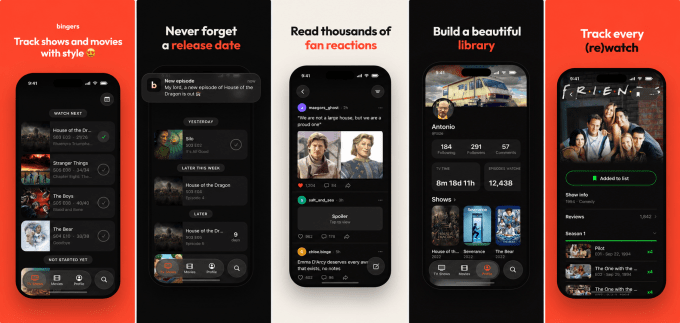
Enter Antonio Pinto. He’s the French entrepreneur who originally built the app — back when it was called TVShow Time — and sold it to Whipclip in 2016. Now he’s building a new app called Bingers. Think of it as a spiritual successor. A second chance.

“I decided to build the new home where the TV Time community could go,” Pinto wrote on the Bingers website. “I wanted to rebuild all TV Time’s great features, but also fix everything that always bothered me.”

That’s a lot of baggage to carry. But Pinto seems ready.

What Bingers will do differently

TV Time had a serious performance problem. The app loaded slowly. It was expensive to run. Pinto says the premium subscription covered only about 10% of the server costs. That’s a brutal ratio. It’s also a big reason the app is dying.

Bingers is built differently. Pinto claims the architecture keeps server costs low, making the whole thing more sustainable. Users should get faster responses when they mark an episode as watched — even when millions of people hit that button at the same time.

That’s the kind of technical fix that doesn’t make headlines but keeps users sane. Anyone who’s waited five seconds for a checkmark to appear knows the pain.

Import your TV Time data now

Here’s the good news: you don’t have to start from scratch. TV Time users can export their entire viewing history using the app’s GDPR-compliant export tool. That tool will disappear once the app is removed from the App Store and Google Play on July 15.

Bingers already has an archive import tool live on its website. Upload your data now, and your history will be waiting when the app launches. That includes community comments from TV Time — the episode-by-episode chatter that made the app feel like a live watch party.

Pinto says the import will “recreate TV Time’s community comments.” That’s a big deal. Many tracking apps let you log what you watched. Very few let you argue about the finale with strangers.

When can you get Bingers?

The app won’t arrive overnight. Pinto tells TechCrunch that Bingers will hit the App Store and Google Play by the end of July 2026. That’s a long wait. But the waitlist is open now on the Bingers website. Sign up, and you’ll get a notification when it’s ready.

In the meantime, the archive import is already functional. So you can lock in your data and forget about it. When the app finally drops, your history will be there.

Why this matters for TV fans

TV Time wasn’t just a tracker. It was a social network for people who watch too much television. That combination is rare. Most tracking apps are solo experiences. You log your shows, get some stats, move on. TV Time had threads, reactions, inside jokes. It had a culture.

When Pinto heard the app was being wound down, he said he felt sad. “Sad because TV Time was part of my life for so many years. And sad because this community was like my other family. Reading the community reactions after each episode became a ritual for me, and for many others.”

That kind of attachment is hard to replicate. But if anyone can do it, it’s the person who built the original. Bingers might not save every feature. It might not bring back every user. But it gives the community a place to land — and that’s more than most dying apps offer.

If you’re a TV Time user, export your data before July 15. Then join the waitlist. Your viewing history deserves a second act.

Continue Reading

Social Media

How to Train AI to Think Like You: Turn Your Meeting Transcripts Into a Personal Brain Clone

Published

on

train AI to think like you

Why Your AI Sounds Like a Generic Robot

You’ve probably tried prompting ChatGPT or Claude to write in your style. It never quite works, does it? The output feels stiff, impersonal, and sounds like every other blog post on the internet. That’s because generic AI models don’t know you — your quirks, your shorthand, your professional instincts.

But what if you could train AI to think like you? Not just mimic your tone, but replicate your reasoning patterns, your decision-making logic, and your unique voice. It’s not science fiction. It’s a matter of feeding the right data into the right framework.

This guide walks you through a step-by-step process to build a personalized AI profile using one of the richest sources of your authentic thinking: your everyday meeting transcripts.

Step 1: Collect Your Raw Material — Meeting Transcripts

Every meeting you host or join is a goldmine of your natural communication. Tools like Zoom, Google Meet, and Microsoft Teams can generate transcripts automatically. But you need more than just words on a page. You need transcripts that capture your thinking process — the way you qualify statements, ask questions, and make decisions.

Which Transcripts Work Best?

Not all meetings are equal. Focus on:

  • Strategy sessions — where you explain your reasoning behind a decision.
  • Client calls — where you adapt your language to explain complex ideas simply.
  • Brainstorming meetings — where you riff on ideas without editing yourself.

Avoid highly scripted presentations or status updates. Those don’t reveal your authentic voice. You want the raw, unpolished you.

Step 2: Clean and Structure the Data

Raw transcripts are messy. People interrupt themselves, use filler words, and go on tangents. Before feeding them to an AI, you need to clean them.

Remove filler words (“um,” “uh,” “like”) and repeated phrases. But keep the thinking markers — phrases like “I think the issue is…” or “What if we try…” These reveal your reasoning structure.

Organize the transcripts into logical chunks: one file per meeting, labeled with date and topic. This helps the AI understand context and progression over time.

Step 3: Choose Your AI Training Platform

You don’t need to be a data scientist. Several platforms now let you fine-tune models with custom data:

  • OpenAI’s fine-tuning API — works with GPT-3.5 and GPT-4. You upload JSONL files of example conversations.
  • Anthropic’s Claude — offers a “style profile” feature where you can paste examples of your writing.
  • Open-source options like Llama 2 or Mistral, if you have technical chops and want full control.

For most professionals, starting with OpenAI’s fine-tuning is the easiest path. Their documentation is clear, and you can train a model in under an hour.

Step 4: Build a “Reasoning Profile” — Not Just a Tone Profile

Here’s where most people fail. They focus on tone (formal vs. casual) and miss the deeper layer: reasoning. To train AI to think like you, you need to teach it your decision-making patterns.

Extract Your Reasoning Rules

Go through your transcripts and identify recurring patterns:

  • Do you always start with a question before giving an opinion?
  • Do you prefer data-backed arguments or intuitive leaps?
  • Do you use analogies frequently? What kind?
  • How do you handle uncertainty — do you hedge or commit?

Write these down as explicit “rules” in plain English. For example: “When faced with a strategic choice, I list three options, then eliminate the weakest one based on ROI.” Feed these rules into the AI as part of your training data.

Step 5: Iterate and Test

Training isn’t a one-shot deal. You’ll need to run multiple iterations.

Start by asking your trained model to write a short email in your voice. Compare it to something you actually wrote. Where does it fall short? Adjust your training data. Maybe you need more examples of your humor, or your specific industry jargon.

Repeat until the AI output feels like you — not a generic copywriter, not a cold consultant, but the person your colleagues and clients recognize.

Practical Applications: Where This Pays Off

Once you’ve trained AI to think like you, you can scale your expertise in ways that were impossible before:

  • Draft client proposals in your voice, saving hours of rewriting.
  • Generate internal memos that sound like you wrote them at 2 AM after deep thought.
  • Create training materials for your team that reflect your decision-making framework.
  • Respond to emails with your characteristic blend of empathy and directness.

This isn’t about replacing yourself. It’s about amplifying your reach without losing your authenticity.

Common Pitfalls to Avoid

Building a personal AI profile isn’t without risks. Watch out for:

  • Overfitting — if you only use one month of transcripts, the AI might sound like you on a bad day. Use at least 3–6 months of data.
  • Privacy leaks — remove client names, confidential numbers, and sensitive details from transcripts before uploading.
  • Losing the human touch — use the AI as a first draft generator, not a final decision-maker. Always review before sending.

The Bottom Line: Your Voice Is Your Asset

In a world of generic AI content, your unique perspective is your competitive advantage. Learning to train AI to think like you — using your own meeting transcripts — lets you scale that advantage without diluting it.

Start small. Pick one meeting transcript. Clean it. Feed it to a model. See what comes out. Tweak. Repeat. Within a few hours, you’ll have a tool that doesn’t just write like you — it thinks like you.

And that’s the difference between a robot and a trusted advisor.

Continue Reading

Social Media

X just tweaked its algorithm to make it more friendly, less battleground

Published

on

X algorithm tweak

X’s algorithm now prioritizes mutuals over strangers

X has quietly rolled out a change to its algorithm that could shift the vibe of your timeline. The platform is now boosting posts from “mutuals” — people you follow who follow you back — according to Nikita Bier, X’s head of product.

Bier announced the update Monday, explaining that the company spotted a gap in its recommendation system. “We noticed this data was missing from the algo and it made your friends appear less in your replies,” he wrote. The result? Reply sections felt like a battleground filled with unfamiliar faces.

The fix is subtle. Don’t expect a complete overhaul of how X works overnight. But for regular users, it might mean scrolling through a feed that feels a bit more like a neighborhood gathering and a bit less like a shouting match in a crowded stadium.

Why mutuals matter for community building

The logic behind the change is straightforward: when you see people you actually know — even if only digitally — chiming in on conversations, the platform feels less chaotic. Bier said the adjustment should “help clusters form around interests more easily, which many people have asked for.”

That phrasing is key. X has long been criticized for amplifying polarizing voices and anonymous drive-by commentary. By tweaking the algorithm to favor reciprocal relationships, the company is signaling that it wants to reward genuine interaction over viral outrage.

It’s a small step, but one that addresses a persistent user complaint: that X feels impersonal and hostile. Whether it actually changes behavior on the platform remains to be seen.

Creators and content: X’s broader strategy

This algorithm tweak is just the latest in a string of updates from X aimed at making the site more creator-friendly. Earlier this year, the platform revised its compensation model to reward original content over simple aggregation. Then, earlier this month, X launched a built-in video editor, giving users tools to polish clips without leaving the app.

These moves suggest X is trying to position itself as a serious destination for creators — not just a text-based debate forum. The mutuals update fits that narrative: if creators feel like they’re building real communities around their work, they’re more likely to stick around and post regularly.

A competitive landscape

X isn’t operating in a vacuum. Meta‘s Threads has been making its own algorithmic adjustments with a similar goal in mind. Last month, Threads introduced a feature called Your Algo, which lets users privately tune what appears in their feed. Threads also crossed 500 million monthly active users, a milestone that puts pressure on X to keep its own audience engaged.

Both platforms are chasing the same thing: making social media feel less like a firehose of noise and more like a place where people actually want to hang out. The difference is in the approach. X is leaning into the mutuals mechanic; Threads is giving users more direct control over their algorithm. Which strategy wins out is anyone’s guess.

What this means for your feed

If you’re an average X user, you might notice a few changes right away. Replies to popular posts could start featuring more familiar handles. Conversations might feel less fragmented. But don’t expect the platform to suddenly become a cozy chat room — the algorithm is still designed to surface engaging content, and that often means controversy.

The real test will come in the weeks ahead. If users report that their timelines feel less hostile, X will likely double down on this approach. If not, expect another tweak down the line. For now, it’s a small but telling signal that X recognizes one of its biggest problems: it’s just not that fun to be on.

Whether this change actually makes the platform more pleasant — or just rearranges the deck chairs — is something only time (and your feed) will tell.

Continue Reading

Trending