Connect with us

How To

Sweet Chat App Review: A Complete Guide to Making New Friends Online for Free

Published

on

Sweet Chat App Review: A Complete Guide to Making New Friends Online for Free

Dating and social discovery have moved firmly into the digital space. Among the many platforms available, the Sweet Chat app stands out as a straightforward tool for those who want to make new friends online without complicated sign-ups. This review covers everything you need to know about this free chat app, from its main features to downloading instructions.

What Is Sweet Chat and How Does It Work?

Sweet Chat is a free mobile application designed to help users connect with strangers for casual conversation and friendship. The app claims to have over 10 million active users who chat, message, and meet new people daily. In just 30 seconds, you can start your first interaction.

This platform focuses on simplicity. You do not need to fill out lengthy profiles or answer personality quizzes. Instead, you can jump straight into a random chat with strangers or browse profiles of people nearby. Whether you are dealing with insomnia or simply want a global conversation, Sweet Chat aims to provide an instant social outlet.

As a free chat app, it offers core functionality without requiring a subscription. However, users should always exercise caution when sharing personal information online.

Key Features of Sweet Chat App

Find Nearby People and Start Free Chatting

One of the standout features is the ability to discover people in your vicinity. This meet new people nearby option uses your device’s location to suggest potential friends within walking distance. It is ideal for those who prefer local connections over international ones.

Random Chat with Swipe Mechanics

Much like popular dating apps, Sweet Chat incorporates a swipe system. Swipe left to pass, swipe right to express interest. This gamified approach makes the process of random chat with strangers feel more engaging and less intimidating.

Private Messaging and Voice Calls

After matching with someone, you can move to a private one-on-one chat room. The app supports both text and voice conversations. This private voice chat feature adds a layer of intimacy, allowing you to hear the other person’s tone and emotion.

Secret Like and World Chat Options

If you feel shy about expressing interest directly, you can send a “secret like.” The recipient will only know if they also like you back. Additionally, the world chat function lets you connect with users from different countries, broadening your social circle globally.

Is Sweet Chat Safe for Making Friends?

Safety is a valid concern when using any social platform. The developers of the Sweet Chat app state that the environment is “totally safe” for meeting strangers. However, no app can guarantee complete security. Users are advised to avoid sharing sensitive data and to report any suspicious behavior.

Building on this, the app does not require extensive personal details during registration. This minimal data collection reduces some risks, but it also means the platform has limited ability to verify user identities. Always trust your instincts when chatting with someone new.

How to Download and Install Sweet Chat

Getting started with the Sweet Chat app is straightforward. Follow these steps:

  1. Scroll to the bottom of this page.
  2. Click the download button provided.
  3. Allow installation from unknown sources if prompted (Android users).
  4. Open the app and grant necessary permissions.
  5. Start your first chat in seconds.

The app is primarily available for Android devices. For iOS users, check the official App Store for availability.

Pros and Cons of Using Sweet Chat

Every free chat app has its strengths and weaknesses. Here is a balanced look:

  • Pros: Quick registration, large user base, swipe interface, voice chat support, global reach.
  • Cons: Potential for fake profiles, limited moderation, no video calling, location-based privacy concerns.

Therefore, while the app excels at providing instant connections, users should remain aware of its limitations.

Final Thoughts on Sweet Chat

If you are looking to make new friends online without financial commitment, the Sweet Chat app is a solid choice. Its simple design and variety of chat options make it accessible for everyone, from teenagers to older adults. The ability to switch between local and global chats keeps the experience fresh.

For more app reviews and tech insights, check out our guide on Edge Screen App or explore TouchCall Global Calling App. Say goodbye to loneliness and hello to new friendships with Sweet Chat.

Continue Reading
Click to comment

Leave a Reply

Your email address will not be published. Required fields are marked *

Social Media

TV Time is shutting down. Its original founder is building Bingers, a new home for TV fans

Published

on

Bingers app

TV Time is going dark. A familiar face is stepping up.

More than 25,000 people have signed a petition begging TV Time to stay alive. But the popular TV and movie tracking app is still shutting down. Its parent company, Whip Media, is pivoting to AI. So TV Time’s community of 26.4 million lifetime installs is about to lose its digital clubhouse.

Enter Antonio Pinto. He’s the French entrepreneur who originally built the app — back when it was called TVShow Time — and sold it to Whipclip in 2016. Now he’s building a new app called Bingers. Think of it as a spiritual successor. A second chance.

“I decided to build the new home where the TV Time community could go,” Pinto wrote on the Bingers website. “I wanted to rebuild all TV Time’s great features, but also fix everything that always bothered me.”

That’s a lot of baggage to carry. But Pinto seems ready.

What Bingers will do differently

TV Time had a serious performance problem. The app loaded slowly. It was expensive to run. Pinto says the premium subscription covered only about 10% of the server costs. That’s a brutal ratio. It’s also a big reason the app is dying.

Bingers is built differently. Pinto claims the architecture keeps server costs low, making the whole thing more sustainable. Users should get faster responses when they mark an episode as watched — even when millions of people hit that button at the same time.

That’s the kind of technical fix that doesn’t make headlines but keeps users sane. Anyone who’s waited five seconds for a checkmark to appear knows the pain.

Import your TV Time data now

Here’s the good news: you don’t have to start from scratch. TV Time users can export their entire viewing history using the app’s GDPR-compliant export tool. That tool will disappear once the app is removed from the App Store and Google Play on July 15.

Bingers already has an archive import tool live on its website. Upload your data now, and your history will be waiting when the app launches. That includes community comments from TV Time — the episode-by-episode chatter that made the app feel like a live watch party.

Pinto says the import will “recreate TV Time’s community comments.” That’s a big deal. Many tracking apps let you log what you watched. Very few let you argue about the finale with strangers.

When can you get Bingers?

The app won’t arrive overnight. Pinto tells TechCrunch that Bingers will hit the App Store and Google Play by the end of July 2026. That’s a long wait. But the waitlist is open now on the Bingers website. Sign up, and you’ll get a notification when it’s ready.

In the meantime, the archive import is already functional. So you can lock in your data and forget about it. When the app finally drops, your history will be there.

Why this matters for TV fans

TV Time wasn’t just a tracker. It was a social network for people who watch too much television. That combination is rare. Most tracking apps are solo experiences. You log your shows, get some stats, move on. TV Time had threads, reactions, inside jokes. It had a culture.

When Pinto heard the app was being wound down, he said he felt sad. “Sad because TV Time was part of my life for so many years. And sad because this community was like my other family. Reading the community reactions after each episode became a ritual for me, and for many others.”

That kind of attachment is hard to replicate. But if anyone can do it, it’s the person who built the original. Bingers might not save every feature. It might not bring back every user. But it gives the community a place to land — and that’s more than most dying apps offer.

If you’re a TV Time user, export your data before July 15. Then join the waitlist. Your viewing history deserves a second act.

Continue Reading

How To

Excel has a paintbrush button most users never click — here’s what it actually does

Published

on

Excel paintbrush button

That tiny paintbrush icon in Excel? It’s not just decoration

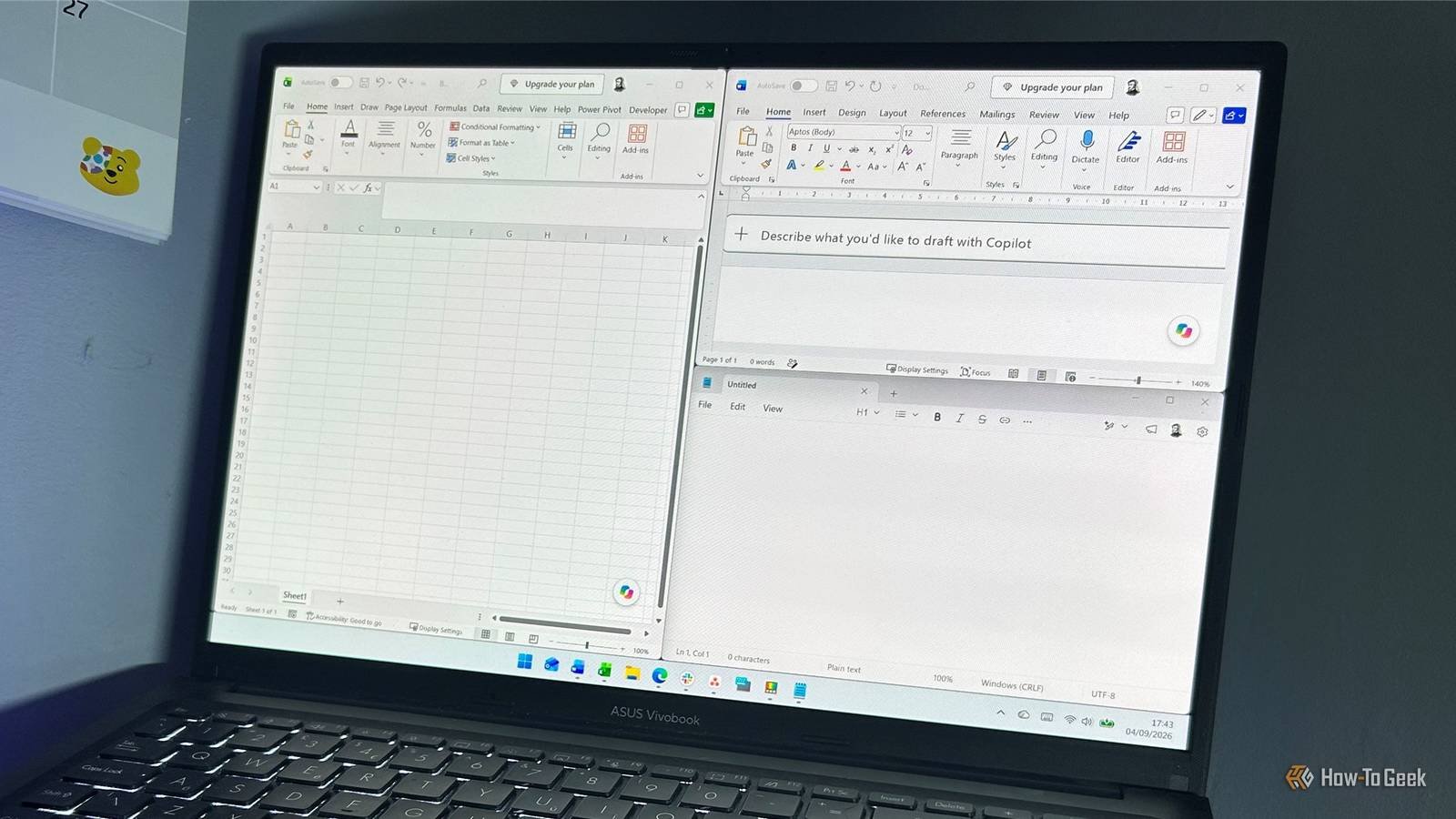
Open any spreadsheet in Microsoft Excel, and you’ll spot a small paintbrush sitting in the Clipboard group on the Home tab. Most people scroll right past it. They click Copy, they click Paste, maybe they dabble with Bold or Fill Color. But that brush? It sits there, untouched, day after day.

That’s a shame — because the Format Painter (its official name) is one of the fastest ways to clean up a messy spreadsheet. It copies formatting — font, size, color, borders, number formats — from one cell and slaps it onto another. No menus. No manual re-setting. One click, and your sheet looks consistent.

Here’s exactly how it works, and why you should start using it today.

What the Excel paintbrush button actually does

The Format Painter copies the look of a cell — not its value. Think of it as a formatting clone stamp. Select a cell that has the formatting you like, click the paintbrush, then click the target cell. Instantly, the target inherits the font, alignment, border style, number format, and fill color from the source.

It works on ranges, too. Select a formatted range, click the brush, then select a target range of the same size. Everything transfers. This is a godsend when you’ve spent ten minutes perfecting a header row and need to apply the same style to the rest of the table.

One important detail: the Format Painter does not copy the cell’s content. Only the formatting. Your data stays put.

How to use the Format Painter (single use vs. multiple use)

There are two ways to use the paintbrush, and they behave differently.

Single-use mode

Click the cell with the formatting you want to copy. Click the paintbrush icon once (it lights up). Then click the destination cell. The brush deactivates automatically. You’re done. This is the quickest way to fix one or two cells.

Locked-on mode

Double-click the paintbrush icon. It stays active, even after you paste formatting onto a cell. You can click cell after cell, or drag across multiple ranges, and each one gets the same formatting. To turn it off, press the Esc key or click the paintbrush icon again.

This locked mode is perfect for applying a consistent style across an entire worksheet — say, making every subtotal row bold with a light yellow fill.

Keyboard shortcut for the paintbrush (power users, take note)

If you prefer keeping your hands on the keyboard, Excel offers a shortcut: Ctrl + Shift + C to copy formatting, then Ctrl + Shift + V to paste it. Yes, it’s the same logic as copy-paste values, but for formatting only.

This shortcut works across worksheets and even between open workbooks. Select a formatted cell in Sheet1, hit Ctrl + Shift + C, switch to Sheet2, select a cell, and hit Ctrl + Shift + V. No mouse required.

It’s a small trick, but once it becomes muscle memory, you’ll wonder how you lived without it.

When the Format Painter saves you real time

Here are a few scenarios where the paintbrush really shines:

  • Merging data from different sources. You import a CSV, and the formatting is a disaster. Use the Format Painter to copy the style from a properly formatted sheet onto the raw data. Everything snaps into alignment in seconds.
  • Building dashboards. You design one KPI card perfectly — font, border, conditional formatting. Double-click the brush, then click each of the other KPI cells. Consistent formatting across the board, instantly.
  • Applying number formats. You have a cell formatted as currency with two decimal places. You need five other cells to match. Click the formatted cell, click the brush, then select the five target cells. No need to open the Format Cells dialog.
  • Copying conditional formatting. Yes, the Format Painter can copy conditional formatting rules. If you’ve set up a color scale or data bar on one range, you can paint it onto another range. The rules adapt to the new range automatically.

What the paintbrush does NOT do (common misconceptions)

The Format Painter is powerful, but it has limits. It does not copy column widths or row heights. If your source column is 20 pixels wide and your target column is 50, the target stays at 50. You’ll need to adjust column widths separately.

It also doesn’t copy merged cell structures. If you’ve merged A1 through C1, painting that formatting onto another cell won’t merge the target cells. You still have to merge manually.

And finally, it won’t copy data validation or cell comments. Those are separate properties that live outside the formatting layer.

Why most users ignore it — and why they shouldn’t

The paintbrush sits in plain sight, but it’s easy to overlook. The icon is small. The tooltip says “Format Painter,” which sounds technical. And many users simply never explore the Home tab beyond Copy, Paste, and Bold.

But here’s the thing: formatting is often the most tedious part of working with spreadsheets. Data entry is straightforward. Formulas are logical. But making a sheet look professional — consistent fonts, aligned columns, clear borders — that’s where time disappears. The Format Painter is a direct solution to that pain point.

If you spend more than 10 minutes a week formatting cells, learning this one tool will save you hours over a year. It’s not flashy. It’s not new. It’s just a brush. But it’s one of the most useful buttons Excel has ever shipped.

Next time you open a spreadsheet, try it. Select a cell you like, click the brush, and click another cell. You’ll see the formatting jump across. Then try double-clicking the brush. You’ll wonder why you never clicked it before.

Continue Reading

How To

Android 17’s Best Privacy Feature Is the One Nobody’s Using Yet

Published

on

temporary location access

What Is Temporary Location Access on Android 17?

Android 17 introduced a quiet but powerful shift in how apps can request your location. Instead of the old binary choice — “Allow all the time” or “Deny” — you now get a third option: temporary location access. Tap it once, and the app sees your location for that session only. Close the app, and the permission resets.

It sounds simple. It is simple. But most people haven’t touched it yet. According to Google’s own usage data from early 2026, fewer than 12% of eligible Android 17 users have ever granted a temporary location permission. That’s a shame, because this feature solves a real headache.

Why You Should Care About One-Time Location Permissions

Think about the last time you opened a food delivery app just to check an ETA. Or used a weather widget to see if you’d need an umbrella. Or searched for “coffee near me” in a browser. In each case, the app probably asked for your location — and you probably tapped “Allow while using the app.” Fine for that moment. But many apps keep that permission active indefinitely.

Temporary location access cuts that chain. You grant permission for exactly one use. The next time you open the app, it has to ask again. No background tracking. No lingering access. No surprise location history logs.

Where It Helps Most

  • Ride-hailing and food delivery: You want the app to know where you are right now, not where you sleep at night.
  • Navigation: Google Maps needs your location for turn-by-turn directions. It doesn’t need it when you’re just browsing restaurants.
  • Social media: Instagram or TikTok might ask for location to tag a post. Temporary access means they can’t check in on you later.
  • Local search: A quick “gas station near me” search shouldn’t become a permanent permission.

How to Use Temporary Location Access on Android 17

Using it is straightforward. When an app requests location permissions for the first time, look for the new option labeled “Only this time” or “Allow for this session” (the exact wording depends on your device manufacturer’s skin). Tap that instead of “While using the app.”

If you’ve already granted permanent location access to an app, you can switch it. Go to Settings > Apps > [App Name] > Permissions > Location. Change the setting from “Allow all the time” or “Allow only while using the app” to “Ask every time”. That effectively forces temporary access on future launches.

A Quick Note on Compatibility

This feature is baked into Android 17, but not every phone maker exposes it the same way. Samsung devices running One UI 7.0 or later include it. Google’s Pixel line has it natively. Some Xiaomi and Oppo phones hide it under an advanced permissions menu. If you don’t see the option, check your phone’s software version — you may need to update to the latest security patch.

Why Nobody Is Using It Yet

Three reasons. First, habit. Users have been trained for years to tap “Allow” and move on. Changing that reflex takes time. Second, visibility. The temporary option appears only during the initial permission prompt. If you already granted location access before upgrading to Android 17, you’d never see it unless you manually revoke permissions. Third, app behavior. Some apps nag you if you keep denying persistent access. They might show a pop-up saying “This feature works best with location always on” — which pressures users into giving more than they want.

Google could do more here. A one-time notification when an app uses background location after you’ve granted only temporary access would help. Or a monthly privacy summary that highlights apps still holding location permissions. For now, the feature exists, but it’s buried.

How Temporary Access Compares to Other Android Privacy Tools

Android has been stacking privacy features for years. Android 12 added the Privacy Dashboard, which shows which apps accessed your location, camera, and microphone in the last 24 hours. Android 14 introduced photo picker so apps can’t see your entire gallery. Android 16 gave users the ability to share approximate location instead of precise coordinates. Temporary location access is the logical next step — it’s not about hiding your location, but about controlling when and how often it’s shared.

The difference is granularity. Approximate location hides your exact address. Temporary location hides nothing — it just expires. Used together, they’re powerful. Set a maps app to approximate + temporary, and it can guide you to a coffee shop without ever knowing your home address.

What About iOS?

Apple introduced a similar “Allow Once” option in iOS 13 back in 2019. Android is playing catch-up here, but the execution is solid. On iPhone, the permission resets when you leave the app. On Android 17, it resets when you close the app — a subtle difference that gives you slightly more flexibility if you switch between apps quickly.

Should You Change Your Settings Right Now?

Yes. It takes two minutes. Open your location permissions list, find the apps that don’t genuinely need constant access — weather apps, shopping apps, games, social media — and switch them to “Ask every time.” You’ll get a prompt the next time you open each one. Tap “Only this time” and move on.

You’ll lose a tiny bit of convenience. A weather app won’t auto-update your local forecast. A food delivery app might ask for your location again if you reopen it after a few minutes. That’s the trade-off. For most people, it’s worth it.

Android 17’s temporary location access isn’t flashy. It doesn’t add a new visual feature or speed up your phone. What it does is give you back control — one permission prompt at a time. Start using it.

Continue Reading

Trending