Connect with us

Artificial Intelligence

The next iPhone moment might come from an AI company, not Samsung or Apple

Published

on

The next iPhone moment might come from an AI company, not Samsung or Apple

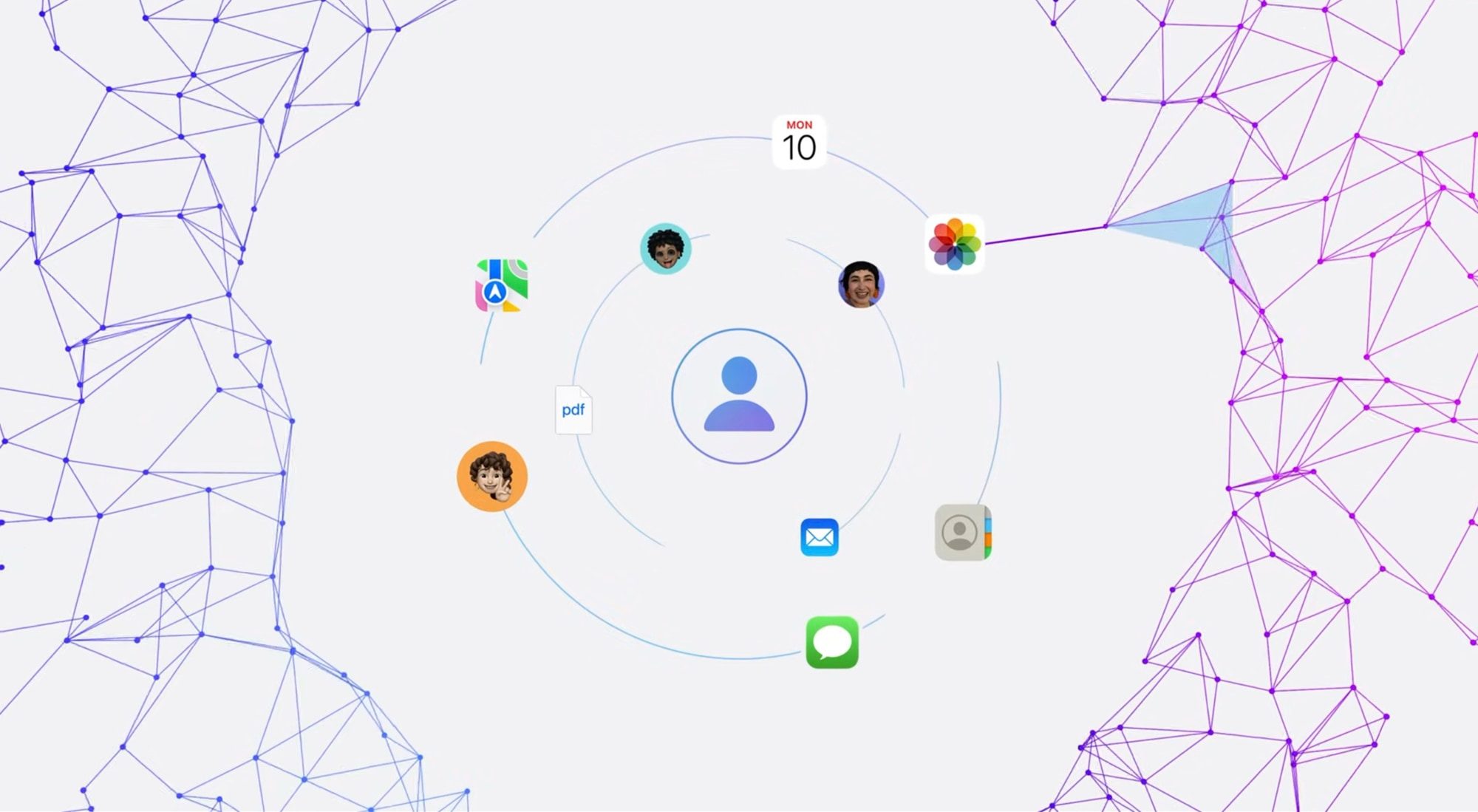
Your smartphone is cluttered with dozens of apps. OpenAI wants to change that by replacing them all with a single AI agent that handles tasks seamlessly. According to a report from analyst Ming-Chi Kuo, the company is developing its own smartphone, complete with a custom processor co-designed with MediaTek and Qualcomm. This ambitious project could mark the next iPhone moment in tech history.

Sam Altman, OpenAI’s CEO, has hinted at this shift. In a post on X, he wrote, “feels like a good time to seriously rethink how operating systems and user interfaces are designed.” That statement is hardly a subtle clue about the company’s direction.

Why would OpenAI want to make a phone?

Previous attempts at AI-first devices, such as the Rabbit R1 and Humane AI Pin, failed because they lacked deep integration with existing apps and services. OpenAI aims to avoid those pitfalls by building its own hardware.

Full control over hardware and software

To deliver a truly comprehensive AI agent experience, OpenAI needs complete authority over both the operating system and the device. Depending on Android or iOS means following someone else’s rules.

Access to personal data

Your smartphone knows more about you than any other gadget. It tracks your location, habits, and daily context in real time. That data is invaluable for an AI agent that wants to anticipate your needs before you ask.

Scaling to the biggest device category

Smartphones remain the largest device category worldwide. For OpenAI to scale its technology, this is the platform to target.

How will the AI actually work on this phone?

According to Ming-Chi Kuo, the OpenAI smartphone will use a two-layer system. Lighter tasks, such as understanding your context and managing memory, will run on the device itself. Heavier processing will be offloaded to the cloud.

This approach resembles Apple’s Private Cloud Compute, but OpenAI has a working AI model—unlike what many critics call Apple’s struggling AI efforts. On the business side, OpenAI may bundle hardware with subscriptions, similar to how Apple bundles services, and build a developer ecosystem around its AI agents.

For more on how AI is reshaping hardware, check out our analysis of AI device trends.

Who is helping OpenAI build this thing?

Kuo reports that MediaTek and Qualcomm are the processor co-development partners. Luxshare, a Chinese manufacturer, is the exclusive system co-design and manufacturing partner. This partnership is significant.

Luxshare has long tried to challenge Hon Hai (Foxconn) in Apple’s supply chain without much success. This project gives Luxshare an early foothold in what could be the next major smartphone generation—a big deal for the company.

Building on this, the timeline is set for 2028. That feels distant, but if OpenAI succeeds, the smartphone you use today might look very different in the near future. As we’ve seen with the evolution of AI smartphones, the industry is ripe for disruption.

In summary, the next iPhone moment may not come from Apple or Samsung. Instead, it could emerge from an AI company rethinking how we interact with technology. The question is: Are we ready for a phone that thinks for itself?

Continue Reading
Click to comment

Leave a Reply

Your email address will not be published. Required fields are marked *

Artificial Intelligence

Adobe Firefly AI Assistant Is Now Live in Public Beta — Here’s How It Reinvents Creative Workflows

Published

on

Adobe Firefly AI Assistant Is Now Live in Public Beta — Here’s How It Reinvents Creative Workflows

Adobe has officially rolled out the public beta of its Adobe Firefly AI Assistant, a conversational AI agent designed to sit across the entire Creative Cloud suite and execute complex, multi-step workflows on your behalf. Instead of jumping between tools manually, you simply describe what you need — and the assistant figures out which applications to use and in what order.

This launch marks a significant shift in how creatives interact with Adobe’s ecosystem. The assistant can orchestrate tasks across Photoshop, Lightroom, Premiere Pro, Firefly, and other apps, automating repetitive steps while keeping you in the driver’s seat.

What Can Adobe Firefly AI Assistant Do for You?

The assistant comes loaded with Creative Skills — pre-built workflows designed around common creative tasks. These include batch photo editing, mood board creation, portrait retouching, and generating social media variations optimized for platforms like Instagram, TikTok, Snapchat, and Facebook all at once.

Building on this, the assistant taps into over 60 pro-grade tools across Adobe’s apps, such as Auto Tone, Generative Fill, Remove Background, and Vectorize. For example, if you’re a graphic designer needing a product mockup, you can upload a logo, a product image, and describe the outcome you want.

The assistant then handles scaling, alignment, lighting, and perspective automatically. However, you stay in control the whole time — you can see every step the assistant takes and jump in to redirect or adjust at any point. Over time, it also learns your preferred tools, workflows, and aesthetic choices to deliver more tailored results.

Is Adobe Firefly AI Assistant Coming to Other Platforms?

Yes, and that is where things get interesting. Adobe is actively working on bringing Firefly AI Assistant’s pro-grade tools to third-party AI platforms. Anthropic’s Claude is already on the list, which means you could eventually access Adobe’s creative toolkit directly from outside the Creative Cloud ecosystem.

In addition, Adobe is adding new AI models to the Firefly app itself, including OpenAI’s GPT Image 2, Google’s Veo 3.1, Runway’s Gen-4.5, and ElevenLabs’ Multilingual v2, among others. This cross-platform approach could redefine how creatives integrate AI into their daily workflows.

Who Can Access the Public Beta?

The public beta is now available for Creative Cloud Pro subscribers and paid Firefly plan holders across Pro, Pro Plus, and Premium tiers. Eligible users will also receive complimentary daily generative credits during the beta period, which resets every day.

As a result, this beta offers a hands-on opportunity to test the assistant’s capabilities before a wider release. For more insights on optimizing your creative workflow, check out our guide on AI-powered workflow tips for designers.

What This Means for Creative Professionals

This launch signals Adobe’s commitment to embedding AI deeply into its tools — not as a gimmick, but as a practical assistant that saves time and reduces friction. The ability to describe a complex task and have the assistant execute it across multiple apps could dramatically speed up repetitive processes.

Nevertheless, the assistant is designed to enhance — not replace — human creativity. You retain full control over every step, and the learning algorithms adapt to your personal style over time. For those curious about the broader implications, explore our article on how generative AI is reshaping creative industries.

In conclusion, the Adobe Firefly AI Assistant public beta is a bold step toward a more conversational, integrated creative experience. Whether you’re a seasoned designer or a content creator, this tool promises to make your workflow smoother — and maybe even more enjoyable.

Continue Reading

Artificial Intelligence

ChatGPT’s Image Generator Is Changing the Rules – and I Am Not Entirely Comfortable

Published

on

ChatGPT’s Image Generator Is Changing the Rules – and I Am Not Entirely Comfortable

The latest ChatGPT image generator from OpenAI is undeniably powerful. It interprets prompts with a depth that feels more like collaboration than simple execution. It renders clean, usable text within images and produces outputs that look like finished products, not rough drafts. But the real shift is not about visual quality alone. It is conceptual. This tool is quietly redefining what creative control looks like in an AI-assisted workflow. And that shift, while impressive, is not entirely comfortable.

From Tool to Decision-Maker in a Competitive Landscape

What sets the ChatGPT image generator apart from most rivals is its reasoning layer. Instead of merely translating prompts into visuals, it interprets intent, fills in missing context, and makes decisions before generating the final output. This allows it to handle complex, multi-step prompts and maintain consistency across multiple images in a structured way.

However, this advantage places it ahead of platforms like Midjourney and Stable Diffusion, which still rely on precise prompting and iterative trial-and-error. But there is a subtle trade-off. As the system takes on more decision-making, the user’s direct control begins to shrink. Creativity becomes less about crafting and more about guiding.

The Rise of Competitors: Nano Banana and Midjourney

At the same time, the competition is evolving in different directions. Google’s Gemini-powered Nano Banana has emerged as a serious challenger, focusing on speed and consistency rather than reasoning depth. It can generate images in seconds, maintain subject continuity across edits, and combine multiple visual inputs seamlessly. Its rapid adoption and viral trends suggest that efficiency and accessibility resonate strongly with users.

Meanwhile, Midjourney continues to dominate in artistic expression, producing images with strong stylistic identity and mood. It remains the preferred tool for creators who prioritise aesthetics over structure. Anthropic’s Claude, while not a direct image-generation competitor, is carving out relevance through structured workflows and design-oriented outputs.

This creates a fragmented but mature market. The question is no longer which tool is best overall, but which fits a specific purpose. ChatGPT leads in versatility, but that leadership comes from balance rather than dominance.

The Text Breakthrough and the Uneasy Reality of Realism

One of the ChatGPT image generator’s most significant achievements is its ability to render accurate, usable text within images. This has long been a weak point for AI image generators, with distorted typography limiting real-world applications. By solving this, ChatGPT has unlocked new use cases in marketing, design, and communication.

But this breakthrough has also exposed an uncomfortable reality. A viral AI-generated cheque for ₹69,000 appeared convincingly real, complete with structured banking details. The image sparked immediate concerns around fraud, with users pointing out how easily such visuals could be misused. This incident illustrates a broader tension: the same capability that enables better design also enables more believable deception. As AI-generated visuals become more functional and realistic, the line between creative output and potential misuse becomes increasingly blurred.

Photorealism plays a central role here. ChatGPT excels at producing commercially usable visuals like product shots and UI mockups. Nano Banana competes closely in this space, often outperforming in speed and consistency, while Midjourney continues to lead in artistic imagination. This creates a clear divide between tools optimised for usability and those designed for expression.

Convenience, Control, and the Future of Creativity

Perhaps the most transformative aspect of the ChatGPT image generator is its workflow. Conversational editing allows users to refine images iteratively using natural language, eliminating the need to start over with each change. This makes the process faster and more intuitive.

Compared to the friction of prompt engineering in Midjourney or the technical complexity of Stable Diffusion pipelines, this approach feels like a leap forward. But it also changes how creative ideas are formed. When iteration becomes effortless, the process risks becoming reactive rather than intentional. Instead of carefully crafting a vision, users may find themselves adjusting outputs until something works.

This is where the broader question emerges. ChatGPT offers the most complete package in the current landscape, combining reasoning, usability, text accuracy, and integration into a single system. It performs consistently well across multiple use cases, making it the default choice for general users. Yet that overall strength hides an important nuance. Nano Banana is faster and often more consistent. Midjourney remains more artistic. Claude is more structured. Stable Diffusion offers deeper customisation. ChatGPT does not dominate any single category outright, but it succeeds by being good at everything.

That shift reflects a larger change in how tools are chosen. The decision is no longer driven by creative identity, but by efficiency and practicality. While that represents progress in accessibility and capability, it also suggests a quieter transformation: creativity is becoming less about expression and more about optimisation.

For more insights on AI tools and their impact, check out our guide on comparing AI image generators and explore how creative workflows are evolving.

Continue Reading

Artificial Intelligence

I Never Thought AI Would Add Typos – But It Kind of Makes Sense

Published

on

I Never Thought AI Would Add Typos – But It Kind of Makes Sense

Imagine spending years perfecting your grammar, only to discover that flawless writing now screams automation. A new AI typos tool is turning conventional wisdom upside down: instead of polishing your prose, it deliberately inserts mistakes. This anti-perfection approach aims to make emails appear more human, even if that means introducing deliberate errors. According to a report by Fast Company, the tool was created by Ben Horwitz, an investment partner at Dorm Room VC and a Harvard Business School graduate.

Why an Anti-Grammarly Tool Exists

At first glance, the concept seems absurd. Tools like Grammarly were designed to eliminate errors and boost clarity. However, in the era of generative AI, overly polished writing now carries a different implication—it often signals machine involvement. This shift has created a strange dynamic: users are now simulating imperfection to maintain authenticity.

Some tools even let you control the level of “human-ness,” from subtle typos to casual, informal styles. In other words, AI is being used to hide the fact that AI was used in the first place. As a result, the AI typos tool is gaining traction among professionals who want to avoid sounding robotic.

How This Redefines Digital Communication

This trend reflects a deeper change in how we perceive digital communication. For decades, clean grammar and structured writing were markers of professionalism. Now, that same polish can feel artificial. Recent discussions suggest that typos and informal writing are increasingly seen as signs of authenticity—even status.

In some cases, overly perfect emails may be viewed with suspicion, as if they lack a human touch. That inversion is significant: AI isn’t just changing how we write; it’s changing what “good writing” even means. The irony is hard to miss. We built AI tools to improve communication, and now we’re building new ones to undo those improvements.

The Rise of Authentic Imperfection

Building on this idea, the concept of “authentic imperfection” is becoming a deliberate strategy. Instead of striving for zero errors, users are embracing minor mistakes to signal genuine human effort. This is particularly relevant in email marketing, sales outreach, and customer communication, where trust is paramount.

For more insights on how AI is reshaping content, check out our guide on AI content strategy.

What This Means for Everyday Users

For everyday users, this shift could subtly change how emails are written and interpreted. If perfect grammar increasingly signals automation, you may find yourself adjusting your tone—intentionally or not—to appear more genuine. That could mean shorter sentences, casual phrasing, or even minor errors creeping into professional communication.

At the same time, it raises questions about trust. If both polished and imperfect writing can be generated by AI, distinguishing between human and machine becomes even more difficult. Therefore, the AI typos tool highlights a growing need for transparency in digital interactions.

The Future: From Correctness to Believability

This anti-perfection trend is likely just the beginning. As AI writing tools become more advanced, the focus will shift from correctness to believability. Future tools may not just generate text, but adapt tone, style, and even mistakes based on context and audience. The goal will be to make communication feel natural, not flawless.

That evolution could blur the line between human and machine even further. And perhaps that’s the real takeaway: the future of writing isn’t about eliminating errors—it’s about deciding which ones to keep. For more on evolving writing standards, see our analysis of 2025 writing trends.

In conclusion, the emergence of an AI typos tool marks a fascinating pivot in digital communication. It forces us to reconsider what authenticity means in a world where machines can mimic humans—and humans can mimic machines. As this trend unfolds, one thing is clear: perfection is no longer the ultimate goal.

Continue Reading

Trending